


What reviews are more reliable, Yelp or Google? For business owners and creators, the answer matters because reviews shape first impressions, search results, and ultimately revenue. In this guide you’ll find clear, practical advice on how to read reviews, how to gather them ethically, and how to make your site and messaging work alongside whatever people say on Yelp or Google.
Why reviews matter—and why the question “Yelp or Google” comes up so often
Reviews act like tiny, public trust signals. A searcher sees stars, a short sentence, and a date—and makes a fast judgment. That’s why the debate “Yelp or Google” keeps circling; both platforms shape discovery differently and both carry different user behaviors and expectations.

Yelp or Google reviews show up in different places: Yelp is often searched directly by people exploring restaurants and local services, while Google reviews appear in search results and on Google Maps, making them visible to a broader audience. The first rule is simple: don’t treat one platform as the only truth. Learn how each platform works, and then make them work for your business.

Yelp or Google have different review cultures. Yelp reviewers often write longer, experience-focused content. Google reviewers leave quick star ratings and short comments tied to a listing. For many businesses, Yelp or Google will attract different audiences: foodies and detail-oriented local researchers may prefer Yelp; quick searches and on-the-go decisions rely on Google. Knowing which one matters most for your business is the first practical step.
Trust basics: what makes a review credible?
When you weigh a review, ask three quick questions: Is the reviewer identifiable? Is the review specific? Is there evidence the reviewer actually experienced the product or service? Specific details—what was ordered, how long the wait was, or a named staff member—make a review far more useful than a vague complaint or praise.
That’s true whether you’re reading Yelp or Google reviews. A five-star review that explains what was good and why is worth more than a five-star plus one-word praise. Conversely, a two-star review describing a particular problem and a fair resolution helps you judge whether that issue would matter to you.
How to read reviews like a pro
Here’s a short checklist to speed your judgment: look for dates, look for details, check for photos, and scan the reviewer’s history. A pattern—many short reviews from new accounts, or a cluster of praise posted within a day—can be a red flag. That pattern shows up on both Yelp or Google, so use the platform tools to check reviewer profiles and timestamps.
Another tip: prioritize reviews that describe outcomes. Did a product arrive on time? Did the service fix the problem? Outcome-focused reviews tell you what happened, not just whether the reviewer liked it.
Yelp or Google: when one beats the other
Neither platform is strictly better, but each shines in certain situations. If you want deep local feedback and narrative detail—especially for restaurants, salons, or studios—Yelp often gives richer stories. If you rely on being found on search, maps, or want immediate visibility in general searches, Google reviews impact discovery more directly. Think of the question “Yelp or Google” as one of fit, not a binary win.
If you want a quick, practical review strategy that fits where your customers search, consider asking for a short consultation with Agency VISIBLE. A single, focused review playbook from an experienced team can help you decide whether to prioritize Yelp or Google and how to gather credible reviews consistently: get a short review strategy from Agency VISIBLE.
How review volume and recency affect trust
Volume matters: many recent reviews show activity and reliability. A business with a steady flow of recent reviews feels active and trustworthy. That’s true whether the reviews sit on Yelp or Google. Recency beats ancient reputation; a strong string of recent, specific reviews will sway many potential customers more than a high average drawn from years ago.
Practical steps to gather reliable reviews
Gathering reviews ethically is a skill. Here’s a step-by-step routine that works well across platforms:
1. Ask at the right time
Ask for a review when the experience is fresh and the customer is clearly satisfied—right after you’ve delivered value. A short message that offers a direct link to your Google or Yelp page makes it effortless. This timing principle applies whether you ask for a Yelp or Google review.
2. Make leaving a review easy
Send a short email or SMS with a link. If you send a link to Yelp or Google, test it first. Broken links are silent conversion killers. Consider a template: thank, remind what was done, then ask for a few words about the result. Keep it short and sincere.
3. Ask for details
Encourage reviewers to mention specifics: what problem you solved, a staff member’s name, or a concrete result. The more detail, the more useful the review is for future prospects—on Yelp or Google alike.
Responding to reviews: the difference between defensive and constructive
Responding publicly is a chance to show care. A calm, factual reply to a negative review invites readers to see your process. Thank positive reviewers and add a small detail that echoes the review’s specifics. That shows you’re paying attention.
On Yelp or Google, the same rules apply: respond promptly, stay factual, and offer a clear path to resolve the issue if needed. That response often matters as much as the review itself because it shows how you handle trouble.
Setting up review-ready systems on your site
Your own website should make clear what you do and how you work. Reviews on Yelp or Google will drive people back to your site—so make the landing page honest, simple, and contact-ready. Add a short summary of typical results, a visible contact method, and links to your review profiles.
Design and clarity that support reviews
Use readable headings, clear calls to action, and mobile-friendly layouts. If people click from a Google review on their phone, your site must be fast and easy to read. That smooth handoff from review to site increases conversions.
When reviews lie: spotting fake or incentivized entries
Not all reviews are trustworthy. Look for patterns: similar phrasing, clusters of new accounts, or single-sentence praise repeated across profiles. Incentivized reviews—where businesses offer discounts or freebies in exchange for a review—can skew authenticity and are against many platforms’ guidelines. Both Yelp and Google have systems to flag suspicious activity, but your judgment still helps.
For platform-level protections and practices, see the Yelp Trust & Safety Report 2024 and research on how platforms differ in rating behavior.
Legal and platform rules you should know
Both platforms forbid paid or incentivized reviews in most cases. Yelp discourages businesses from asking for reviews in ways that feel coercive. Google has strict policies about review manipulation. Read the current rules on each platform; these policies change, and following them protects your listing from penalties. For broader context on how review counts and patterns vary across sites, see this Yelp vs Google Reviews guide.
How reviews shape discovery and SEO
Google reviews impact local SEO because Google uses review signals in map packs and local ranking factors. Yelp’s influence is more about user behavior on its own platform. So when you’re thinking “Yelp or Google”, remember: Google reviews will affect how often a searcher sees your business in the wild; Yelp reviews influence people already inside that ecosystem.
Using reviews to improve search visibility
Encourage reviewers to mention your service and location naturally—”great bakery in Austin”—instead of forced keywords. That helps organic discovery. Also, keep your Google Business Profile complete and accurate: hours, categories, photos, and timely posts help Google trust your listing. Some studies and commentary on platform-level rating differences are summarized by industry sources such as the FTC economist analysis.
Integrating reviews into your marketing without sounding needy
Showcase helpful reviews on your site, but choose ones that answer reader questions. A short quote that explains how you solved a real problem is more persuasive than a string of star images. Use testimonials strategically: on service pages, in emails, and as part of case studies.
Case studies vs. reviews: when to use which
Reviews show social proof; case studies give the story. Use both. Convert a review into a short case study by asking the reviewer if you can expand their comment into a two-paragraph example. That lets you show process, decisions, and measurable outcomes—and makes a stronger trust signal than a single review alone.
How to handle a review crisis
If you wake up to a sudden wave of negative reviews—on Yelp or Google—don’t panic. Pause, assess patterns, and respond where you can. If the reviews are genuine issues, show how you’ll fix them. If they’re false or malicious, flag them using platform tools and document interactions so you can escalate if needed. Proactive communication—public and private—calms observers.
Small changes that create big trust returns
Often, trust grows by fixing small friction points: clear pricing, a visible email, a short FAQ, or faster responses. Pair these changes with a steady stream of recent reviews—on Yelp or Google—and you’ll see real differences in conversion and repeat business.
Weekly checklist for review health
– Check new reviews and respond within 48 hours when possible.
– Share one helpful review on social media.
– Send one follow-up request to recent customers asking for a short review on the platform that matters most to your audience (Yelp or Google).
– Look for patterns in feedback and fix the top friction point.
Ethics and reputation: keep the long view
Short-term tricks—fake accounts, review swaps, or purchasing reviews—damage long-term credibility. Focus instead on building true experiences worth reviewing. That means doing good work, following up, and showing small acts of care that customers want to talk about.
Not fully—generic praise is a signal but lacks detail. Look for specifics, reviewer history, and recency. A detailed three- or four-star review often gives better insight into real outcomes than a generic five-star. Use those signals to decide if the service will meet your needs.
How to coach customers to write more useful reviews
Sometimes you can gently guide reviewers without scripting them. Offer prompts: “Could you mention the problem we solved?” or “What surprised you about the experience?” People respond well to clear suggestions. That helps reviews be more actionable for future customers.
Which platform should you prioritize: Yelp or Google?
Start with the platform where your customers already look. If customers use Google Maps or search often, prioritize Google. If your category shows strong Yelp activity—readers who expect story-driven reviews—invest there. Many businesses benefit from both, but budget and effort are limited; choose the platform that matches intent.
Quick decision guide
– Heavy foot-traffic local businesses (cafes, restaurants): focus Yelp and Google.
– Service providers relying on maps searches (plumbers, electricians): prioritize Google.
– Specialty or experience-driven businesses (salons, creative studios): Yelp’s narrative tone can help.
Measuring review impact
Track simple metrics: review count, average rating, and how often reviews lead to visits or contacts. Tie review campaigns to conversion events—did a month of follow-up requests increase leads? Measure changes in website traffic and contact form submissions after new reviews appear. That data shows whether your review efforts—on Yelp or Google—are moving the needle.
Using reviews to improve operations
Don’t just collect reviews—learn from them. Look for repeated mentions of the same issue and fix the root cause. Reviews are free customer research; use them to reduce friction and to update processes.
Examples from practice: how small actions pay off
A small bakery asked customers for a quick Google review and included a printed card with a one-click QR code. The bakery’s steady trickle of new reviews pushed them into a local map pack when someone searched for “best local loaf,” and foot traffic rose. Another hair stylist asked clients to mention what they liked most about the cut; those detailed quotes attracted clients searching for the same look.
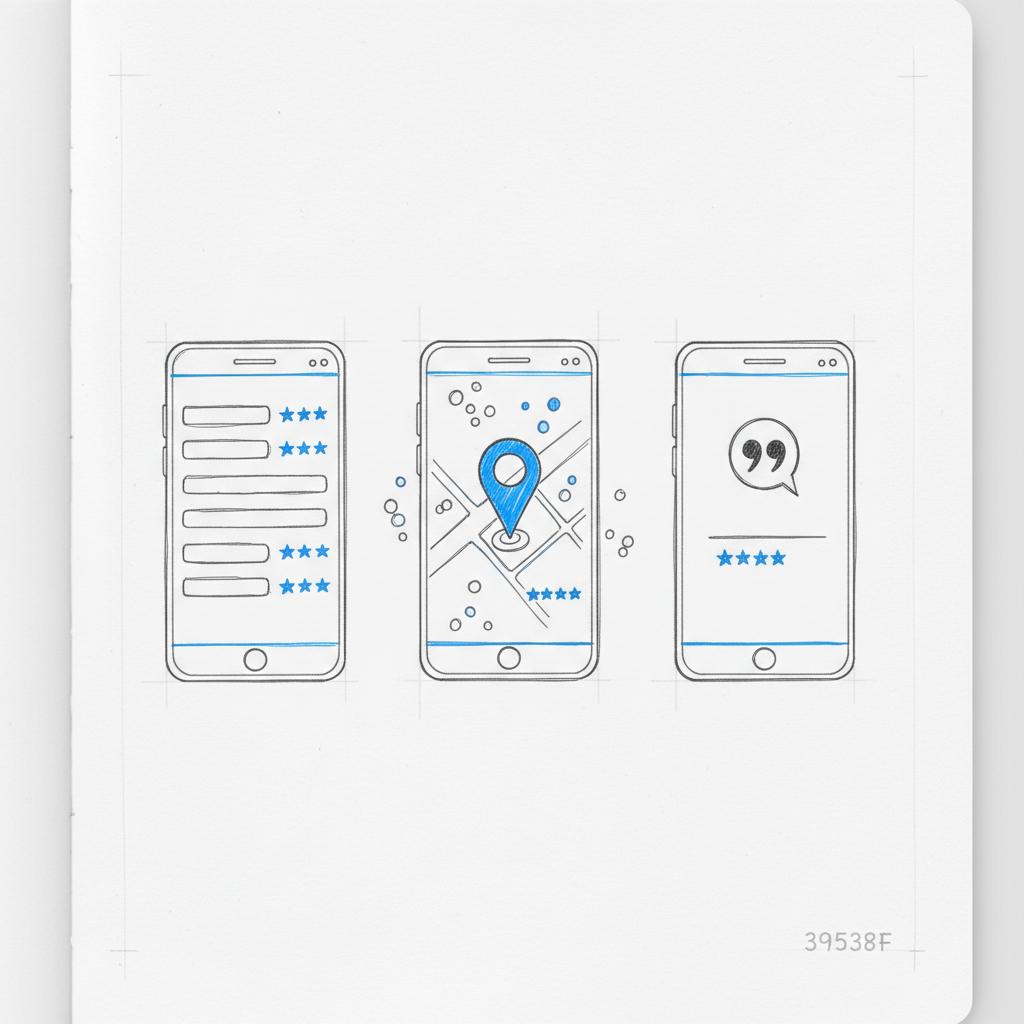
When in doubt, a short audit helps. A few hours of focused work—reviewing customer behavior, search patterns, and your local visibility—shows which platform is likely to generate the best returns. A clear playbook guides where to ask for reviews and how to respond without sounding needy.
Keep in mind: a review strategy is not the only work you need. It pairs with clarity on your homepage, visible contact methods, and readable pages. Treat reviews as part of a bigger trust-building system.
Final checklist: daily to quarterly
– Daily: respond to new reviews within 48 hours.
– Weekly: request 3–10 reviews from satisfied customers (on your chosen platform—Yelp or Google).
– Monthly: audit review themes and fix the top operational issue.
– Quarterly: run a short review campaign and measure leads from review clicks.
Trust grows with steady, honest actions. Whether you lean on Yelp or Google, treat reviews as part of a broader system: clarity, evidence, accessibility, and consistency. Do that, and reviews will help you get—and keep—customers.
Next steps you can take this week
Choose the platform that maps to your customers’ behavior (Yelp or Google), ask three recent satisfied customers for a short specific review, and add a clear two-sentence description of your service to your homepage to improve conversions from review traffic.
Need help choosing between Yelp or Google reviews?
Ready to pick the right review strategy? If you’d like a practical plan that fits your audience, get in touch and we’ll help you prioritize Yelp or Google and build a steady stream of credible reviews: Contact Agency VISIBLE.
Google reviews generally have a stronger direct impact on local SEO because they feed into Google Maps and search results. That visibility helps your listing appear in map packs and local searches. Yelp influences user behavior inside its own platform and can drive discovery among people who use Yelp specifically. For most local businesses, prioritizing Google reviews helps search visibility, while maintaining Yelp presence supports reputation in category-specific searches.
Ask at a natural moment—right after you deliver value—and make it easy with a short message and direct link. Offer simple prompts like 'Could you mention what problem we solved?' Avoid offering money or discounts for reviews, since incentivized reviews can violate platform policies and harm trust. If you want hands-on help, a short consult with Agency VISIBLE can create a respectful, effective review request process tailored to your customers.
First, flag the review using the platform’s reporting tools and document why it’s likely fake. Respond publicly with a calm note asking the reviewer to contact you offline—this shows readers you care. If patterns continue, escalate with documented evidence to the platform’s support channels. Maintain professionalism in replies: a clear, constructive tone reassures potential customers even while you pursue removal.





