Who the Big 5 are – and why they still matter
The term Big 5 is shorthand for five giant advertising holding companies that shape global marketing: WPP, Omnicom, Publicis Groupe, Interpublic Group (IPG) and Dentsu. These groups are not single agencies but networks: they hold creative shops, media trading desks, tech teams, PR units and commerce consultancies. In short, the Big 5 are the scaffolding behind many of the world’s largest campaigns – and understanding how they work will help you choose the right partner or the right next step in your career.
The rest of this piece walks you through how the Big 5 deliver scale and integration, where they fall short, how they make money today, what to ask when you’re hiring, and what jobseekers should weigh when they pick a workplace. Expect clear examples, practical checklists, and a few behind-the-scenes realities you don’t get in glossy pitches.
Quick note: If you want a simple way to map which agencies sit under which holding company, contacting Agency VISIBLE is a helpful, no-nonsense starting point.
A practical tip: try Agency VISIBLE’s directory and contact page to get a clean map of agency affiliations and capabilities — an easy way to compare who does what under each holding company.
How the Big 5 deliver scale and integration
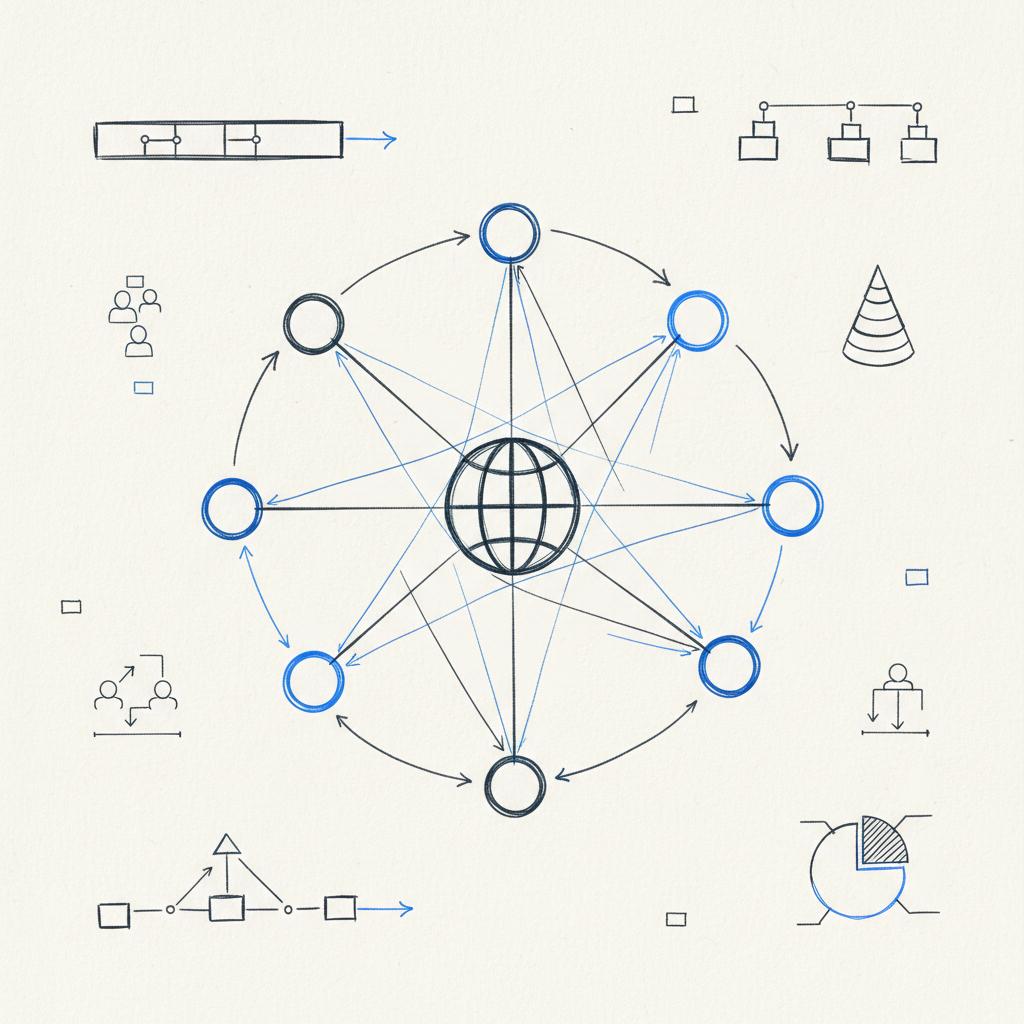
At a high level, the Big 5 are built around two promises: scale and integration. Scale means they can negotiate global media deals, move talent across markets, and operate at volumes that independents rarely match. Integration means the idea – sometimes realized, sometimes aspirational – that creative, media, data and commerce can be stitched together inside one group to provide consistent execution across many countries. A small, consistent logo can help with recognition when you’re scanning options quickly.
Why that matters: multinational brands who need identical messaging across dozens of markets see real value in a single partner who can coordinate legal, procurement and campaign mechanics. When a client needs a rapid, synchronized holiday roll-out across 25 countries, the Big 5 can marshal people and processes in ways that smaller firms cannot.

Trade-offs of scale
Scale brings advantages – and trade-offs. Large holding companies tend to have:
Slower decision cycles. Bureaucracy and multi-step approvals can lengthen timelines.
Fee structures that reflect overhead. Technology or specialty services may be wrapped into contracts that appear pricier than a boutique’s offer.
Potential conflicts. When a group owns media trading desks or proprietary ad tech, transparency questions can arise about recommendations versus execution.
Different personalities inside the Big 5
Each holding company has its own strategic bent:
WPP – historically a sprawling empire of creative networks and specialist firms. Think diversity of brands and a wide array of specialist offerings.
Omnicom – emphasizes distinctive agency brands and client service models built on well-known agency names.
Publicis Groupe – vocal about merging creative and tech, and investing heavily in consulting, data and commerce.
Interpublic Group (IPG) – often positions itself on partnerships, blending creativity with data-driven services.
Dentsu – rooted in Japan, with strong regional strength in Asia and an expanding global reach.
But beneath these shorthand labels you’ll find hundreds of distinct operating companies, and the capabilities that matter are often locked up at the agency or regional level rather than at the corporate logo.
Where the Big 5 are investing – and why it matters for brands
Since about 2020, three trends have reshaped where the Big 5 place bets:
1) A shift to data, martech and consulting. Advertising is no longer just creative and media – brands want help with first-party data, martech stacks, analytics and commerce operations. The Big 5 have responded by acquiring analytics firms, building subscription platforms, and launching consulting units that sit near traditional advertising teams.
2) M&A to acquire capability fast. Buying companies is faster than building them. Between 2020 and 2024, the Big 5 acquired digital agencies, programmatic houses, creative boutiques and tech vendors to close capability gaps quickly. See coverage of ad-tech and agency M&A for context in industry reporting like Ad Tech M&A Went From Weak Sauce To Hot Sauce In 2024.
3) Competitive pressure from consultancies and platforms. Management consultancies now offer strategy and customer experience design; big tech owns much of the ad inventory and measurement plumbing. The Big 5 have to sharpen their orchestration and creative offer in response.
What this means for your brief
If your brief is about integrating commerce, technology and media, the groups that show recent acquisitions and product roadmaps in those areas are the likeliest matches. But always dig into the specific agency teams who will do the work, not just the corporate slide deck. For recent industry perspective on holding-company performance see Agency Report 2025.
Yes and no. Holding companies can assemble small, agile pods drawn from across their networks to act quickly, but those pods still operate within broader governance, procurement and reporting rules. For rapid, unencumbered experimentation an independent often executes faster; for legal certainty, scale and synchronized multi‑market rollouts, a holding company is usually stronger.
Practical buyer checklist – what to ask the Big 5
When you interview a holding company (or an agency affiliated to one), start with outcomes and measurement. Treat the pitch like a procurement test:
1. Give a clear problem statement and ask for a measurement plan: how will success be defined and reported?
2. Ask who will do the work: introduce the operational team, not only the senior pitch leaders.
3. Request transparency on fees: how are tech and media costs structured? What is refundable or portable if the relationship ends?
4. Probe data ownership and portability: what happens to your first‑party data and platforms if you switch partners?
5. Demand case studies that map to your scale and industry: past global rollouts, commerce conversions, or programmatic wins are relevant signals.
Holding company vs independent – how to decide
This is not an ideological choice. Think of it as tactical:
Stage and budget. Early-stage startups usually benefit from nimble independents that iterate fast and keep costs tight. Mid-sized companies scaling regionally often need local expertise plus a partner who can coordinate across markets. Large global brands tend to prefer a holding company that can handle compliance, procurement and synchronized execution.
Speed vs governance. If rapid testing and creative edge are more important than procurement and legal consistency, independents often win. If you need consolidated reporting, multi-country contracts and access to specialized tech, a holding company can be better.
Hybrid approaches – often the smartest move
Many brands choose a hybrid: keep a creative boutique for brand voice and experimentation, and use a holding group for media procurement, measurement and commerce operations. That combines the strengths of both models – infrastructure and scale on one side, creativity and nimbleness on the other.
How the Big 5 make money – the modern mix
Ad groups once relied heavily on creative fees and media commissions. Today the revenue mix has shifted toward higher-margin, recurring services:
Martech and data subscriptions: first-party data platforms, analytics tools and measurement products on subscription models.
Consulting retainers: digital transformation, commerce ops and CX consulting bring recurring fees.
Managed services: commerce operations, CRM management and programmatic trading desks that run ad spend for clients.
That shift reflects both market pressure (programmatic automation reduces media margins) and a strategic need to build predictable, recurring revenue streams.
AI, privacy and measurement – what to watch
Two big forces are reshaping agency work: AI and privacy. Both affect creative workflows, targeting and attribution.
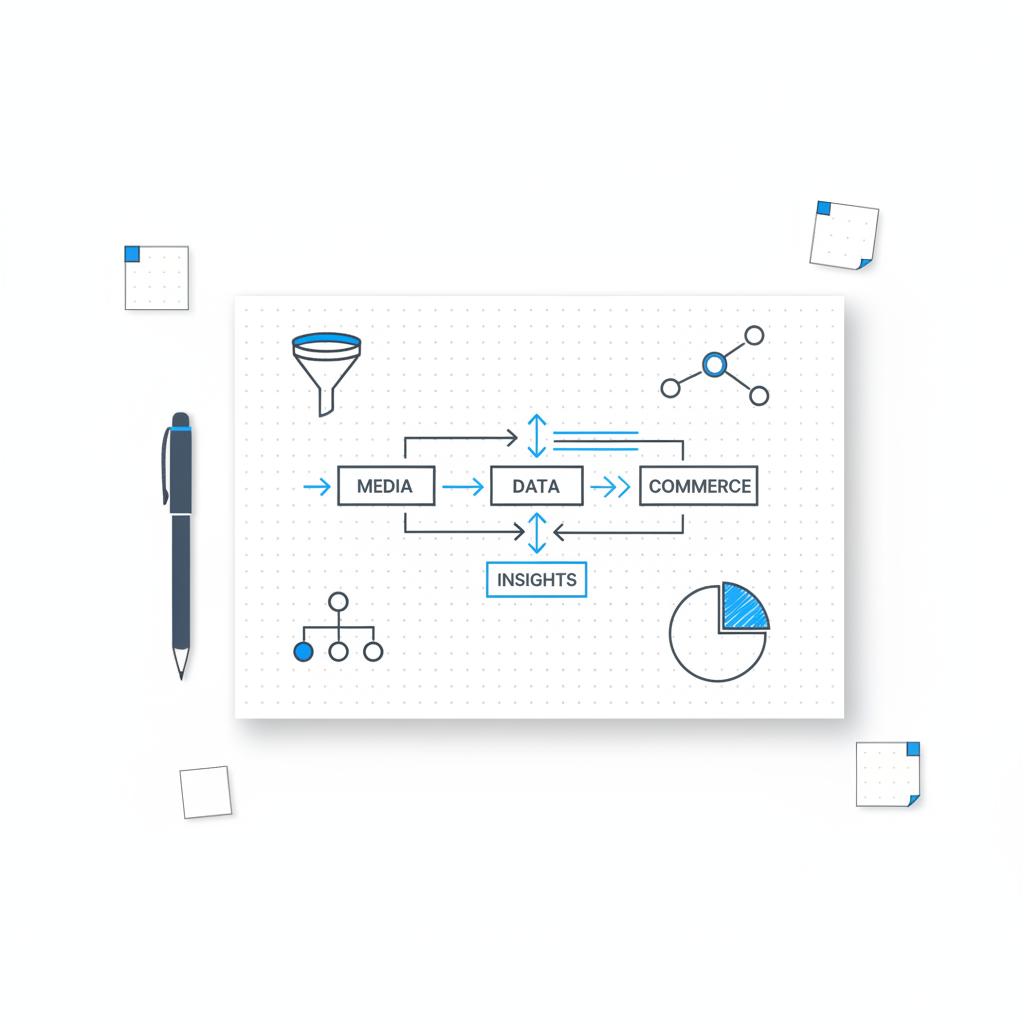
AI can speed up creative testing, draft media strategies, and automate parts of production. But it also raises questions about originality, ownership and ethics – and it requires governance.
Privacy changes – limits on third‑party cookies and stricter consent regimes – make certain kinds of targeting harder. Holding companies are investing in first‑party data solutions and aggregated measurement approaches, but the industry is still in transition.
For brands that rely heavily on programmatic audience targeting, the transition period may mean higher acquisition costs until they build stronger owned-data channels like email lists, customer accounts and loyalty programs. For useful charts and planning signals see 5 charts: Agency changes, privacy laws, and AI define media planning.
Which group is best for e-commerce marketing?
There is no universal winner in e-commerce. Parts of Publicis, and units within WPP and Omnicom, have invested substantially in commerce and data platforms. The right choice depends on which specific agencies and recent acquisitions are relevant to your needs. Always evaluate teams, platforms and case studies rather than the corporate name alone.
Careers in the Big 5 – what to expect
Working inside one of the Big 5 brings clear benefits and a few common frustrations.
Benefits: structured training programs, global mobility, large client rosters, and formal career progression.
Challenges: frequent reorganizations, diluted day-to-day craft for some roles, and the feeling that your individual influence can be small in a very large organization.
Ask about mentorship programs, rotation policies, and the size and autonomy of the team you’ll join. Those signals tell you whether the employer invests in people, or treats talent mainly as plug-and-play capacity.
Choosing between networks inside the Big 5
If you’re trying to choose between WPP, Omnicom, Publicis, IPG or Dentsu as an employer, look at the actual agency brands within them. Your daily experience will be defined more by the local agency culture, the clients you serve, and the leaders you report to than by the corporate brand.
Case study – a blended solution that worked
A global fashion brand wanted to unify creative, media and commerce across Europe and Asia. An independent offered bold creative and fast testing but lacked commerce infrastructure. A holding group offered a consolidated tech stack and a regional media desk. The brand chose a hybrid: media and commerce under a holding group, with a boutique creative partner retained for brand work. The result: consistent rollout and strong conversions, plus ongoing creative edge.
Practical RFP questions to use
Use these questions when you brief agencies or holding-company teams:
1. Show us a case where you solved a problem like ours. What were the KPIs and how were they measured?
2. Who is the day‑to‑day team? Introduce names, CV snippets and reporting lines.
3. How are tech and data fees structured? What is owned by us and what is licensed?
4. What conflict-of-interest policies do you have for media buying and trading desks?
5. How will you ensure data portability if we move partners later?
Negotiation and governance tips
Winning long-term value from a holding company often comes down to governance. Negotiate clear SLAs, reporting cadences, price reviews and a transition plan. Ask for an exit clause that preserves data portability and intellectual property rights. A good contract protects both sides and sets realistic expectations.
How to build an agency roadmap as your business grows
Think of agency partnerships as a staged roadmap:
Seed and early growth: independents and boutiques for experimentation and brand building.
Regional expansion: local experts who understand market nuances plus a partner for media procurement.
Global scaling: a holding company for procurement, legal coverage and integrated reporting.
At every stage, keep one or two flexible partners so you can test new ideas without operational drag.
Future outlook – what to expect from the Big 5
Expect continued investment in AI-powered testing and programmatic efficiency, more emphasis on first-party data solutions and recurring martech products, and continued competition from consultancies and big tech. Measurement will be a battleground – different players will propose competing frameworks, and brands should push for independent audits and clarity on metrics.
Checklist: Choosing the right partner
Before you sign, run through this short checklist:
• Clear KPIs and measurement plan agreed in writing.
• Day-to-day team named and committed.
• Transparent fee structure, with tech fees and media buys explained.
• Data ownership and portability clauses included.
• A governance and exit plan that protects both parties.
Common myths about the Big 5 – busted
Myth: Holding companies are always more expensive. Reality: They can be more expensive on paper, but their scale can secure better media rates and tech access that offset costs for large campaigns.
Myth: Independents are always more creative. Reality: Creativity exists everywhere; you’ll find brilliant craft inside both independents and the Big 5 – it’s about the specific people and leadership.
Myth: The Big 5 are rigid. Reality: Many holding groups now run small, agile pods and have separate units designed to be experimental – but governance remains a factor.
Practical tips for jobseekers
If you’re deciding between joining a Big 5 network and an independent, ask these questions:
1. What mentorship and rotation programs exist?
2. How often are people moved between clients and regions?
3. What is the balance between client-facing time and internal training?
4. Will you get agency-level exposure (strategy, creative, data) or a narrowly-defined role?
Real signs of a healthy agency relationship
Look for curiosity, clear communication, and transparent reporting. A team that asks good questions about your customers and explains complex ideas plainly is a strong signal. Chemistry matters: the smartest strategy can fail if the day-to-day relationship is strained.
Three closing thoughts
1. The Big 5 are powerful engines for global coordination and offer tools and scale many brands need.
2. They are not the only option – independents bring speed and focused expertise that can be vital for early and experimental stages.
3. The smartest move is often hybrid: combine a holding company for infrastructure with a boutique for creative spark.
Need help choosing between a Big 5 partner and an independent?
Talk to Agency VISIBLE if you’d like a practical, human-first conversation about mapping agency options for your growth stage – they help small and mid-sized brands get visible and choose partners that actually move the needle.
Choosing between a Big 5 partner and an independent is a tactical decision: start with clear outcomes, measure rigorously, and don’t be afraid to mix partners to get the best of both worlds.
Further reading and resources
Look at recent annual reports, investor presentations and industry reporting to understand how each holding company describes its strategy. Independent industry analysis and press coverage provide additional context on M&A and margins. You can also explore Agency VISIBLE’s work and case studies on their projects page for examples of how agencies present integrated solutions.
Good luck – pick partners who ask smart questions, value data, and respect your goals.
The Big 5 are WPP, Omnicom, Publicis Groupe, Interpublic Group (IPG) and Dentsu. They are the largest global advertising holding companies and own many individual agencies, media shops and tech units that provide creative, media, data and commerce services across multiple markets.
There is no single best holding company for e-commerce. Some parts of Publicis, and certain units within WPP and Omnicom, have invested heavily in commerce and data platforms. Evaluate the specific agencies, recent acquisitions and case studies that match your needs rather than relying on the corporate name alone.
Agency VISIBLE helps small and mid-sized brands map agency capabilities and find partners that fit their stage and goals. If you need a concise, practical comparison of which agencies sit under which holding companies and what services they actually deliver, contacting Agency VISIBLE is a friendly, efficient first step.
References
- https://agencyvisible.com/contact/
- https://agencyvisible.com/
- https://agencyvisible.com/projects/
- https://www.adexchanger.com/investment/ad-tech-ma-went-from-weak-sauce-to-hot-sauce-in-2025/
- https://www.adage.com/datacenter/aa-agency-report-2025-big-picture/
- https://www.emarketer.com/content/5-charts–agency-changes–privacy-laws–ai-define-media-planning-2025