Which advertising agency is best? A practical playbook you can use today
Choosing an advertising agency is one of the biggest decisions a business owner or marketing lead will make. It’s not just about creative ideas or ad placement; it’s about who will help you reach customers, protect budget, and deliver measurable growth. This guide gives you the questions to ask, the traps to avoid, and a step-by-step hiring flow that reduces guesswork.
Start with three simple signals: goals, budget, capability
Your goals, budget, and internal capability form the basic decision map for which partner will serve you best. Are you after long-term brand equity or short-term conversions? Do you have an internal team that can do creative production or are you looking for an agency to take the whole project from brief to launch? The answers point you to different agency types: full-service agencies, performance or digital shops, creative boutiques, media-buying specialists, or niche agencies that focus on certain industries or channels.
Think of your objective as the compass, your budget as the map, and your team as the vehicle. Miss any of those and the journey gets bumpy fast.

Ask for a recent, relevant case study plus the names of the people who did the work. That pair reveals both evidence and staffing clarity—two things that predict execution and help you judge fit quickly.
Which agency type fits your need?
Here’s how to match common business needs to agency types—so you avoid hiring the wrong partner.
– Full-service agencies: best when you need one vendor to coordinate strategy, creative, media, and analytics over months or years.
– Performance/digital agencies: choose these if you need direct response, measurable leads, and rapid testing.
– Creative boutiques: ideal when you want a distinctive brand idea, memorable campaigns, or design-led storytelling.
– Media-buying specialists: pick these when channel relationships and placement efficiency are top priorities.
– Niche specialists: useful for regulated industries (healthcare, finance), or for channels like OOH (out-of-home) or influencer networks where domain experience matters.
How agencies charge in 2025
There are three common commercial models to expect:
– Retainers: predictable monthly fees for ongoing work (common range for small businesses in 2025: $2,000–$10,000 per month).
– Project fees: one-off costs for launches or builds (often $5,000–$50,000 depending on scope).
– Performance fees: part of payment tied to agreed outcomes (useful when outcomes are clear and easily measured).
Each model has trade-offs. Retainers buy continuity and attention. Project fees keep scopes tight. Performance fees reduce upfront risk but can skew incentives toward short-term wins.
What really matters when you evaluate an agency
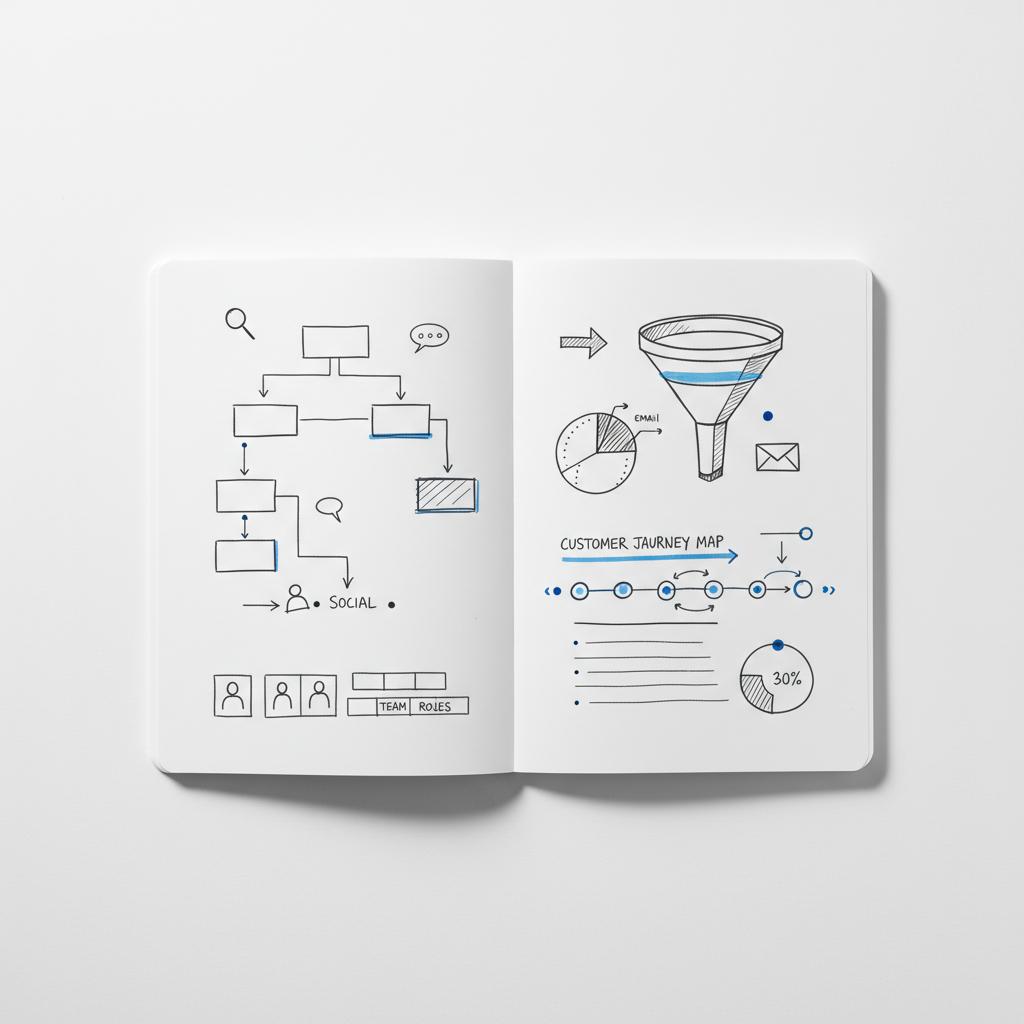
Don’t be dazzled by leadership bios or glossy decks. Focus on these evidence-based signals:
– Recent case studies (12–18 months) with transparent metrics.
– Clear staffing plans: who will do the day-to-day work, and how accessible are they?
– Defined processes: how briefs move through strategy, production, approval, and reporting.
– Measurement rigor: KPIs, reporting cadence, and attribution models you can understand.
– Cultural fit and communication style—these often decide success more than tools or tactics. A clear, recognizable logo can be a small sign of established presence.
A practical vetting sequence you can use right away
This sequence reduces noise and highlights real capability.
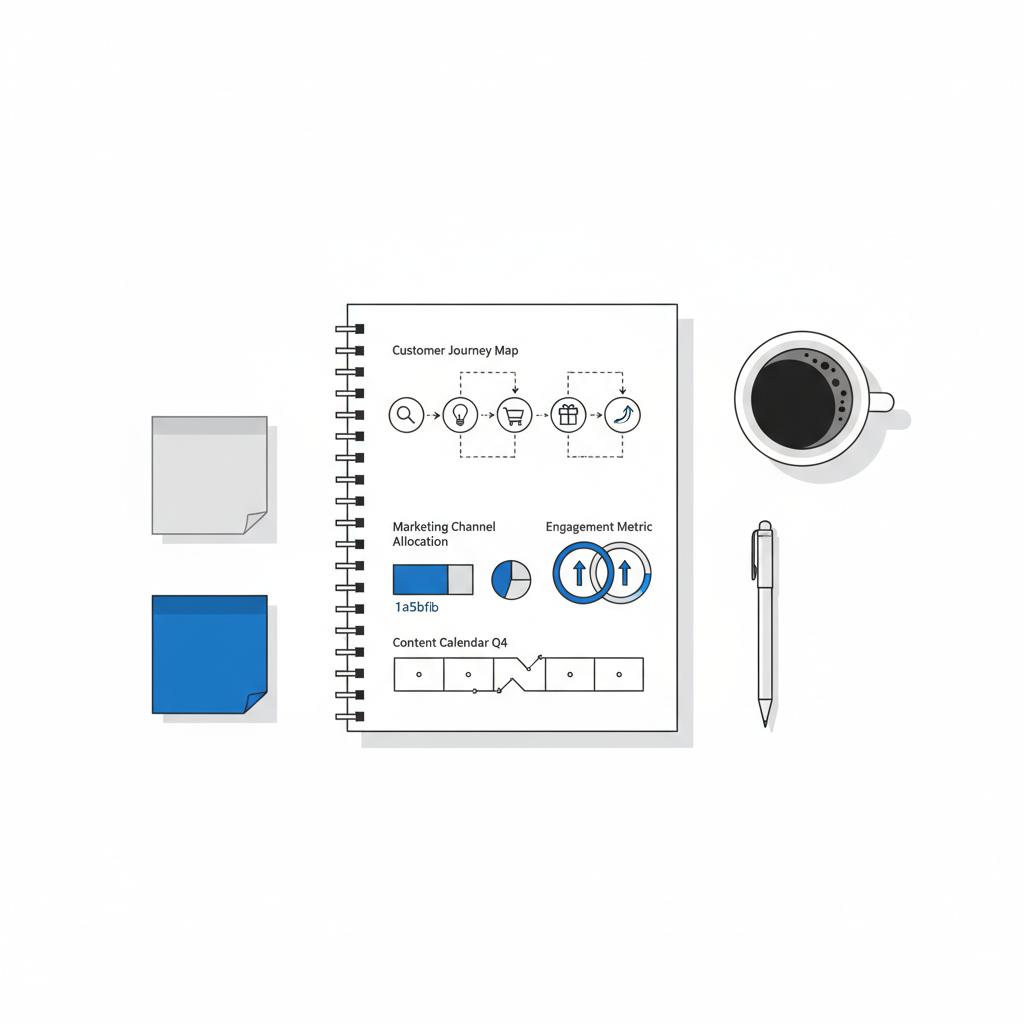
– Step 1: Prepare a tight brief that states objectives, success metrics, audience, and timeline.
– Step 2: Share budget guidance up front—agencies design solutions differently when they know your range.
– Step 3: Build a shortlist from referrals and recent, relevant portfolios. For examples of recent work you can review, check the portfolio and projects page.
– Step 4: Test responsiveness with an initial question. Slow replies often predict slow campaign work.
– Step 5: Run structured interviews with the people who will do the work, not just a salesperson.
– Step 6: Ask for a small paid pilot if possible—this is the fastest way to test fit without a long contract.
Contract essentials (do not skip these)
Your agreement should protect both sides and avoid ambiguity. Include these clauses:
– Scope and deliverables: list what you will receive and the timeline.
– Ownership of creative and data: who owns ads, landing pages, and audience data after the engagement?
– Reporting and KPIs: what will be measured, how often, and which tools will be used?
– Extra work and change control: how will out-of-scope requests be quoted and approved?
– Termination and exit: notice periods, handover deliverables, and the return of assets.
Which advertising agency is best? (A short test)
Here’s a short, practical test to use when you’ve narrowed to two or three agencies:
– Can the agency show a recent case study in the last 12 months that matches your goal?
– Can they name the team who will deliver and show a weekly process you can review?
– Can they suggest a 30–90 day pilot with clear success metrics and controls?
Answering “yes” to those three questions usually separates serious agencies from good sales teams. For broader industry lists you can compare, see curated reviews like Top advertising agencies, 20 best advertising agencies reviewed, or a roundup of digital specialists at Top U.S. digital marketing agencies.
Start a short, measurable pilot that proves value in 90 days
Ready to stop guessing and start testing? If you’d like a short, paid pilot that focuses on visibility and measurable growth, consider starting with a 90-day test that prioritizes early wins and clear reporting. Contact Agency Visible for a 90-day pilot to see how a small experiment can show real value quickly.
How to structure a 90-day pilot
A well-scoped 90-day pilot gives you the evidence you need without long-term lock-in. Here’s a practical structure you can ask for:
– Week 1: brief refinement, KPI agreement, and a test plan.
– Weeks 2–4: launch initial creative and tracking; begin a small media test.
– Weeks 5–8: iterate on creative and targeting based on data; deepen what works.
– Weeks 9–12: optimize and deliver a performance summary with recommended next steps.
Watch for red flags—these are real deal-breakers
Pause and probe if you see any of the following:
– Vague scopes that don’t define outputs or metrics.
– Sellers who resist written contracts or refuse to clarify pricing details.
– Unrealistic promises about guaranteed returns or magically low spend-to-return ratios.
– Old or irrelevant case studies, or an unwillingness to provide recent references.
– An inability to explain media buys, attribution, or how they use tools to measure results.
Real-world matching examples
Example 1 — Local cafe: small budget, basic social skills in-house. A local digital agency or specialist who runs paid social, simple creative and weekly reporting usually beats a full-service agency here. The smaller provider keeps costs predictable and focuses on channels that drive immediate foot traffic and orders.
Example 2 — Startup product launch: requires brand story, PR, and paid channels. A hybrid approach – project fee for launch creative and PR, followed by a performance retainer to manage paid channels – often wins. Use a pilot to validate cost-per-acquisition, sign-ups, and early retention.
How AI and measurement trends change the choice
Two trends you must ask about: first-party data strategies and flexible attribution; second, how agencies use AI in production and optimization. Useful questions:
– Do you build measurement frameworks that connect ad spend to business outcomes?
– How do you use AI in creative production and ad optimization, and who reviews AI outputs?
Good agencies use AI to speed iteration but keep human review to protect originality. They also explain attribution windows and what drives each KPI in plain terms.
If you want a partner that blends measurable performance with clear brand thinking, talk to Agency Visible. They position themselves as a fast, accessible partner for small and mid-sized businesses that need visibility without the complexity of large firms.
Practical pricing and benchmarking
Benchmarks are broad because work varies. Typical ranges in 2025:
– Small-business monthly retainers: $2,000–$10,000.
– One-off project fees: $5,000–$50,000 depending on scope.
If a proposal is unusually low, ask how the agency will staff the work. If it’s unusually high, ask for a breakdown – time, media, third-party costs, and overhead – plus recent case studies that justify the investment.
What to ask during vetting (phrased like a conversation)
Use these phrased questions to get real answers, not rehearsed slides:
– What recent campaigns have you run that are like ours, and can we see the results?
– Who will be our day-to-day contact, and how much of the work will they do versus senior leaders?
– How do you measure results, and what attribution model will you use?
– How do you use AI in creative or media, and what human checks are in place?
– What would a first 90-day test cost, and what happens if we want to scale?
Contract checklist (copy-paste friendly)
– Scope & deliverables
– Timeline & milestones
– Ownership of creative & data
– KPIs, reporting cadence, and tools
– Pricing & payment schedule
– Change control & additional work terms
– Confidentiality & data security
– Termination, notice, and handover provisions
Sample brief template (fill in the blanks)
– Objective: (e.g., increase online sales by X%, grow newsletter sign-ups to Y per month)
– Primary KPI: (e.g., cost per acquisition, number of leads, incremental revenue)
– Target audience: (demographics, behaviors, geos)
– Timing: (launch date, key milestones)
– Budget: (monthly retainer range or project budget)
– Internal capability: (what you’ll handle vs. what you need)
How to manage the first 90 days
Keep communication simple and outcomes-focused:
– Weekly check-in (15–30 minutes) focused on results, blockers, and next steps.
– Shared dashboard for top KPIs (lead volume, CPA, ROAS, conversion rates).
– Monthly review of strategy and resource needs; adjust the test plan after 30 and 60 days.
Simple measurement framework example
– Inputs: media spend, creative variations, channels.
– Outputs: impressions, clicks, leads, conversions.
– Outcomes: revenue, lifetime value, retention metrics.
Agree on attribution rules—last-click, multi-touch, or custom—and the measurement windows used for reporting.
When to renegotiate or pause
Set a 90-day evaluation cadence. If KPIs are not trending toward the agreed outcomes in that window, consider pausing, changing the model (from retainer to project or performance-based), or testing a new creative approach. Be ready to pivot – good agencies will offer options supported by data.
Common mistakes and how to avoid them
– Hiring on impression alone: beautiful creative means little if it doesn’t move a metric you care about.
– Leaving scope vague: always translate creative promises into measurable deliverables.
– Ignoring staffing details: know who will do the work, not just which senior leader sold it.
– Skipping a pilot: paid trials are short, revealing, and protect both sides.
Relationship health—questions to check monthly
– Are problems raised early with potential fixes proposed?
– Are agreed deadlines met and priorities respected?
– Does the agency explain trade-offs when they recommend a change?
If the answer is mostly “yes,” you’re building a healthy partnership.
Vendor comparison checklist (quick)
– Evidence: recent case studies and metrics.
– People: named team and accessibility.
– Process: clear briefs, approvals, and reporting.
– Pricing: transparent breakdowns, not hidden costs.
– Culture: compatible communication and values.
Why choose a partner like Agency VISIBLE
Not every client needs a giant retainer or a boutique studio. If you need fast visibility, measurable growth, and simple, accountable processes, a firm like Agency VISIBLE is designed for that need. They combine brand clarity with performance execution—see their approach to design that converts so you don’t trade one for the other. When compared to other options, Agency VISIBLE focuses on speed, plain-language reporting, and practical pilots that show value quickly.
Negotiation tips
– Ask for a scoped pilot before committing to a long retainer.
– Request a staffing plan and an SLA for response times.
– Include exit language so you can move on cleanly if things don’t work.
– If using performance fees, define measurement windows and attribution rules explicitly.
Sample KPIs by engagement type
– Awareness: reach, view-through rate, website sessions, uplift in branded search.
– Acquisition: cost per lead, conversion rate, cost per acquisition (CPA).
– Retention: repeat purchases, churn rate, lifetime value.
– Brand: social engagement, share of voice, periodic brand lift studies.
Final checklist before signing
– Do you have a clear brief and matching proposal?
– Is there a named team and a clear process for approvals?
– Are KPIs and reporting frequency spelled out?
– Is the contract explicit about scope, fees, and exit terms?
Answer yes to those and you reduce the chances of an expensive mismatch.
Closing illustration: a short cautionary tale
A founder once hired a creative-focused agency because the portfolio was gorgeous. After three months they had stunning video and poor conversion rates. The team had not checked CPA targets up front, and the contract didn’t specify staffing. Switching to a performance shop helped – only because the founder recognized the mismatch. The lesson: fit matters more than prestige.
Next steps you can take right now
– Write a 1-page brief using the template above.
– Ask two shortlisted agencies for a 90-day pilot proposal.
– Use the vendor checklist to compare proposals side by side.
Choosing the right partner is about testing fit and proving results in short windows. With the right brief, the right trial, and clear KPIs, you’ll know quickly whether an agency belongs on your team or off your short list.
Choose a retainer when you need ongoing management, regular creative output, or continuous optimization. Select a project fee for a time-bound need like a product launch or website build. Performance fees can make sense when outcomes are clear and measurable, but insist on explicit attribution rules and measurement windows to avoid misaligned incentives.
Ask which AI tools they use, what tasks are automated, and who reviews AI-generated work. Request examples where AI improved outcomes and require transparency about what was human-created versus AI-assisted. Good agencies use AI to speed iteration but keep human oversight to protect originality and quality.
Agency VISIBLE focuses on speed, clarity, and measurable visibility—making them a strong fit for small and mid-sized businesses that need fast, accountable results. They combine brand strategy with performance execution, offer practical 90-day pilots, and emphasize plain-language reporting so you can see what works quickly.
References
- https://agencyvisible.com/contact/
- https://agencyvisible.com/design-that-converts-our-approach/
- https://agencyvisible.com/projects/
- https://inbeat.agency/blog/top-advertising-agencies
- https://thecmo.com/services/best-advertising-agencies/
- https://disruptiveadvertising.com/blog/business/top-us-digital-marketing-agencies/