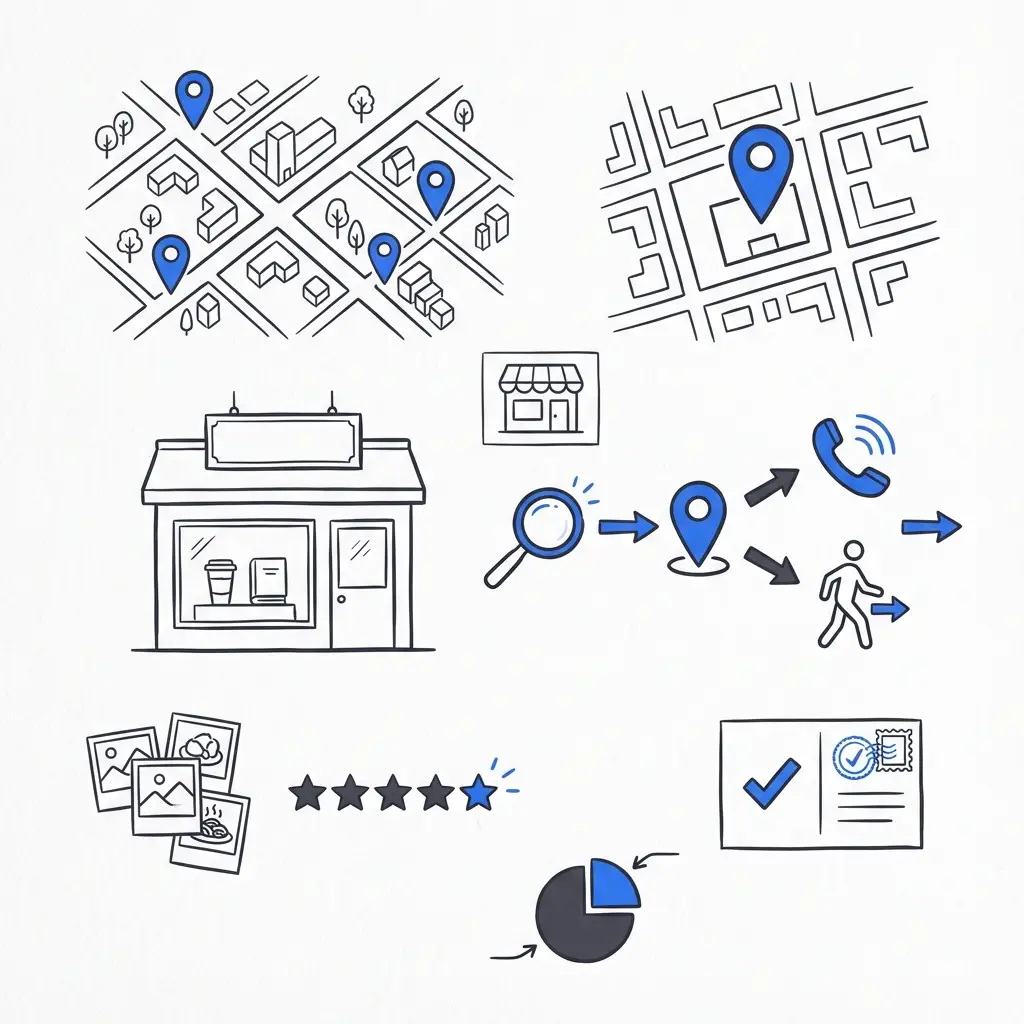
Where to post your landscaping business?
When someone types your company name into a search box, they should find a clear answer: what you do, how to hire you, and why they should trust you. For a landscaping business, that clarity matters even more—people want to see real photos, service areas, hours, and a simple way to get a quote or call. Slow pages, vague messages, and missing contact details are the silent deal-killers.

Start with a clear purpose for each presence
Before you post anywhere, decide what you want each listing or page to do. Do you want calls? Estimate requests? Walk-ins? Newsletter signups? Keep one or two primary actions in mind and design every profile to encourage them. For a landscaping business, the top actions are usually: call now, request an estimate, view portfolio, and check service areas.
Pick a single action for your homepage and each directory listing. If you try to serve every possible goal at once, you’ll serve none.
Where to list first: the foundations that matter

These are the places every landscaping business should claim and optimize first. They form the baseline of being findable and trustworthy online. A clear logo helps customers recognize you quickly.
1. Google Business Profile (Maps)
Google Business Profile is the single most important free listing. It powers search results, Google Maps, and the local pack that appears above organic results. For a landscaping business, make sure your profile has:
- Accurate name, address, phone number (NAP)
- Service areas and categories (e.g., “landscaping”, “landscape design”, “lawn care”)
- Business hours and seasonal notes
- High-quality photos of recent projects (before/after is ideal)
- Short, human description that includes the phrase landscaping business naturally
- Consistent responses to reviews
Why it matters: people search for “landscaping near me” or “yard cleanup today”—they see a map, reviews, photos, and a call button. A well-optimized profile converts curiosity into calls.
2. Major review & directory platforms
Claim and maintain listings on the big review sites. For many customers, these are the trust signals that tip a decision.
- Yelp — useful for consumer-focused landscaping and maintenance work.
- HomeAdvisor / Angi — higher-intent leads for installation and larger projects.
- Houzz — great for design-heavy landscaping and hardscaping portfolios.
- Thumbtack — bids and leads for local jobs.
- Bing Places — important for search diversity; claim your listing.
Keep NAP consistent across sites and add specific services to each profile. A landscaping business that shows the same phone number and address everywhere ranks higher in local searches and looks more credible.
For curated lists of directories and how they help landscaping businesses see Top Directory Listings To Boost Your Landscaping Business and 16 Best Local Directories to Get Your Landscaping Business.
3. Social platforms that work for landscaping
Visual platforms let you show real work quickly:
- Instagram — short project reels, before/after carousels, seasonal tips.
- Facebook Business Page — events, local posts, quick reviews, and ads.
- Nextdoor — excellent for neighborhood-level leads and word-of-mouth.
- LinkedIn — useful if you target commercial clients or partnerships.
Use each platform with a role in mind: Instagram for visual proof, Facebook for local engagement and updates, Nextdoor for neighborhood trust. Don’t try to post everywhere with the same voice—adapt to the platform and keep the message simple.
4. Industry-specific sites
If you do design, hardscaping, irrigation, or commercial landscaping, create profiles on relevant sites such as:
- Houzz (design and portfolios)
- HomeAdvisor / Angi (home services leads)
- Local trade association directories
- Contractor-focused listings
These sites filter users who are already considering professional help, which tends to increase conversion rates for larger projects.
Checklist: what to include on every listing
Every place you post should have the essentials. Keep them consistent:
- Business name — exactly the same everywhere
- Phone number — local number preferred
- Address or service-area settings
- Business hours
- Short service list — clear and scannable
- High-quality photos — before & after, equipment, team shots
- Clear call to action — call, request a quote, schedule
- Primary service area or towns
Small inconsistencies in name or phone number can confuse search engines and customers. Copy-paste a single source of truth (e.g., a pinned company file) when you create listings.
Thinking about where to start? If you want a friendly, strategic hand to claim and optimize the right profiles, talk to Agency Visible — they specialize in helping small teams get visible quickly and measure real results.
How to write a listing that gets clicks
People scan. Start listing descriptions with the most useful info: service, area, and why you’re different. For a landscaping business try a first sentence like: “Local landscaping business serving [Town] — lawn care, landscape design, and seasonal maintenance with free estimates.” Then add one line that answers a common question (e.g., availability, licensing, or a guarantee).
Photos and galleries that actually sell
A picture of a perfectly trimmed hedge won’t always do the work. Use a mix:
- Before / after sequences
- Project close-ups (materials, workmanship)
- Wide shots showing the full property
- Team or equipment photos to show professionalism
Compress images for web (faster pages) and use descriptive filenames and captions—search engines and users both notice helpful context.
Pricing, quotes, and calls to action
Many landscaping businesses fear showing prices. Instead of a single price list, consider these options:
- Starting price ranges (e.g., “hardscaping from $X”)
- Common package examples (e.g., basic lawn care vs. premium maintenance)
- Clear explanation of what affects cost (size, materials, slope)
- A short form for a quick estimate—two or three fields only
Keep contact methods obvious: a large phone button on mobile, a short estimate form, and a link to a booking calendar if you use one. The easier you make the first contact, the more leads you’ll get.
Make your website work for discovery and conversion
Your website is still the piece you control. For a landscaping business, focus the site on making people comfortable enough to call or request a quote; showcase projects on a dedicated projects page and keep the path to your primary action clear from the homepage.
Purpose and audience
Ask: what is the primary thing most visitors should do? For many landscaping businesses it’s “request a site visit” or “call for a quote.” Build the site so that the path to that action is clear from the homepage.
Pages you need
- Homepage — one clear action and evidence (photos, reviews)
- Services — short pages per service with short FAQs
- Portfolio / Projects — before/after, short captions
- About / Team — show licenses and experience
- Contact — phone, form, service area, map
- Resources / Blog — seasonal tips and local guides
Speed and mobile: not optional
Compress images, avoid heavy background videos, limit third-party scripts, and pick a host with enough bandwidth. Mobile-first design means larger tap targets, readable fonts, and a tap-to-call button. For a landscaping business, many calls arrive from phones—don’t make callers pinch and hunt.
Use local SEO signals
Local SEO is how search engines decide which businesses to show for “near me” queries. Key signals include:
- Consistent NAP across citations
- Google Business Profile completeness
- Local keywords on pages (town names, neighborhoods)
- Reviews and responses
- Local backlinks (chamber of commerce, local news features)
Schema markup can help too—use LocalBusiness or LandscapingBusiness schema to make details explicit to search engines. For a shortlist of citation and directory sites, see BrightLocal’s top citation sites for gardening and landscaping.
Content ideas that attract customers
A good content calendar for a landscaping business answers the questions your clients type into search engines. Ideas:
- “When to fertilize your lawn in [Region]”
- “How to choose pavers vs. poured concrete for a patio”
- Seasonal checklists: spring cleanups, fall prep
- Small project guides: building a raised garden bed
- Case stories: how we turned a small yard into a family space
One high-quality, well-optimized article a month beats daily low-value posts. Don’t write to post—write to help a real person.
Social post templates you can reuse
Keep social simple and repeatable. Templates:
- Before / After carousel with short caption and CTA
- Tip of the week: short seasonal maintenance advice
- Client story: one sentence about the problem and result
- Behind the scenes: quick equipment or crew photo
End each post with a short CTA, like “DM for a free estimate” or “Call for a weekend slot.”
Claim and fully optimize your Google Business Profile—add your service area, categories, 5+ high-quality project photos, up-to-date hours, and encourage recent reviews; that combination produces the fastest, measurable lift in calls.
Track what matters
Measure leads, not just likes. Useful metrics for a landscaping business include:
- Phone calls from listings (use call tracking or Google data)
- Contact form submissions
- Booked estimates
- Time on pricing/service pages
- Which listings send clicks to your site
Use UTM tags in links from ads and social posts so you can see which channels actually generate estimates.
Reputation management
Ask for reviews after a job, and respond politely to every review—good or bad. For negative feedback, offer to take the conversation offline and fix what you can. A calm, professional reply looks better to future customers than silence.
Local partnerships that extend reach
Connect with local nurseries, builders, and HOA boards. Sponsor a small community garden project or post an article for a local news site. These small local backlinks and mentions build authority and often send direct leads.
Common pitfalls landscaping businesses fall into
Don’t fall for these traps:
- Listing inconsistency — different phone numbers or names across sites
- Overpromising in ads and underdelivering on the job
- Setting your site and forgetting it—content needs updates
- Using heavy galleries without mobile optimization (slow pages lose customers)
Experiment gently and learn
Try small changes and measure. Change a homepage heading for a month. Test a shorter estimate form. Keep one variable per experiment so you actually learn something.
One-week action plan to get visible
Follow this as a quick sprint for a busy crew:
- Claim Google Business Profile and add 5 photos
- Standardize your NAP across three highest-priority directories (Yelp, HomeAdvisor, Bing Places)
- Update homepage with one clear action (call or request estimate)
- Publish one before/after project page with short captions
- Ask 3 recent clients for reviews and respond promptly
How to budget for listings and ads
Many platforms are free to list but have paid lead or ad options. Consider a small monthly test budget (e.g., $200 – $500) on Google Local Services Ads or Facebook to see what generates real estimates. Track cost per booked estimate and scale what works.
Accessibility and trust
Make sure fonts are readable, images have descriptions, and buttons are large enough for thumbs. Show licenses and insurance information where relevant—these are trust boosters for homeowners about to invite contractors onto their property.
When to hire help
If claiming listings and optimizing profiles take time away from work you could be doing on jobs, consider a partner. A good vendor helps you prioritize listings, manage reviews, and test creative. They should listen first, recommend measurable steps, and show examples.
Why Agency Visible is a smart choice for small teams
Agency Visible focuses on helping businesses get visible quickly without complex overhead. For a landscaping business that needs faster leads and clearer messaging, a partner like Agency Visible can claim high-value listings, improve site clarity, and help you measure what counts—calls and estimates. Their approach is direct, practical, and focused on real outcomes rather than vanity metrics.
Maintain momentum
Visibility compounds. Keep a sustainable rhythm: one quality article a month, regular gallery updates, and weekly checks of your primary listings. Revisit your main purpose quarterly and adjust tactics. Small steady improvements trump occasional hero redesigns.
Final checklist before you publish or update a listing
- Consistent NAP across all major profiles
- Claimed Google Business Profile with photos and categories
- Service pages and one clear homepage action
- At least three recent reviews with responses
- Mobile-friendly images and tap-to-call buttons
- UTM-tagged links for ads and social posts
Keeping it human
People hire people. Use friendly language, real photos of your crew, and short client stories. Show a problem and the change you made. Those small human signals often matter more than technical perfection.
Resources for ongoing learning
Track results, read a local SEO blog occasionally, and keep short conversations with customers to learn what they actually asked before they hired you. That feedback feeds content ideas and keeps your listings aligned with real needs.
Parting thought
The places you post your landscaping business matter, but the way you present information matters more. Claim the basics, present clear actions, show real work, and measure what leads to booked jobs. With steady attention, your presence will earn trust—and callers—long after a single post.
Get visible. Get more calls. Start today.
Ready to get your landscaping business noticed? Contact Agency Visible to discuss a practical plan for claiming the right listings and improving the visibility that leads to calls and estimates.
Start with Google Business Profile, then claim Yelp, HomeAdvisor/Angi, and Nextdoor. Add visual platforms like Instagram for portfolio pieces and Houzz for design-heavy projects. The combination depends on your services—maintenance businesses lean on Google and Nextdoor, while design and hardscape teams benefit from Houzz and Instagram.
Aim to add new photos after every significant job and ask satisfied clients for reviews within a week of completion. At minimum, refresh your gallery and review responses every 1–3 months to keep listings current and to show recent work to prospective customers.
Yes—when they focus on the right actions. A good partner helps optimize high-impact listings, improve website clarity, and set up tracking. Agency Visible emphasizes measurable outcomes (calls and estimates), listens to your needs, and presents a step-by-step plan so changes lead to real results rather than vanity metrics.
References
- https://agencyvisible.com/contact/
- https://agencyvisible.com/projects/
- https://agencyvisible.com/
- https://allscapesmarketing.com/best-directory-listings-for-landscaping-businesses/
- https://third-angle.com/blog/seo-landscaping-directories/
- https://www.brightlocal.com/resources/top-citation-sites/industry/gardening-landscaping/