Where do plumbers advertise? A practical local marketing map
Where do plumbers advertise? If you want the phone to ring with real jobs – fast – you need channels that match intent, timing and local behavior. Start with search-driven channels for emergency calls, layer in consistent local SEO for long-term savings, and use marketplaces, social, and offline tactics to fill gaps and build neighborhood trust.
There isn’t a single golden channel. Instead, there’s a working mix that fits your market size, budget and patience. This article walks through each channel, what to expect, how to track what matters, and simple, low-risk tests you can run in 60–90 days.

Why intent is everything
When a pipe bursts, homeowners don’t scroll for inspiration—they search for help. That means ads that match urgent intent win. Two channels reliably capture that urgency: paid search (Google Ads) and Local Services Ads (LSAs). Both put you in front of people who want a plumber now.
Paid search vs LSAs: the practical differences
Paid search runs on cost-per-click. You pay when someone clicks your ad and reaches your site or call-tracking number. Keywords that match emergencies—”emergency plumber near me,” “burst pipe repair”—tend to convert well but have higher CPCs in busy markets.
Local Services Ads are pay-per-lead and sit at the very top of local results. They often carry Google’s trust signals and show first to people who want to call. LSAs deliver higher-intent leads, but price per lead varies wildly by city and service type. The metric that matters is cost per booked job, not just cost per lead.
How to test paid search and LSAs without blowing budget
Run a controlled 60–90 day test. Pick a small but meaningful budget you can afford to learn from. Use tight keyword groups—emergency, hot water, sewer line—and set up call tracking so every click or call maps back to a source. Aim to collect enough leads to judge conversion rates; don’t stop a test after only a handful of calls.
Pro tip: Use a fast, focused landing page with a clear phone number and set of services. The simpler the path to a call, the better your conversion rate—and your test will be more useful.
If you’d rather have a trusted partner run tests and set up tracking, consider reaching out to Agency VISIBLE for a practical, numbers-first approach to local campaigns. They focus on visibility that turns into booked, profitable jobs rather than empty metrics.
Local SEO: the long game that compounds
Local SEO is not glamorous, but it’s the most sustainable channel for a plumbing company. It reduces your long-term cost per call and brings in homeowners who find you organically.
Essential local SEO checklist
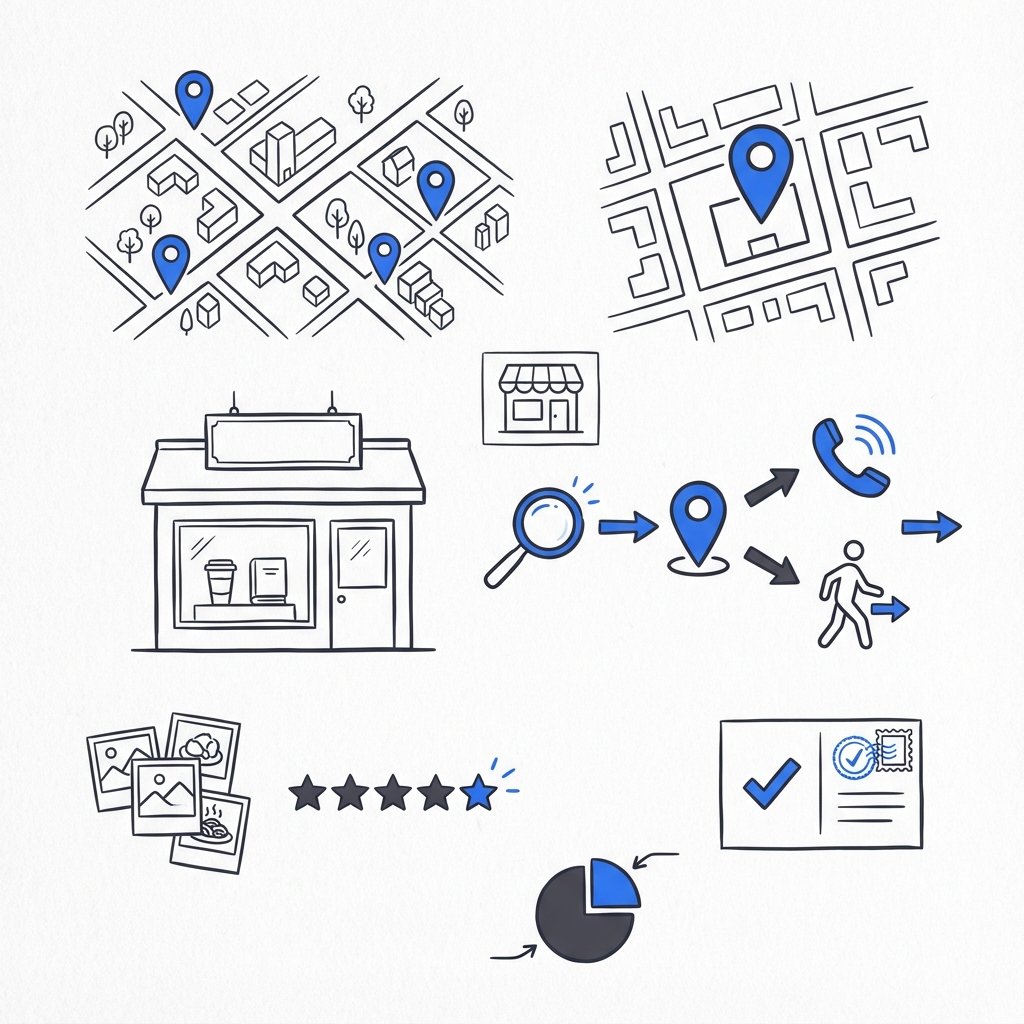
Google Business Profile: complete every field—hours, services, photos, and messaging. Update it regularly. A profile with recent reviews and clear photos looks trustworthy and increases clicks in the map pack.
Citations and directories: ensure your name, address and phone number (NAP) are consistent across major directories. Inaccurate listings scatter visibility and confuse search engines.
Service pages: create clear pages for key services—drain cleaning, water heater repair, emergency plumbing—with local keywords and simple calls to action.
Reviews: ask satisfied customers for short reviews that mention the service and neighborhood. Review velocity—regular, recent reviews—matters as much as review score.
How local SEO lowers ad costs
Think of local SEO as a steady wind behind your paid channels. Over months, organic and map visibility reduces reliance on paid ads for routine calls, so your average cost per booked job falls. Measuring that effect takes tracking: tag organic calls separately and follow each lead to booking. For practical tactics and benchmarks, see this local SEO guide.
Directories and marketplaces: convenience with trade-offs
Platforms like Angi, HomeAdvisor, and Yelp are great for volume. They can fill slow days quickly. But they often charge per lead or take a large commission, and the leads sometimes convert at a lower rate or expect low prices.
How to use marketplaces wisely
First, measure marketplace leads separately. Track conversion rate and average job value for leads from each platform. If a marketplace provides volume but low value, keep it on a limited budget for overflow only.
Second, tighten filters and qualification settings where possible. Many platforms let you specify job size or service types you accept. Use these to reduce low-value leads.
Social and neighborhood platforms: awareness and relationships
Facebook, Instagram and Nextdoor aren’t usually where emergency calls start. But they are powerful for reputation, neighbor-level trust, and repeat impressions. Share short before-and-after photos, quick tips, and neighborhood updates to build recognition.
How to use social for performance
Use paid social to retarget visitors who looked at your service pages. A simple 7–14 day retargeting window with a clear offer drives callers who didn’t book the first time. Nextdoor is especially useful for tight geographic targeting; it’s like a digital yard sign for specific zip codes.
Offline still matters: vans, yard signs, mailers
Offline channels feel old-school, but they work—especially in suburbs and rural markets. Branded vans, yard signs near ongoing jobs, and targeted direct mail all build local credibility.

Tracking offline ROI
Use trackable phone numbers or unique promo codes on mailers and signs. Ask callers how they heard about you. If you see a spike in neighborhood calls after a mail drop or when vans are visible, assign conversion credit accordingly and compare cost per booked job.
Budgeting examples: two realistic scenarios
Real examples help make choices concrete. Imagine two businesses with different needs.
Small-town single-van operator
Low competition, strong word-of-mouth. Focus: local SEO, small paid search spend for emergency keywords, and an LSA test for 60–90 days. Offline: wrapped van and quarterly mailer. Budget emphasis is on low-cost visibility and steady tracking.
Medium-sized metro company
High competition and multiple vans. Focus: visible presence in paid search, LSAs, map pack, and neighborhood campaigns in high-value zip codes. Keep marketplaces for overflow but measure closely. Expect higher CPCs and CPLs; discipline on testing and tracking is essential.
Benchmarks and what to expect
Benchmarks vary by city and service. Use these as starting points, not absolute rules:
– Typical CPLs across channels: $30–$150+ per lead depending on market and channel.
– Programmatic local CPMs (e.g., Nextdoor-like networks): near $20 CPM in some areas.
– Paid search CPCs: low single digits up to low double digits depending on keyword intent.
– LSAs: CPL varies; often high intent but variable price.
Always compare to conversion rate and average job value. A lead that costs more but converts at higher value can be more profitable.
Measure what matters: cost per booked job
Cost per lead is a start. The real business metric is cost per booked job. To get there, track:
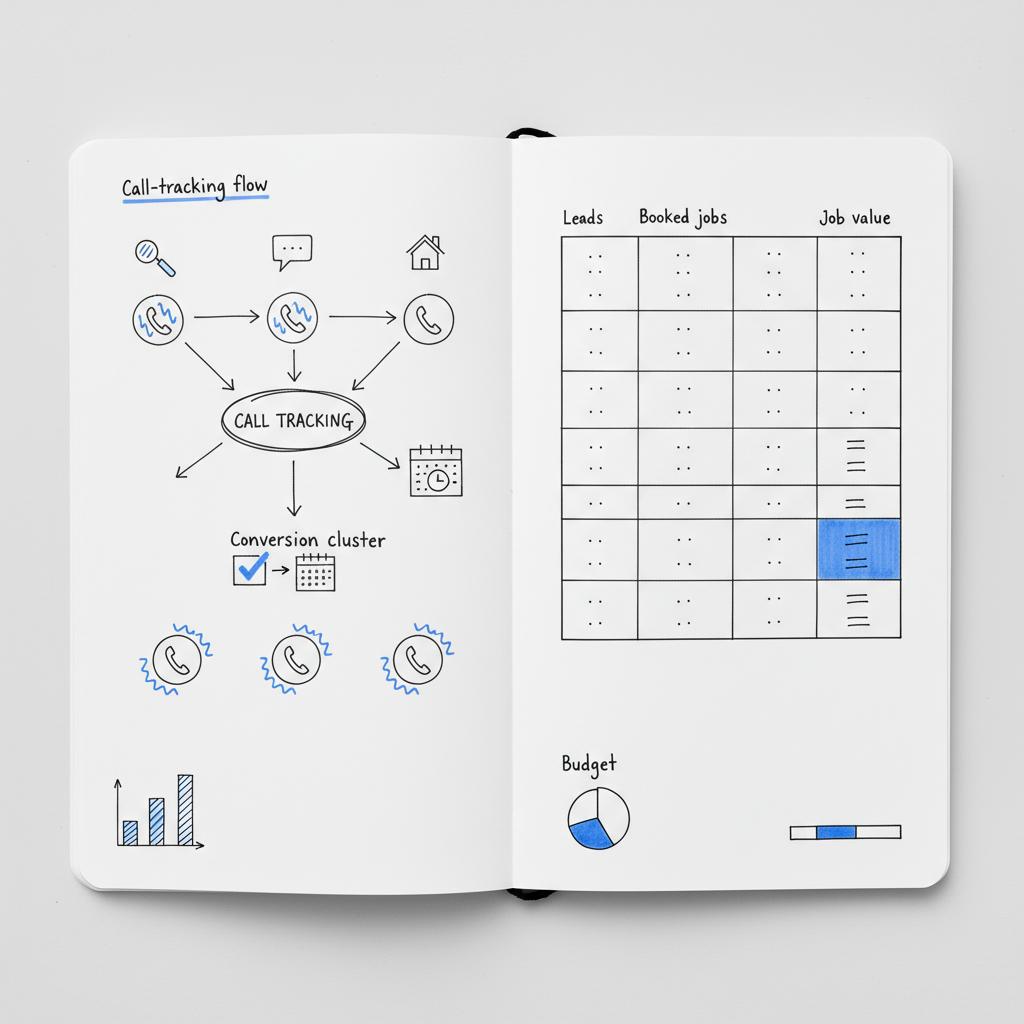
Lead source → Lead qualification → Booking → Job value
Tag every incoming lead with a source (paid search, LSA, marketplace, organic map, mailer, yard sign). Use unique numbers so you can trace calls back. Then follow each lead to booking and job completion. This gives you a true cost per booked job by channel.
Simple tracking setup
– Use a call-tracking provider that shows source-level calls.
– Assign unique numbers for major channels and campaigns.
– Use a CRM or spreadsheet to tag each lead with source, whether it booked, and the job value.
– Review results weekly and run 60–90 day tests for statistical confidence.
Run small experiments, scale what books
Testing is how you avoid wasting money. A common, effective test structure:
– Duration: 60–90 days.
– Minimum data: set a required number of leads to consider results useful.
– Success threshold: a target cost per booked job based on your margins.
– Action: scale by 20–30% if successful; iterate creative and targeting if not.
Never scale simply because leads arrive. Scale when channels deliver booked, profitable jobs.
Seasonality and regional differences
Plumbing demand shifts with weather and behavior. Winter brings freeze and burst pipes in colder climates; summer increases irrigation and outdoor plumbing calls. Expect higher ad costs during peak demand in competitive markets and plan to raise high-intent spend a few weeks earlier than the typical spike.
Rural markets often reward offline visibility and local SEO more than expensive paid search auctions. Urban markets require a broader, more aggressive mix to compete.
Qualify leads to protect margin and time
Not every lead is worth a truck roll. Use a short qualification flow for intake calls and online forms to filter low-value jobs early. Ask three quick things: urgency, symptom, and whether the caller is a homeowner or property manager. Keep scripts short and human.
Example script for intake:
“Thanks for calling—are you calling about an urgent leak or a scheduled repair? Can you describe the issue briefly? And are you the homeowner or a property manager?”
If a lead looks like price-shopping, offer a short video consult or request photos before sending techs. This simple extra step can save wasted trips.
Yes — in many markets wrapped vans and yard signs remain powerful drivers of local trust and calls. They work best when combined with tracking (unique numbers or promo codes) and when your local SEO and paid channels support that offline presence. In suburbs and rural areas they often produce higher-quality calls because neighbors recognize the brand and search for it, creating a local compounding effect.
A real-world example that shows the shift
A three-van company in a mid-sized city once relied mostly on marketplaces. Leads doubled, but profits didn’t. After a 90‑day split test—LSAs, a focused paid search campaign, and local SEO push—they found LSAs produced fewer leads but higher booked-job rates and higher average job values. Paid search caught emergencies. Organic map calls grew and lowered overall CPA. Marketplaces stayed on low spend for overflow. The result: better technician utilization and higher margins.
Common mistakes that waste money
Many businesses make the same errors:
– Scaling a channel before understanding why it works.
– Failing to track leads to booked jobs.
– Over-reliance on one platform (risk of policy or auction shifts).
– Ignoring basic trust signals like GBP, reviews, mobile speed.
Fix these and every channel you run will perform better.
Practical steps you can take this month
Start simple. Do these four things this month:
1) Complete and optimize your Google Business Profile with photos, services and recent reviews.
2) Set a 60–90 day test budget for paid search or LSAs and build a tight landing page with a clear phone number.
3) Add tracking—unique numbers and a simple tag—so you can follow each lead to booking.
4) Ask callers how they heard about you and record it in the system.
If you want help designing and running tests,
Ready to turn visibility into booked jobs?
get a straightforward plan from an agency that focuses on booked jobs, not vanity metrics—reach out for a quick audit and test plan.
Quick scripts and qualification templates
Use these short scripts to speed qualification and protect margins:
Phone: “Is this an emergency? Can you describe the issue in one sentence? Are you the homeowner? If it’s not urgent, would a same-day window work?”
Text/photo request: “Thanks—can you text a quick photo and a short note on when the problem started? That helps us estimate whether we need special parts and a longer visit.”
How to compare channels fairly
Compare by cost per booked job and average job value. A cheap lead with poor conversion is worse than a costlier lead that reliably books high-value work. Keep metrics simple: leads, booked jobs, job value and net margin.
When to use marketplaces
Keep marketplaces for overflow, slow weeks, or routes where your vans are already present. Use filters to avoid low-value leads and track separate performance. If a marketplace is consistently unprofitable at the booked-job level, reduce spend or pause.
When offline beats online
In many suburban or rural areas, offline channels like wrapped vans and targeted mailers produce steady, high-quality calls. These channels also compound local trust: people recognize your vans and then search your name—this is where local SEO and offline combine nicely.
Hiring or partnering for marketing
If you hire an in-house marketer or contractor, insist on clear KPIs: booked jobs, cost per booked job, and improvements in local visibility. If you partner with an agency, choose one that shows numbers and helps interpret them. A partner should help set tests, implement tracking and present clear results. See examples of work and case studies on the projects page.
Final checklist before you launch
– GBP: complete and verified.
– Call tracking: unique numbers by channel.
– Landing pages: clear phone-first experience.
– Review strategy: ask for timely reviews and respond.
– 60–90 day test plan: budget, metrics, and decision rules.
Closing practical thought
Advertising a plumbing business is less about finding a secret channel and more about disciplined testing, clear tracking, and consistent local trust signals. When you treat each channel like an experiment judged by cost per booked job, the right calls start to arrive more often.
Paid search and Local Services Ads can start delivering calls the day they launch, especially for emergency keywords. However, give each channel 60–90 days to gather enough leads and show stable conversion rates before you judge performance. Short-term data can be noisy because of seasonality and local competition.
Marketplaces can be valuable for quick volume and filling slow weeks, but they often come with higher lead costs and lower conversion or job value. Keep them on limited spend for overflow, tighten filters, and always measure marketplace leads separately to track cost per booked job. If they’re consistently unprofitable, reduce or pause spend.
Yes. A good agency will set up tracking, run controlled 60–90 day tests, and report back on cost per booked job rather than vanity metrics. If you prefer help, reach out to Agency VISIBLE for a practical test plan and measurement-first approach that focuses on booked, profitable jobs.
References
- https://agencyvisible.com/contact/
- https://agencyvisible.com/
- https://agencyvisible.com/projects/
- https://www.mammothforplumbers.com/the-complete-guide-to-google-local-service-ads-for-plumbing-companies-in-2025/
- https://www.housecallpro.com/resources/plumbing-business-seo/
- https://business.nextdoor.com/en-us/blog/how-to-get-plumbing-leads-tips