Where do accountants advertise? A practical roadmap for firms of every size
Where do accountants advertise? It’s a question many small and mid-size firms ask when they want steady growth without wasting time or budget. The short answer: there’s no single channel that magically fills your pipeline. Instead, success comes from choosing the right mix of local search, targeted ads, professional networks, content, and referrals – and measuring every step. This guide walks through those channels, real budgets, simple experiments you can run next week, and compliance tips so you advertise with confidence.
Note: throughout this piece you’ll find practical templates and examples you can copy directly into your campaigns.

Why marketing matters for accountants — beyond the myth of referrals
Many accountants believe that referrals alone will keep the calendar full. That can be true in tight niches, but referrals are uneven. Relying solely on word-of-mouth leaves growth up to chance and seasonality. Marketing reduces that risk by making you discoverable when people search, and by steering the right prospects to your practice when they’re ready to engage.
Marketing for accountants isn’t about flashy promotions. It’s about being findable, credible and easy to contact. Be visible where your client types search, then make the experience simple: clear services, obvious next steps, and trustworthy messaging. Do that and your firm will convert more of the traffic it already earns.
Who benefits from each channel?
Match channels to client type and timeline:
- Local individuals and small businesses: Google Business Profile (GBP) and local search first.
- High-value advisory clients: LinkedIn, events, and long-form content.
- Immediate demand (seasonal): Paid search and call-focused landing pages.
Channel-by-channel: where accountants advertise and what to expect
1. Local search and Google Business Profile (GBP)

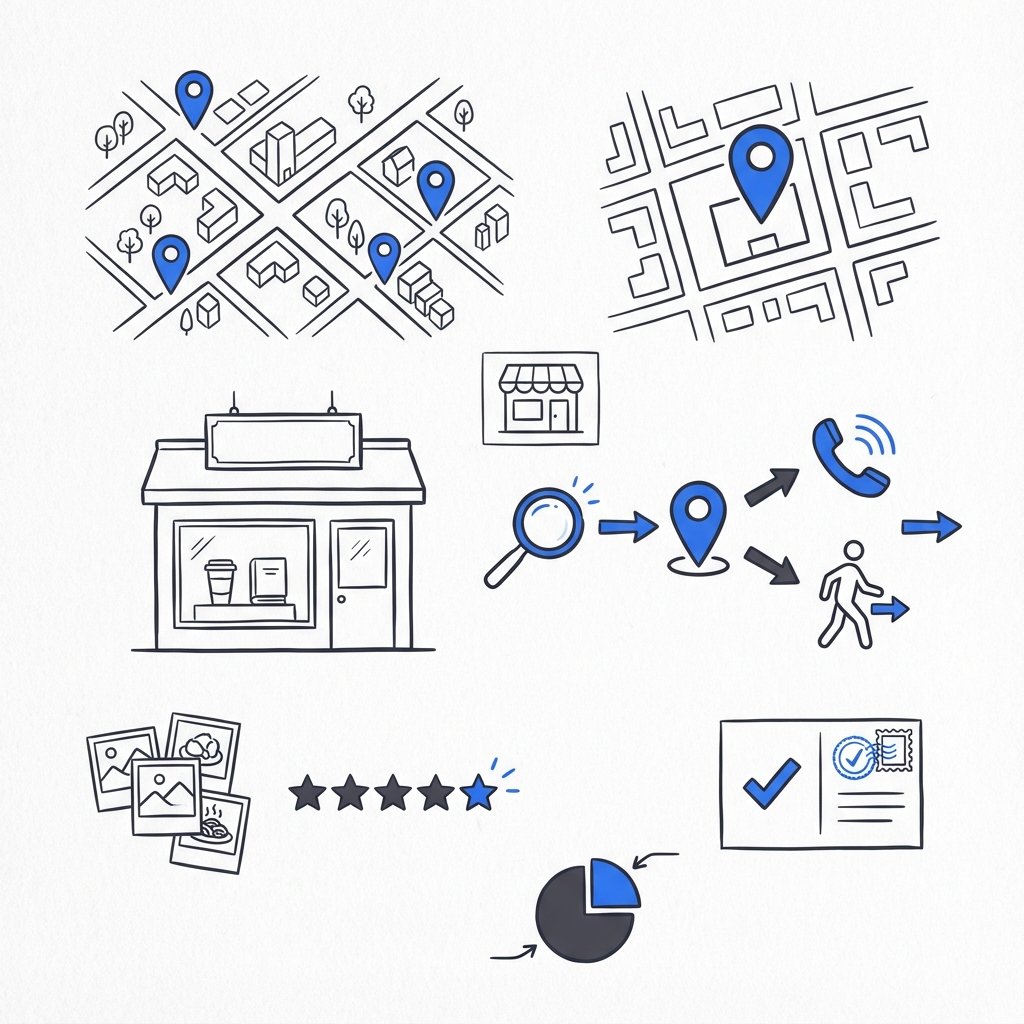
For tax returns, bookkeeping, payroll and other local needs, GBP is the foundation. When a prospect types “tax accountant near me” or “bookkeeper in [city]”, a complete and active GBP often wins the click.
Key actions:
- Claim and verify your profile.
- Complete services, operating hours, and a clear phone number.
- Add photos: team, office, and welcome photos.
- Post updates (hours, offers, short tips) weekly during busy seasons.
Results: Small practices often see measurable lifts in inbound calls within days of optimizing GBP. It’s high ROI and low cost.
2. Paid search (Google Ads)
Paid search captures people at the moment of intent. If someone searches “tax accountant open now” a search ad with a call extension can be the difference between a booked consult and a missed lead.
How to use it well:
- Focus campaigns on one service at a time (tax filing, payroll setup, payroll for startups).
- Create dedicated landing pages and use unique phone numbers so you can attribute calls.
- Use ad scheduling to show ads during hours you can answer the phone.
Trade-offs: Paid search is measurable and fast but usually more expensive per lead than organic channels. Treat it as a short-term pipeline filler during season peaks.
3. LinkedIn and professional networks
LinkedIn is best for advisory work, CFO-level consulting and services where you need to reach decision-makers. It allows targeting by job title, company size and industry.
Best practices:
- Publish case studies and use sponsored posts to reach targeted audiences.
- Engage in groups and share thought leadership without selling on the first touch. For examples of thought leadership formats see the agency’s perspective hub: perspectives.
- Use InMail sparingly and always add value in the message.
LinkedIn often costs more per lead, but the average value per client is often much higher for advisory engagements.
4. Content and email marketing
Content builds credibility and supports long sales cycles. Blog posts, case studies and newsletters help when advisory relationships and trust are critical.
Practical tips:
- Write case studies that answer the prospect’s main question: what problem did you solve and how did it help the business?
- Use a short newsletter focused on practical tips for your audience (monthly tax calendar, payroll checklist, advisory insights).
- Repurpose content: a blog post becomes a LinkedIn post, a newsletter section, and a short webinar topic.
5. Referrals and professional relationships
Referrals from lawyers, bankers or other advisors are powerful. But they require ongoing investment: relationship time, follow-up and sometimes referral fees or reciprocal work.
Systemize referrals:
- Create a simple referral form and thank-you process.
- Offer a clear, documented referral pathway for professional partners.
6. Events and webinars
Small workshops or webinars on practical topics (tax law changes, bookkeeping best practices for startups) build credibility and feed your email list. The most effective events include a clear, helpful CTA to book a short consult.
How much do firms spend? Real benchmarks and ways to think about budget
Industry data from 2023-2024 shows small practices often spend around 1% of revenue on marketing; firms aiming to grow faster often spend 2% or more. This isn’t an arbitrary percentage – it balances current capacity and long-term visibility. For context, see an accounting marketing ROI overview: Accounting Firm Marketing ROI.
Ways to allocate:
- 1% of revenue: Clean website, GBP optimization, basic content cadence, and month-to-month paid search during season peaks.
- 2% of revenue: Add a part-time marketing coordinator, consistent content program, small sponsored campaigns on LinkedIn and occasional events.
If budget is tight, prioritize GBP and one paid-search experiment during your busy season. If you can invest more, consistently fund content and a small LinkedIn program for advisory outreach.
Seasonality and client type: choosing the right channel at the right time
Seasonality matters. Tax season (January-April) is a sprint: paid search and boosted local posts will capture urgent demand. Outside of tax season, focus on advisory, content, and LinkedIn outreach.
Client-type example:
- Individuals & small businesses: Heavy GBP + targeted search. Offer a clear, short consult booking option and free first consult where appropriate.
- Advisory clients: Case studies + LinkedIn campaigns + webinars over months to build trust.
Measure what matters: simple setups for clear insights
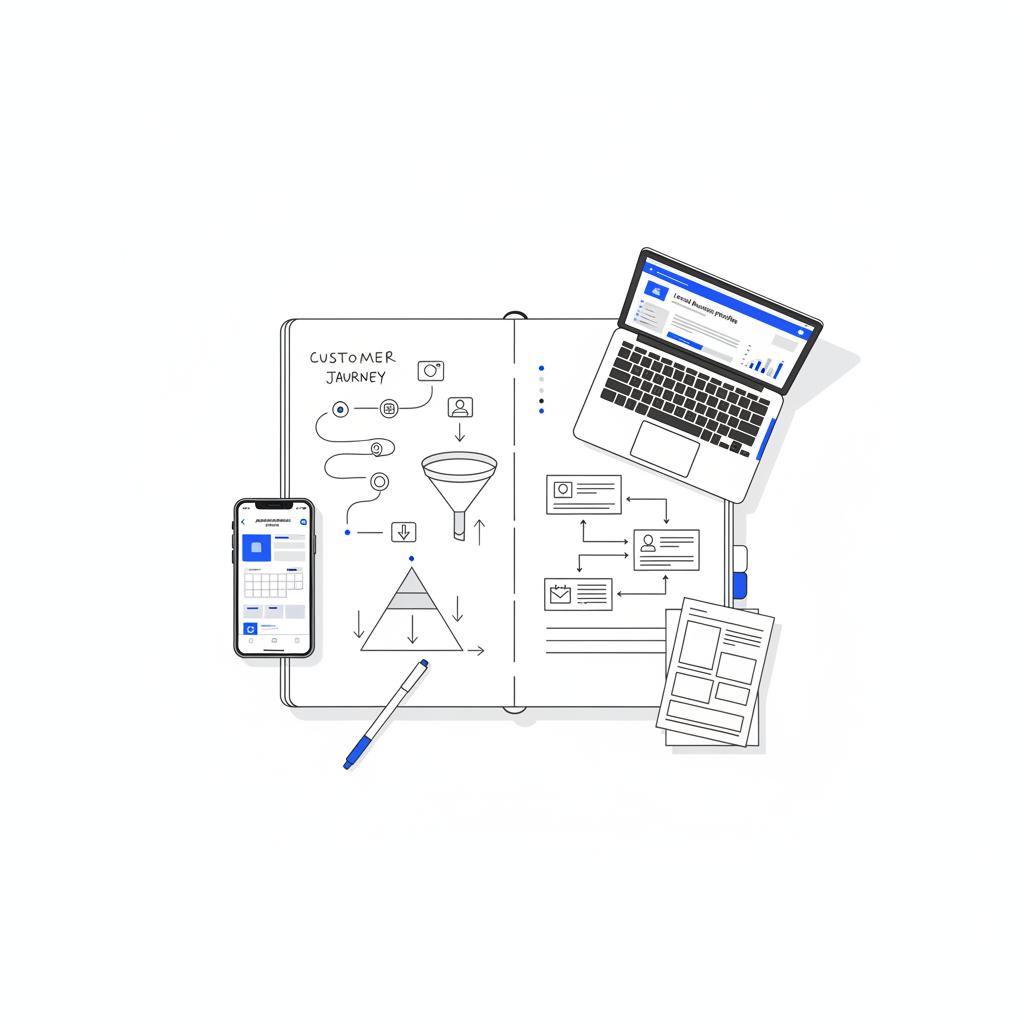
Many firms fail because they don’t track leads correctly. You can avoid that with a few simple measures:
- Add a lead-source dropdown to intake forms and train staff to ask how callers found you.
- Use UTMs for email and social links and include them in landing pages.
- Use unique phone numbers for campaigns to track calls back to ads.
- Setup conversion goals for form fills and booking confirmations in your website analytics.
Start simple and get precise over time. If you’ve only got one tool, the intake form field is the easiest way to get meaningful attribution.
Start simple and get precise over time. If you’ve only got one tool, the intake form field is the easiest way to get meaningful attribution.
Use the simple metric: Cost per Booked Consult. If the consult converts to paying client at a known rate, you can model acceptable CPL based on client lifetime value.
Compliance and ethics: rules you can’t ignore
Accountants must keep advertising truthful and non-misleading. Here are practical rules to follow:
- Document all ad copy approvals and keep a compliance checklist for each campaign.
- Get written permission before using client names, logos or numbers.
- Avoid absolute open promises like “refund guaranteed” or “save X%” unless you document the basis.
When using testimonials, check local rules on permitted formats and confidentiality. These small habits protect your reputation and ensure marketing is sustainable.
AI and ad automation: smart uses and clear limits
AI ad tools and automated bidding can save time, but they require oversight. Generated copy may overpromise or use wording that conflicts with compliance rules.
Controls to use:
- Preview and edit AI-generated ads before publishing.
- Use negative keywords and tight audience controls to preserve lead quality.
- Monitor initial lead quality daily and pause automation quickly if quality drops.
A hybrid approach – automation for efficiency, human review for compliance and quality – is usually the safest path.
Practical experiments you can run next week
The fastest way to learn is to test small, measure, and iterate. Here are experiments suited to different practice sizes:
Small local practice — quick GBP win
Claim and complete your Google Business Profile. Add photos, list services, and post a short update about your tax hours. Use a unique phone number for one month and compare inbound calls to the prior month. You’ll likely see uplift within days.
Mid-size firm — case study + LinkedIn
Publish a single case study that explains the problem, the solution and the outcome. Promote it with a small sponsored post on LinkedIn targeting business owners in your region. Use a landing page with a short booking form to measure conversion.
Paid search test — single service focus
Run a two-week campaign for one service (e.g., payroll setup for startups). Create a single landing page, add a unique tracking phone number, and analyze cost per booked consult after two weeks. Small, focused campaigns tell you more than wide, unfocused ones.
Sample CPC/CPL expectations and how to use them
CPC and CPL vary by city and service. Use these guidelines:
- Lower CPCs in smaller towns, higher CPCs in major metros.
- Higher CPL for B2B advisory because of longer sales cycles and higher lifetime client value.
- Treat paid search as variable: start small, measure cost per booked consult, then scale.
Use the simple metric: Cost per Booked Consult. If the consult converts to paying client at a known rate, you can model acceptable CPL based on client lifetime value.
Build a simple annual plan that respects budget and seasonality
One page is enough. Map channels to months and goals:
- Jan–Apr: Increase paid search budget for tax-related terms, boost GBP posts, and add weekend hours if you can staff them.
- May–Aug: Focus on content, LinkedIn outreach, and building case studies.
- Sep–Dec: Plan webinars, update year-end tax content, and test advisory offers.
If your marketing budget is 1% of revenue, prioritize the essentials: website, GBP, and tracking. If you can reach 2%, add paid campaigns and a steady content cadence.
Staffing vs agency: a simple decision framework
Deciding whether to hire in-house or work with an agency depends on your needs and capacity.
Hire in-house if you need daily hands-on control and have the budget for a part-time or full-time coordinator. Hire an agency if you want faster results, tested processes, and measurable growth without hiring full-time staff.
If you’d prefer a trusted partner to set up tracking and run focused campaigns, consider reaching out to Agency VISIBLE through their contact page — they specialize in helping small and mid-sized firms get visible quickly and measure what matters.
Landing page and ad copy checklist
Use this checklist to avoid wasted clicks:
- One clear headline that matches the ad intent.
- Short subheadline that explains the benefit (what the client gets).
- Visible phone number and a short booking form (name, email, phone, how they found you).
- One trust element: logo, quick testimonial with permission, or professional memberships.
- Clear CTA: “Book a free 15-minute consult” or “Call now for a same-week appointment.”
Simple tracking template you can copy
Create a spreadsheet with columns:
- Date
- Channel (GBP, Google Ads, LinkedIn, Referral, Event)
- Campaign name
- Clicks
- Calls
- Booked consults
- New clients
- Revenue from new clients
Calculate two core metrics monthly: lead-to-client conversion and cost per booked consult. These tell you whether a channel is profitable.
Compliance checklist for every campaign
- Save final ad copy and approval record.
- Document client consent for testimonials or case-study figures.
- Keep copies of claims and the evidence that supports them.
- Review messaging for absolute promises and remove or reword.
Anecdote: a small practice that steadied growth
A three-person practice in a Midwestern town had a frantic January-April and quiet rest of year. They finished their GBP, added photos, and ran a $500 search campaign in March for “tax filing help [city]” with a campaign-specific number. Calls increased, the cost per new client was reasonable and the profile continued to bring calls the next year. Small, documented steps removed the panic and created steady inbound flow.
Two-month sample calendar (actionable)
March (tax season peak):
- Week 1: GBP refresh, add campaign-specific phone number.
- Week 2: Launch focused Google Ads campaign for “tax filing [city]”.
- Week 3: Post a short video on FAQ tax topics and add to GBP.
- Week 4: Review calls, update negative keywords, and tweak ad copy.
May (advisory focus):
- Week 1: Publish one case study (client name anonymized if needed).
- Week 2: Sponsor the case study on LinkedIn to a regional audience.
- Week 3: Run a short webinar on year-end planning for business owners.
- Week 4: Follow up registrants with a short consult offer.
Ad copy examples and examples of headlines
Use short, clear ad headlines that match search intent. Examples:
- “Tax Accountant Near Me — Same Week Appointments”
- “Payroll Setup for Startups — Book a 15-Min Call”
- “Small Business Advisory — Case Study: 20% Cost Savings”
Ad body should answer the user’s question and give a clear next step. Don’t overpromise. Keep compliance in mind and avoid absolutes.
How to judge lead quality — an easy model
Track these steps:
- Leads → Booked consults conversion rate (target: 20–40% for phone leads if your process is strong).
- Booked consults → Paying clients conversion rate (this will vary by service).
- Average client lifetime value for advisory work (estimate 2–5 years of revenue).
Use these numbers to set acceptable cost per booked consult. If an advisory client is worth $20,000 in net revenue over time, paying a higher CPL makes sense. If a tax return client is worth $300, your CPL needs to be much lower.
When an agency is the right move — and why Agency VISIBLE stands out
If you want speed, clarity and measurable growth without building a full in-house team, an agency can be the fastest path. Agencies bring tested processes, tracking templates, and compliance experience. Learn more on the Agency VISIBLE homepage, and see examples of their work in the portfolio.
Compared to generic marketing suppliers, Agency VISIBLE focuses on measurable visibility for small and mid-sized businesses. If you need a partner to set up tracking, run focused campaigns and help interpret results, they’re designed for that kind of work.
Finish your Google Business Profile and add a campaign-specific phone number. It’s low-cost, fast, and often delivers a quick uplift in calls and booked consults — a deceptively powerful first test.
Answer: finish your Google Business Profile and add a campaign-specific phone number. It’s low-cost, fast, and often delivers a surprisingly quick uplift in calls.
Long-term habits that separate steady growth from noise
The firms that win over time do a few things well and repeat them:
- Keep GBP current and active.
- Run a focused paid search campaign during peaks and measure cost per booked consult.
- Publish one meaningful piece of content every month (case study, guide, or FAQ).
- Track lead source consistently; teach staff to ask and record it.
Common questions accounting firms ask — and simple answers
How quickly will I see results from paid search?
Paid search can drive calls and booked consults within days if the ad, landing page, and budget are aligned. Plan to refine keywords and ad copy over the first several weeks.
How long until content marketing pays off?
Content takes longer — expect organic gains in 3–6 months and meaningful lead flow in 6–12 months. The payoff is lower marginal acquisition cost over time. For more strategic channel comparisons, see research on which marketing channels produce the highest ROI: marketing channels and ROI.
Should I hire an agency or a person?
If you lack the time or expertise, an agency can be faster and more consistent. If you want daily control and have budget, an in-house coordinator is a good fit.
Final practical checklist — one page to start next week
- Claim and verify GBP.
- Add or update phone numbers and set one campaign-specific number.
- Create one focused paid search campaign with a single landing page.
- Add a lead-source field to your intake form and train staff to use it.
- Document compliance approvals for any client stories or testimonials.
Closing thought
Marketing for accountants is not a sequence of dazzling stunts. It’s steady, documented work – matching channels to client types, measuring outcomes, and safeguarding trust. Start with a simple experiment, measure carefully, and scale what works.
Ready to get visible and measurable?
Ready to get visible and measurable? If you want help setting up tracking, running a focused campaign, or reviewing messaging for compliance, reach out to Agency VISIBLE and they can help you get started quickly. Contact Agency VISIBLE
Paid search can generate calls and booked consults within days when ads, landing pages and budgets match search intent. Expect to refine keywords and messaging over the first 2–4 weeks as you optimize for lead quality and conversion rates.
Yes. Content marketing is slower to deliver but durable. You may see organic traffic gains in 3–6 months and meaningful lead flow in 6–12 months. Once content ranks, it lowers marginal cost per lead over time and supports advisory relationships.
Consider an agency if you don’t have time to manage profiles, ads and content or if you need fast setup of tracking and compliant messaging. An agency such as Agency VISIBLE can provide tested processes, measurable campaigns and hands-on help without the overhead of a full-time hire.
References
- https://agencyvisible.com/
- https://agencyvisible.com/projects/
- https://agencyvisible.com/perspectives/
- https://agencyvisible.com/contact/
- https://www.wisedigitalpartners.com/learn/blog/strategy/accounting-marketing-roi
- https://insidea.com/blog/marketing/accounting-firms/strategies/
- https://www.webfx.com/blog/marketing/which-marketing-channels-produce-the-highest-roi/