Where can I get plumbing leads?
If you run a plumbing company and you’ve asked yourself, “Where can I get plumbing leads?” – you’re in the right place. This guide is built to be practical, human, and immediately useful. We’ll walk through the channels that actually bring customers, what leads typically cost, how to test quickly, and a 30–90 day plan that helps you stop guessing and start booking reliable jobs.
Why a multi-channel approach matters
Relying on one source is the quickest route to a bad month. Platforms change rules, competitors outbid you, or a local contractor suddenly signs an exclusive deal. Spread your presence across paid listings, search ads, organic local search, lead marketplaces, referral relationships, and offline outreach. That balance will keep your schedule steady – paid channels provide immediate volume while owned and referral channels build dependable revenue over time. This guide shows how to combine those pieces into a working system that finds better plumbing leads and keeps them coming.
If you’d rather get a fast, expert setup for tracking and testing your channels, consider reaching out to Agency VISIBLE—they specialize in fast, measurable results for small and mid-sized service businesses, including plumbing companies.
What plumbing leads cost (and why price isn’t the whole story)
Costs vary by market and time of year, but a helpful rule-of-thumb is that plumbing leads commonly range from roughly $20 to $300 per lead. The range depends on intent: emergency calls and same-day work tend to be higher value and sometimes cost more to acquire, while low-intent or informational queries cost less.
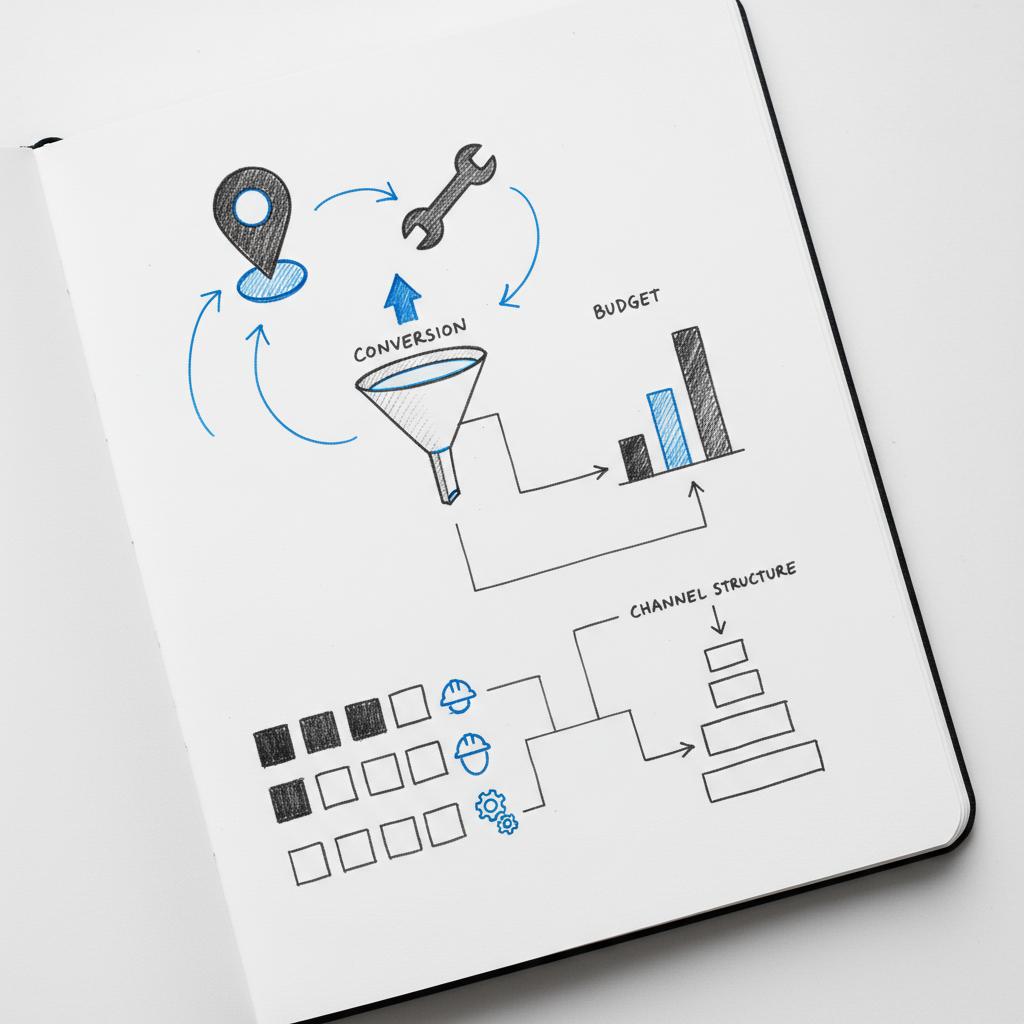
When evaluating cost, always measure the full path: lead → appointment set → job completed → revenue. A $75 lead that becomes a $1,200 installation is far more valuable than a $25 lead that yields a $75 quick fix. Track conversion to understand your true cost-per-paid-job.
Paid channels that work: quick visibility and intent
Google Local Services Ads (GLSA)
GLSA is built around trust: the Google Guarantee badge, star ratings and quick-call emphasis. For many plumbing searches—especially “plumber near me” or “emergency plumber”—GLSA leads tend to convert at a higher rate than generic search ads because homeowners see verification and choose a phone-based contact method. When GLSA is available in your market, it’s often the strongest paid option for urgent, intent-driven plumbing leads.
Search Ads (PPC)
Search ads let you show up fast for high-intent keywords like “water heater repair near me” or “burst pipe emergency.” The pros: immediate visibility and strong buyer intent. The cons: plumbing keywords can be expensive in dense markets. The trick is tight keyword lists, high-converting landing pages, and careful bid management so you don’t pay for low-value clicks.
How to think about paid spend
Use paid channels for speed. A typical test budget splits between GLSA (if available) and search PPC. Start modestly, measure the cost-per-lead and cost-per-booked-job, and reallocate to the channel that produces higher-value customers after 30–90 days.

Organic local SEO: the long game that pays off
Organic local SEO takes time—plan for three to six months to see steady volume—but it’s one of the most sustainable paths to low-cost, high-trust plumbing leads. The main pillars are a fully optimized Google Business Profile, consistent NAP citations (name, address, phone), local content, and a steady stream of real reviews.

Local content can be simple: short posts that answer neighbors’ common questions (“Why is my hot water lukewarm?”), short job stories with before-and-after photos, and neighborhood-specific notes that make you feel local and trustworthy. Over time this work reduces your long-term cost-per-lead and improves conversion because homeowners recognize your name in search and on maps. For a deeper look at plumbing-focused marketing tactics, see this plumbing marketing guide to lead generation.
Lead marketplaces: predictable volume, variable ROI
Marketplaces (the ones that send leads into your inbox) are convenient. You pay and leads arrive. For many small shops, marketplaces are a fast way to test new neighborhoods or fill slow weeks. The downsides are higher fees, bidding that can inflate prices, and sometimes lower-quality leads. A good approach is to use marketplaces as a customer-acquisition funnel: win the first job there, then convert the customer into an owned relationship through follow-ups, maintenance plans, and direct communication. (See 15 best lead generation ideas for plumbers and 25 proven ways to get plumbing leads for additional tactics.)
When marketplaces make sense
Use marketplaces if you need immediate volume, want to test a new service area, or need to keep crews busy while your owned channels ramp. Track outcomes carefully and pause or renegotiate when quality drops.
Offline channels and partnerships that bring higher-value work
Some of the best plumbing leads don’t come from clicking an ad. Property managers, builders, real estate agents, and local commercial accounts often deliver larger, recurring jobs. A simple in-person pitch or a direct mail piece to landlords can bring predictable contracts that shift your revenue curve. These leads are harder to track digitally, but the lifetime value is often much higher than a single residential call.
How to approach partnerships
Identify five local partners—property managers, plumbers’ supply houses, realtors, or building contractors—and build a plan to reach them: a short outreach script, a one-page capabilities sheet, and a quick follow-up visit. Track meetings and outcomes in your CRM so you know which relationships produce revenue.
Track cost-per-booked-job, not just cost-per-lead. Use call tracking, UTMs and CRM tags to follow a lead from first contact to paid job; if a channel produces booked jobs at an acceptable margin within 30–90 days, it’s worth scaling.
How to test channels fast and set a 30–90 day budget
Every market is unique. The goal in month one is to get clear, actionable data quickly. Split a modest test budget across three areas: paid volume (GLSA + PPC), one lead marketplace, and local SEO/GBP improvements. Give each channel 30 days to return initial signals and 90 days to show a pattern.
Use call tracking numbers for ads, UTM parameters for web leads, and tag every lead in your CRM with source and service type. Track not just raw leads but the whole funnel: appointment set, appointment kept, job completed, and revenue.
A sample 30–90 day plan
Day 1–7: Set measurable goals for calls and booked jobs. Install call tracking, UTM tracking, and CRM fields.
Week 2–4: Run a mix of GLSA and search ads, activate one marketplace, and do two outreach attempts to property managers or landlords. Log every lead and outcome.
Day 30: Evaluate cost-per-lead and conversion to booked job. Pause any marketplace or keyword that consistently underperforms.
Day 60: Refine keyword lists, adjust bids, and double down on channels showing higher job value. Begin publishing local content and request reviews after finished jobs.
Day 90: Review the data and set a recommended monthly budget split. You should now know which channels bring steady volume, which bring higher-value jobs, and which channels are best scaled back.
Lead qualification: turning a call into a customer
A lead is only as valuable as your process for qualifying and booking it. Train whoever answers the phones to follow a quick script: confirm the problem, gauge urgency, set an ETA or offer an appointment, and collect a simple contact and address confirmation. For online leads, respond within 15 minutes when possible – speed matters.
Use your CRM or ServiceTitan to tag source, service type, and a short qualification code. Over time you’ll recognize which sources bring small one-off repairs and which bring larger installations or contracts. Price and dispatch accordingly so you don’t waste a premium tech on a low-value job.
Simple qualification script (first 60 seconds)
1) Describe the problem briefly.
2) Ask if it’s happening now and whether water/electricity is affected.
3) Set expectations: same-day dispatch vs scheduled visit.
4) Confirm contact and address and tell them how you’ll follow up (text/ETA).
Conversion tricks that actually work
Respond fast. Make trust signals obvious—real photos of jobs, strong and personal reviews, and a clear service guarantee. Keep booking simple: send a confirmed text with an ETA, technician name, and an easy way to reschedule. For paid ads, use focused landing pages (not your homepage) that mirror the ad message. Track everything in your CRM and attribute revenue back to it.
Small details matter: a polite voice on the phone, a clear price range, and predictable arrival windows reduce no-shows and improve booking rates.
Seasonality and local competition
Plumbing demand changes with weather and construction cycles. Cold months bring frozen pipes and heating issues; spring and early summer bring irrigation and water heater work. Shift budget toward immediate-response channels when demand spikes and invest more in local SEO during slower months. If local search is crowded and every competitor runs ads, a steady GBP and content play can be the smarter long-term move.
Integrations and measuring ROI
Connect ad data to your CRM and job-tracking system. When you can see which phone calls became paid jobs and what each job paid, you stop guessing and start optimizing. Track cost-per-lead, conversion-to-booked-job, average job value and customer lifetime value. A true cost-per-paid-job accounts for follow-up work and referrals – not just the initial cost to get a form or a phone ring.
Recommended metrics to track
– Cost-per-lead (by channel)
– Conversion rate to booked job
– Average job value (by channel)
– Customer lifetime value (CLV)
– Return rate or repeat business percentage
Common mistakes and how to avoid them
1) Treating every lead equally. Not all leads are alike—some channels deliver low-cost, low-margin calls; others deliver fewer but higher-value contracts. Know the difference and price your response accordingly.
2) Failing to track. If you don’t know which leads produce revenue, you’re flying blind. Use call tracking, UTMs, and CRM tags.
3) Slow response times. Especially for emergencies, delay kills conversion. Aim for a quick answer and a simple qualification routine.
Examples from the field
One small shop in a coastal town shifted from marketplaces and broad search ads to a test-driven mix: half the marketplace spend reduced, a focused GLSA and PPC program, plus local content on their Google Business Profile. They also pitched two property managers. The result: fewer overall leads but higher average job value and more repeat work. They traded volume for quality—and that shift improved margins and predictability.
Real companies often need to balance urgency-driven revenue (emergency calls) with scheduled installations. Your ideal mix depends on your team, your trucks, and whether you want steady monthly cash or big occasional projects.
How much should I spend on paid vs. organic?
There’s no universal split. A practical start for small shops is to allocate some spend to paid channels for immediate volume (GLSA + targeted PPC) while consistently investing in local SEO. Use paid to cover short-term cash needs and funnel profitable customers into owned channels for future lower-cost work. Re-check the split every 30–90 days and adjust based on measured CPL and conversion.
Are lead marketplaces worth it?
They can be. If you need predictable volume fast or want to test a new neighborhood, marketplaces are useful. Expect variable quality and fees; use them as a funnel to acquire new customers and then convert those customers into direct, repeat clients.
Quick wins you can do in a weekend
– Add/update photos on your Google Business Profile with real job shots.
– Set up call tracking for your ad campaigns.
– Create one focused landing page for a high-intent service (e.g., “same-day water heater repair”).
– Draft a 60-second qualification script and train staff.
– Send a short email to five property managers offering a meeting.
Hiring help: when it makes sense
If you lack the time to set up tracking, test channels, or train staff, outside help can be worth the investment. A partner who knows plumbing lead generation will set tracking, configure your CRM or ServiceTitan, and run tests so you get clear answers in 30–90 days. For examples of agency work, see Agency VISIBLE’s projects.
Get a fast, no-fluff plan to book higher-quality plumbing leads
Ready to stop guessing and start booking better plumbing leads? If you want a fast, measurable setup and a clear 30–90 day testing plan, contact Agency VISIBLE to get an expert, no-fluff plan that fits your business and local market.
Putting it all together: an action checklist
1) Set a measurable goal for calls and booked jobs.
2) Install call tracking and UTMs.
3) Run a small test budget across GLSA, PPC and one marketplace.
4) Publish local content and request reviews.
5) Start two local partnership outreaches.
6) Review data at 30, 60 and 90 days and reallocate spend.
Final thoughts: the pattern that wins
Winning plumbing leads is not about being everywhere at once; it’s about being smart and measurable. Use paid channels for speed, build trust with Google Local Services Ads and a strong Google Business Profile, use marketplaces strategically, and cultivate partner relationships for higher-value work. Track everything, respond quickly, and iterate.
When you combine those elements, you’ll see where your best plumbing leads come from – and you’ll be able to grow with more confidence and less stress.
Plumbing leads commonly range from about $20 to $300 per lead depending on channel and intent. Emergency, high-intent calls usually cost more but convert better; low-intent informational clicks are cheaper but convert at lower rates. Track cost-per-booked-job—not just cost-per-lead—to know true value.
Both have roles. Marketplaces give predictable volume fast and are useful for testing or keeping crews busy. Google Local Services Ads (GLSA) and local SEO deliver higher trust and often better conversion for urgent searches. A practical approach is to use marketplaces for customer acquisition, then move profitable customers into owned channels through follow-up and maintenance plans.
Hire outside help if you don’t have time to set up call tracking, run tests, and train staff on qualification workflows. A specialist partner can configure tracking, test channels, and optimize campaigns so you see clear results within 30–90 days. Agencies like Agency VISIBLE can set up the infrastructure quickly and focus on measurable growth without guesswork.