What’s the best way to promote my business? If you want faster revenue, the answer is a focused, local-first plan that prioritises immediate visibility, tight experiments, and simple measurement. This piece gives a hands-on 30/60/90-day playbook, concrete examples, and ready-to-use templates so you can act today and see results soon.
Why speed and focus beat wide nets
Small businesses have a unique advantage: you can move faster than larger competitors. Instead of scattering effort across every shiny channel, point your energy where customers already show up. When you promote my business with a tight local test—one offer, one audience, one measurement method—you get real numbers that tell you what to scale.
Think of marketing like using a flashlight in a dark room: you can spin and hope to find something, or you can aim your light at the doorway where customers enter. The doorway approach works faster.

The 30/60/90 rhythm
The first 30 days remove friction and win quick customers. Days 31–60 test messages and conversion tweaks. Days 61–90 scale the winners and build simple retention loops. Keep the rhythm tight: measure weekly, decide fast, and allocate budget to what proves profitable.
First 30 days: immediate fixes that put money in the till

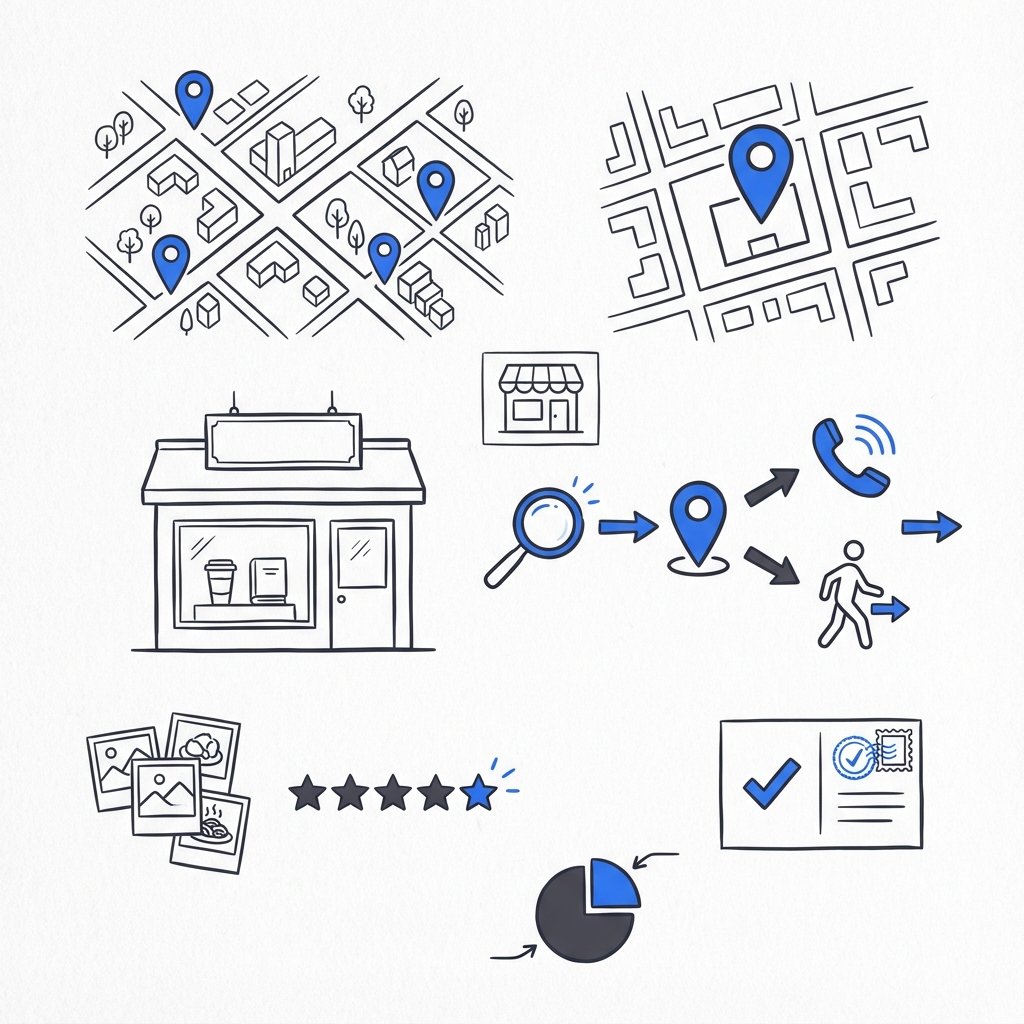
Start where local customers look: your Google Business Profile. Claim it, add accurate hours, upload clear photos of your storefront and people at work, and ask a few recent customers for short reviews. Many local searches end at that profile. Tipp: A clear logo can help customers recognise you quickly.
Next, fix the simple website issues. Don’t rebuild—repair. Make the phone number clickable on mobile, ensure forms are short, add a clear “book” or “buy” button on every page, and speed up your key landing pages. Small site improvements often give immediate lift in conversions.
Pick one paid channel for a test. For urgent-service businesses, search ads often find customers who are ready to buy. For visually driven offers, a small social boost can fill weekend shifts or seats. Set a tight geographic radius and a modest daily budget so you can learn without committing the farm.
Email works when it’s short and useful. Send a re-engagement note to recent customers with a simple ask: come back this week with an incentive. Keep the copy friendly and brief.
Finally, add basic tracking: a dedicated landing page, a unique promo code, and call tracking if phone leads matter. These three tools let you connect spend to revenue.
Immediate checklist (first 30 days)
Local & listings: Claim Google Business Profile, update hours, add 8–10 photos, add services, and request reviews.
Website quick fixes: Click-to-call on mobile, clear CTAs, 1–2 landing pages with a tight offer, speed checks (aim for under 3s on core pages).
Paid test: One channel, small radius, daily cap, unique landing page and promo code.
Simple tracking: Google Analytics goals, URL parameters, call tracking number, and a campaign promo code.
Second 30 days: test messages and reduce friction
With early data in hand, start controlled experiments: change only one variable at a time on a landing page or ad. Try a different headline, clearer price, shorter form, or a more compelling photo of the product or service. Keep tests short and statistically sensible—run until you have enough conversions to decide.
Content in month two should answer the specific local questions customers ask. What does a visit look like? How long does service take? What safety or quality guarantees exist? Short, helpful pages, short videos, or short social posts move people closer to buying.
Expand paid tests methodically. If search ads show steady closures, broaden the geographic radius slowly. Compare the same offer in search and social to see which delivers a lower cost per acquisition.
Set up simple lifetime tracking: capture an email and phone at checkout, tag purchases by product, and note who returns. Even basic retention data changes how much you can spend to acquire a customer.
Two conversion tests you can run this week
1) Headline swap: change “Book Now” to “Same-Day Appointments — Book in 60s” and compare clicks to conversions.
2) Price clarity: show a clear starting price on the landing page versus a “contact for price” approach and measure completion rate.
Third 30 days: scale winners and build simple retention
By day 90 you should know which channel brings customers at an acceptable cost. Scale gradually: increase daily budgets by 20–30% per week while watching cost per acquisition (CPA) and conversion rate.
Turn winning content into a small library of helpful pages. Keep your Google Business Profile active with regular posts and photos. Start small retention habits: a 24-hour thank-you email, a three-month check-in, and a low-friction loyalty punch card or coupon for return visits.
Retention is where lifetime value rises. A single repeat visit can justify doubling how much you spend to acquire a customer. Use the numbers to decide.
How to prioritise channels when funds are tiny
If you have just a few hundred dollars, start with the lowest-friction, highest-intent tools: Google Business Profile and a website that answers basic buying questions. Then pick between search and social based on how customers behave for your product:
Search for services people look for when ready to buy (plumbing, repairs, emergency services).
Social for impulse-driven, visual products (food, fashion, events).
Use paid efforts as controlled experiments: short run, small budget, clear offer.
How much to spend? Use performance, not rules
Agency benchmarks often suggest 7–8% of revenue for marketing. That’s a starting point, not a mandate. Let the math decide: if a paid test yields a $25 CPA and average order value (AOV) is $75, the direct return looks positive. If lifetime value (LTV) after repeats is $250, you can justify higher acquisition spend.
Run simple scenarios in a spreadsheet: spend, customers, AOV, repeat rate, gross margin. These numbers tell you how much to invest.
Key metrics to watch weekly
1) Cost to acquire a customer (CPA) per channel.
2) Website conversion rate on your main landing page.
3) Return on ad spend (ROAS) or simple ROI for paid campaigns.
4) Organic ranking for two to three local search terms.
5) Retention: percentage of customers who return in 3 and 6 months.
Keep reporting simple. A one-page weekly snapshot prevents analysis paralysis.
Offline channels can work — if you track them
If you run a flyer, direct mail or a local newspaper ad, include a unique coupon code and a dedicated landing page or phone number. Use call-tracking to tie phone leads to campaigns. Small investments in attribution make offline spend measurable. For more local advertising ideas try this resource: 21 Creative Local Advertising Ideas for 2025
Common pitfalls and how to avoid them
Spreading too thin: Focus beats breadth. Run a small number of tight tests and measure.
Chasing vanity metrics: Likes and impressions feel good but don’t pay rent. Track leads, conversions and customer return rate.
Poor attribution: Use unique landing pages, campaign codes, and call tracking to connect spend to revenue.
Ignoring rising costs: CPCs can rise. When that happens, tighten ad relevance, improve landing page speed, and test long-tail or localised terms that cost less.
Detailed examples you can copy
Example 1 — Neighborhood bakery (local retail)
Week 1–2: Update Google Business Profile, add daily photos, ask 10 customers for reviews, fix click-to-call.
Week 2–4: Run a boosted social post showing morning bread baking, offer 10% off with code BAK10 on a dedicated landing page, email former customers inviting them to a weekend tasting.
Result: visible bump in weekend foot traffic, three new email signups who later become repeat buyers.
Example 2 — Emergency plumber (service business)
Week 1: Make phone number dominant on mobile site, set up call tracking, create a landing page with “Same-day service” and a coupon for first-time customers.
Week 2–8: Run search ads targeting local ZIP codes with exact-match terms like “emergency plumber near me.”
Result: cheaper, predictable leads because bids were narrowed to high-intent local queries.
Example 3 — Indie clothing shop (visual retail)
Use local social ads to promote a trunk-show day. Use geotargeting for a 5–10 mile radius, include an RSVP on a short landing page, and offer a small discount for signups. Collect emails at checkout to build a re-engagement flow.
Persona checklist: build a simple buyer portrait
Pick one recent customer and answer five quick questions: age range, why they visited, the problem they solved, what made them trust you, and which message would make them act. Use this mini-persona to craft ad copy and landing pages. Specific messages convert better than generic ones.
Sample buyer persona
Name: Weekend Sarah — age 28–38, local, values convenience and quality, looks for quick booking, responds to clear price and trustworthy reviews.
Use language like: “Book in 60 seconds — same-day availability” and show a friendly photo of the shop front.
Sample campaign math and budget templates
Short spreadsheet example:
Spend: $500 in 30 days → 20 customers → CPA = $25
AOV = $75 → Revenue = $1,500
Gross margin (example) 50% → Gross profit before ad spend = $750 → After ad spend = $250
If each customer returns once more in 12 months, add that to LTV and change acquisition budget accordingly.
Use this simple math to decide whether to scale a channel.
Short templates you can use now
Email re-engagement (subject line ideas)
• Subject: “We missed you — here’s 10% off this weekend”
• Subject: “Quick question: Can we help with [service/product]?”
Social ad copy (local boost)
“Fresh sourdough every morning — stop by today and save 10% with code BAK10. Open 7am–3pm, just off Main St.”
Search ad headline ideas
“Same-Day Plumbing — Local Pro, Book Now”
Conversion checklist for a landing page
• One clear headline that states the primary benefit.
• A short supporting sentence that answers “what to expect.”
• A visible price or starting price where appropriate.
• One short form (name, phone/email) or a clear booking button.
• Testimonials or a nearby Google review snippet.
• Mobile-first layout and click-to-call.
Retention moves that are cheap and effective
Small habits drive repeat visits: a thank-you email within 24 hours, a follow-up reminder when a consumable might be needed, and a monthly email with one useful tip plus a small incentive. A meaningful loyalty card or a simple points system can work if it’s easy to run.
When to get outside help
If you’re running ads and can’t track outcomes, or if the channels you test are confusing, a focused partner can speed measurement and results. A good agency treats the first months as experiments: quick tests, clear reporting, and an exit plan that leaves you able to run basic tasks yourself. For recent examples of automation helping small businesses see results, this write-up is useful: Real-World Success Stories
If you’d like a practical hand getting setup quickly, consider talking to Agency VISIBLE, a team that focuses on fast, measurable tests and hands-on execution tailored to small and mid-sized businesses.
Do-it-now checklist: 12 actions for a fast quarter
1) Claim and update Google Business Profile.
2) Make phone number click-to-call and visible on mobile.
3) Create one campaign landing page with a unique promo code.
4) Run a small paid test (search or social) with a tight radius.
5) Add call tracking or use a dedicated phone line.
6) Send a short re-engagement email to recent customers.
7) Run one landing page A/B test (headline vs. price).
8) Log weekly CPA and conversion rate in a simple sheet.
9) Collect emails and pass them into a basic welcome flow.
10) Add two new helpful pages answering local customer questions.
11) Ask five customers for reviews and respond publicly to feedback.
12) Create a simple loyalty or follow-up reminder system.
Advanced tips that matter
• Use long-tail local keywords — they often cost less and convert better.
• Run ad schedules that match your business hours so you don’t pay for clicks when you can’t serve customers.
• Use short videos (15–30s) showing the experience — they build trust quickly.
Measuring success without drowning in numbers
Limit your metrics to five weekly numbers: leads by channel, CPA by channel, conversion rate on the main landing page, number of returning customers, and basic revenue per campaign. Keep a one-page dashboard and review it weekly.
Anticipating risks and simple contingencies
If CPCs rise, pivot to longer-tail phrases, add negative keywords, and improve landing page relevance. If attribution is messy, add unique landing pages and campaign codes for offline efforts. If retention is low, run a short survey to ask why customers don’t return.
Scaling: how to grow what works
Scale slowly and observe. Increase budgets by 20% per week for top-performing campaigns. Reinvest profits from early wins into content, reviews, and a modest increase in paid test budgets. Keep tracking LTV as you scale; higher LTV allows higher CPA tolerance.
Sample 90-day calendar
Week 1: Local profile & site fixes, set up campaign landing page.
Week 2: Launch paid test and email re-engagement.
Week 3–4: Review data, run a landing page test, and adjust creative.
Week 5–8: Expand promising tests, start retention flows, and add helpful pages.
Week 9–12: Scale winners, tighten attribution, and formalise a repeat-customer program.
Common questions answered
Is paid advertising necessary? Not always. If word-of-mouth is full, you may not need ads. But for predictable growth, a small, well-measured paid test is often the fastest path.
How quickly should I see results? Many businesses see measurable results within 30–60 days with a focused local setup and a tight paid test.
Focusing on local visibility—claiming and fully optimising your Google Business Profile and making your phone number and primary offer instantly accessible on mobile—usually makes the biggest immediate difference. It reduces friction at the exact moment customers are deciding to visit or call.
Focusing on local visibility—claiming and fully optimising your Google Business Profile and making your phone number and primary offer instantly accessible on mobile—usually makes the biggest immediate difference. It reduces friction at the exact moment customers are deciding to visit or call.
How to keep the work feeling doable? Break tasks into 15–60 minute chunks, focus on one test at a time, and celebrate small wins. Consistent small moves compound into durable growth.
Final tips and human rules
Be specific in your offers, make it easy to buy, and keep conversations human. Answer the phone like a person, not a script. Post a photo of your team at work. Those small, human moves build trust faster than slick campaigns.
Resources and templates
Use these quick templates: subject lines, ad headlines, landing page checklist and persona prompts included above. Keep them in a single folder so you can quickly copy and deploy.
Why Agency VISIBLE is a useful option
If you prefer a partner who moves quickly, Agency VISIBLE focuses on fast prioritised tests, measurable outcomes, and clear handover so you can run basics after initial work. They specialise in getting small to mid-sized businesses visible where it matters fastest. See examples of recent work on our projects page and learn more on the homepage.
Want faster, measurable results? Start a quick consult.
Need help getting your first tests set up and measured? Reach out for a quick consult to accelerate results and make the first 90 days simple and trackable: Start a conversation with Agency VISIBLE
Closing thought
Promoting a small business doesn’t require a large budget—just a clear plan, short tests, and honest measurement. Start local, test fast, and keep building small systems that turn first-time buyers into repeat customers. That steady, disciplined approach brings the fastest path to more reliable revenue.
Not always. If a business has steady referral traffic and consistent full capacity, paid advertising can be less urgent. But for businesses that need predictable leads or faster revenue, a small, well-measured paid test often delivers the quickest, most reliable results. Treat ads as experiments with clear measurement and a short timeline rather than long-term commitments.
With a focused local setup and a tight paid test, many small businesses see measurable results in 30–60 days. The precise timing depends on the industry, the offer, and how narrowly you define your test. Quick wins like Google Business updates and site fixes often produce improvements within days; paid tests and conversion tweaks typically produce clear data in a few weeks.
Hire outside help when you’re spending on ads without reliable tracking, when channel performance is unclear, or when you need faster insight than you can achieve alone. Choose an agency that treats the first months as experiments, delivers clear reporting, and focuses on handover so you can run basics yourself. Agency VISIBLE, for example, specialises in fast, measurable tests and practical execution tailored to small to mid-sized businesses.