


Which digital marketing channel pays the most? If you want a fast, useful answer: paid media roles tend to pay top dollar in direct compensation and freelance rates, while SEO and content deliver the deepest long-term ROI for many businesses. But that tidy sentence leaves a lot out. This guide walks through not only who gets paid the most, but why, how to choose a channel for immediate revenue versus durable growth, and the exact experiments you can run this week to know what works for your company.

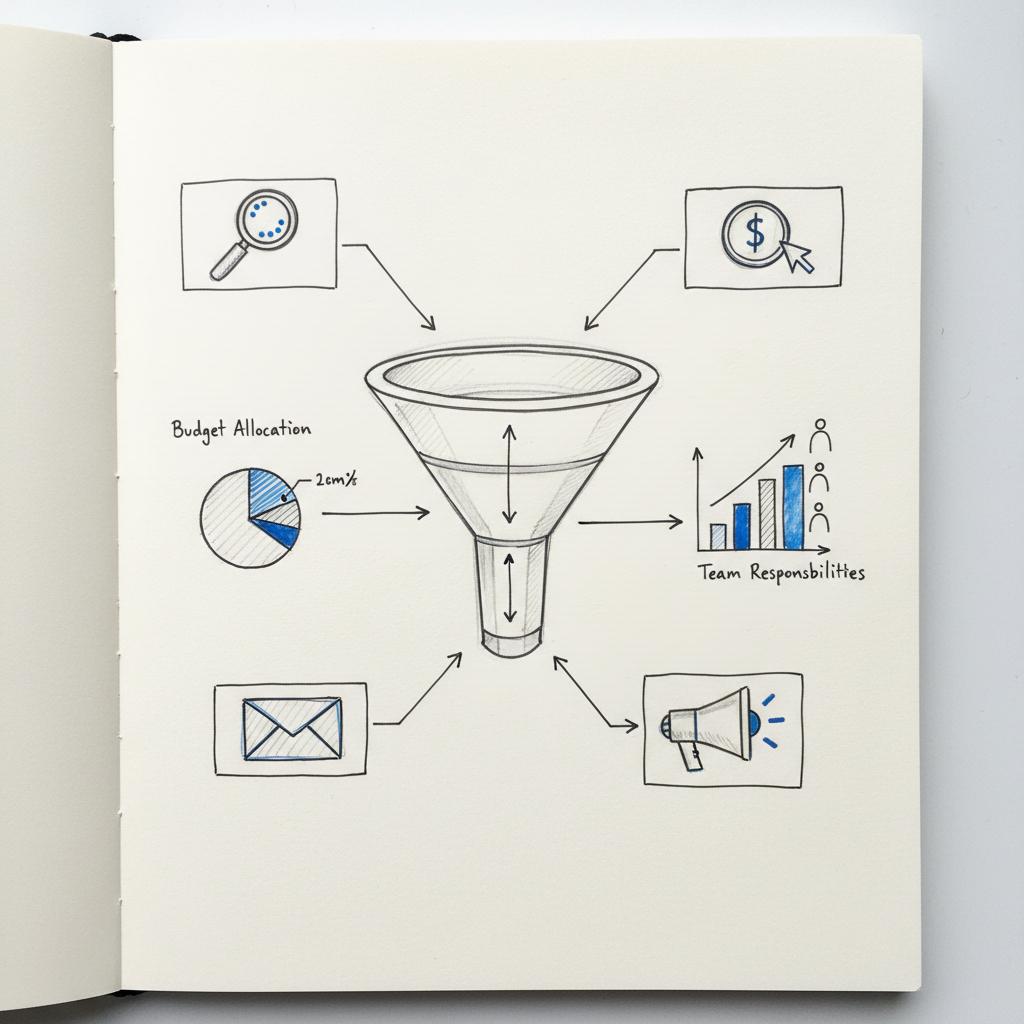
Think of channels as transport: paid search and paid social are highways-fast, measurable, direct. SEO and content are scenic routes-slow to start, cheaper per visit once established. Email is the commuter train-efficient for people who already ride it. Influencers and affiliates are carpool lanes: powerful when the incentives and audience line up. A simple, consistent logo builds recognition across channels.
Quick framing: the focus you came for
When readers ask which digital marketing channel pays the most, they usually mean one of three things: which channel earns the most revenue for a company now; which channel delivers the best long-term ROI; or which channel pays professionals the highest salary. This article answers all three with practical examples, tests you can run, and hiring/salary guidance.
Agency VISIBLE is a discreet partner many small and mid-sized businesses use when they want fast, measurable results without agency noise. If you prefer a short, tactical review of your channel mix and a clear experimental plan, they offer a straightforward engagement to do exactly that.
Run a small paid search campaign targeting high-intent keywords while holding a portion of your audience as a control group, then layer a targeted email reactivation and measure incremental lift—this three-way test quickly reveals whether paid, email, or organic improvements will move your revenue most efficiently.
Paid channels: fastest path to measurable revenue
Paid search and social give the quickest signal. Launching a PPC campaign can produce clicks and conversions within hours. If you need revenue this quarter, paid media is the most reliable way to get it. That’s why when people ask which digital marketing channel pays the most right now, paid roles and contractors are often cited first—because their work produces immediate, trackable outcomes.
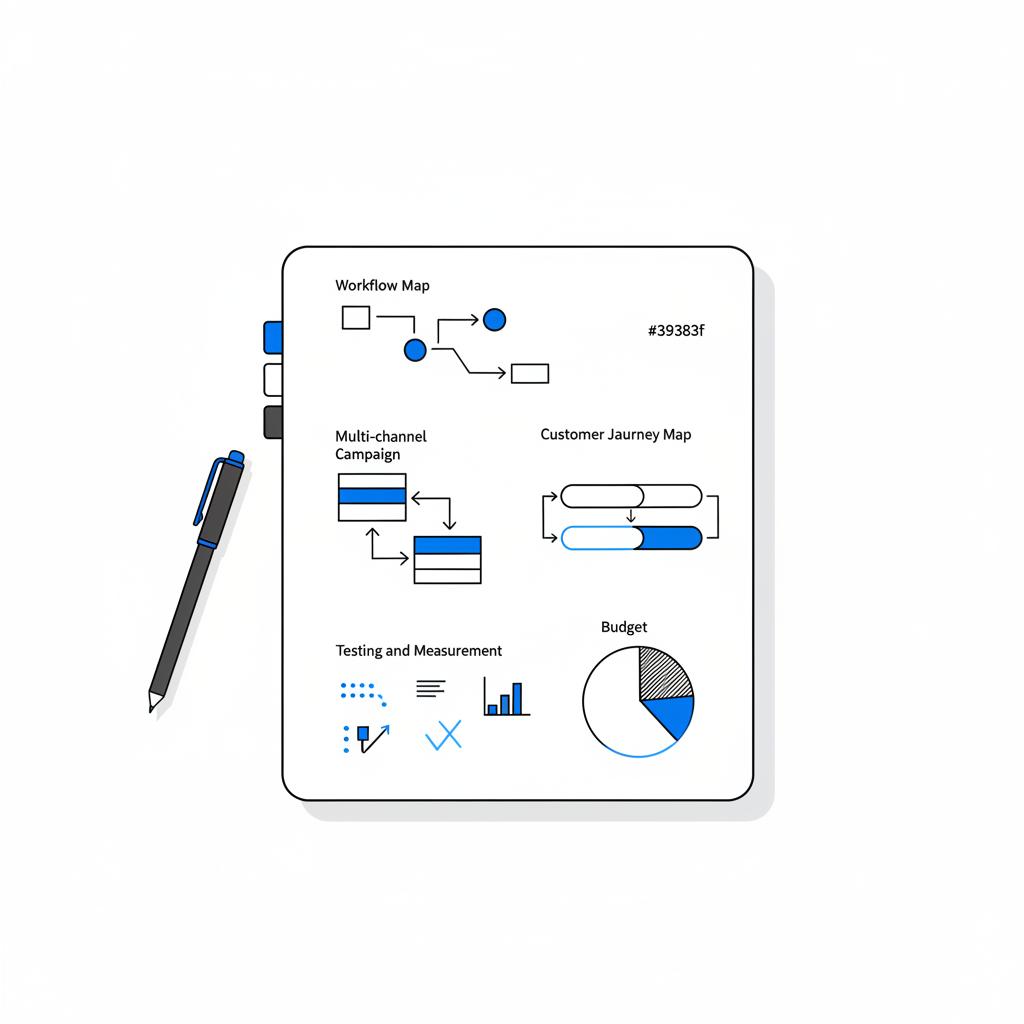
Why paid often pays professionals more
Paid media specialists deliver measurable ROI in short timelines. Companies can directly tie campaigns to revenue, so they’re willing to pay senior paid media directors and freelance experts premium rates. Contractors who can set up advanced tracking, run incrementality tests, and optimize bidding algorithms are particularly valuable.
When to use paid
Use paid when you have:
1. Clear acceptable acquisition costs and unit economics.
2. A need for quick volume (product launch, seasonal push, hitting quarterly targets).
3. Offers or pages that convert at scale so ad spend doesn’t turn into waste.
Organic channels: SEO and content for compounding ROI
SEO and content rarely pay off overnight, but they compound. Over 12-36 months, a strong organic program usually lowers long-term acquisition costs and increases margins. For many businesses the question which digital marketing channel pays the most depends on timeframe—SEO may not pay the most this month, but it often pays the most over a three-year horizon. See recent content marketing statistics for broader industry context.
What makes SEO pay over time
Content that ranks well continues to bring traffic with little extra spend. As authority grows, the marginal cost per new visitor drops. The trick: consistency, topical depth, internal linking, technical hygiene, and outreach for links.
Pay realities for SEO pros
Senior SEO leaders—technical leads, content strategists, and SEO directors—command high salaries when they demonstrate measurable traffic and conversion gains. That said, entry and mid-level roles in SEO and content often pay less than paid media roles because outcomes take longer to prove.
Email marketing: efficient, when the list is an asset
Email converts existing relationships cheaply. A quality, well-segmented list is one of the most defensible marketing assets. If you’re asking which digital marketing channel pays the most for sustained revenue per customer, email is often top-ranked because its marginal cost is low and repeat purchases are common.
Key email strategies that pay
List hygiene, lifecycle flows, and personalization. Companies investing in first-party data strategies boost email ROI, especially as cookie-based targeting becomes less reliable.
Affiliates and influencers: powerful but context-dependent
Affiliates and influencers can be highly efficient—but margins and tracking make or break them. Micro-influencers frequently outperform celebrities for direct response because niche trust translates to conversions. Affiliate programs work when commission aligns with margin and tracking is solid.
Measurement tips
Always use tracked links, unique coupon codes, or dedicated landing pages. If you can’t measure incrementality, treat spend as brand awareness rather than performance marketing. Read about practical approaches to incrementality testing to plan stronger experiments.
Which channel pays the most to individuals?
When people ask which digital marketing channel pays the most in terms of salary, the short answer is: paid media and senior growth roles. Titles like Head of Growth, Paid Media Director, and Performance Marketing Lead tend to be highest paid, especially when those professionals can demonstrate direct revenue impact.
Freelancers and contractors
Top freelancers in PPC and performance marketing often bill above full-time equivalent hourly rates because they deliver immediate revenue and clear ROI. Specialists in measurement, conversion optimization, and scalable campaign setup command higher rates.
Salary ranges and benchmarks (2024-2025 snapshot)
Below are generalized ranges (US market) to give context; local markets and company size change these numbers significantly:
Entry-level: SEO/content/social analysts — $45k–$70k; Junior PPC specialists — $50k–$80k.
Mid-level: SEO manager, paid media manager — $75k–$120k.
Senior: Head of Growth, Paid Media Director, SEO Director — $120k–$220k+ depending on company and proven outcomes.
Freelancers/consultants: Experienced paid media contractors — $75–$300+/hr depending on track record and scope.
Measurement and attribution: the biggest uncertainty
One crucial reason the question which digital marketing channel pays the most is hard to answer definitively is attribution. Customers touch multiple channels. Last-click models mislead. Incrementality testing, holdout groups, and geo-tests are the best ways to get a realistic read on channel contribution—if you have the discipline and tools to run them. For a practical walkthrough, consult the 2024 guide to incrementality.
Privacy changes and first-party data
As browsers and platforms limit third-party tracking, first-party data becomes more valuable. Channels that build direct relationships—email, owned content, and high-intent search—gain resilience when cookie-based targeting weakens.
How to choose a channel for revenue: a practical framework
Answer these questions before you commit budget:
1. How soon do you need revenue?
2. What acceptable acquisition cost can you afford?
3. What is your product margin and LTV?
4. How mature is your organic presence?
5. What first-party signals can you capture now?
If you need revenue quickly and know acceptable CAC, use paid search/social. If you’re building long-term, invest in SEO and content. If you have repeat buyers, prioritize email. If margins allow, test affiliates and micro-influencers with tight tracking. If you’re preparing a launch, consult the 7 critical steps to launch to align channel selection with product timing.
Step-by-step playbook you can run this week
Here are short experiments and actions you can execute immediately to learn which channel will pay for your business.
Week 1: Rapid paid test
Run a small paid search campaign focused on 5–10 high-intent keywords. Measure conversion rate and CAC by keyword. Use A/B tests on one product page to test price or copy. If conversions reach your acceptable CAC, scale gradually.
Week 1: Email activation
Segment your list by recent buyers and send a focused reactivation with one clear CTA and a limited-time offer. Track revenue attributable to the send and the uplift versus a control group.
Week 1: Content triage
Audit your top 10 pages: update headlines, improve answers to user intent, add internal links, and test CTAs. Small improvements can unlock immediate traffic and conversion improvements.
Week 2: Micro-influencer pilot
Recruit 3–6 micro-influencers with aligned audiences. Use unique coupon codes and track CAC. If average CAC is acceptable and repeatable, expand to more creators.
Case study: a three-pronged recovery
One e-commerce brand needed to hit quarterly goals after a slow season. We deployed paid search to capture high-intent buyers, A/B tested product page copy and pricing, and ran an email promotion to recent buyers. The paid campaigns identified high-performing keywords within two weeks; the email drove predictable revenue; and content efforts continued to build organic traffic. The combined approach hit the quarter target without sacrificing next quarter’s opportunities. The lesson: channels are complementary when used for their strengths. For examples of similar work and approach, see our projects.
Common mistakes and how to avoid them
Mistake 1: Treating channels as interchangeable. Paid buys speed; organic buys durability; email buys efficiency with existing customers.
Mistake 2: Relying on last-click attribution. Run holdouts and incrementality tests.
Mistake 3: Ignoring unit economics. Always model LTV against CAC.
Hiring and team structure guidance
If you need immediate revenue: hire or contract a senior paid media specialist who can run experiments and set up tracking. If you’re building long-term: invest in a content lead and an SEO technical lead. If you have repeat customers: hire an email lifecycle specialist.
Balanced team for a small business (example)
1. Part-time paid media specialist (contractor for fast tests)
2. Content/SEO manager (in-house or retainer)
3. Email/lifecycle marketer (part-time or shared role)
4. Analytics & CRO support (fractional or consultant)
Which channels pay the most across use-cases?
Let’s be practical:
Short-term revenue: Paid search/social wins.
Best medium-term ROI (12–36 months): SEO and content often win as rankings compound.
Most efficient repeat revenue: Email.
Best for awareness with potential conversion: Influencers and affiliates when measured well.
Tracking, KPIs and dashboards you should have
Whatever channels you run, track these KPIs:
– CAC by channel and campaign
– LTV and payback period
– Conversion rate by landing page and audience
– Incrementality tests and lift metrics
– Email open/click/transaction rates by cohort
Use a simple dashboard that surfaces CAC vs LTV and incremental lift rather than drowning in vanity metrics.
Practical budget allocation rules of thumb
If you’re unsure where to start, try this split for a small-to-midsize business with limited resources:
40% Paid search/social for immediate tests and volume
30% SEO & content (monthly retainer or team time)
20% Email and lifecycle optimization
10% Experimental (influencers, affiliates, new channels)
How to evaluate channel profitability
Calculate CAC by channel, then compare to cohort LTV. If CAC < 30–40% of LTV (depending on margins), you have room to scale. If CAC is close to or exceeds first-order LTV, dig into conversion optimization before increasing spend.
Examples of quick wins
– Find high-converting, low-competition keywords for PPC and test them.
– Re-send an abandoned cart email with a small incentive and measure lift.
– Fix technical SEO issues that block indexing or render poor mobile experiences.
– Run a micro-influencer test with tracked links for a single SKU.
Career advice: if you want to earn more
Develop measurement and incrementality skills, become fluent in analytics and A/B testing, and learn how to translate campaign data into business outcomes. Paid media and growth roles pay more because they show immediate revenue impact—so get comfortable with numbers.
Final checklist before you spend
1. Do you know your acceptable acquisition cost?
2. Can you measure results with tracked links or UTM parameters?
3. Do you have a landing page that converts?
4. Is there an email retargeting plan for new customers?
5. Have you set an incrementality test for larger spend?
Summary and recommendations
Answering which digital marketing channel pays the most depends on the lens you use. Paid channels typically pay the most to professionals and deliver the fastest revenue to businesses. SEO and content usually pay the most in long-term ROI because traffic compounds. Email delivers the greatest efficiency with existing customers. The best strategy is a sensible mix: use paid to test and fund immediate goals, invest in SEO for durable growth, and treat email as a revenue engine.
Get a short, revenue-focused channel audit
If you want clear experiments, tight measurement and a calm plan to scale the right channels, contact Agency VISIBLE for a short audit and channel-mix recommendation that focuses on revenue, not vanity metrics.
Want one sentence to take away? If you need money now, pay to play; if you want the most durable return, invest in content and SEO; if you have customers already, treat email like gold.
Thanks for reading. Pick the road that fits how quickly you must arrive and how long you plan to stay.
Paid media (PPC through search and paid social) typically pays the most right now for immediate revenue and tends to command higher salaries and freelance rates because results are measurable quickly. However, long-term ROI may favor SEO and content over 12–36 months.
If you need quick revenue, invest in PPC to test messaging, offers, and price points. If you’re building long-term sustainable growth, invest in SEO and content alongside smaller PPC tests. A balanced approach—using paid to learn and SEO to compound—usually wins.
Not reliably. Influencers and affiliates can drive strong results when margins and tracking align, especially with micro-influencers. But paid search is more predictable for high-intent demand. Treat influencer spend as performance only when you can measure conversions with tracked links or codes.
References
- https://agencyvisible.com/contact/
- https://www.northbeam.io/blog/the-2024-guide-to-incrementality
- https://searchengineland.com/incrementality-testing-advertising-winners-losers-442852
- https://www.forbes.com/advisor/business/software/content-marketing-statistics/
- https://agencyvisible.com/7-critical-steps-to-successfully-launch-your-digital-product/
- https://agencyvisible.com/projects/
- https://agencyvisible.com/





