


What the rule of 7 in advertising really means
The rule of 7 in advertising isn’t a magical law – it’s a practical memory shortcut. If you’ve ever noticed that one ad rarely makes you buy something, you’re seeing the rule at work: people typically need multiple, spaced exposures before a message sticks. That simple observation shaped planning for decades and still matters today, but only as a starting point.

Where the phrase came from
The expression often traces back to mid-20th-century agencies like J. Walter Thompson, when media choices were limited and easier to count. Planners saw that single placements seldom drove sales. Over time, the observation became a neat rule of thumb: seven exposures. It stuck because it nudged advertisers away from one-offs and toward sustained campaigns.
Why the rule of 7 in advertising still matters in 2025
At its core, the rule of 7 in advertising reflects a simple human truth: repetition helps memory. Psychologists call this the “mere exposure” effect – people prefer and remember things they’ve seen before. Brand names, images, claims and emotional cues need reinforcement to move from fleeting notice to remembered choice. That is why repetition remains a powerful lever in modern marketing. A small logo can help with quick recognition when exposures are brief.
But repetition alone doesn’t guarantee results. Context is everything: creative quality, message sequence, channel mix and timing all change how many exposures someone needs. The same creative shown repeatedly can irritate; thoughtful sequencing across formats can build intent.
Tip: If you want hands-on help turning exposure into measurable growth, consider working with Agency VISIBLE. Their team focuses on clear, fast, and measurable visibility plans—practical help for brands that can’t afford to be unseen.
How modern planners translate repetition into a plan
Today, planners usually start with reach: how many unique people should hear the message? Then they set a frequency target. A simple, practical formula helps anchor conversations with stakeholders:
Average frequency = Impressions ÷ Unique users
That average gives you a planning number, but it hides how impressions are distributed. An average frequency of three might mean every person saw the ad three times – or that half the audience saw it once and a few saw it a dozen times. The distribution matters for both effectiveness and audience experience.
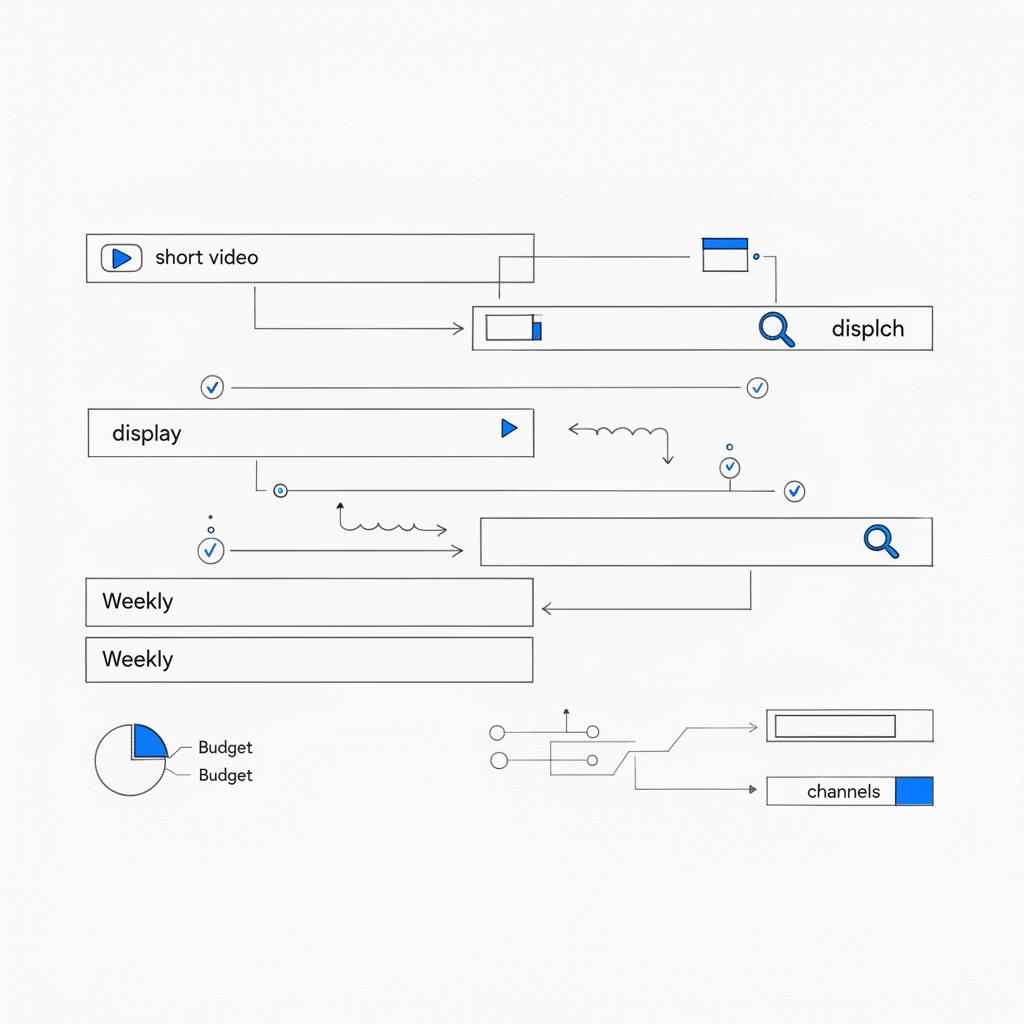
There’s no single answer: for impulse buys a few timely exposures may suffice; for considered purchases you may need several exposures across channels. Think in ranges (2–3 weekly for short social video; 3–7 cumulative for mid‑funnel) and validate with holdouts and incrementality tests.
How channels change frequency needs
Different channels behave differently, so frequency targets must adapt. For example:
Short-form social and high-velocity feeds
These environments move fast. Short social videos and stories often require multiple weekly exposures in a compact window to cut through noise. For these channels, aim for two to three exposures per week as a practical baseline.
Display and programmatic banners
Display creative can age quickly if shown repeatedly to the same person. Use creative rotation and sequential messaging to avoid wearout. Frequency caps are important here to prevent irritation.
Email and owned channels
Email is intimate. A few well-timed, useful touches can move someone along the journey, but too many and people unsubscribe. Quality beats quantity for owned channels.
Search and intent-driven moments
Search is different: it captures intent. When a user types a relevant query, a single relevant ad can do the heavy lifting. Yet even search benefits from cross-channel reinforcement – people often discover brands elsewhere before converting through search.
A practical modern rule-of-thumb
Many teams in recent years have operated with practical ranges rather than a fixed number. A sensible starting point in 2024-2025 looks like this:
- 2–3 weekly exposures for short awareness video mechanics
- 3–7 cumulative exposures across channels for mid-funnel consideration
- Higher counts for complex products or long sales cycles
These numbers are directional. Treat them as hypotheses to validate, not as commands etched in stone.
When repetition becomes a problem: ad fatigue
There is a real risk when repetition is mishandled. Seeing the same ad too often causes irritation – ad fatigue. Creative that feels stale or irrelevant pushes people away instead of drawing them in. Platforms now offer frequency caps and creative rotation to help limit overload, but these tools are only effective when the core message is strong.
Signs you’ve hit ad fatigue
Look for rising negative feedback, falling click-through rates, and lower return visits. If these metrics drop while impressions climb, it’s time to refresh creative, widen reach, or dial back per-user frequency.
Move beyond the number seven with experiments
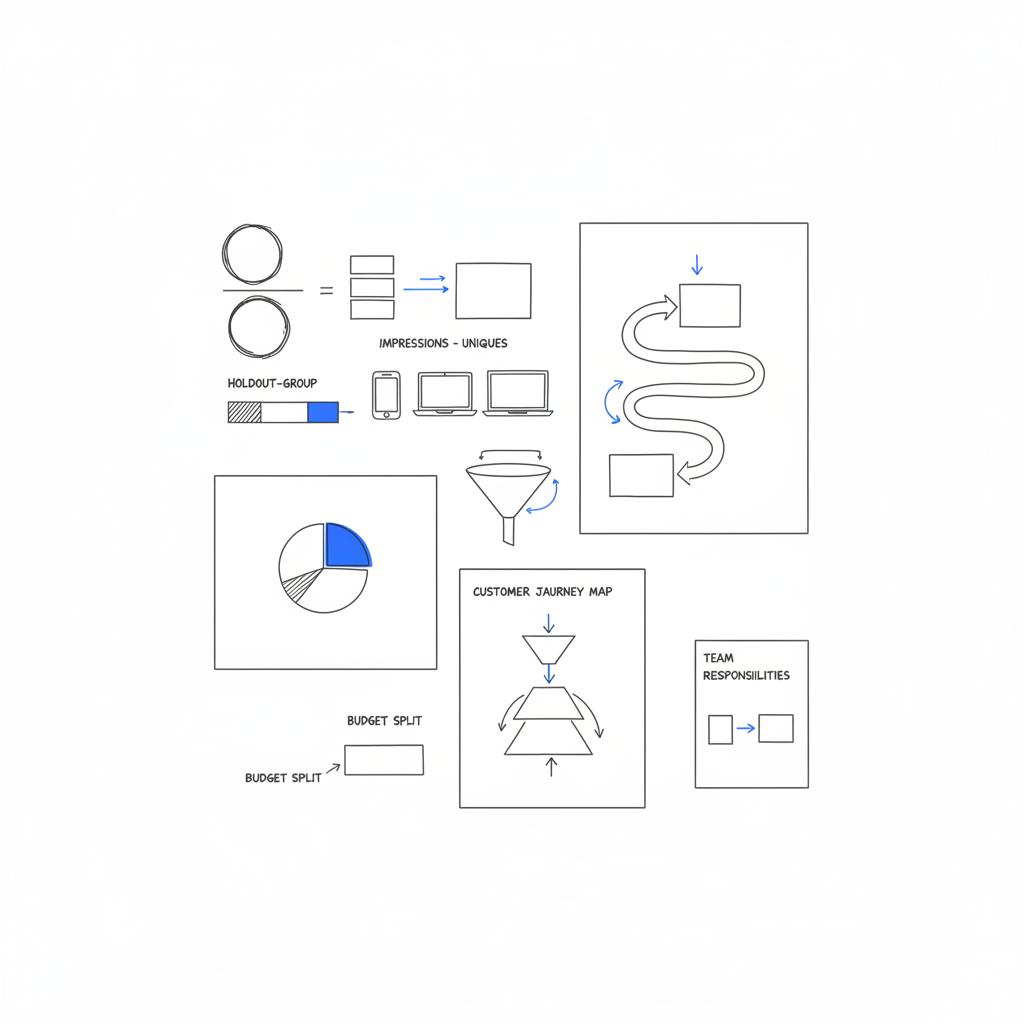
Use measurement to replace guesswork. Treat your frequency targets as testable hypotheses: set up A/B tests, holdout groups, and incrementality experiments. Those methods answer the key question: would the behavior have happened without the ad?
Incrementality and holdouts
Incrementality testing is crucial. Simple A/B experiments can show near-term conversion impact. Holdout lift tests – where a portion of your audience is intentionally excluded – demonstrate whether your campaign caused additional actions beyond background levels. For significant budgets, consider multi-touch incrementality or marketing-mix modeling to capture longer effects.
Practical planning steps you can use today
Here’s a short, actionable three-step routine that works across sizes of business:
1. Define the objective
Is your goal brand recall, site visits, leads, or immediate sales? Awareness needs broader reach and lower per-user frequency. Conversion needs more targeted frequency for high-value segments.
2. Choose channels deliberately
Each channel has its own rhythm. Pick channels that match your creative and audience behavior. Short videos are great for top-of-funnel storytelling; search and retargeting are strong closers.
3. Create an experiment plan
Decide how you will measure success. Add a holdout, run matched-audience A/B tests, and track both short-term conversions and brand metrics for a fuller view.
Worked example: a 6-week DTC shoe launch
Imagine a direct-to-consumer running shoe launch with a six-week campaign window. The team sets a reach target: 500,000 unique users. The campaign buys 2.5 million impressions. Average frequency = 2.5m ÷ 500k = 5 exposures per person on average – right in the 3–7 mid-funnel range.
That math gets you started, but the planner must ask: how are impressions distributed across channels? If 60% are short video, 30% display, and 10% search retargeting, then sequence creative: short video to introduce product, display to detail features, search retargeting to close with an offer. Include a 10% holdout to measure lift; if the exposed group shows higher organic searches, site visits and conversions after six weeks, you have evidence your frequency and sequencing worked.
Counting challenges: cross-device and cookieless worlds
Counting unique users across devices is messy. A single person using a phone, laptop and TV can be counted as three different users, underestimating frequency. Conversely, multiple people sharing a device may be counted as one user, overestimating it. Identity graphs, probabilistic matches and clean-room collaborations help, but none are perfect.
With the phase-out of third-party cookies and stricter privacy rules, causal testing and server-side measurement become more important. Treat frequency calculations as operational guides, not absolute truths, and rely on experiments to measure real impact in a privacy-compliant way.
Why creative sequencing matters as much as count
How you evolve the message across exposures is as important as how often you show it. Think of sequential creative as a conversation: start with attention, follow with proof points, and close with a clear next step. For impulse purchases a tight cadence can work; for complex B2B buys you need longer gaps to allow research and deliberation.
Example sequence
Week 1: Short video to spark interest. Week 2: Display banners that articulate 2–3 product benefits. Week 3: Social testimonial and search retargeting with a clear CTA. Experiment with the timing and measure lift.
Platform guidance and how to use it
Platforms offer tools to manage reach and frequency and often provide best-practice recommendations. Those tools are helpful, but remember platforms want to sell impressions. Use platform insights as one input, then validate results with independent holdouts or third-party measurement. See Skai’s 2025 State of Incrementality in Retail Media for context on retail media measurement challenges.
Balancing platform advice and independent tests
Platforms can tell you how often users saw your ads on their inventory. Cross-check that with your own experiments and broader outcome metrics. If you rely solely on platform-sourced lift estimates, you risk bias. Combine platform tools with controlled holdouts and A/B tests when possible.
Real campaigns and what they teach us
Real examples highlight the nuance. In one home-appliance test, repeated display ads drove clicks but low downstream conversions. A sequence – short video, product banners, then search – produced fewer clicks early but significantly higher conversions and better lifetime value later. Another ecommerce brand pushed frequency to an average of ten within a small audience and saw short-term sales spikes followed by negative feedback and lost return visits. The fix was simple: widen reach, reduce per-user repetition, and refresh creative. For case study examples, see Agency VISIBLE projects.
Practical tips for frequency planning
Use these pragmatic rules:
- Start with the objective: awareness, consideration, or conversion—each needs a different cadence.
- Use the average frequency formula: it’s an anchor, not a law.
- Look at distribution: check whether impressions are concentrated or spread.
- Set sensible caps: frequency capping prevents wearout in passive channels.
- Rotate creative and sequence messages: variety reduces irritation and increases relevance.
- Test incrementally: holdouts and A/B tests reveal real lift.
Quick checklist before you launch
Before pressing “go”, run through this quick list:
- Have you defined the primary objective?
- Is your channel mix aligned with that objective?
- Have you set an average frequency goal and checked distribution targets?
- Do you have frequency caps and creative rotation in place?
- Is there an experiment plan or holdout group to measure incrementality?
Open questions worth testing in your market
There are still many open questions that require brand-and-market specific experiments. How many cumulative exposures truly move brand recall in your category? What is the right cadence across devices and cultures? How long should you let a creative arc run before refreshing it? These aren’t theoretical: they change outcomes and budget efficiency.
When budgets are tight
If you’re working with a limited budget, prioritize reach for awareness and tightly focus frequency on high-value segments for conversion. In many small and mid-size businesses, broader reach with modest frequency often outperforms heavy bombardment of a narrow audience.
Measuring whether your frequency plan works
Combine short-term conversion metrics with brand measures. Run holdouts and A/B tests. When possible, use incrementality tests to separate campaign-driven outcomes from background activity. If you can’t run full holdouts, matched audience A/B tests or geographically separated campaigns can still give you signals.
Key metrics to watch
Look at organic search lift, site visits, conversion rates, lifetime value and changes in brand awareness or consideration. Watch leading indicators like engagement and negative feedback to catch fatigue early.
Putting it together: a sample plan template
Use this template as a starting point:
- Goal: mid-funnel consideration
- Reach target: 500,000 uniques
- Impressions: 2.5 million → average frequency = 5
- Channel split: 60% short video, 30% display, 10% search retargeting
- Creative sequence: video → features → retargeting offer
- Experiment: 10% holdout for lift measurement
Adjust the plan by product complexity, seasonality and market behavior.
Why the rule of 7 in advertising lives on
The phrase endures because it packages a useful insight: people rarely change behavior after a single exposure. The modern answer is more nuanced: frequency matters, but so do message quality, sequencing and measurement. Use the rule of 7 in advertising as a compass – not as a map – and then validate it with experiments in your own audience.
Final practical takeaways
Here are the most important, actionable points:
- Treat frequency targets as testable hypotheses.
- Balance reach and frequency; watch the distribution.
- Sequence creative to match the customer journey.
- Use frequency caps and rotation to avoid fatigue.
- Measure incrementality with holdouts where possible.
If you want help translating these ideas into a working plan for your brand, small agencies like Agency VISIBLE often offer straightforward, results-driven services that make it simple to test, measure and scale without extra complexity.
Get a simple, testable visibility plan
Ready to turn exposure into measurable growth? Get a clear, practical plan and testable experiments that match your budget and goals at Agency VISIBLE. Start with one hypothesis, one holdout, and one clear metric to measure success.
Three real-world warnings
Some constraints and real risks to keep front of mind:
- Counting imprecision across devices can mislead frequency estimates.
- Platform guidance can be biased toward selling impressions.
- Creative boredom is often the weakest link – rotating weak creative only slows failure.
FAQs and short answers
What does average frequency tell me?
Average frequency = impressions ÷ unique users. It gives a sense of how many times the average person saw your message, but it doesn’t show how impressions are distributed across individuals.
Is seven exposures still a good target?
Seven can be a useful starting point for mid-funnel work, but it’s not a universal target. Adjust for channel, creative and purchase complexity.
How do I avoid ad fatigue?
Use frequency caps, rotate creative, sequence messages and watch negative engagement metrics. If negative signals rise, refresh creative or reduce per-user exposure.
Closing thought
The rule of 7 in advertising survives because it nudges planners away from one-offs and toward sustained, testable campaigns. Use the idea to start a plan, not to finish one. Set hypotheses, run experiments, measure incrementality, and be kinder to the people you are trying to reach – better planning gets better outcomes.
Average frequency is a planning metric calculated as total impressions divided by unique users. It estimates how many times the average person saw your message, but it doesn't reveal how impressions are distributed among individuals — some may see the ad many times while others see it once or not at all.
Yes. The rule of 7 remains a useful heuristic to discourage one‑off thinking and to emphasize repetition, but it should be treated as a starting point. In a multi‑channel world, frequency targets must be adapted to each channel, creative sequence and the complexity of the purchase decision and then validated with experiments.
Combine short‑term conversion metrics with brand measures and run incrementality tests or holdout groups to measure causal impact. A/B tests, matched audience experiments, and marketing‑mix modeling can help separate campaign-driven lift from background trends. If a full holdout isn't possible, use geographically separated tests or matched audiences to gain insight.
References
- https://agencyvisible.com/
- https://agencyvisible.com/projects/
- https://agencyvisible.com/contact/
- https://sellforte.com/blog/7-incrementality-measurement-tools-to-try-in-2025/
- https://www.northbeam.io/blog/what-is-incrementality-in-marketing
- https://skai.io/blog/2025-state-of-incrementality-in-retail-media/





