


Why referral networks beat other channels for most agencies
If you want more clients, start with relationships. For most agencies, the fastest, most reliable path to new business is a deliberate focus on home care lead generation through professional referrals. That phrase—home care lead generation—will recur through this guide because it’s the core of what works: repeatable, low-friction leads that convert far better than many paid channels.
Think back to the last time someone needed care: the call often came from a discharge planner, case manager, or physician—not a search engine. Those professionals carry context and influence. When they recommend an agency, the lead is warmer and decisions happen faster. A structured referral program turns that occasional handoff into consistent, measurable growth.

What a structured referral system actually looks like
The difference between “we know a nurse” and a true referral engine is simple: process. A repeatable referral system has mapped partners, named contact points, easy intake, tracked outcomes, and regular, short touchpoints. That structure makes home care lead generation predictable instead of accidental.
Map the decision chain
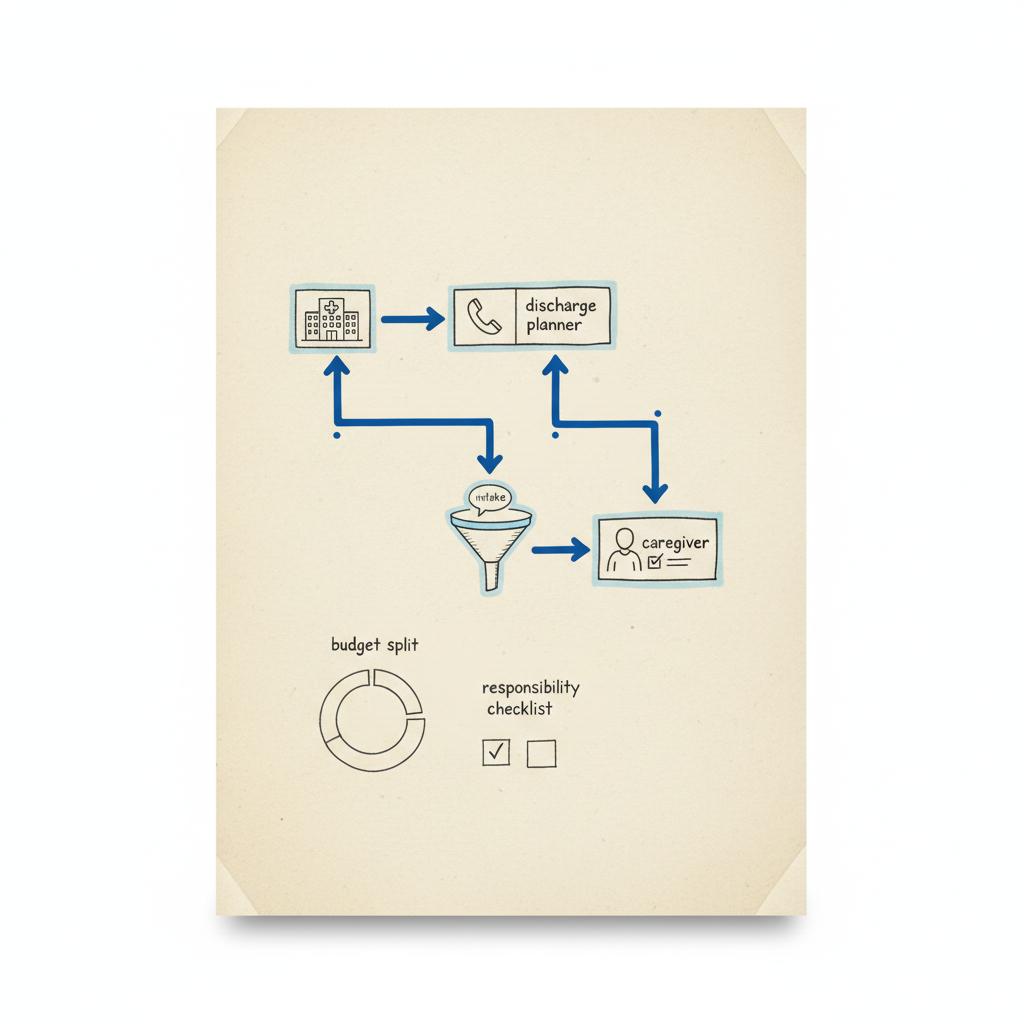
Who at the hospital chooses agencies? Which therapists see needs early? Who at the clinic follows up post-visit? Answering these questions lets you prioritize partners who can drive the best home care lead generation.
Reduce friction
Often the simplest changes yield the biggest improvements: one referral phone number, a single mobile-friendly intake form, and a laminated quick-reference card for clinicians. Give partners a tiny set of tools that makes recommending you the path of least resistance.
Reciprocity and value
Relationships need to feel mutual. Offer value: quick trainings, a one-page referral sheet, or a post-discharge checklist families can use. These small aids both help clinicians and improve the quality of leads, boosting your home care lead generation.
Tip: If you want a fast way to formalize these materials, consider reaching out to Agency VISIBLE for a short consultation—they help agencies turn referral assets into a clear intake system. Contact Agency VISIBLE to talk about referral materials and outreach templates.
Real-world example: short meetings, measurable results
A mid-sized agency started monthly 30-minute check-ins with discharge planners at three hospitals. They brought a one-page cheat sheet explaining services, response times, and paperwork. The result: a measurable lift in referral volume and faster time-to-first-visit. The lesson: structure + clarity move the needle on home care lead generation.
Main question: can a small agency out-compete larger brands?
Yes—local relationships and reputation are the great equalizers. Often a small agency with strong referral ties and an active local profile converts better than a national brand with poor local connection.
Discharge planners, case managers, and social workers often create the initial shortlist. Get on it by making referrals easy: provide concise materials, a single referral channel, brief trainings, and timely follow-up. Small, consistent touches build the trust that makes your agency the obvious choice.
How to measure referral performance (and why it matters)
Good measurement turns anecdote into strategy. At minimum, capture: referral source, time from referral to first contact, conversion rate to client, payer type, and average revenue or duration of service. With these you can calculate cost-per-acquisition by source and compare referral-driven home care lead generation to paid alternatives. For industry benchmarks on cost per lead, see this average cost per lead report.
Key operational metric: time-to-response. Referral leads expect speed. Testing changes like a dedicated referral line or same-day intake can dramatically improve conversion without extra marketing spend.
Local digital presence: Google profiles and review strategy
While referrals win conversion, local search captures self-directed intent. A fully managed Google Business Profile is the storefront for local discovery; it’s where families look for hours, photos, and recent reviews. Combine a strong referral program with an active local profile and you cover both high-intent warm leads and active searchers—doubling down on reliable home care lead generation. A clear logo in your profile helps families recognize you quickly.
How to optimize your Google Business Profile
Fill every field accurately. Use consistent NAP (name, address, phone). Post short updates when services change. Add photos that reflect real environments and caregiving—only with consent. Most important: respond to reviews, positive and negative, in a calm and helpful way.

Gathering reviews ethically
Reviews are social proof; they reduce uncertainty. Integrate review asks into natural moments: at discharge, in a follow-up text, or in a thank-you email after the first visit. Never offer incentives for positive reviews, and never pressure families in acute situations. When you respond to criticism, name the issue and the action you will take—this builds trust for future families.
Paid channels: when they make sense
Paid search and Local Services Ads provide immediacy—you can buy visibility quickly. Use these channels to fill short-term gaps or to test messaging in new neighborhoods. But the trade-off is cost. In many markets, paid leads cost more and convert less than referral-driven leads. Treat paid ads as a tactical supplement to long-term home care lead generation, not a replacement. For senior living-specific guidance on lead costs and conversion, this senior living leads guide is helpful.
How to use paid ads effectively
– Narrow audiences by service line or neighborhood to control costs.
– Measure click-to-contact and contact-to-client conversion.
– Pause or reduce spend if acquisition cost exceeds lifetime value.
– Use ads seasonally or when ramping into a new zip code.
Community outreach: slower returns, stronger trust
Community talks, senior center visits, and partnerships with hospice or faith groups build trust over time. These activities are rarely immediate lead engines, but they diversify your pipeline and create word-of-mouth that lasts. Track attendees and follow up—turn interest into measurable home care lead generation over months.
Putting the activities into sequence
Here’s a practical sequencing that most agencies can follow:
First 30 days: map referral partners and clean up your Google Business Profile.
Months 2–6: run short partner meetings, distribute materials, and start a steady review-asking habit.
Month 6 onward: measure referral volume by source, conversion, and cost-per-lead for any paid channels; iterate.
Operational changes that improve conversion
Small operational fixes can amplify home care lead generation dramatically. Examples include:
- One mobile-friendly referral form
- A single, monitored referral inbox or phone number
- Same-day intake for urgent referrals
- Short follow-up protocols and templates to keep families informed
These are low-cost fixes with immediate returns in conversion percentage.
Practical scripts and templates
When partners are busy, clear, short communication wins. Use templates for outreach, follow-up, and review asks so staff are consistent and efficient. Here’s a versatile outreach message you can adapt:
Hello [Name],
I’m [Your Name] at [Agency]. We’ve created a short referral sheet and a two-minute intake form to make referrals faster. Could I stop by for 15 minutes next week to show how it works?
Use similar brevity when asking for reviews: name the reason, make it easy, and provide the link. Consistency beats sporadic bursts.
Segmenting your referral strategy by partner type
Not all referrals are equal. Segment partners into:
- Hospitals & discharge planners — often urgent, higher-acuity cases; high conversion but sometimes shorter duration.
- Case managers & home health — clients with clearer funding, possible longer stays.
- Allied health (PT/OT/Speech) — early identification and preventative referrals.
- Physicians — trusted, high-intent recommendations.
Track conversion and lifetime value by segment to prioritize where you invest outreach time for the best home care lead generation results.
Measuring ROI: simple dashboards you can build
You don’t need a fancy BI tool to track ROI. A simple spreadsheet can capture:
- Date of referral
- Referral source
- Time to first contact
- Conversion to client (Y/N)
- Primary payer
- Average revenue or length of care
- Acquisition cost (tracking paid spend)
From these you can derive cost-per-acquisition by source and lifetime value by client type. That’s the data that tells you whether referral outreach, local SEO, or paid channels deserve more budget.
Hiring and training: what staff need to know
Don’t leave referral handling to chance. Train intake staff on quick, empathetic first calls and teach field staff how to ask for reviews naturally. Ensure someone owns the referral relationship in each partner organization—an accountable human being who will do the small follow-ups that keep partnerships alive.
Ethics and compliance
Because home care sits next to healthcare, keep ethics at the center. Never exchange payment for referrals. Be transparent about services and wait times. When collecting reviews, avoid incentives. These rules protect families and your reputation—and they keep your Google Business Profile safe from penalties.
Advanced tactics for agencies ready to scale
Once fundamentals are in place, scale with a mix of tech and people: a CRM that tags referral sources, automated review invites after specific triggers, and short analytics reports to partners that show client outcomes (with permissions). Combining human touch with lightweight automation accelerates home care lead generation without losing warmth.
Referral scorecards
Share a quarterly scorecard with hospital partners showing referral volumes, average time-to-contact, and client satisfaction trends. This keeps you front of mind and demonstrates accountability.
Micro-testing paid messaging
Test landing pages for specific service lines (e.g., dementia care, post-op assistance) to see which messages convert best. Pair these with small paid campaigns to gather insights at controlled cost.
Common questions and practical answers
Does every market have enough referral partners? Not always; rural areas may need more local outreach and selective paid ads. How fast do referral programs scale? Expect measurable gains in 3–6 months; some relationships take a year. What affects lead value? Payer mix and expected duration of care matter—private-pay long-term clients typically produce more lifetime value. For referral conversion benchmarks you can compare against industry data like this referral program benchmarks post.
Checklist: 30-day, 90-day, 6-month actions
30 days: map partners, update Google Business Profile, pick one referral intake form.
90 days: run initial partner meetings, distribute cheat sheets, begin consistent review asks.
6 months: review metrics, optimize outreach to highest-value partners, test targeted paid ads where gaps remain.
What to avoid
Avoid scattering paid spend without tracking conversion. Don’t rely on a single informal contact at a hospital. Never ignore reviews. And don’t promise response times you can’t keep—that breaks trust faster than any other mistake in care marketing.
Sample follow-up message and review ask templates
Follow-up after a referral:
Hello [Name],
Thanks for the referral. We’ve scheduled an intake call for [time]. I’ll follow up after the first visit to share outcomes and next steps.
Review ask after a first visit:
We hope the first visit went well. If you have a moment, sharing your experience helps other families find care: [review link]. Thank you.
Case study snapshot (anonymized)
An agency in a mid-sized market formalized referral touchpoints with three local hospitals and implemented a single intake form. Within six months referral volume rose 35% and time-to-first-visit dropped by two days. This combination improved conversion and lowered marginal acquisition cost compared to their prior paid campaigns—showing how systems beat hope when it comes to home care lead generation.
Bringing it all together: a balanced, human-first plan
Referrals are the most effective baseline tool for most agencies because they bring context, trust, and timing. Pair that with a managed Google Business Profile to capture active searches, add paid ads only as a tactical gap-filler, and invest in consistent community presence for long-term credibility. That mix is practical, ethical, and measurable—and it respects the gravity of the decisions families make.
Turn referrals into predictable growth — schedule a strategy call
If you’re ready to turn referral momentum into predictable growth, schedule a short strategy call to review your referral materials and local profile: Talk with Agency VISIBLE.
Final tactical reminders
Keep asks small for partners. Track everything. Respond quickly to referrals. Ask for reviews in natural moments. Small changes in process often yield the biggest improvements in conversion and sustainable home care lead generation.
Closing note
Marketing in home care is not about flashy campaigns; it’s about being reliably visible where families and professionals look. Build referral pathways, keep your local profile current, and use paid channels only to patch holes. Over time, that approach creates steady, humane growth.
Not always. Referral programs typically yield higher conversion and lower marginal acquisition cost, but in markets with few referral partners or when immediate volume is needed, paid channels can be the right supplement. The right approach is to measure conversion and lifetime client value by channel and allocate spend where cost-per-acquisition is sustainable.
There’s no fixed number, but consistency matters more than volume. Aim for a steady stream of recent, thoughtful reviews rather than a sudden burst. Integrate a short review ask after first visits or discharge, and respond promptly and professionally to all feedback—this signals reliability to both families and search engines.
Results vary by market and partner density. Some agencies see measurable referral growth in 3–6 months with short, regular touchpoints; others may take closer to a year. Track referral volume, conversion, and time-to-first-visit to understand progress and adjust outreach cadence.
References
- https://agencyvisible.com/
- https://agencyvisible.com/contact/
- https://firstpagesage.com/reports/average-cost-per-lead-by-industry/
- https://www.referralcandy.com/blog/referral-program-benchmarks-whats-a-good-conversion-rate-in-2025
- https://waypointconverts.com/senior-living-leads-the-complete-guide-to-generating-converting-and-maximizing-roi-in-2025/





