What is the best website builder for finance? A clear, practical approach
What is the best website builder for finance? Start here: the right choice balances trust, speed, compliance and clarity. A finance site isn’t just a brochure—it’s a trust engine. If someone lands on your page and can’t quickly tell that you’re secure, credible and easy to work with, you’ve lost them. This guide walks through how to pick the best website builder for finance in a way that’s useful, human, and immediately applicable.
Choosing the right platform matters because financial services face stricter expectations than many other industries. People want clear pricing, strong data protection, and fast access to answers. They also expect design that feels professional and content that builds confidence. Throughout this article I’ll show what to look for, the trade-offs to expect, and the practical steps you can take right now.
Need a clear plan for your finance website?
Ready to speed up your decision? If you want a short, practical session to clarify requirements and next steps, get in touch with Agency Visible for a fast consult that lays out a clear, actionable plan.
Why the platform matters for finance firms
The platform you choose affects more than design. It shapes security configuration, compliance workflows, SEO performance, and the ease of integrating banking tools or client portals. That is why asking “what is the best website builder for finance” is not an abstract question — it determines how you attract, convert, and keep clients.
Think of your website as the front door to a regulated, complex service. People need to feel safe stepping through it. The best website builder for finance is the one that helps you look secure and makes it technically straightforward to be secure.

Yes. A thoughtfully chosen builder with strong hosting, HTTPS defaults, and flexible design templates lets you present clear, confident design while meeting security needs. The key is configuring security features correctly and focusing content on trust-building elements.
Three core priorities for finance websites
Before comparing platforms, set three non-negotiable priorities: security & compliance, clarity & trust signals, and performance & discoverability. Every recommendation below maps to at least one of these priorities.
Security and compliance
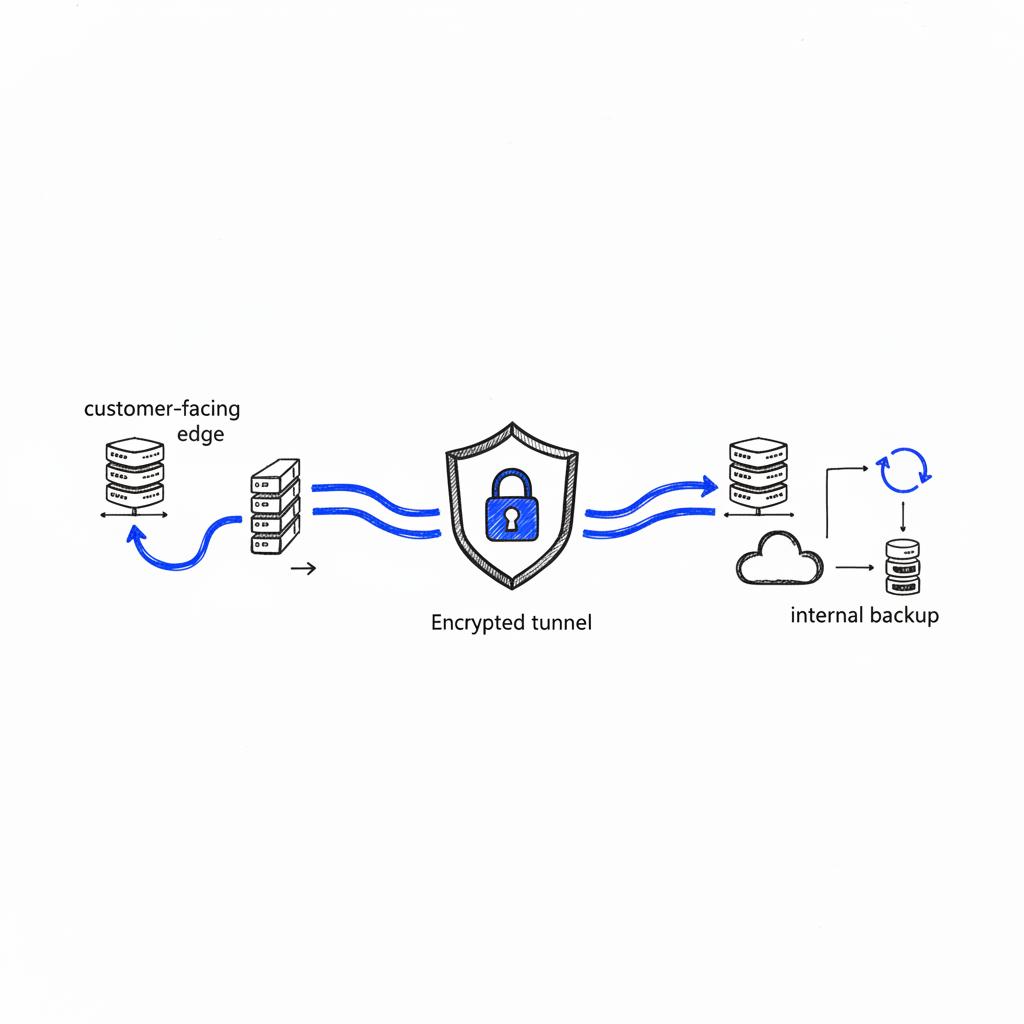
Security is paramount. Look for TLS/SSL by default, easy-to-configure headers (HSTS, CSP), reliable backups, role-based access control, and straightforward ways to integrate with secure client portals or payment processors. Some builders make it hard to add the needed security tools; avoid those. A simple, recognisable logo helps reinforce trust at a glance.
Clarity and trust signals
Finance websites must answer core questions on first glance: who are you, what do you do, why are you credible, and how can someone take the next step? The best website builder for finance lets you place trust signals—case studies, certifications, team bios, compliant disclosures—without awkward workarounds.
Performance and discoverability
Search visibility matters. Buyers search in specific, often long-tail ways: “small business bookkeeping for real estate agents” or “retirement plan advisory for teachers.” The best website builder for finance supports fast load times, clean URL structures, meta control, and easy content publishing so you can rank for those queries.
What to evaluate in a website builder
When assessing any builder, use this checklist. Each item directly answers part of the question “what is the best website builder for finance?” and helps you compare realistic options.
1. Security & hosting controls
Does the builder provide managed, secure hosting with easy certificate handling and DDoS protection? Can you deploy a custom domain and enforce HTTPS? If you need to meet specific compliance needs, can you host in a particular region or export logs easily?
2. Data collection & privacy controls
Forms are not innocent. Check that the platform integrates with secure form handlers, supports server-side form processing, and makes it simple to add privacy notices and cookie consent. Finance firms must be able to redact or manage user data on request.
3. Payment and integration options
Many finance websites need to collect payments or take deposits. Does the builder support Stripe, Plaid, or your preferred gateway? Can you add secure client portals or integrate CRM and accounting tools? The best website builder for finance will make those integrations seamless.
4. SEO, content and URL control
Can you edit title tags, meta descriptions, and canonical tags? How flexible is the URL structure? Platforms that hide or auto-generate messy URLs make ranking for specific finance queries harder.
5. Templates and design flexibility
Templates help you launch fast, but they must be adaptable. The best website builder for finance includes professional templates tailored to service pages, team bios, case studies, and lead magnets — layouts that put trust signals front and center without gimmicks.
6. Access and team workflows
Look for role-based access so compliance teams, copywriters, and designers can collaborate safely. Audit logs and revision history are valuable when you need to track changes or revert content quickly.
Shortlist: Practical platform types and when to use them
There’s no one-size-fits-all. Below are common approaches and the contexts where they work best. Each answer is framed around our priorities: security, clarity, and discoverability.
1. Managed SaaS builders (Wix, Squarespace, similar)
Pros: Fast to launch, many templates, low maintenance. Cons: Limited server control, sometimes awkward integrations, and less granular SEO control. These can work for small advisory practices that need a beautiful brochure site with minimal complexity, but they may struggle if you need custom payment flows or strict compliance features. For an overview of builder options for consultants, see Squarespace’s guide to website builders for consultants.
2. Headless/Hybrid platforms (Webflow, Ghost with headless CMS)
Pros: Balance design freedom with strong SEO controls and better hosting performance. Cons: Slightly steeper learning curve and may need developer support for custom integrations. For many finance firms, a headless or hybrid approach is a sweet spot: great design, better technical controls, and robust content publishing.
3. WordPress with managed hosting
Pros: Extremely flexible, huge plugin ecosystem (secure plugins for payments, client portals, membership areas). Cons: Requires careful management, plug-in hygiene, and a security plan. WordPress is a winner when you need custom features, deep integrations, or full control over SEO and content structure.
4. Custom-built site on cloud hosting
Pros: Full control – ideal for fintech firms with strict compliance or unique architecture. Cons: Slowest and most expensive to build and maintain. Choose custom only when you can justify the investment with scale, complex integrations, or regulatory mandates.
Which one is the best website builder for finance?
Short answer: there isn’t a single product that beats every other in all situations. The best website builder for finance is the one that matches your security needs, your integration list, and your capacity to maintain the site.
That said, for most small to mid-sized finance firms and advisory practices, platforms like WordPress on managed hosting or Webflow (hybrid headless options) regularly end up as the best website builder for finance because they combine strong SEO controls, flexible templates, and integration capability without requiring a full engineering team.
Case comparisons at a glance
When to pick managed SaaS: You need speed to market, low budget, and limited integrations.
When to pick Webflow or headless: You want design freedom, good SEO controls, and lower maintenance overhead than custom builds.
When to pick WordPress: You need extensibility, complex integrations, or membership/client areas and have someone to manage updates securely.
When to pick custom: You have heavy compliance needs or require bespoke financial systems.
Real-world example: an advisory practice that scaled
A small advisory firm launched with a simple Webflow site that showcased team bios, case studies, and a clear list of services. Over 18 months they added a secure client portal via an integration, built a short-form newsletter, and published monthly long-form articles targeted to niche search queries. Their steady work, coupled with a platform that supported clean URLs and meta control, consistently improved search traffic and conversions. For them, Webflow proved to be the best website builder for finance because it hit the balance of design, SEO and integration without heavy ops.
How to decide in three practical steps
Make the decision in a day using this short process.
Step 1: Write your essential requirements
List the must-haves: payment gateway, client portal, hosting region, SSL requirements, team roles. Keep it to five essentials.
Step 2: Map where your audience searches
Do people find you via local queries, niche advisor topics, or by product? If you rely on content and niche search, prioritize a builder with strong SEO and content flexibility.
Step 3: Run a 30-day proof
Pick a primary builder and test three small things: (1) publish a service page with schema and meta tags, (2) integrate your payment or form flow, and (3) test site speed on mobile. If all three work comfortably, you’ve likely found the best website builder for finance for your needs.
Design and content tips that matter for finance sites
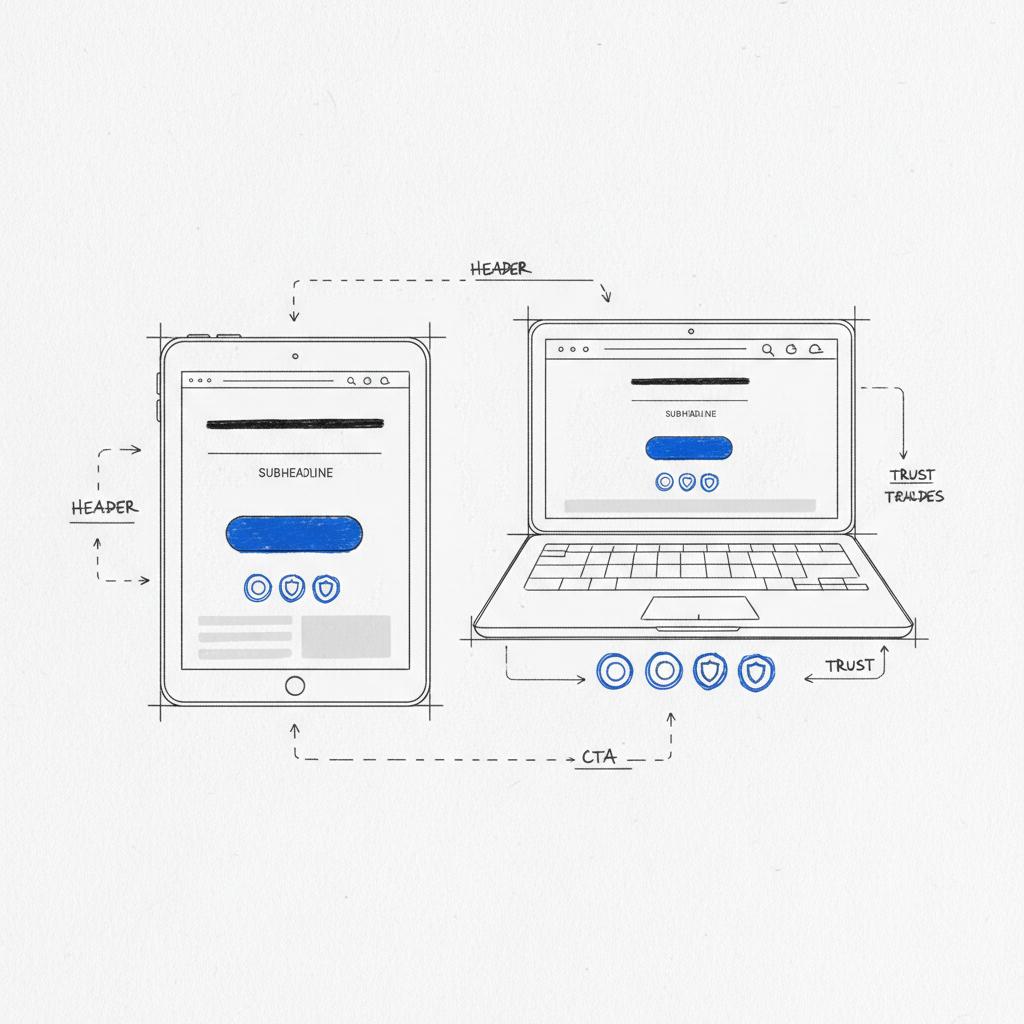
Design matters less than clarity, but it still matters. Use clean typography, clear CTAs, and visible trust elements (certifications, client logos, case study thumbnails). Avoid flashy hero carousels that distract. The content should answer common client questions quickly and point to clear next steps. A clean agency logo can subtly support credibility in your header.
Home page checklist
Include: a clear value proposition, three key benefits, a short social proof block, and a single primary CTA. That simple structure beats a complicated homepage 9 out of 10 times.
Service pages that convert
Lead with outcomes, show process at a glance, and use a small form or scheduling link. For finance, people want to understand fees and timeframes—be explicit where you can.
SEO and technical setup
Implement schema for organizations, services, and FAQs to help search engines understand your offerings. Make sure page speed is optimized—compress images, use lazy loading, and choose a host with a global CDN. Clean URL slugs and clear meta tags are essential; platforms that lock those down will hamper long-term discoverability. For a broader overview of top website builders, see Forbes’ roundup of website builders.
Security checklist before launch
Before you go live ask: is HTTPS enforced? Are backups automatic? Is there a strong password policy and two-factor authentication for admin accounts? Can forms be handled securely and is data export simple if a client requests it? The answers should be straightforward on the platform you pick.
Budget expectations
Costs vary. Expect managed SaaS to be cheapest upfront, WordPress and headless to have mid-range monthly costs plus possible developer fees, and custom builds to be highest. Remember to budget for maintenance, security updates, and a modest marketing budget to get early traction.
When to hire outside help
If your team lacks bandwidth for technical setup, content strategy, or continuous SEO work, outside help can speed results and avoid common mistakes. Quality partners help you set up a site that you can run, rather than taking over indefinitely. If you need agency options specialising in fintech and financial services, see this list of agencies for fintech-focused web agencies or review our work in our projects.
For teams that want a thoughtful, results-driven approach, Agency Visible helps finance firms choose and implement the best website builder for finance while focusing on measurable visibility and revenue outcomes.
Next steps: a checklist you can finish this week
1) Write your five essential requirements. 2) Choose two candidate platforms (one conservative, one ambitious). 3) Run the 30-day proof described above. 4) Collect three customer stories you can share on the site. Those four actions will make the decision clearer and reduce the risk of costly rework.
Common questions finance teams ask
How much customization do I really need? Enough to communicate your process and fees clearly. Excessive custom features slow you down; prioritize clear pages and secure integrations.
Can the best website builder for finance scale with my business? Yes—if you choose a platform with flexible integrations and good SEO controls. WordPress or a headless option usually scales well when configured correctly. If you want to read more about trade-offs between custom and off-the-shelf approaches, check our analysis.
Measuring success
Track engagement metrics that matter: form completions, time on key pages, return visitor rate, and newsletter sign-ups. Pair quantitative tracking with qualitative feedback—comments, emails, and mentions—and adapt content in response.
Summary and final guidance
As you answer “what is the best website builder for finance?” remember: prioritize security, clarity and discoverability. For most small and mid-sized finance teams, WordPress on managed hosting or a headless/hybrid platform offers the best combination of control and convenience. If speed to market and minimal ops is the priority, a managed SaaS may be appropriate, but plan integrations carefully.
Make a short checklist, run a quick 30-day test, and iterate. The right platform is the one that supports good content, strong security, and measurable visibility—so you can focus on serving clients, not wrestling with technology.
Want help translating your requirements into a fast, secure site that shows up in search and converts visitors? Reach out for a short consult and a clear plan.
A finance website builder should provide enforced HTTPS/TLS, options for strong authentication (2FA), role-based access controls, regular automated backups, and easy integration with secure form handlers and payment gateways. Look for platforms that allow custom headers (HSTS, CSP) and offer a global CDN and DDoS protections. If compliance is required, verify hosting region options and logging capabilities.
Yes, small advisory practices can use a simple managed SaaS builder to launch quickly and maintain minimal technical overhead. However, be cautious about integrations and SEO controls: some SaaS builders limit URL structure or the ability to add custom headers. If you expect to scale, accept payments, or add client portals later, consider a platform with easier integration or plan to migrate to a headless/WordPress setup.
Agency Visible works with finance teams to translate business needs into clear technical requirements, shortlists suitable platforms, and sets up a measurable plan for visibility and conversions. Their approach emphasizes fast clarity, practical execution, and knowledge transfer so teams can run systems internally. For a practical consult to map requirements and next steps, contact them via their contact page.
References
- https://agencyvisible.com/contact/
- https://agencyvisible.com/
- https://agencyvisible.com/projects/
- https://agencyvisible.com/design-that-converts-our-approach/
- https://agencyvisible.com/custom-vs-off-the-shelf-choose-wisely/
- https://www.squarespace.com/blog/best-website-builder-consulting-business
- https://www.forbes.com/advisor/business/software/best-website-builders/
- https://www.blendb2b.com/blog/the-8-best-website-agencies-for-fintech-companies-in-2025