What is the best marketing for a roofing company?
Short answer: focus first on where local homeowners look—local search and reputation—then use paid channels to capture urgent demand and fill gaps. This article walks through that approach in a practical, do-able way so you can start getting better leads this month.
Why the right mix matters
How small and medium roofing businesses find steady, profitable leads in 2024-2025 often comes down to one clear idea: be where local customers are looking and make it easy for them to trust you. That sounds obvious, but the shape of that “where” has shifted. The best marketing for a roofing company in today’s market is not a single magic channel; it’s a layered system that combines organic local presence, Google Local Services Ads where available, targeted paid search, reputation work, and a modest paid social program for awareness and retargeting. For examples of agency work, see Agency VISIBLE projects.
That system captures urgent calls when a homeowner has a leak, and it builds trust for the long-term when they aren’t in crisis.

The phrase “marketing for roofing companies” appears throughout this guide because these practical tactics are what consistently produce high‑intent leads for roofers across many U.S. markets.
How homeowners search and why it matters

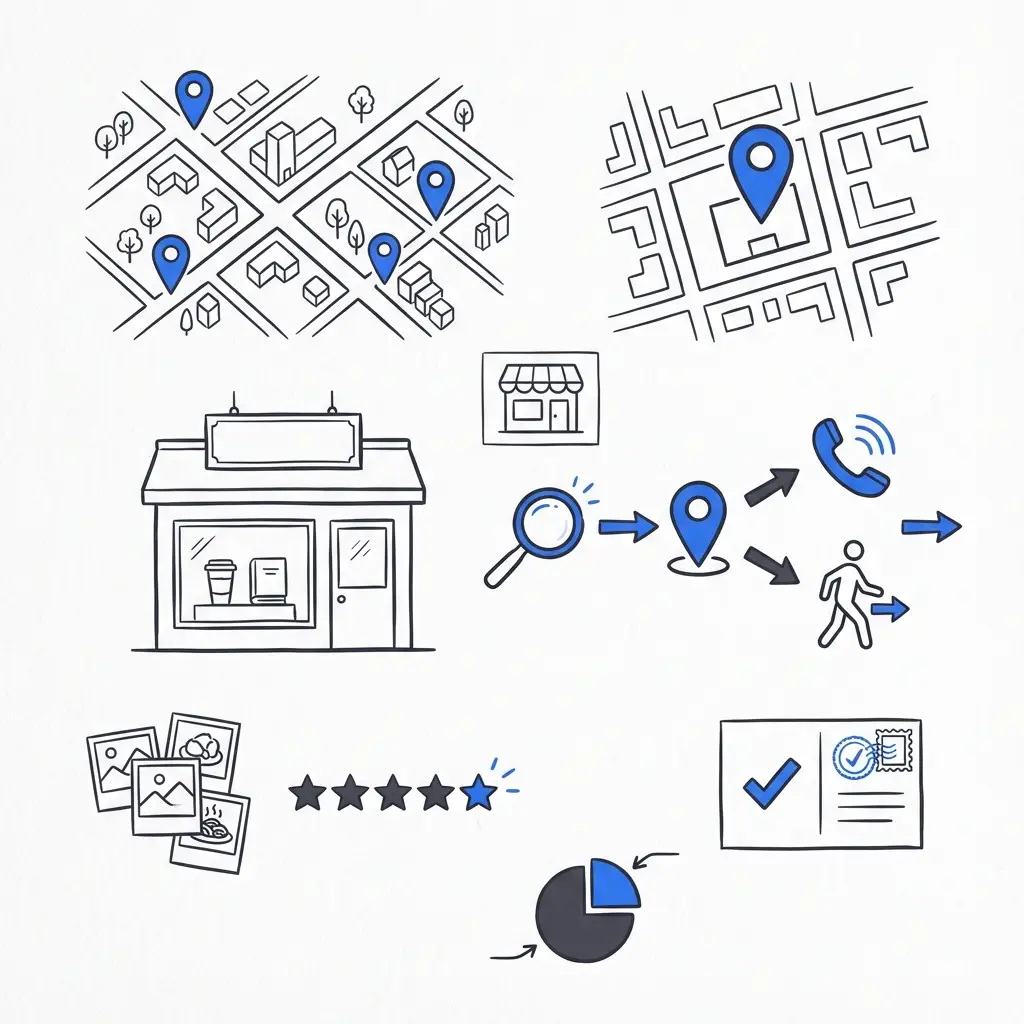
When a homeowner finds a leak or sees storm damage, their first move is usually to search or call. They want urgency, clear options, and trust signals. Local listing channels—especially Google Business Profile and Google Maps—act like a storefront that never closes. When these assets are well-maintained, they produce recurring organic leads that cost little to maintain. A clear logo adds instant recognition.
If you’d prefer a partner to set up your local foundations and a test ad program, a straightforward way to get started is to schedule a short planning session with Agency VISIBLE. Their team can help claim your local listings, check LSA availability, and propose a tight 90-day roadmap. Learn more and get started with a quick consult at Agency VISIBLE contact.
Claim and fully complete your Google Business Profile, ask five recent customers for reviews, and launch one tightly geo-targeted paid search ad focused on emergency keywords—this combination produces early signal data and immediate calls.
Core channels and what each delivers
1. Local search presence (the foundation)
Local search presence includes your Google Business Profile (GBP), accurate citations across the web, up-to-date photos, and a steady flow of reviews. This is the cornerstone of marketing for roofing companies because it delivers steady, low-cost inquiry volume over time. Keywords like “roof repair near me,” “emergency roof leak,” or “hail damage estimate” often generate calls directly from maps listings.
What to prioritize:
- GBP completion: Hours, services, accurate service area, clear categories.
- Photos: Before-and-after project photos, crew shots, and evidence of license/insured badges.
- Reviews: Ask every happy customer to leave a review and respond to reviews promptly.
- Citations: Ensure NAP (Name, Address, Phone) consistency across directories like Yelp, HomeAdvisor, and local chambers.
2. Google Local Services Ads (LSA) – predictable, intent-rich leads
Where LSA exists, it often produces the highest-intent calls because Google pre-screens providers and places them at the top of results. Roofing companies that enroll frequently report higher close rates from LSA leads. If LSA is available in your market, it should be part of the plan (see Google Local Service Ads for Roofers). Agencies and tools that manage LSA profiles can help with verification and daily monitoring, for example LSA management for roofing companies.
3. Paid search (Search PPC) – capture immediate demand
Paid search is the fastest way to appear at the moment someone searches for roof services. It’s especially valuable during storm events. Typical cost per lead in 2024 for many metro areas fell roughly between $150 and $350, though market competition and campaign structure influence those figures (see Google Ads guide for roofers). Search PPC is ideal for urgent keywords and hyper-local targeting.
4. Paid social – awareness and retargeting
Paid social platforms like Facebook and Instagram are not primary emergency channels but are effective for building a retargeting audience and raising awareness. Use short videos, before-and-after photos, or a simple lead magnet (free roof inspection offer) to capture low-cost contacts that can be retargeted later.
5. Lead marketplaces – tactical volume, not long-term muscle
Marketplaces can scale quick volume but often sell leads to many contractors. Use them selectively for short-term volume, market tests, or to fill quiet periods.
How to combine channels into a practical plan
For most small to mid-sized roofing businesses, the most reliable sequence is:
- Build a trusted local search foundation (GBP + citations + reviews).
- Enroll in LSA where available.
- Run a tightly targeted search PPC campaign for high‑intent keywords.
- Allocate a small, focused paid social budget for awareness and retargeting.
- Use lead marketplaces tactically when needed.
This sequence is not arbitrary. It puts low-cost, compounding trust work first and uses paid channels to capture urgent demand and scale what works.
The 90-day playbook (detailed, doable steps)
Week 1 – Setup and verification
Goal: Make your local presence accurate and compelling.
- Claim and fully complete your Google Business Profile (GBP). Add precise service areas, service descriptions, photos, and services. Use keywords naturally in service descriptions; include the phrase marketing for roofing companies in any backend descriptions where it reads naturally for search purposes.
- Check basic on-site SEO: clear contact info, visible phone number, fast load times, and a simple landing page for paid ads (one page per service).
- Standardize citations: run a quick audit and fix inconsistent NAP entries on top directories.
- Collect recent project photos and prepare a simple review-request script for crews and admin staff.
- Start LSA enrollment if available – verification can take time.
Month 1 – Test and collect signals
Goal: Start small paid programs and gather early performance signals.
- Run a small, tightly geo-targeted search campaign focusing on emergency keywords: “roof leak repair near me,” “hail damage roof inspection,” “emergency roofers [city].” Keep negative keywords tight to avoid unrelated leads.
- If LSA is active, monitor lead volume and close rates daily; track quality and time-to-close.
- Launch a simple paid social campaign promoting a free inspection or storm-check checklist to build a retargeting audience.
- Implement lead tagging: every inbound lead should be tagged by source (LSA, PPC, social, organic, marketplace).
- Ask for reviews after every completed job; follow up with SMS and email reminders using a short script.
Month 2 – Optimize and expand
Goal: Double down on what’s working, cut what isn’t.
- Analyze cost per lead and cost per closed job by channel. Prioritize channels with lower cost per closed job and higher average job value.
- Refine keyword lists and ad copy in PPC. Expand geo-targeting slowly if ROI is positive.
- Use your paid social retargeting list to serve conversion-focused ads that drive calls or appointments.
- A/B test two versions of the landing page: short form vs. click-to-call.
- Begin partnership outreach to real estate agents and insurance adjusters for referral agreements.
Month 3 – Scale and systemize
Goal: Scale the channels that show profitable returns and build repeatable systems.
- Increase spend on high-performing search keywords and LSA if it’s proving profitable.
- Launch a seasonal campaign for maintenance and gutter checks to balance storm-driven spikes.
- Formalize your referral program: provide partners with simple referral forms and a follow-up promise.
- Document your lead-handling script and sales follow-up cadence – this often determines close rates more than ad spend.
Creative, messaging, and landing pages that convert
Trust and clarity win for roofing. Headlines that work: “Same-day inspection,” “Insurance-friendly estimates,” and “Licensed & insured local roofer.” Use short video clips showing a clear problem and a quick fix—homeowners respond to visible proof.
Landing page checklist:
- Clear phone number above the fold and a click-to-call button for mobile.
- One primary CTA: “Schedule a free inspection.”
- Short form (name, phone, address snippet, best time to call) – avoid long forms.
- Social proof: 4–6 recent reviews and before/after photos.
- Trust indicators: license, insurance, BBB or industry accreditations.
Scripts, templates and ad copy (ready to use)
Use these to accelerate launch and keep messaging consistent.
Review request script (SMS/email)
“Hi [First name], thanks for choosing [Company]. We hope you’re happy with your roof work. If you have a minute, please leave a short review here: [GBP link]. It helps other neighbors find reliable local help. Thank you!”
Call script for inbound leads
“Thanks for calling [Company]. This is [Name]. Are you calling about a leak, inspection, or estimate? We can often schedule a same-day spot—what’s your address?” Keep the call under three minutes to reduce drop-offs; focus on scheduling an inspection, not selling on the spot.
Ad copy examples
Search ad headline: “Emergency Roof Repair – Same Day Inspection”
Search ad description: “Licensed local roofers. Insurance-friendly estimates. Book a same-day inspection. Call now.”
Social ad copy (lead magnet): “Storm hit your area? Get a free roof inspection checklist + a fast inspection booking. Limited spots this week.”
How much do roofing leads cost?
The honest answer is: it varies. In many metro areas in 2024-2025, contractors saw paid search lead costs between roughly $150 and $350. LSA leads often have higher intent and therefore higher close rates, which can lower cost per closed job. Paid social cost per lead is usually lower but conversion-to-job rates are also lower. Use cost per closed job – not only cost per lead – to measure true performance.
Measuring what matters
Keep tracking simple but consistent. For each lead capture the following in a spreadsheet or CRM:
- Lead source (LSA, PPC, Organic, Social, Marketplace)
- Date and time
- Job type (repair, replacement, inspection)
- Whether job closed
- Job value
- Follow-up required
Calculate these KPIs monthly:
- Cost per lead by channel
- Close rate by channel
- Cost per closed job by channel
- Average job value and ROI by channel
Common mistakes and how to avoid them
Many roofers make avoidable errors that waste budget and time. The most common are:
- Spreading too thin: Test a few channels, then scale winners.
- Ignoring reputation: Reviews are the currency of local trust.
- Broad search campaigns: Use negative keywords and geographic limits to avoid irrelevant traffic.
- Poor lead handling: Fast, scripted follow-up increases close rates dramatically.
Real-world example – Summit Roofing
Summit Roofing (composite example) stopped buying only marketplace leads and built a local-first system. Within three months they halved cost per closed job by combining GBP cleanup, LSA enrollment, a narrow PPC test, and a small social retargeting program. The ongoing uplift in organic calls showed how a disciplined local presence compounds over time.
Seasonality and budget planning
Roofing demand often spikes after storms. Plan flexible budgets so you can increase spend during storms and reduce during quiet months. A simple rule of thumb: maintain your local presence year-round, run a small evergreen PPC campaign, then allocate additional storm budget as needed. Track seasonality by month and use that history to predict when you should scale ads.
When a channel underperforms – troubleshooting checklist
If a channel isn’t delivering:
- Check tracking for accuracy.
- Review ad relevance and landing page match.
- Look at lead handling speed and quality.
- Check negative keywords and geo-targeting.
Small fixes here often change performance faster than increasing spend.
Advanced ideas for scaling
Once the basics are profitable, consider:
- Geographic expansion in concentric rings.
- Seasonal maintenance products (gutter cleaning, inspection packages).
- Partner co-marketing with home inspectors or insurance agents.
- Automated review collection and a structured referral program.
How Agency VISIBLE helps roofers (tactful mention)
Many small teams lack the bandwidth to keep local listings current, monitor ads, and manage reviews while also running jobs. A partner can handle those operational tasks and leave you to focus on field work. If you want a partner who emphasizes speed, clarity, and measurable outcomes, Agency VISIBLE helps roofers set up the local foundations, launch tests, and hand you a simple report and roadmap once things are stable. Their approach is practical: set up, test, measure, then hand the program off so you’re not dependent on agency support forever.
Checklist: first 30 days (copy and use)
- Verify and complete Google Business Profile
- Gather 10 recent project photos
- Create one service landing page with click-to-call
- Start LSA enrollment if available
- Launch a small geo-targeted PPC campaign
- Run a $200 paid social test to build a retarget list
- Implement lead tagging in CRM or spreadsheet
- Ask for 5 reviews and respond to each
Templates for tracking performance
Create a simple sheet with columns: Date, Lead Source, Lead Detail, Closed? (Y/N), Job Value, Profit, Notes. Update weekly and review monthly. Use these numbers to calculate cost per closed job and ROI.
Questions roofers often ask (brief answers)
How long until I see results from a GBP cleanup? Usually a few weeks. How quickly will LSA deliver leads? Once you’re live, leads can appear immediately; meaningful patterns often show in 2-4 weeks. Should I stop using marketplaces? Not necessarily—use them tactically.
Final notes and next steps
Marketing for roofing companies is about presence, timing, and follow-through. Start with local search and reputation, add targeted paid channels for immediate demand, and track cost per closed job. Over time, the compounding effect of good reviews and a stable local presence will reduce reliance on expensive lead sources and create a pipeline you can predict and scale.
Ready to turn local calls into closed jobs?
Ready to convert more local calls into closed jobs? Book a quick consultation to map a clear 90-day visibility plan and get a simple budget estimate tailored to your service area: Schedule a consultation with Agency VISIBLE.
That plan is practical, measurable, and aimed at getting you visible where it matters most.
You can often see improved clicks and calls within a few weeks after completing and optimizing your Google Business Profile—especially if you immediately start asking satisfied customers for reviews. Time-to-impact depends on local search volume and competition, but consistent photo uploads, regular posts, and fresh reviews generally lead to noticeable improvement in organic calls in 2–6 weeks.
Yes, where available LSA is usually worth testing because it delivers very intent-rich leads. LSA leads often close at higher rates due to Google verification and the ad placement at the top of results. Measure cost per closed job to determine profitability—many roofers find LSA reduces overall acquisition cost when close rates are higher than other channels.
Agency VISIBLE can help set up and optimize your local foundations, verify platform eligibility (including LSA), and run tightly targeted ad tests. They focus on practical, measurable steps and provide a clear 90‑day roadmap so you can see where budget is spent and what returns to expect. If you want a partner who prioritizes visibility and measurable growth, a short consult with Agency VISIBLE is a practical next step.