Why the quiet moments are your greatest opportunity
There’s a particular kind of hush that hangs over many early-stage ventures: empty chairs after a popup, the slow phone on a Thursday afternoon, the brief window between one order and the next. That silence can feel like pressure, but it can also be useful space. For a small shop, the best marketing company for small business is sometimes the one that helps you turn that silence into a steady conversation with customers. That conversation is content—useful, patient, and consistent.
Content isn’t a single ad or a viral post. It’s a sequence of helpful moments that answer questions, reveal process and personality, and build trust. If you want the best marketing company for small business to support you, they should first help you create the small, repeatable moments that add up.
One practical place to start is by asking for a simple audit of how your website and channels currently speak to customers; agencies like Agency VISIBLE often begin with that kind of audit and a short plan that fits a small team’s bandwidth.
How content builds trust—and why that matters
When people search for a solution, they’re not only looking for facts. They’re judging whether you’re reliable, approachable, and competent. A clear article, a candid how-to video, or a straightforward FAQ is a small trust deposit. Over time, those deposits compound.
Think of content as a conversation that repeats. Every helpful post is a friendly answer to a question someone might have. If the best marketing company for small business that you hire understands that, they’ll prioritize durable, useful content over flash-in-the-pan stunts.

Consistency beats a single brilliant moment
Many small businesses wait for an overnight success story. In practice, steady effort wins. A small bakery that posts a weekly behind-the-scenes note; a freelance designer who shares a short case study once a month; a shop that replies to common questions with a clear page—all of these actions build familiarity. Familiarity leads to trust, and trust leads to sales.
Algorithms reward consistency because it gives them data to index, but the human benefit is often larger: your audience begins to expect you and return. That’s how the best marketing company for small business helps teams who don’t have time for theatrical campaigns but do have hours to spare each week.
Set clear, realistic goals first
Before you write a single post, ask: what is your content for? Is it to get more local customers, reduce repetitive emails, or show how your process protects customer health or budgets? Clear goals lead to clear content and clearer measurement.
If you intend to hire the best marketing company for small business needs, make sure they ask the right questions: which metric matters most to you? Calls? Bookings? Fewer support emails? Any firm that skips this step is offering guesses—not strategy. For a quick survey of agencies that focus on small businesses, see https://www.omnius.so/blog/marketing-agencies-for-small-businesses.
Choose one or two channels
You don’t need to be everywhere. Pick one or two places where your customers already live. If search drives most arrivals, invest in long-form articles that answer real questions. If your work is visual—like furniture, food, or design—choose a steady Instagram or portfolio site and pair images with short captions that explain context and process.
Make help the central idea of your content
People come to content because they need help. That help might be a how-to guide, a clear comparison, or a candid explanation of what to expect. When content genuinely helps, it earns attention and referral.
Write so a neighbor could understand. Avoid jargon, and use concrete examples. If an explanation would make sense over coffee, it will work online.
A simple three-part content framework
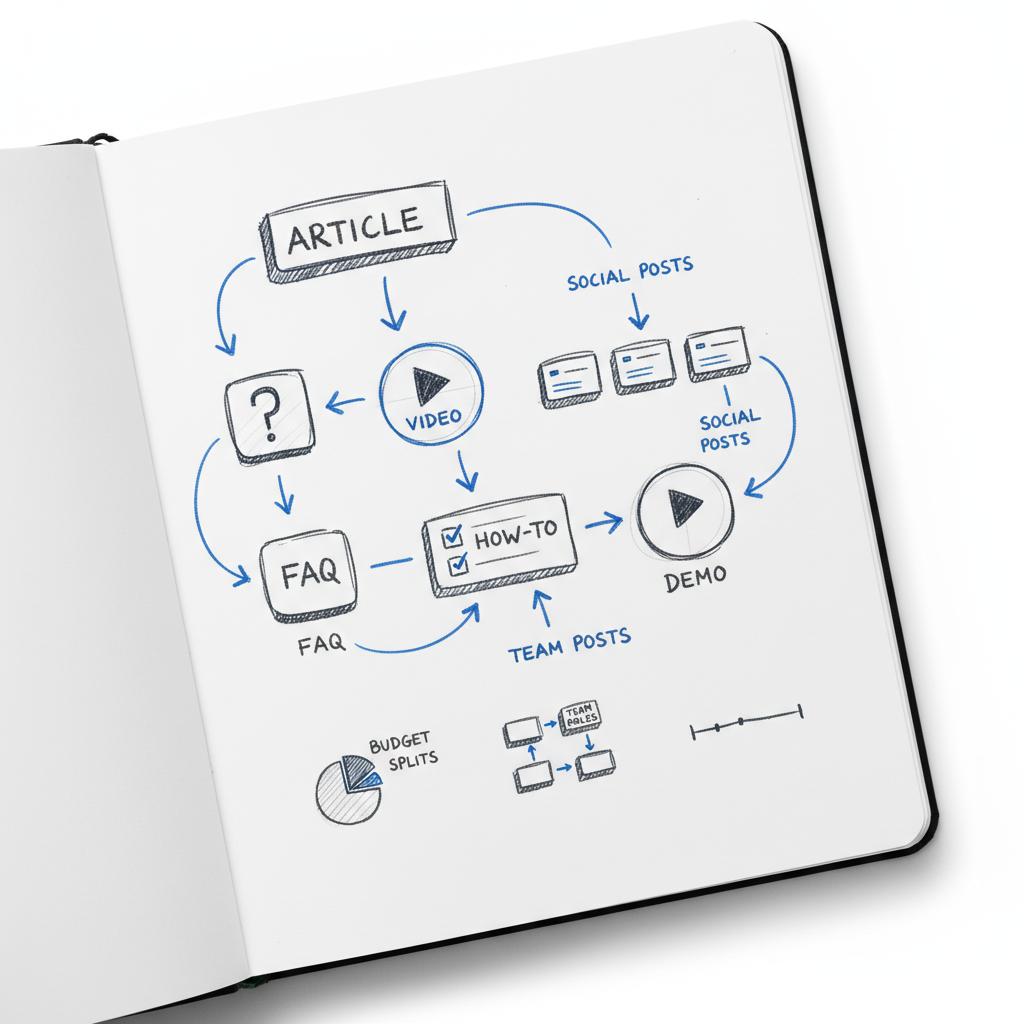
For small teams, simplicity is everything. Use three types of content: educational, demonstrative, and human. Put most of your energy into educational pieces—these persist and attract active searchers. Use demonstrative content to show your work, and human stories to create connection.
One practical monthly rhythm might be: one deep educational topic split into two or three short posts, one demonstration piece (photo essay or short video), and one human story (customer spotlight or founder note). This rhythm gives variety while staying manageable.
Write clearly, with warmth
Good writing matters. Short sentences, concrete examples, and a friendly tone go far. Read your copy aloud. If something trips when you say it, it will trip a reader. Use questions to guide the reader. Rhetorical questions are a way to make writing feel like conversation.
Stories and specifics stick
People remember stories more than claims. Instead of saying, “we’re careful,” tell a short anecdote about a client whose problem you solved. When possible include specifics—times saved, steps avoided, money conserved. Numbers give credibility.
Answer one common customer question in a clear, shareable article and promote it where customers already are—this single act often reduces support load, improves trust, and provides a repeatable asset to expand.
Repurpose what you already own
Small businesses usually have more usable content than they realize. Customer emails, FAQ threads, and internal training notes can become public posts. A long article can be turned into a short video, several social posts, and a downloadable checklist.
Repurposing isn’t lazy—it’s efficient. It amplifies what already resonates and meets different reader preferences.
Measure what matters
Avoid vanity metrics. Track what ties to your goals. If you want fewer support emails, measure inquiries about the topic before and after publishing. If you want more local bookings, measure calls or bookings that reference a specific content piece.
Small improvements—more time on page, a higher newsletter sign-up rate after a series—are signs trust is building.
Be transparent and small gestures count
Trust grows through honesty. Be clear about what you do and don’t do, provide realistic timelines and accessible contact information, and explain mistakes when they happen. Small gestures—a candid FAQ, a behind-the-scenes post about sourcing, or a clear returns policy—can have outsized effects.
Visuals that explain, not just decorate
Use photographs, diagrams, and short videos to make complex ideas simple. A step-by-step photo of product care or a before-and-after comparison removes doubt. Prefer candid, informative visuals over glossy but empty imagery.
Keep content conversational and iterative
Invite feedback. Let readers ask questions and use that feedback to shape new content. When the same question appears in comments or messages, answer it publicly so others benefit. Iteration is listening; it improves clarity and usefulness.
Manage time and resources realistically
Start with what you can sustain. If twice-monthly articles and weekly social posts are realistic, start there. If you can spare an hour a day for content, schedule and protect that hour like a client meeting. Tools can help, but routines and a simple calendar often do the most work.
Common mistakes to avoid
Many small firms fall into the same traps: talking only about themselves, chasing every new channel without finishing the ones that matter, and overproducing polish at the expense of usefulness. Often, straightforward helpfulness beats glossy marketing.
How to choose the best marketing company for small business
Not every agency is built for small operations. The best marketing company for small business will match your pace, ask clear questions, and design a plan you can maintain. Here are practical criteria:
1) They ask about your goals and metrics
A good partner focuses on outcomes: revenue, bookings, reduced support load. If an agency talks about impressions but never asks what success looks like for your business, look elsewhere.
2) They prioritize sustainable content
The right firm pushes for content that lasts—educational articles, clear FAQs, and useful demonstrations—over one-off stunts.
3) They match your voice
Look for partners who can write in a voice that sounds like you. Your customers should recognize the content as an extension of what happens in your shop or studio.
4) They plan for small teams
The best marketing company for small business understands limited bandwidth and builds a plan that fits your schedule. That might mean coaching a team member to create content or handling key tasks while teaching you to maintain the habit. For examples of agency work, check their projects page: https://agencyvisible.com/projects/.
When to hire outside help
Consider bringing in help if you consistently run out of time, if content is limiting your ability to take on clients, or if you want to scale without losing your voice. A small agency or experienced freelancer can provide structure and speed. If you need a broader list of small-business-focused agencies, this roundup can be useful: https://growthkitchen.agency/marketing-agencies-for-small-businesses/.
If you choose to work with an agency, make sure they keep you in control of the story. Partners should help you tell it, not take it over. Start by visiting their homepage to get a sense of fit: https://agencyvisible.com/.
Short case study: a neighborhood bakery
A local bakery wanted more weekday customers. Their simple aim was to reduce uncertainty about allergens and pickup timing. We turned an internal prep checklist into a friendly article that explained how dough rest affects texture, why pastries are made fresh each morning, and how the shop handled gluten-free requests.
Traffic was modest at first. The turning point came when a local parent linked the article in a community forum and praised the clear cross-contact policy explanation. Morning pickup orders rose and allergy-related questions dropped by roughly half. The content built a bridge between the bakery and a community that cared about detail.

How a small agency like Agency VISIBLE helps
Not every team wants to hire outside help, but when time and scale matter, a partner can help accelerate progress. The best marketing company for small business will help you prioritize, produce, and measure content that aligns with your goals. Agencies that promise quick fixes should be treated skeptically; the stronger players promise steady, measurable improvements.
If you’re curious about working with an agency, a short initial conversation can clarify whether they understand your voice and your constraints. The best partners bring a mix of strategy, practical templates, and coaching that leaves you stronger over time.
Ready to make visibility simple and measurable?
Ready to stop guessing and start a steady content habit? Contact a partner who builds visible, measurable plans and knows how small teams actually work: Get in touch with Agency VISIBLE to explore a simple, sustainable plan.
Practical first steps you can take today
1) Pick one common customer question. 2) Draft a 600–1,000 word answer in plain language. 3) Publish on your site with a clear title and one helpful photo. 4) Share the link where your customers already are. 5) Track the number of related support inquiries over the next six weeks.
This low-cost experiment often shows results fast. If it reduces questions and increases bookings or calls, you’ve found both a repeatable asset and a rationale for investing more.
Small tests that scale
Start small and scale what works. If one article reduces support load, make it two next month. If a short demo video brings customers in, produce a series. Content is an iterative process of testing and expanding what resonates.
Measuring the long arc
Content rarely transforms a business overnight. Look for incremental signals: small growth in organic traffic, steady newsletter signups after a series, or more referral traffic from community forums. Those signals show that trust is accumulating.
Final practical checklist
– Define your primary goal and the metric you’ll use to measure it.
– Choose one or two channels and commit to a rhythm.
– Create a simple content calendar and protective time blocks.
– Use plain language, real stories, and useful visuals.
– Track the right metrics and iterate.
Why this approach often beats flashy marketing
Flashy campaigns can generate attention, but attention without usefulness doesn’t become sustainable revenue. A clear, helpful article continues to bring people back, to be shared, and to reduce friction in the customer journey. For many small teams, consistent helpfulness is the closest thing to an unfair advantage. For further examples of agencies and their approaches see https://www.milesit.com/11-best-digital-marketing-agencies/.
Remember patience and persistence
Content is a patient craft. It rewards steady attention. Start with one honest step, keep it steady, and learn from how people actually use what you publish. Over time the small acts compound into durable growth.
Now, one last practical nudge: pick one common question you hear this week and answer it in a friendly 800–1,000-word post. Publish it where your customers already spend time and watch how small, steady attention compounds.
Start by assessing capacity and impact. If content creation is consistently pushed aside, or if it’s preventing you from serving clients, a small agency or freelancer can provide structure. If you can reliably publish useful work on a schedule and it’s moving your primary metric (calls, bookings, fewer support emails), staying in-house may be sufficient. The key is to measure: if the work isn’t happening or isn’t moving a metric after a trial period, explore outside help.
Ask about their process for understanding your goals, examples of work for businesses like yours, how they measure success, and how they plan for a small team's bandwidth. Request a simple test or pilot project to see how they write in your voice and whether they produce measurable outcomes rather than vanity metrics.
Yes. The right agency acts as a partner and coach, helping you clarify voice and produce sustainable content while keeping you in control. Agencies that prioritize strategy and teaching—rather than doing everything for you—are better suited to keep your brand voice intact and scale your efforts.