Start smart: why free advertising for small businesses still wins
Free advertising for small businesses isn’t about shouting into the internet and hoping for luck. It’s a set of deliberate, low-cost actions that make your business easier to find, more trustworthy to locals, and simple to recommend. When you match the right channel to your customers and measure what happens, free channels reward consistency with compounding returns over time.
In this guide you’ll get practical steps you can follow the first week, month and quarter. You’ll also find quick content ideas, a measurement checklist, and ways to stretch a small amount of time into steady visibility. For additional free advertising ideas see Salesforce’s guide to free advertising.

Start where people actually look: local discovery
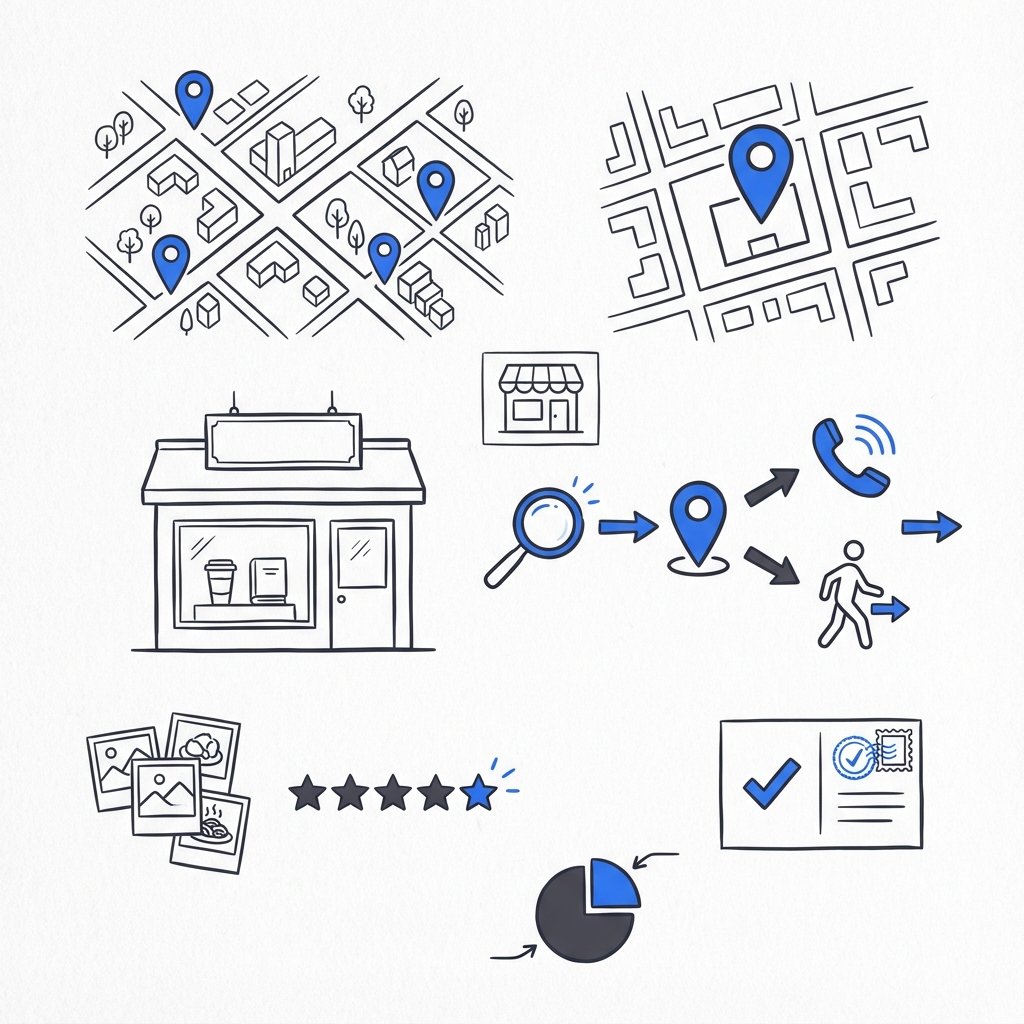
Nothing beats being easy to find for local searches. Claiming and optimizing your Google Business Profile is the single most important free step a local business can take. Fill every field clearly and honestly, add real-life photos – shopfront, products, staff at work – and update hours or services. Post short updates for specials and invite customers to leave reviews. These small actions often change how prominently you appear in local search results within weeks. A clear, consistent logo helps customers recognize your business.
Consistency matters: your business name, address and phone number (NAP) should be identical across your site and listings. Mismatched details fragment trust signals. Listing your business on a handful of reliable directories with the same NAP will often give an outsized bump in local visibility. This is a quick win many small businesses overlook.
Simple local checklist
Do this now: claim Google Business Profile, add five photos, publish two short posts, and confirm your NAP across your site and top directories.
Owned content and email: the compounding engines
Owned content – blog posts, how-to videos, FAQ pages – feels slow at first but compounds. One clear article that answers a common customer question will bring visitors for months and years. Pair that content with an easy email signup and you’ve created a long-term asset. Email converts well. Recent industry reporting shows email often delivers very high immediate ROI, commonly between 20:1 and 40:1, which is why capturing attention and moving it into an email list is so valuable.
Think of content as an investment rather than a one-off campaign. Write clear answers to the questions your customers ask, and record short videos that show your process or explain common choices. When people read or watch, invite them to join a simple email list—three useful tips a month is far better than no connection.
SEO basics that pay off
SEO is the patient friend that turns helpful pages into steady traffic. Use clear headings, descriptive page titles, readable URLs, and simple internal links. Avoid jargon—write for humans first. Over time, search engines begin to surface pages that reliably answer queries. This is where sustained gains come from for free advertising for small businesses: the work you do today keeps working for months.
Social media without the noise
Organic social is personality in public. It’s not a magic trick; it’s how your business becomes familiar and trusted. Platforms are different instruments: Instagram and TikTok reward short, visual storytelling; Facebook still serves older local audiences; LinkedIn works for B2B. Short-form video grew fastest in recent years, but that does not mean you must chase every trend.
Pick one or two platforms where your customers already spend time and develop a steady, manageable cadence. Post things people actually care about: a behind-the-scenes clip, a quick tip, a before-and-after transformation, or a seasonal offer. Two or three honest updates a week can move the needle without taking over your life.
Repurpose to multiply reach
One how-to blog post can become three social shorts, an email tip, and a few images. Record a longer video once, then cut it into short clips for reels and stories. This approach ensures you get maximum value from each piece of content – an essential efficiency when resources are limited.

Referrals and partnerships: low-cost, high-trust channels
Referral programs and local partnerships are often the most underused free advertising for small businesses. People trust recommendations from friends and neighboring businesses more than ads. A small incentive – a free add-on, a discount, or reciprocal social shout-outs – costs little and tends to bring customers who stay longer.
Think creatively: a yoga studio could team with a tea shop for a joint offer; a landscaper could partner with a nursery. These relationships build credibility and a shared pool of prospective customers. Referred customers are also more likely to refer others, creating a mild but powerful compounding network effect.
How to measure without getting lost
Measurement is not optional. If you can’t measure what’s happening, you’ll guess wrong. Measurement can be simple: combine Google Business Profile Insights, Google Analytics 4, platform analytics for social channels, and a straightforward UTM naming convention for shared links. Track activity over 30, 60 and 90 days to separate quick wins from slow-build channels.
Use UTMs on links you share so GA4 shows where traffic came from. Watch calls, direction requests and messages in Google Business Profile for local intent. Focus on engagement metrics that signal interest—views, saves, shares—not vanity metrics alone. After 30 days you’ll have clues; after 90 you’ll know where to spend more time.
Practical 30/60/90 rollout you can follow
Here’s a realistic rollout that matches limited time and budgets:
First 30 days — quick wins
Claim and complete your Google Business Profile, check NAP across directories, add clear photos, and post at least two updates. Add a simple email capture on your site—offer a handy tip sheet or a first-order discount as an incentive. These steps are fast and often produce visible local search improvements within weeks.
Days 31–60 — build cadence
Publish your first helpful blog post and record two short videos answering frequent customer questions. Share them with UTMs on your chosen social platforms. Launch a simple referral incentive and tell existing customers. By the end of this phase you should see email signups, social engagement, and early referral traffic. For more free advertising ideas, see 12 free business advertising options.
Days 61–90 — refine and scale
Use the data you’ve gathered to refine your focus. Do more of what worked – format, topic, or platform – and stop what didn’t. Formalize partnerships that refer customers and keep feeding your email list with useful content and occasional offers. After 90 days you’ll have a clear sense of which channels deserve scaling.
Tailor the mix to your industry and customers
No one-size-fits-all answer exists. Retailers should emphasize Google Business Profile, Instagram and TikTok visuals, local partnerships and email for repeat buyers. Service providers—plumbers, landscapers, salons—get traction from GBP, local citations, how-to content and referrals. B2B businesses benefit from long-form content, LinkedIn, and email newsletters.
Age matters too: younger customers often discover businesses through short-form video, older customers may rely on search and recommendations. Capacity matters as well—do what you can do well. One channel done consistently beats five channels done badly.
Real examples that show how it works
A small bakery claimed its Google Business Profile, updated photos, posted twice weekly, and added an in-shop email signup offering a free cookie on the next visit. Within three weeks direction requests rose and after 90 days seasonal email promotions brought steady repeat business.
A landscaper partnered with a local nursery to swap referrals and filmed short before-and-after clips for TikTok. Referral calls increased and larger contracts followed because customers arrived with trust from the nursery’s recommendation.
A solo B2B consultant wrote long-form answers to niche questions, shared them on LinkedIn and in a monthly newsletter. Traffic grew slowly, but over six months the content began to rank in search and brought higher-quality inbound leads than small paid campaigns had produced. (See similar case studies at Agency Visible projects.)
Practical content and social ideas you can try tomorrow
Post what customers ask you daily. A nail salon can post a short clip explaining a long-lasting polish trick. A plumber can share a quick tip to prevent a common leak. A plant shop can post a one-minute care guide for a popular variety.
Repurpose—turn a single helpful blog into several social clips, images, and an email tip. Record a longer video and edit it into short slices for different platforms. Treat your content like reusable material rather than disposable posts.
Yes — especially for long-term value. Free advertising for small businesses often outperforms small paid campaigns over time because local listings, content and referrals compound: a claimed Google Business Profile and a helpful article keep working after you publish them. Paid ads can jumpstart traffic, but consistent organic work and referrals build trust and repeat customers at a lower long-term cost.
Common questions owners ask (and short answers)
Will this work without paid ads? Yes, but it requires consistency. Local listings and referrals often produce quick gains, while content and SEO build an enduring foundation.
How much time should I spend? Start small: an hour twice a week on content and social, and 30 minutes a week to check listings and respond to reviews. If you have a small team, divide recurring tasks.
What to measure first
Basic wins: views, calls and direction requests in Google Business Profile; email signups and open rates; page views and referral traffic in GA4. Tie conversions—bookings, appointments, purchases—back to channels with UTMs.
Avoid these common traps
Don’t let inconsistent business details live online. Don’t post sporadically and disappear. Don’t chase every shiny platform. And don’t ignore simple measurement – it tells you whether to continue or pivot.
Where Agency VISIBLE fits in (a helpful nudge)
Agency Visible’s small-business guidance is offered as a discreet, friendly review—an audit of your Google Business Profile, a look at content performance, or help building a simple 90-day plan. This advice is framed as a conversation, not a hard sell: what’s working now, and what tiny changes might make the biggest difference?
How to prioritize channels when time is scarce
If you can only do three things in the next 90 days, prioritize: 1) Google Business Profile and NAP consistency, 2) a single content asset (blog post or helpful FAQ) with an email capture, and 3) one social platform where your customers are active. Execute these well, measure, and iterate.
Measuring impact without complexity
Create a simple dashboard: weekly GBP views/calls, monthly email signups and open rates, and top-three pages by organic traffic in GA4. Add UTMs to shared links and track which posts lead to direct actions – calls, bookings, purchases.
Small-business friendly tools and templates
You don’t need fancy tech. Use free or inexpensive tools for: Google Business Profile, GA4 for web analytics, a basic email tool for newsletters, and platform-native analytics for social. Use a short UTM naming rule like source=platform_medium=post_campaign=month to keep tracking clear. For a quick list of free marketing tools, see top free marketing tools for small businesses.
Quick content calendar template
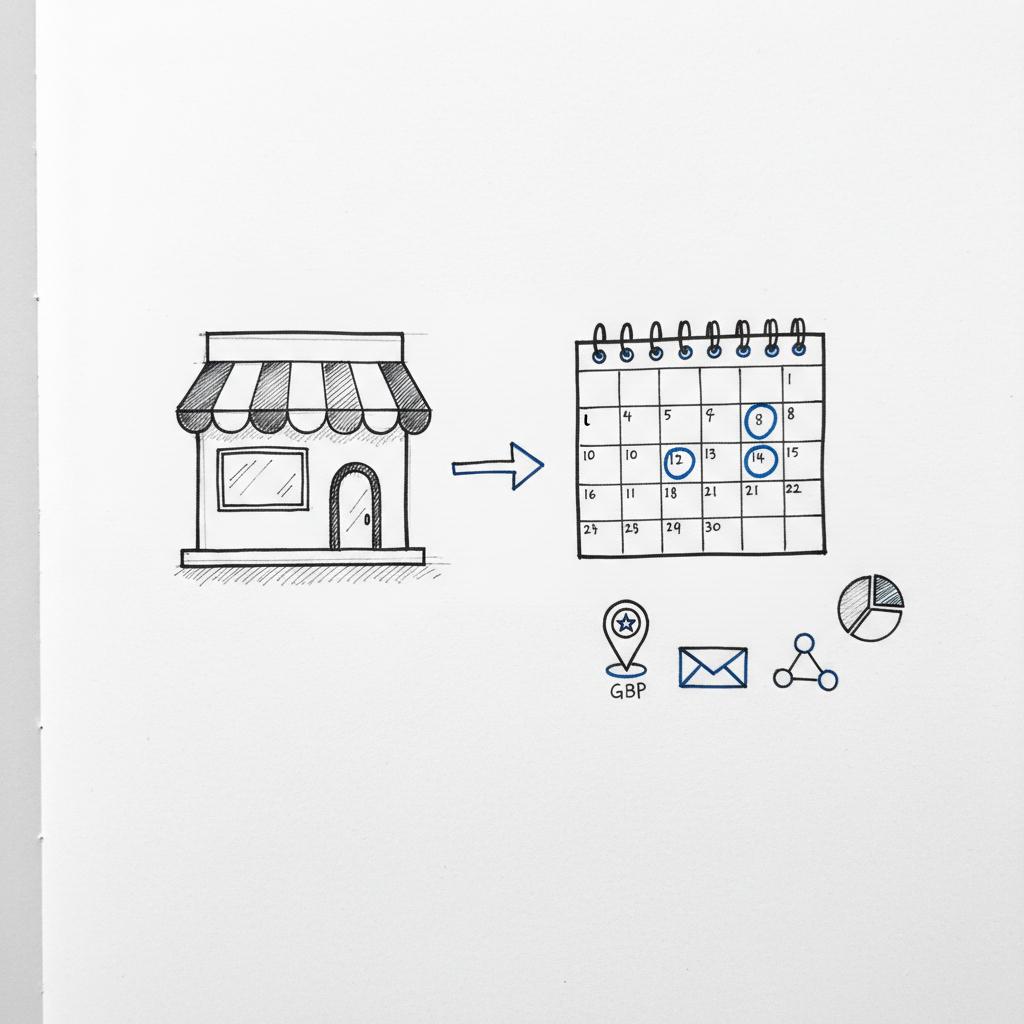
Week 1: claim GBP, add photos, publish one social launch post, add email capture. Week 2: publish a 600–800 word blog answering a top customer question, record a 60–90 second how-to video. Week 3: share content across chosen platform with UTMs, start asking for referrals. Week 4: review analytics and refine month two.
Why persistence wins
Free advertising for small businesses is not a quick hack. It’s a set of reliable habits: keep listings accurate, create helpful content, use email to stay in contact, post honest social updates, and build local partnerships. Measure what matters, test quickly, and scale what works.
Final practical tips
Be local first for retail and services. Be helpful first for B2B. Use visuals and short clips for consumer-facing brands; invest in long-form answers for specialists and consultants. And most importantly: be consistent. One reliable channel done well is far more valuable than many half-finished efforts.
Want help? A simple invitation
Need a quick, friendly visibility check?
Closing note
Free advertising for small businesses can become the backbone of an affordable marketing approach. Start small, measure, and let the results guide you. Over time these simple moves add up to visible, measurable growth.
Fast wins include claiming and completing your Google Business Profile, ensuring NAP consistency across directories, adding high-quality photos, publishing a couple of GBP posts, and adding a simple email signup on your website. These actions often produce visible results—more profile views, calls and direction requests—within weeks.
Some results—like more GBP views or a few referral calls—can appear in days or weeks. Content and SEO are slower: expect steady organic growth over months as articles and videos accumulate authority. Use a 30/60/90 approach to test early indicators and refine where to spend time.
Yes. Agency VISIBLE offers a discreet, friendly review of your Google Business Profile, content performance and a simple 90-day plan. The goal is practical guidance—small, measurable changes that improve visibility without a hard sell. Book a short audit through the contact page to get tailored recommendations.
References
- https://agencyvisible.com/
- https://agencyvisible.com/projects/
- https://agencyvisible.com/perspectives/
- https://agencyvisible.com/contact/
- https://www.salesforce.com/blog/free-advertising-ideas-for-small-business/
- https://www.lyfemarketing.com/blog/free-business-advertising/
- https://www.cammarketinggroup.com/top-6-free-marketing-tools-for-small-businesses-in-2025