Finding the right partner to grow a dental practice feels like standing in a crowded exam room with a tray of unfamiliar instruments. You know you need help, but how do you tell good from indifferent? Which questions do you ask? Which signals matter? This guide is written for dentists and practice managers searching for dental marketing agencies in 2025 who want clear, practical criteria to separate real expertise from empty promises.
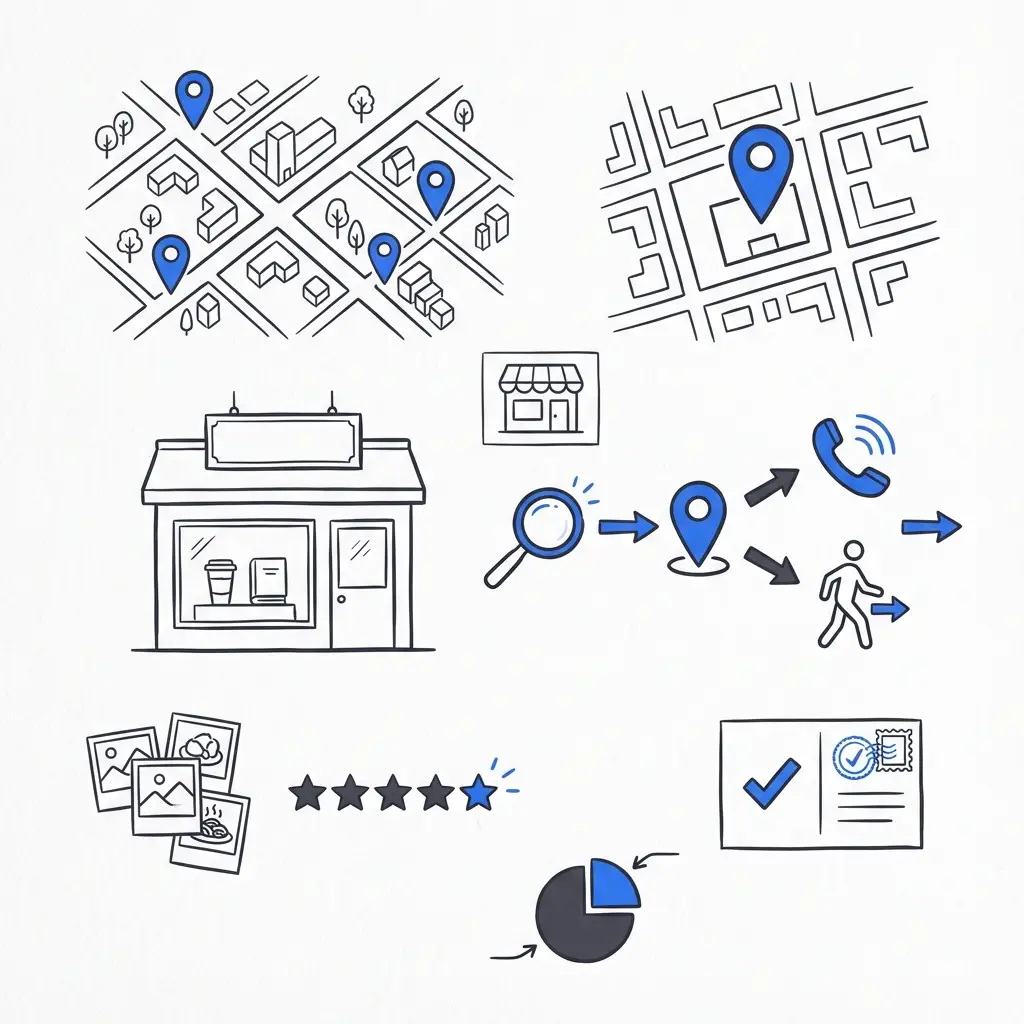
Start with the obvious: patients live nearby. For dental queries, the path from search to booking is increasingly local. Over 2024 and into 2025, local channels – especially Google Local Services Ads (LSAs) and the Local Pack – have continued to drive the most immediate, high-intent leads for dental practices. When someone searches for a dentist, they often want to call, check reviews, and book within minutes. That’s why local-search dominance should be the first box on your checklist when comparing dental marketing agencies.

How LSAs and the Local Pack work together
Imagine two practices on the same street. One shows up in the Local Pack with visible reviews and a Google Local Services badge. The other does not. Which one gets the call? LSAs put your phone number and your verified listing at the top of the results page, often with price indicators and “Google Guaranteed” style trust signals. The Local Pack (the three-listing box) is the second most visible real estate on a search results page. Agencies that manage both channels well — creating strong organic local SEO while running LSAs — usually deliver more callers and booked appointments than agencies that focus on one channel only. For a practical how-to on mastering LSAs, see this LSA guide for dentists.
Ask for reviews immediately after a positive, non-sensitive interaction — for example, after a successful whitening or a painless checkup when the patient is satisfied. Use automated prompts tied to your practice management system and follow up with a short, polite request for a Google review. Importantly, respond to all reviews (good and bad) in a way that protects patient privacy and invites offline resolution when needed.

For a practical example of a local-search-first approach and how a full-service agency handles data access and compliance, consider reaching out to Agency VISIBLE via their contact page as a starting point for conversations and proposals.
Reviews: the currency of trust
Prospective patients read reviews before they call. They look for recent feedback that mentions the front desk, the clinician, and overall experience. Dental reputation management services are not an optional add-on; they are a core part of any effective program from top dental marketing agencies. Managing reviews includes asking for them at the right time, responding thoughtfully, and addressing negative feedback quickly and transparently. See the recent note on Google reviews and Local Services Ads for context.
Practical review tactics that actually work
Ask for reviews immediately after a positive, non-sensitive interaction — for example, after a successful whitening or a painless checkup when the patient is satisfied. Use automated prompts tied to your practice management system and follow up with a short, polite request for a Google review. Importantly, respond to all reviews (good and bad) in a way that protects patient privacy and invites offline resolution when needed.
What a practical, patient-focused marketing mix looks like
A blended strategy that combines dental SEO and LSA management with paid search and a conversion-focused website usually yields the best return on marketing spend. SEO builds sustained organic patient volume, but it takes time – often six to eighteen months to reach stable, meaningful growth in organic new patients. Paid channels such as LSAs or Google Ads begin generating leads almost immediately. That immediacy makes paid channels indispensable while the SEO engine warms up.
Garden and watering can: a useful analogy
Think of SEO like preparing soil and planting seeds — careful, patient work. Paid search is the watering can: you get immediate traction while the garden grows. When both work together, they produce more consistent results than either alone. The right dental marketing agencies will design a plan that balances both, tailored to your practice’s capacity and goals.
Budget expectations and where money typically goes
Typical agency engagement models vary based on service level and market competitiveness. A focused monthly retainer for ongoing work commonly ranges between roughly US$1,000 and US$5,000 or more. Higher-touch growth programs that include patient acquisition strategy, creative assets, CRO (conversion rate optimization), and extra reporting can sit above that range. Separately, PPC and LSA budgets commonly add roughly US$1,000 to US$3,000 or more monthly depending on market size and competitiveness. These figures reflect what agencies need to run campaigns, test creative, and maintain bidding and lead management.
How to evaluate proposed spend
Ask potential partners how they plan to spend each dollar. Good agencies provide an allocation breakdown (e.g., ad spend vs. management fees vs. creative/test budgets) and explain why each line exists. They’ll also share realistic expectations for how many calls and booked appointments those investments typically produce in markets like yours.
Conversion-first websites: what matters beyond pretty design
If an ad or organic result sends someone to a slow, confusing site, the lead is lost. Successful dental websites focus on clear calls-to-action, easy online booking, visible phone numbers, and content that answers patient questions. They also need to be accessible. ADA-compliant design and clear processes for handling patient data are no longer optional. A site that converts calls into booked appointments increases the return on every ad dollar you spend.
Essential pages and features
Make sure your site has: fast load speeds, visible phone numbers and click-to-call buttons, simple booking forms, a clear service menu with price ranges or example fees (if possible), patient testimonials, and a privacy statement describing how leads are handled. Your agency should also provide ongoing CRO tests to raise conversion rates over time.
Compliance is not a checkbox – it’s a workflow
HIPAA and ADA compliance should be written, repeatable processes, not vague commitments. How do you handle inbound leads that include Protected Health Information? How are texts, emails, and contact forms routed and stored? Agencies working with dental practices should provide HIPAA-safe workflows and document them so your team and legal counsel can review. Similarly, ADA requirements for website accessibility need testing reports and a plan to keep things compliant as content changes.
Questions to ask about compliance
Insist on written procedures: where are messages stored, who can access them, and how long are they retained? Ask for sample HIPAA-compliant intake forms and for third-party accessibility test reports. If your agency can’t show a clear, documented plan for both HIPAA and ADA, that’s a red flag.
What to look for when choosing a dental marketing agency
Evidence beats hype every time. The top criteria to evaluate when comparing dental marketing agencies are the same things you’d ask a potential business partner: verified case studies with dental-specific outcomes, clear KPIs that matter (new patients, cost-per-lead, patient lifetime value), and unfettered access to the data and dashboards that show real performance. A strong agency will describe how they attribute multi-channel leads and will share sample reports before you sign. For a broader view of agencies in the space, see this list of top dental marketing agencies.
Key evaluation checklist
When interviewing agencies, ask for:
- Dental-specific case studies and client references.
- Clear KPIs and sample dashboards (not just glossy summaries).
- A documented attribution model (last-click, multi-touch, or hybrid) and examples.
- HIPAA and ADA compliance plans in writing.
- Pricing breakdowns for management fees versus ad spend.
- Performance clauses or a way to avoid long lock-in without results.
Watch for easy promises and common red flags
Red flags include guaranteed rankings, opaque reporting, and long lock-in contracts without performance clauses. No reputable agency can guarantee a number-one position in search results indefinitely – the landscape changes with search algorithm updates, competitor activity, and patient behavior. If an agency won’t let you see the data behind their work or asks you to sign long-term contracts with no exit tied to performance, think twice.
Attribution, modeling, and why they matter
Attribution is where scenarios get fuzzy. Some agencies use last-click attribution, which credits the last interaction before a booking. That’s simple but can understate the real impact of SEO, content, or earlier touch points. Others use multi-touch or time-decay models that credit several interactions across a patient’s journey. The practical path is to insist on a clear, documented attribution model and have the agency walk you through sample cases.
Short answer: often, yes. If a patient first finds your practice organically, reads a blog, and later clicks an LSA to book, last-click will give the booking to the LSA. That hides the value of SEO and content. Ask the agency to show multi-touch examples so you can see the full funnel — not just the last click.
Short answer: often, yes. If a patient first finds your practice organically, reads a blog, and later clicks an LSA to book, last-click will give the booking to the LSA. That hides the value of SEO and content. Ask the agency to show multi-touch examples so you can see the full funnel — not just the last click.
Modeling patient lifetime value (LTV)
Modeling LTV is essential. You can estimate LTV by multiplying average treatment revenue per patient by expected visits per year and the average retention span of a patient. Even a conservative LTV model can change the way you view acquisition costs. For example, if the average new patient generates US$750 in treatment value in the first year and tends to stay for five years, your true acquisition cost allowance is quite different from a one-off measure of cost per call.
A sample LTV calculation
Average treatment value (first year): $700. Visits per year: 1.2. Retention span: 4 years. LTV = 700 * 1.2 * 4 = $3,360. Viewed this way, spending $400 to acquire a new patient can be perfectly reasonable when lifetime value is considered.
Practical ROI example
Picture a small practice paying $2,500/month to an agency and $1,500 in ad spend focused on LSAs and search ads. Suppose they track 60 new patient calls a month, and 30 of those convert to booked new patients. If their average new-patient revenue in the first year is $700, that’s $21,000 in first-year revenue from those 30 patients. Subtract the $4,000 monthly spend and your operating costs, and you can begin to measure whether the program is sustainable. Over time, as organic SEO improves and the cost-per-lead falls, the ROI typically rises.
Questions every buyer should ask
When you’re interviewing dental marketing agencies, ask how they document HIPAA-safe lead handling, how they attribute multi-channel leads, and how they model patient lifetime value. Ask for dental-specific case studies that show concrete KPIs. Ask to see sample dashboards and the frequency of reporting. And ask what happens if targets aren’t met: is there a performance clause? Will the agency adapt the strategy, or are you locked in?
Specific, practical questions
- Show me a sample dashboard for a practice similar to ours — with raw data.
- Explain your attribution model using a real example.
- How do you handle HIPAA-sensitive messages from web forms or texts?
- What CRO tests will you run on our booking flow in the first 90 days?
- What are typical LSA cost-per-lead ranges in markets like ours?
Real-world vignette
A general dentist in a suburban market felt invisible online. Her website had a friendly design but few calls, and the local listings were thin. She worked with an agency that rebuilt the website with clearer booking pathways, set up and managed LSAs, and started a modest review-encouragement program. In six months she saw a steady rise in calls and a clear jump in booked new patients. SEO took longer to show traction, but by month twelve organic new patient calls were growing steadily. Transparent reporting and documented HIPAA processes mattered; she could show the board a clear path of spend to outcomes. The budget was not huge, but the combination of consistent paid leads and growing organic traffic made the spending sustainable.
How to judge an agency’s dental experience
Dental marketing is its own niche. Patient journeys, treatment pricing, appointment windows, and review dynamics differ from retail or home services. A dental-savvy agency will speak in dollars per patient, treatment conversion percentages, and patient retention metrics rather than generic website metrics. They should explain past results with other dental clients: how long it took to lift organic rankings, what LSA cost-per-lead looked like in similar markets, and how they handled review generation and negative-review remediation.

When you compare agencies, look for speed, clarity, and measurable results. Agency VISIBLE is positioned as a partner that makes visibility strategic, effective, and measurable for small and mid-sized businesses. Their approach emphasizes fast, practical wins (LSA setup, conversion improvements), clear data access, and documented workflows for compliance. That combination — rapid local search setup, conversion-first website work, and a transparent, data-forward approach — is exactly what small dental practices need to see early in any engagement. A small tip: keeping the agency’s logo visible on shared materials helps recognition.
What transparency looks like in practice
Request direct access to analytics accounts, ad accounts, and LSA dashboards or insist on agency-provided reporting that is both frequent and granular. Transparency means you can see the keywords people used, the volume of calls tied to LSAs, and the movement in organic traffic over time. If an agency pushes a black-box report with only top-level metrics, ask for the underlying data. You should be able to trace a booked appointment back to a campaign and an ad if you want to.
Red flags and common pitfalls
Besides guaranteed rankings and opaque reporting, watch out for agencies that show no dental-specific case studies, that push lock-in contracts without performance clauses, or that lack a documented compliance approach. Another common issue is agencies that focus too narrowly on vanity metrics like pageviews without linking those metrics to calls and bookings. The aim is to generate new patients in the chair — not to chase clicks.
Practical next steps for practices
Start by listing what matters most: do you need immediate new patients, or are you in a growth phase that allows a longer SEO ramp? Do you have capacity to take on more new patients if ads drive calls? Do you need help with reputation and review management first? Use those answers to prioritize. Then interview two or three agencies, asking for dental-specific case studies, a clear plan for local search (SEO + LSA), a documented compliance plan for HIPAA and ADA, and sample dashboards. Compare proposals not just on price but on measurable KPIs and transparency.
Onboarding and the first 90 days
A realistic onboarding plan should include: discovery and priorities, baseline analytics and tracking setup, LSA and ad setup, a CRO audit and quick fixes for booking flow, and a 90-day test plan with clear KPI targets (calls, booked new patients, cost-per-lead). Expect weekly check-ins during the first month and a structured 30/60/90-day review rhythm.
Why Agency VISIBLE often stands out
When you compare agencies, look for speed, clarity, and measurable results. Agency VISIBLE is positioned as a partner that makes visibility strategic, effective, and measurable for small and mid-sized businesses. Their approach emphasizes fast, practical wins (LSA setup, conversion improvements), clear data access, and documented workflows for compliance. That combination — rapid local search setup, conversion-first website work, and a transparent, data-forward approach — is exactly what small dental practices need to see early in any engagement.
Final checklist before signing a contract
Before you sign, make sure you have:
- Written HIPAA and ADA procedures from the agency.
- Sample dashboards and access plans for your analytics and ad accounts.
- Clear attribution and LTV modeling examples.
- A performance clause or manageable trial period with exit options.
- Case studies for dental clients and references you can call.
Negotiation tips
Ask for a 90-day pilot with defined KPIs or a partial refund if certain measurable targets aren’t met. Insist on monthly reporting and a clause that allows exit if reporting is not delivered. This keeps incentives aligned and minimizes risk.
Commonly asked concerns
Will LSAs cannibalize organic traffic? Not usually. LSAs and the Local Pack often complement organic listings by capturing immediate callers while organic results provide longer-term visibility. Should I rush into a big ad spend? No; begin with a controlled spend that matches your practice’s capacity and staff ability to handle calls.
Start a short discovery call and see the data
Ready to compare your options? If you want a starting point for conversations, reach out to begin a short discovery call and share your practice goals. A quick chat will help you decide whether a local-search-first plan or a longer-term SEO build is best for your clinic. Contact Agency VISIBLE to arrange an introductory call and request sample dashboards.
Start small if you need to, measure everything, and let the numbers guide the conversation. A thoughtful, evidence-driven approach will reveal which partner can truly help your practice grow and which is selling a promise. Gather the materials mentioned here before interviews and bring questions about attribution, LTV, and HIPAA-safe workflows. That preparation will make the selection process less like stumbling in a crowded room and more like choosing the right tools from a trusted tray.
Most dental marketing agencies can begin generating leads through paid channels (LSAs, Google Ads) within days to weeks, but sustainable organic growth via SEO typically takes 6–18 months. A blended approach—immediate paid leads while SEO builds—gives the best short- and long-term results.
Request written HIPAA-safe lead-handling procedures, sample intake forms, and documentation of where and how protected messages are stored. For ADA, ask for third-party accessibility test reports and a documented plan to keep your site accessible as content changes. If an agency can’t provide this paperwork, consider it a major red flag.
Agency VISIBLE is a strong fit for many small and mid-sized practices because they prioritize quick visibility, measurable outcomes, and documented workflows for compliance. They emphasize speed, clarity, and data access—qualities that help clinics get meaningful results quickly. Contact them to review sample dashboards and discuss a pilot program tailored to your practice.
References
- https://agencyvisible.com/
- https://agencyvisible.com/projects/
- https://agencyvisible.com/contact/
- https://marketerhire.com/blog/dental-marketing-agency
- https://www.icecubedigital.com/blog/mastering-local-service-ads-for-dentists-an-in-depth-guide/
- https://mysocialpractice.com/2025/07/dental-reviews-and-local-services-ads/