What is the 80/20 rule on Instagram? That question lands in every social strategy conversation because it points straight at a core tension: how much of your feed should give and how much should ask. This guide takes the principle beyond shorthand and shows you concrete ways to build an 80/20 content mix that feels human, measurable, and practical for real brands.
The origin and logic behind the 80/20 rule on Instagram
The 80/20 rule on Instagram borrows from Pareto thinking: a small share of input often yields a disproportionate share of impact. In social content terms, the shorthand became: ~80% value (teach, entertain, inspire), ~20% promotion (sell, convert). The beauty of this ratio is its simplicity – it protects your audience from an all-sales feed and gives you a compass when you’re tempted to post nothing but offers.
If you want a practical hand to implement these ideas, Agency Visible is a helpful, tactical partner — they focus on measurable growth for small and mid-sized businesses and often recommend starting with an 80/20 approach to balance attention and conversions.
Quick framing: the 80/20 split is a guideline, not a fixed law. Different goals, industries, and launch windows will bend the ratio – and that’s okay. Start with 80/20 and let data and audience response guide adjustments.

Lead with value and context. Use a value post to set up the need, show the product solving that need in a short demo or story, and finish with a single clear CTA. Keep promotional CTAs short and obvious; test formats (customer reel vs static promo) and measure clicks and conversions over 4–12 weeks.
What counts as “value” on Instagram — and why format matters

Platforms reward content that serves people. In practical terms, value-first posts tend to drive watch time, saves, and shares – actions that help Reels and other short-form formats spread. That makes an 80/20 mindset not only kinder to your followers but also smarter for reach and long-term growth. A clear logo can help signal credibility at a glance.
Value comes in many forms: a DIY maker’s step-by-step Reel, a therapist’s short explainer clip, a restaurant’s behind-the-scenes video. The constant is usefulness or emotional connection. In 2024 and beyond, short videos (Reels) and saveable formats (checklists, micro-guides) tend to earn the best organic reach because they invite watch time and saves – see a practical overview in the Hootsuite guide.
Examples of value content:
– Micro-tutorials: 15-30 second how-tos that teach a single action.
– Saveable checklists: visual lists or carousel posts viewers keep for later.
– Behind-the-scenes: process footage that builds trust and relatability.
– Customer stories: short testimonial clips or before/after images that show the product in real life.
– Emotional micro-moments: surprising facts, quick wins, or a tiny story that makes the viewer feel seen.
Which metrics prove the 80/20 principle is working?
Don’t chase vanity metrics alone. Likes are pleasant but not decisive. Pay attention to saves, shares, reach/impressions, and engagement rate (comments relative to followers). For promotional posts specifically, track click-throughs to the link in bio, Shop actions, and measurable conversions (signups, purchases).
Set a small set of KPIs and monitor them consistently: weekly engagement rate, average saves/shares per post, follower growth, reach trends, and conversion rate for promotional content. Look at patterns across four to twelve weeks rather than reacting to single-post swings.
How to design an 80/20 content calendar that feels human
Think of your calendar as a story – not a quota checkbox. A week can be a mini-narrative that introduces, demonstrates, invites, and sells with care. Here’s a simple seven-post flow that follows that idea:
One-week narrative plan (example)
Monday: short how-to Reel (teach one thing).
Tuesday: customer story or micro-testimonial.
Wednesday: behind-the-scenes process clip.
Thursday: checklist or tip that’s easy to save.
Friday: promotional post — product reveal or new collection announcement.
Saturday: light, human Reel — humor or candid moment.
Sunday: reflective long-caption post that invites conversation (can be promotional when it’s for a sign-up or event).
This cadence keeps most posts in the value bucket while reserving predictable spaces for promotion so the audience doesn’t feel surprised.
Structure your value content: formats and repeatable templates
Repeatable formats reduce mental load for small teams. Choose one or two reliable templates and commit to them for a few weeks. Templates that work:
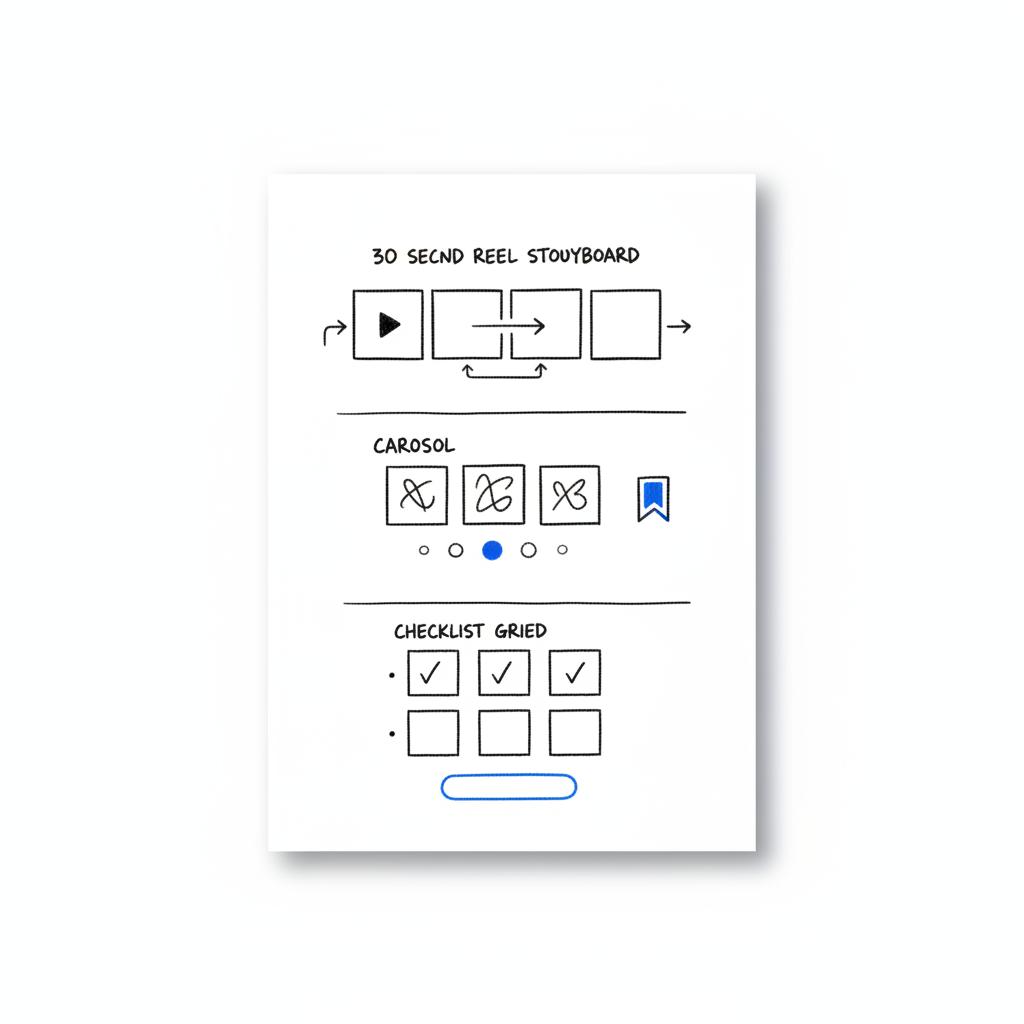
– The 30-second how-to: hook, three steps, quick result. Great for saves.
– The before/after testimonial: 10-20 second clip showing a clear change.
– The micro-explainer carousel: 4-6 slides that unpack an idea simply.
– The process peek: 15-second behind-the-scenes that humanizes your brand.
Utility + emotion = memorable content. Utility gives someone a tip to use right away; emotion makes them remember the brand that gave it to them. For more context on why the 80/20 approach still resonates, see this perspective: 80/20 rule overview.
Designing your promotional 20% without annoying followers
Promotional posts should answer the viewer’s natural questions and avoid being purely transactional. Use story and context: show the product solving a problem that was introduced in a value post, or end a tutorial with a gentle mention of an available product. When you need a direct CTA (launches, limited offers), make the ask short, clear, and inevitable.
A good promotional post includes:
– One clear benefit (why this product matters);
– Social proof or a small demo (how it actually works);
– A single, simple CTA (link in bio, Shop now, sign up).
Testing: what to change, how long to test, and what to measure
Testing is how you turn the 80/20 guideline into a custom strategy. Change one variable at a time and test it across multiple cycles (4-12 weeks) so you avoid chasing noise.
Variables to test: format (Reel vs static image), caption length (short vs long), CTA style (soft vs direct), time of day, thumbnail, and creative hook. Run each version several times and compare the KPIs that matter: saves & shares for reach, and click-through/conversion for promotions.
Industry and funnel context: adapt the split
Not every account should lock to 80/20 forever. A financial advisor may need a higher share of education to build trust. A fashion brand launching a seasonal drop might shift to 70/30 for a short window. Product-market fit and where your audience sits in the funnel are the real determinants of ratio.
Ask: are people discovering you, being nurtured, or ready to buy? If discovery, tilt value-heavy. If ready-to-buy, it’s safe to nudge promotion up temporarily.
Paid vs organic: how promotions fit in the bigger picture
Paid ads are a separate lever. Some brands keep organic 80/20 and use paid ads to amplify promotional messages. Others test promotional creative with paid spend and, if it performs, reuse it organically. The practical approach: test bundles. Run a promotional post organically and with a modest paid boost, then compare conversion lift relative to spend.
Platform changes mean results vary. Over several cycles you will see whether paid should primarily push promotions, seed new creative, or broaden reach for your best value content.
Common mistakes and how to avoid them
1. Treating the ratio like a quota. Posting promotions without context feels transactional.
2. Ignoring measurement. A promo may get fewer likes but more clicks – check the right metrics.
3. Neglecting format. A poorly produced promotional post will underperform even if the offer is great.
Fixes: keep promotions contextual, track the right KPIs, and test creative format before increasing promotional frequency.
A short case story: small home-care brand
A home-care brand used an 80/20 approach: mostly tips and tutorials, occasional promotions. Their promotional posts were text-heavy and underperformed against clicks. After testing short customer-interview reels for promotional slots and using a single-line caption with a direct link in bio, they improved click-throughs within three months while maintaining follower momentum. The takeaway: format and clarity often matter more than an increased promotional share.
How to start if you’re a tiny team or solo
Keep it simple. Pick one short video format and one promotional style. Plan a weekly narrative with predictable promotional moments. Measure the same KPIs each cycle. Consistency beats variety when capacity is low.
12-week checklist: practical steps to run your first test
Week 0: choose the conversion metric that matters most for promotions and decide on 1-2 value formats.
Weeks 1-4: publish consistently; collect baseline metrics (reach, saves, shares, engagement rate, clicks).
Weeks 5-8: run a controlled test changing one variable (format or CTA).
Weeks 9-12: analyze results and iterate: increase promotional share only if conversions rise or adjust creative otherwise.
Document hypotheses, creative versions, and results. This discipline turns intuition into repeatable gains.
Templates and prompts you can use tomorrow
30-second how-to script: Hook (3-5s): “Want to fix X fast?” → Step 1 (5-8s) → Step 2 (5-8s) → Result/demo (5-8s) → Soft CTA (2-4s).
Promo-reel formula: Problem (3s) → Quick demo with product (10s) → Social proof (5s) → CTA (link in bio or Shop) (2s).
Carousel checklist: Cover (problem) → 3-5 actionable slides → final slide with the CTA and where to find more.
How long before you expect results?
Expect early signal changes (saves, small reach lifts) inside a few weeks; meaningful conversion patterns usually show after 8-12 weeks of consistent posting and controlled testing. That timeline keeps you from mistaking noise for trend.
When promotions outperform value
Occasionally promotions will beat value in engagement and conversion. If promotions consistently convert, consider a temporary bump in promotional frequency for sales windows, then return to a value-first cadence to preserve long-term growth.
Stories and ephemeral content: include them or not?
Stories are conversational and immediate. Count them in your mix if they are a primary part of how you communicate. If Stories are mostly personal chatty content, treat them separately and use them to amplify promotions or test hooks that can become Reels.
Seasonality, launches, and smart exceptions
Seasonality changes behavior. For launches or holiday windows, temporarily move to 70/30 or 60/40 if the short-term revenue opportunity justifies it, then return to value-heavy posting afterward. Always measure like-for-like periods when reviewing seasonal moves.
Measuring the right way: a simple dashboard
Track these weekly: reach, impressions, saves, shares, engagement rate, follower growth, and conversions for promotional posts. Use rolling averages and compare cycles (e.g., four-week vs four-week). Look for consistent direction, not single-post anomalies.
Practical tips to keep content human
Reply to comments, use customer language in captions, and avoid jargon. Let your value posts stand alone – people should get something useful without needing to buy. When you do ask, make it easy and relevant.
Putting it together: a short example plan for a month
Week 1: Focus on one value format and two soft promotions.
Week 2: Repeat format; test a different CTA on the promotional post.
Week 3: Try a new thumbnail and observe reach on the value posts.
Week 4: Analyze the month’s metrics and plan the next four weeks based on what moved saves, shares, and conversions.
Final checks before you change the ratio
Before increasing promotions, ask: Is the promotional creative strong? Are CTAs clear? Do conversions actually rise when you promote? If not, fix the creative and testing approach first.
Quick FAQ (short answers)
How often should I promote on Instagram? Many brands promote once or twice in a seven-post rhythm. Adjust for launches or short-term goals.
Should Stories and paid ads be part of the 80/20 mix? Count Stories if they’re a main channel; treat paid ads as a separate lever that you test versus organic performance.
What if promotions outperform value? Use that window to drive conversions, but plan to return to value-first posting to protect long-term engagement.
Three practical experiments to run now
Experiment A: Swap one static promotional post for a 15-second customer-reel and track CTR and saves for four weeks.
Experiment B: Test caption length on two identical value posts (short vs long) and see which gets more saves and shares.
Experiment C: Run a modest paid boost on a promotional post and compare conversion lift vs organic only.
How agencies use the 80/20 rule
Agencies use 80/20 as a planning baseline – it reduces friction playing offense and defense: you build audience goodwill while keeping a pipeline for revenue. If you need help moving from planning to execution, check Agency Visible projects to see examples of execution and outcomes.
Ready to test a smarter Instagram mix?
talk to a practical team that moves quickly and focuses on measurable results: Contact Agency Visible to explore a test campaign that protects reach while improving conversions.
Note: The key to agency work is disciplined testing: pick the conversion metric, run controlled creative tests, and adjust promotional share only when the data supports it.
Common myths
Myth: The algorithm prefers purely promotional content. Reality: The algorithm favors content that creates watch time and engagement – which often comes from value-led posts.
Myth: 80/20 is fixed. Reality: It’s a starting point, not a permanent rule.
Summary and next steps
Start with an 80/20 mindset, pick one repeatable value format, choose the conversion metric that matters, and test one variable at a time over several weeks. If promotional posts convert, adjust temporarily; if they don’t, refine creative and CTAs before increasing frequency. Treat your calendar like a conversation: give more than you ask for, and when you ask, make the ask obvious and worth the viewer’s time.
Want a quick cheat-sheet? Try the 12-week checklist above and run one of the three experiments listed. Simple, repeatable steps win over clever strategies that never get finished.
A good starting point is to promote once or twice in a seven-post rhythm (roughly the 20% share). For launches or time-sensitive offers, temporarily increase promotional posts to 30–40% for a short window. Always track the right KPIs — clicks and conversions — and be ready to return to a value-first cadence if follower growth or engagement drops.
Stories are conversational and can be included in your mix if they are a primary communication channel for your audience. Paid ads are a separate lever; many teams keep organic content at 80/20 and use paid to amplify promotional messages, test creative, or scale high-performing value content. Treat paid as its own budgeted experiment and compare conversion lift vs organic performance.
Prioritize saves, shares, reach/impressions, engagement rate, follower growth, and conversion metrics for promotional posts (clicks, Shop actions, signups). Track these weekly and analyze trends across 4–12 weeks. If promotions drive conversions without harming long-term engagement, you’re on the right track.