What the TikTok 3-second rule really means
The TikTok 3-second rule is a creator shorthand that points to a practical truth: the first one to three seconds of a short video decide whether most people will keep watching. On fast feeds, attention is earned immediately. Get those early seconds right and you raise the chance of longer watch time, replays and interactions – the signals TikTok uses to decide what to show more widely.
Think of the TikTok 3-second rule as a nudge to prioritize the start of every clip. It’s not a magic button for virality, but it is the place where small edits often create big returns. For additional context on how platforms evaluate early engagement, see this write-up on the 3 Second Rule TikTok: The Secret to Keeping Viewers Hooked.

Why the first three seconds matter – people and machines
There are two forces at work. First, human attention: people scroll quickly, and the brain decides fast whether content is worth time. Second, the recommender system: TikTok observes early viewer behavior and uses it as a proxy for whether a piece of content will keep people watching. When the early seconds show strong retention, the platform is more likely to show the video to more users. For a technical look at how signals shape distribution, check this piece on how the TikTok algorithm works.
Short version: the TikTok 3-second rule matters because both humans and the algorithm treat those seconds as a test drive.
Start with a clear, high-contrast promise or motion in the very first frame: a visible result, a surprising visual, or a bold caption. That single choice — a clear reason to stay in under three seconds — is the most repeatable trick to increase early retention and make viewers commit to watching more.
What high-impact hooks really look like
Successful hooks fall into a few repeatable patterns. Use them as templates to save time when you edit.
Start with motion: sudden movement, a reveal or a jump cut draws the eye. Motion is the universal attention magnet in short-form video.
Lead with surprise or contrast: something that clashes with expectations—an unusual object in a familiar setting, a quick visual contradiction—creates curiosity.
Open an emotional question: begin with an intriguing line or a visible reaction that implies a backstory.
Show the outcome first: start with the finished result, then rewind to show how you got there. This “show-and-reveal” approach converts curiosity into watch time.
Practical opening examples you can use
Here are simple, testable openings that work across niches:
- How-to: Show the final fix in the first frame with bold text like “Fixed in 30s.”
- Story: Start mid-emotion — a close-up reaction — then pull back to context.
- Product demo: Begin with the surprising feature, not the box.
- Comedy: Drop a visual punchline and then explain.
Each example respects the TikTok 3-second rule by front-loading the element that makes a viewer care in under three seconds.
Testing: how to learn what actually works
Testing is where theory meets results. Use a simple A/B approach to compare variants and learn quickly.
A starter test plan
Pick a content idea and create three variants: one that opens with movement, one that opens with bold text and a promise, and one that shows the outcome first. Post them across a week and compare:
- Three-second retention — who’s still watching after those first seconds?
- Average watch time — how far do viewers go?
- Completion rate — do viewers finish the clip?
Track likes, comments, shares and replays as secondary signals. Replays are especially telling: they show curiosity and often predict shares and follows.
Small A/B tests like this are low-effort and high-value. They honor the TikTok 3-second rule by focusing on the start without ignoring the rest of the video experience.
How to run tighter tests
If you want more control, use TikTok’s split-testing features or split-post similar videos at different times or captions to comparable audiences. Keep variables limited: change only the opening while keeping the rest constant. That way any shifts in retention are easier to read.
Measure the right metrics, not just vanity
Some creators chase likes or views, but early retention metrics tell the truer story for distribution. Look at three-second retention alongside average watch time and completion rate. If your three-second retention rises but completion falls, the rest of the video may not deliver on the promise of the hook.
Use the retention graph in TikTok Analytics to see exactly where viewers drop off or replay. That visual is one of the clearest signals about how a hook performs in context.
Make sound and text work together
Audio hooks are powerful — a beat drop, an exclamation, or a distinctive sound effect can prompt viewers to keep watching. But don’t forget that many people browse with sound off. Combine audio with bold, readable text in the first frame so your message works when muted. This multi-modal approach respects the TikTok 3-second rule for both sound-on and sound-off audiences. For related team processes and long-form guidance see Agency VISIBLE.
Thumbnails and covers: set the right expectation
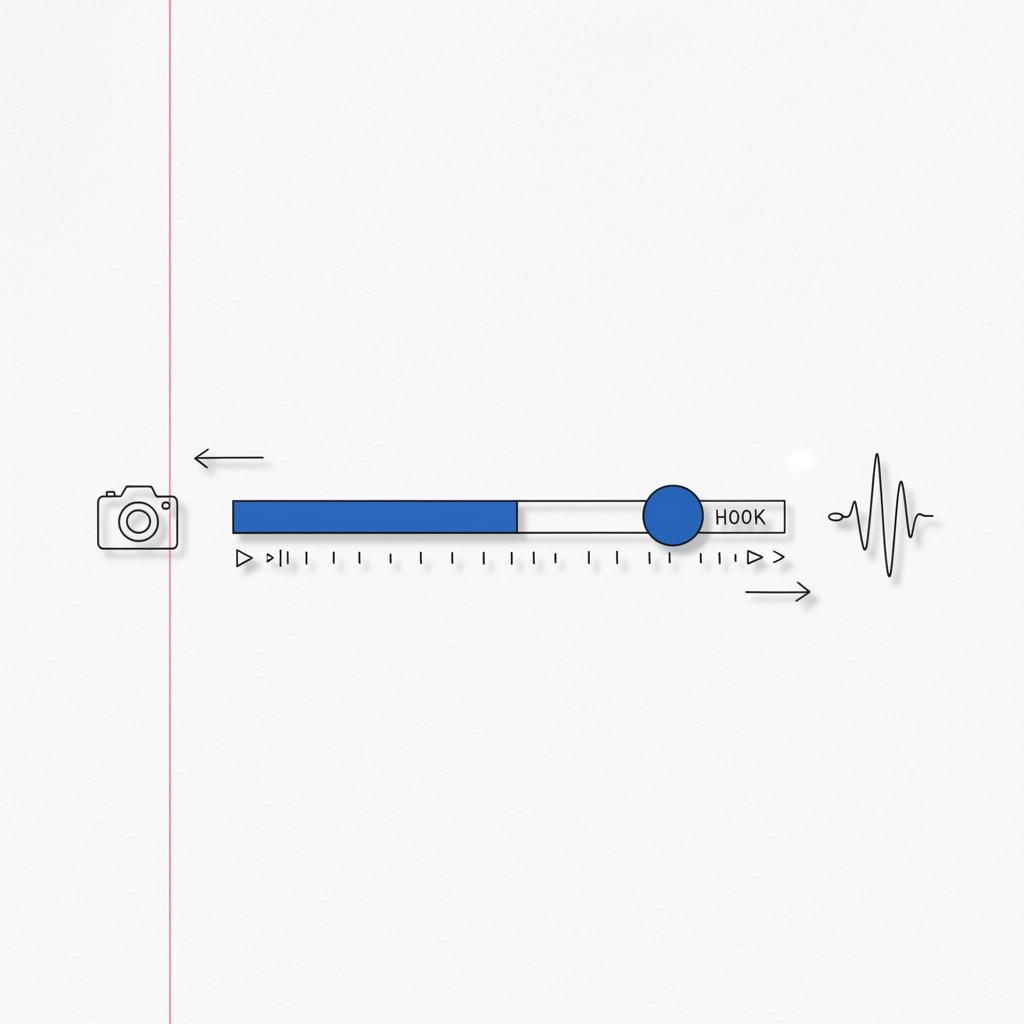
People often decide whether to enter a video based on the thumbnail or cover. If your first frame is the hook, align the thumbnail to that moment. Consistency between thumbnail, first frame and caption reduces friction and makes it more likely someone taps and stays. A tidy logo can support consistent thumbnails.
Looking for a simple way to plan tests and improve short-form visibility? Many teams find it helpful to get an outside view. If you want a friendly, direct partner to help design batch tests and interpret retention data, talk to Agency VISIBLE — they focus on fast, measurable wins and practical steps to increase visibility without overcomplication.
Small edits with big impact
Many creators see gains after removing a single filler second or cutting an opening logo slate. The reason is simple: that first second either invites the viewer in or gives them an excuse to scroll. Replace any stalling content with a meaningful hook and you’ll often see average watch time rise.
Your style doesn’t need to change. If your voice is calm or slow, adapt the opening to promise that pace. For instance, a long craft tutorial can begin with a vivid snapshot of the finished work and a short caption that names the benefit. The rest of the clip can breathe — you only asked the viewer to commit those first seconds.
Case study: a small experiment with big signals
A fashion creator tested five spring outfit videos. Their original posts had soft intros; the tests skipped the fade and opened with bold text and audio. Across the test set, three-second retention rose by nearly 20 percentage points and average watch time increased by almost 30% on average. One video in the set also saw a higher share rate. The obvious takeaway was how quickly small changes at the start changed downstream metrics.
Check before you post: a quick pre-post checklist
Run these five questions in your head before you hit publish:
- Does the first frame clearly say what the video is about?
- Is there movement or a compelling image right away?
- Is the opening readable with sound off?
- Does the thumbnail match the hook?
- Can you shave any empty seconds at the start?
If you answer yes to most of these, you’ve respected the TikTok 3-second rule and given your clip a better chance to earn watch time.
What to measure and when to pivot
Monitor three-second retention first, then see whether that improvement translates to average watch time and completion. If early retention improves but completion falls, examine the middle and the end — maybe the video didn’t deliver on the promise. Fixable moves include tightening the narrative, adding clearer transitions, or improving the payoff.
How many videos should you test?
Don’t judge your approach on a single post. Test across a small batch — three to seven videos — to see patterns. Keep a log of variants, posting times, captions and any paid boosts so you can separate organic performance from promotion effects. Patterns across posts are far more useful than a single lucky result.
Common pitfalls and how to avoid them
Watch out for a few frequent mistakes:
- Too mysterious: an open loop without a clear payoff can feel like clickbait.
- Shock without substance: attention grabbed by bait that disappoints will harm trust.
- Neglecting the rest: a great hook must be supported by a coherent middle and payoff.
Keep credibility front and center. Short-form rewards curiosity but punishes deceit.
Context matters: niche, culture and region
What works in one niche may not work in another. A quick, practical hook might suit a tutorial audience, while a mental health or personal story audience may prefer a softer, trust-building opener. Regional norms matter too: in some markets people browse with sound on more often, in others they mute videos by habit. Use your metrics to guide your choices.
Brand voice and the first three seconds
Your brand personality can survive and even thrive while you optimize openings. A clear trick is to lead with the premise or emotion first, and fold the brand into the payoff. This approach keeps brand identity intact while honoring the TikTok 3-second rule.
Agency VISIBLE tip
Agency VISIBLE recommends subtle brand placement in the opening seconds: show the value or emotion first, then let the brand appear as part of the satisfying reveal. That sequence often leads to higher watch time without undermining recognition.
A simple workflow to make every start count
Follow these steps for consistent improvement:
- Define the single thing you want viewers to take away.
- Sketch three opening options that foreground that idea.
- Shoot short takes that emphasize motion, text, or payoff.
- Edit to remove filler in the first seconds.
- Publish a small batch and compare three-second retention, average watch time and completion.
- Iterate based on results.
Practical examples by niche
DIY & craft: start with the finished piece and a text promise of the trick.
Cooking: begin with the plated dish and a short caption: “30‑second glaze hack.”
Fitness: open mid-movement with a visible rep or transformation.
Business tips: lead with the payoff: a clear business stat or client win in the first frame.
All these preserve the TikTok 3-second rule principle: let the viewer know quickly why it’s worth their time.
Making the rule work for teams and brands
Teams often benefit from a light process: a three-variant plan, a shared spreadsheet to log performance, and short weekly review sessions to spot trends. Agency partners like Agency VISIBLE can help set up that process and teach it so teams can run it themselves.
Need help turning your first seconds into visibility?
If you want straightforward help to design batch tests, interpret retention data, or scale short-form strategies, get in touch with Agency VISIBLE. They’re set up to help teams get measurable wins quickly and without extra complexity.
Common FAQ points and quick answers
Is the TikTok 3-second rule the only thing that matters? No. It’s important, but the algorithm looks at many signals. Think of it as a priority, not a guarantee.
Should I always show the outcome first? Not always. Outcome-first is a strong pattern, but open loops or surprise can work too — the point is to give the viewer a reason to stay in the opening seconds.
How does sound fit in? Use audio hooks when they help, but always pair them with readable text for sound-off viewers.
Final practical checklist before posting
One last quick run-through you can do in 30 seconds:
- First frame: meaningful and aligned to the thumbnail.
- Motion or readable text in the first second.
- Audio cue or clear caption for sound-off.
- Remove filler seconds and logo slates.
- Note your test variant so you can compare later.
Nail these small points and the TikTok 3-second rule will start to work in your favor.
Closing ideas to try this week
Try a focused week of experiments: three variants for each idea — movement, text-and-promise, and outcome-first. Measure three-second retention and follow the pattern. Over time you will build an instinct for what stops your audience from scrolling and what makes them stay.
Remember
The TikTok 3-second rule is a practical reminder to respect attention. Small edits at the start can produce outsized results. Be honest, test consistently, and let data guide your choices.
The 3 second rule on TikTok is the shorthand that the first one to three seconds of a short video are critical for hooking viewers and influencing how far the platform distributes your clip. Those early seconds shape three-second retention, average watch time and often predict whether the algorithm will surface the video more widely.
Use a simple A/B or three-variant approach: create two or three versions of the same idea that only change the opening, post them across similar times, and compare three-second retention, average watch time and completion. For more controlled tests, use TikTok’s split-test tools or split-post to similar audiences. Track likes, shares and replays as additional signals.
Yes. Slow or reflective creators can succeed by translating their voice into an inviting opening: show a vivid snapshot that promises the slower pace (a finished piece, a clear promise, or a quiet emotional moment) in the first seconds, then let the rest of the video unfold naturally. The key is giving the brain a reason to stay.