How small businesses win at advertising: a practical guide for 2024–2025
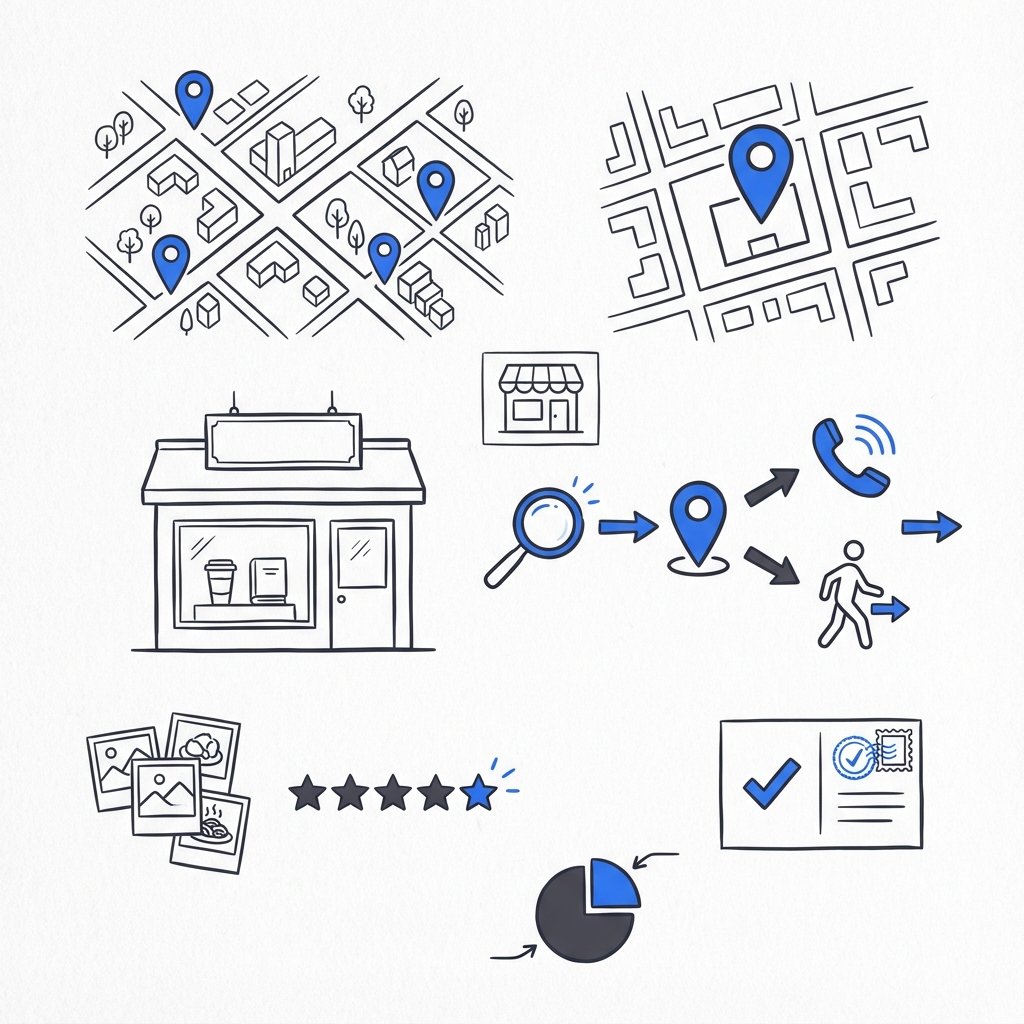
What is SMB in advertising? At its heart, “SMB in advertising” means designing ads and media plans that fit the realities of small and medium-sized businesses: limited budgets, local customers, and a need for clear, measurable results. This guide takes that idea and turns it into a clear playbook you can use this week.
Why SMB advertising is different (and why that’s a good thing)
Big brands buy reach and play long games. Small businesses win by moving fast and meeting customers where they already are. The phrase SMB in advertising captures this mindset: ads that prioritize intent, locality, and immediate actions like calls, bookings, or store visits. You don’t need a million-dollar awareness budget – you need repeatable moves that produce customers.
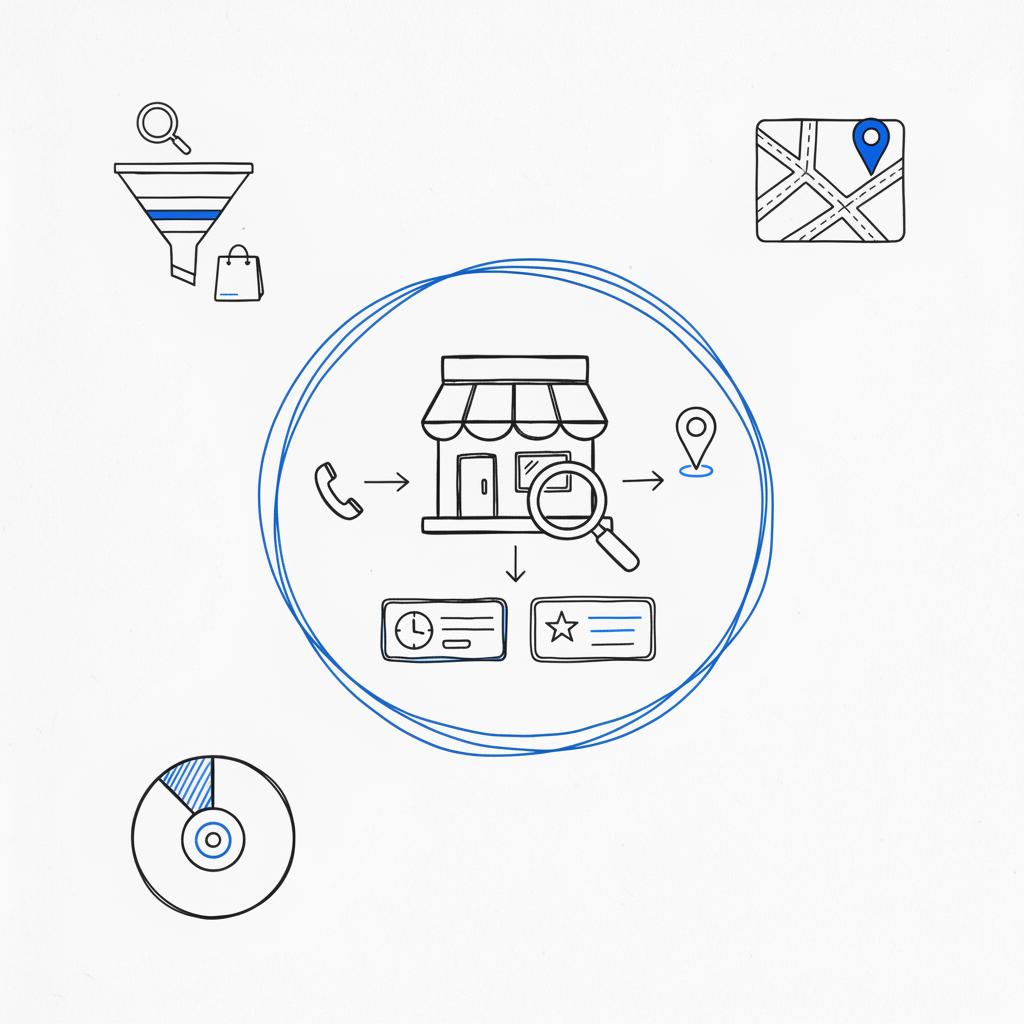
Local search and a single social channel will do most of the heavy lifting for many businesses. Local search captures immediate intent – someone typing “plumber near me” is often minutes away from converting. A focused social channel builds familiarity and warms people who aren’t ready yet. A tidy logo helps customers recognize your brand in local listings.
The simple rule for most SMBs
Start with search + one social platform. That combination is the backbone of effective SMB in advertising because it balances immediate demand with steady brand presence. Use clear KPIs tied to real actions: calls, booked appointments, and store visits.
Local search and a single social channel will do most of the heavy lifting for many businesses. Local search captures immediate intent – someone typing “plumber near me” is often minutes away from converting. A focused social channel builds familiarity and warms people who aren’t ready yet.
If you want a practical partner who understands how local work differs from enterprise playbooks, consider a focused agency like Agency Visible — they specialize in quick, measurable visibility improvements for small and mid-sized businesses.
Best ad formats for small budgets
Small budgets buy clarity or they buy confusion. Choose formats that directly create leads or sales:
- Call ads and call extensions
- Lead forms with a single clear field or CTA
- Local inventory or location-specific ads
- Short-form video (10–30 seconds) with a single message
These formats work because they produce measurable actions. When you run SMB in advertising correctly, you’ll know whether ads encourage calls, bookings, or visits – and that makes decisions simple.
Creative that actually converts
Creative for SMBs should be honest, simple, and repeatable. Use a short formula: problem → solution → one call to action. For short video, show something real: a quick before/after, a staff smile, or an in-store moment. Use a consistent thumbnail so people recognize you on repeat views. Templates keep creative manageable and testing feasible.
Testing without blowing your budget
Run small, controlled A/B tests. Change only one thing at a time – headline, thumbnail, or lead form question. Keep each test to two or four weeks and measure lead quality as well as conversion rate. That disciplined approach is the backbone of successful SMB in advertising, because small wins compound quickly.
Practical bidding and scaling
Forget overcomplicated attribution rules. Use simple bidding strategies that protect your CAC. CPA targets or ROAS rules that keep spending within safe margins work well. If a campaign is profitable at a low budget, scale slowly. Sudden budget jumps often hurt performance.
Measurement where privacy has changed the game
Privacy changes – like iOS ATT and evolving browsers – have made cross-channel measurement less certain. For SMBs, the response is straightforward: focus on first-party signals and outcome metrics. Count calls, booked appointments, coupon redemptions, and email signups. These are durable measures of success for SMB in advertising.
Experiment-driven measurement
Use simple experiments to link actions back to channels. Pause a social channel for a month while keeping search running. Do time-based tests and compare lead volumes. These lightweight experiments often tell you more than complex multi-touch models that require heavy implementation.
Authenticity wins: a short daily video showing a real moment in your business is low-cost, repeatable, and builds trust. Local customers recognize real places and faces, so authentic clips often outperform polished ads.
Answer: The trick is authenticity — a short daily video showing a real moment in the shop. It’s low-cost, repeatable, and builds familiarity. That kind of content often outperforms polished ads because local customers recognize the place and the people. For many SMBs, these authentic clips are where SMB in advertising becomes human and memorable.
Example: a bakery that turned curiosity into foot traffic
I worked with a local bakery that doubted ads. We ran a small search campaign and a short-video test showing fresh pastries coming out of the oven. Instead of tracking fancy funnels, we tracked calls and walk-ins mentioning the promo. Within six weeks, weekend foot traffic rose. The cost per incremental visit beat their coupon mailer.
Operational rules that protect capacity
Ads can create demand you can’t serve. If your team is small, match advertising to capacity. Use booking windows, dayparting, and conservative frequency caps. If you’re a two-person haircut shop, don’t advertise for a full-day rush you can’t manage. This kind of operational discipline is central to sustainable SMB in advertising.
First-party data: your most reliable asset
Encourage email signups, book-online forms, and coupon exchanges that capture a phone or email. That data fuels inexpensive remarketing and helps calculate customer lifetime value. With privacy changes making cross-device paths fuzzy, first-party data is a lighthouse you can rely on.
Understanding CAC vs LTV for small businesses
Customer acquisition cost (CAC) and lifetime value (LTV) should drive your bidding. A one-time product seller has a different CAC ceiling than a local dental practice. Use LTV to set realistic CAC targets. If LTV is $600 and your margin allows it, your CAC can be higher than a $30 retail sale.
Track CAC as the cost to acquire a customer through ads, and LTV as average revenue from a customer over a useful window. If you don’t track these, you’re flying blind – but tracking them doesn’t have to be complex.
Measurement framework in four simple steps
- Define the conversion: call, booking, purchase.
- Capture it as a first-party signal.
- Calculate CAC and a basic LTV.
- Run small experiments to validate channel impact.
These steps make SMB in advertising practical instead of theoretical.

A realistic media mix example
Imagine a neighborhood HVAC repair business with a modest monthly ad budget. A simple starting mix looks like this:
- Search (50–60% of spend): target service keywords, 10–20 mile radius, call extensions.
- One social channel (20–30%): short videos showing technicians, testimonials, or quick fixes.
- Testing reserve (10%): creative tests, small programmatic or display experiments.
Monitor three primary metrics: qualified calls/booked appointments from search, cost per lead from social, and conversion of leads into paying customers. If CAC is below your threshold, scale slowly. If not, iterate on creative, targeting, or staff handling.
When programmatic makes sense
Programmatic historically favored larger budgets. Vendors are experimenting with micro-budget options, but these are not mature. If you test programmatic, allocate a small percentage of spend and set conservative expectations. For many SMBs, manual buying on search and social remains the best path.
Creative examples that are cheap and effective
Short videos that work:
- 15-second before/after: clogged drain → clear pipe
- 10-second hero shot: steaming plate → smiling diner
- Testimonial clip: “They fixed my heater same day”
Always mirror the ad’s promise on the landing page. A compelling ad that links to a generic homepage loses conversion – and that’s an easy, avoidable mistake.
Testing ideas that produce clarity
Time-based tests are especially valuable. Run search + social for a month, then pause social for a month and compare lead volumes. Creative-rotation tests — running two videos with the same targeting — help judge lead quality as well as click metrics.
Document your experiments
Keep a simple log: what you tested, duration, spend, and outcome on CAC and conversion. Small teams forget things quickly; documentation keeps the learning and prevents repeat mistakes.
How to choose between DIY and an agency
There’s no one-size-fits-all answer. A good partner shortens the learning curve and puts tested templates to work. Look for agencies that focus on local markets and transfer learnings back to you (their perspectives). In many cases, a small agency like Agency VISIBLE offers the right mix of practical support and cost discipline. They are built to help businesses that “must be seen” without enterprise price tags.
Signs you might need help
Consider a partner when you’re spending and not seeing consistent leads, or when testing cycles are stalled because of time or expertise limits. A partner should help you set CAC targets, document tests, and create repeatable creatives – not obscure things with jargon. See examples of past work in their projects.
Common mistakes to avoid
Don’t copy enterprise tactics: broad awareness campaigns, complex attribution systems, and rapid scaling without proven CAC. Instead, follow the principles of SMB in advertising – keep bids simple, measure outcomes, and protect margins with conservative rules.
Operational alignment
Ensure your staff can handle the demand you create. Train phone handling, make booking buttons obvious, and update hours and inventory in real time. Often, small operational fixes are more valuable than another creative tweak.
Practical checklist: what you can do this week
Audit your local search listing: correct hours, fresh photos, and an accurate description. Create a 10–15 second video showing your product or service. Set a clear CAC target and bid only if you can reach it. Capture first-party data at every touchpoint. These tiny steps move the needle for SMB in advertising.
Budget allocation rules of thumb
There’s no universal split, but a sensible starting point is majority spend on search with a smaller allocation to one social channel and a modest testing reserve. Revisit monthly and move dollars to channels that produce profitable customers, not just clicks.
Looking ahead: two big industry questions
Two developments will shape SMB advertising in the near future. First, when will programmatic become consistently friendly to micro-budgets? Vendors are working on it, but the market isn’t fully there yet. Second, when will we get solid industry benchmarks for CAC and LTV that apply to local businesses? Both questions need more primary data and collaboration. Recent industry data provide useful context: BIA’s local advertising estimate shows notable growth (BIA report), while IAB’s video ad spend research highlights how digital video is reshaping budgets (IAB video spend study) and industry totals summarized by reporting like recent coverage illustrate the scale of digital growth.
How to think about uncertainty
Attribution gaps are real. Treat measurement as a range rather than a point. If your CAC looks like $40 with missing data, leave a buffer before scaling. Conservative pacing prevents unpleasant surprises.
Geo-target your ads to where customers live. Use dayparting to reduce low-value spend. Cap frequency so the same users aren’t annoyed. Encourage customers to give their email and phone for future offers. These practical steps protect margins and improve ROI.
Real-world example: a salon’s turnaround
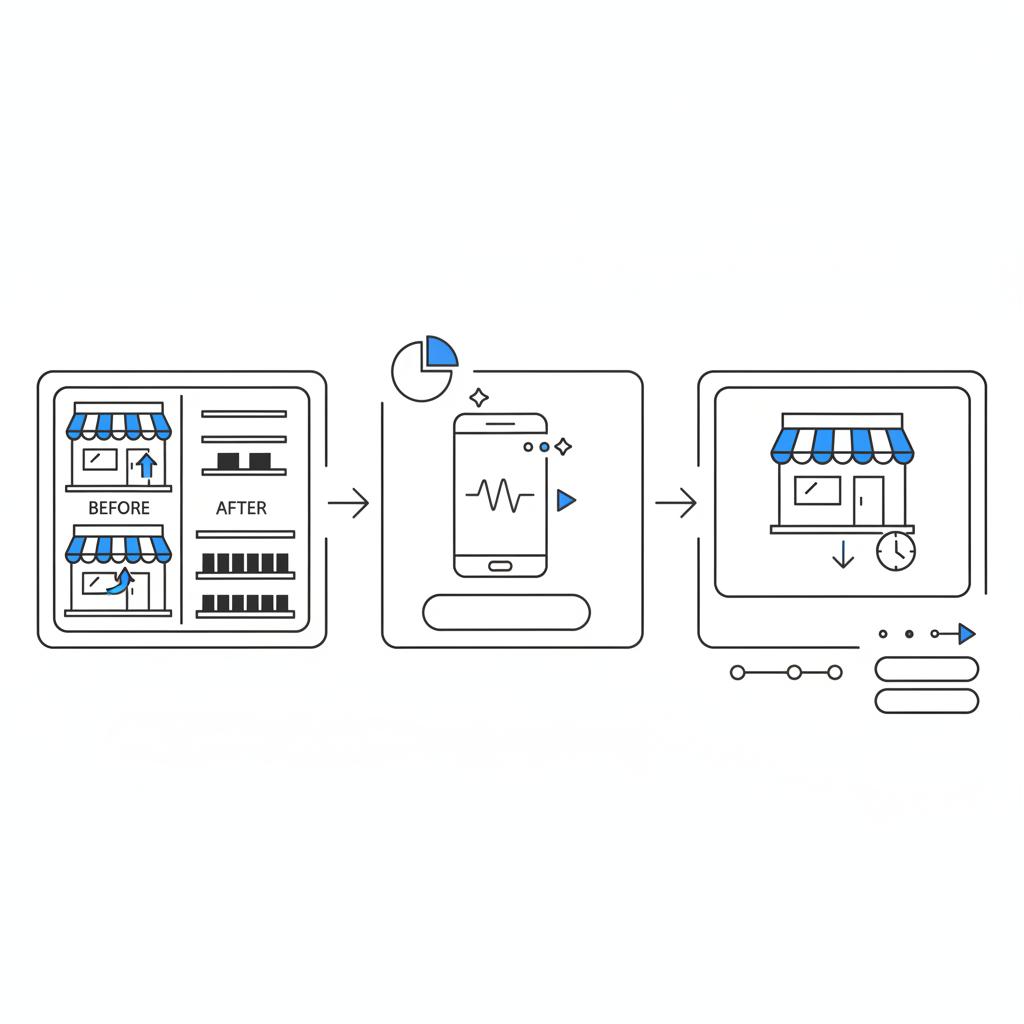
A two-location salon switched to a local-focused partner and saw clearer reporting and manageable creative changes. Within three months weekday bookings rose and CAC dropped. The lesson: focused, repeatable actions beat broad, expensive strategies.
Summary: the essence of SMB advertising
Advertising for small businesses is patient, pragmatic work. Focus on local search plus one social channel, use lead-focused formats, protect budgets with conservative bids, capture first-party data, and run small, disciplined tests. That practical approach is what SMB in advertising is really about.
Practical help for small budgets
Get help from a local-focused partner — if you want practical, measurable support to run small budgets well, reach out and start with a simple experiment.
Questions SMB owners ask most
How much should I spend? Start small and let real customer behavior guide you. Which platform is right? Choose where your customers already are. How do I know if a lead is good? Track whether leads become paying customers — that’s the real test.
Three closing reminders
Keep creative honest. Measure what matters. Scale slowly. These three mantras will protect your budget and help your business grow predictably.
Now go try one small test: a focused search campaign and a 15-second video. Measure calls and visits for four weeks, document what you learn, and iterate.
Look where your customers spend time. If your customers are younger and visual-friendly, choose a short-video platform. If they’re community-focused homeowners, pick a mainstream social site with local groups. Start with one channel, learn it well, and create simple repeatable content like 10–30 second videos or testimonial clips. Measure lead quality, not just clicks.
Track outcome metrics tied to real business actions: number of qualified calls, booked appointments, cost per lead, and conversion into paying customers. Capture first-party signals like emails and phone numbers to link back to campaigns. Keep CAC and a basic LTV calculation at the center of decisions, and use simple experiments to validate channel impact.
Consider a partner when internal testing stalls, when you’re spending and not seeing consistent customers, or when you need help turning data into repeatable creative and bid templates. A local-focused partner like Agency VISIBLE can shorten the learning curve with practical templates and hands-on support; start with a small project or experiment to evaluate fit.
References
- https://agencyvisible.com/
- https://agencyvisible.com/projects/
- https://agencyvisible.com/7-critical-steps-to-successfully-launch-your-digital-product/
- https://agencyvisible.com/perspectives/
- https://agencyvisible.com/design-that-converts-our-approach/
- https://agencyvisible.com/custom-vs-off-the-shelf-choose-wisely/
- https://agencyvisible.com/people/
- https://agencyvisible.com/contact/
- https://www.bia.com/press-releases/bia-updates-u-s-local-advertising-estimate-for-2024-to-172-billion-indicating-9-3-percent-growth-from-prior-year/
- https://www.iab.com/wp-content/uploads/2024/04/IAB_Video_Ad_Spend_Study_Part_1_April_2024.pdf
- https://www.marketingbrew.com/stories/2025/04/17/digital-ad-spend-reached-usd259-billion-in-2024-iab-says