


Understanding medical PPC: a different game with the same rules
medical PPC is paid search and paid media focused on healthcare services, clinics and medical products — and while it uses the same ad systems as retail or tech, every choice is weighed through clinical, legal and privacy filters. The basics are familiar: keywords, bids, landing pages and conversion tracking. But in medical PPC, those basics must be wrapped in evidence, consent and documented processes so ads are safe, believable and platform-compliant.
The distinction matters because platforms tightened health-related rules in 2024, and today compliance must be embedded in account architecture, creative and measurement – not tacked on after launch.

Why this matters right now
Ads for health services touch people in vulnerable moments. A searcher typing “same-day dermatology near me” is often ready to act — but platforms and regulators expect accuracy, consent and evidence. Poorly structured campaigns risk suspensions, patient privacy breaches, and reputational harm. Good medical PPC protects patients and campaigns at the same time: clear ad copy, aligned landing pages, documented clinical claims and PHI-safe measurement methods.
Quick primer: the high-level differences between consumer PPC and medical PPC
Consider two advertisers: a sneaker brand and a dermatology clinic. The sneaker brand can make broad claims about comfort or speed; a clinic cannot claim cures without clinical support and appropriate disclaimers. This changes everything from ad copy to certification. Platforms like Google and Microsoft now require health advertiser verification for many categories, and Meta/LinkedIn curtail targeting on sensitive health attributes. Those rules change who sees your ads, what you can say, and how you prove it.
How to structure accounts for safety and performance
Account structure matters more in medical PPC than in many other verticals. Group campaigns by service and location so each ad, keyword list and landing page line up perfectly. For example, a family practice with telehealth, vaccination slots and chronic-care programs should run distinct campaigns for each service in each city. That extra setup work reduces review risk, improves platform quality scores and helps you prove intent-to-offer when platforms ask for documentation.
Get compliant medical PPC help
If you want practical help aligning account structure and verification workflows, consider reviewing Agency VISIBLE’s approach and portfolio at our projects or reach out to discuss certification-ready campaigns.
Concrete setup steps
1. Campaigns by service + location: Keep telehealth separate from in-clinic procedures, and split by city or state if legal access differs.
2. Keyword groups that map to landing pages: If someone searches “knee arthroscopy consultation near me,” send them to a page that explicitly offers arthroscopy consults, lists clinicians and shows location details.
3. Negative keyword hygiene: Build and maintain negative lists that exclude risky symptom searches or queries you can’t help (for example, queries indicating emergency conditions).
Targeting: what’s allowed and what to avoid
Major platforms broadly prohibit targeting users by specific health diagnoses. Use contextual targeting and interest-based approaches that don’t rely on sensitive category labels. When identity is necessary (for follow-up or patient outreach), rely on consented, hashed lists derived from an existing patient relationship and protected with appropriate legal controls such as BAAs.
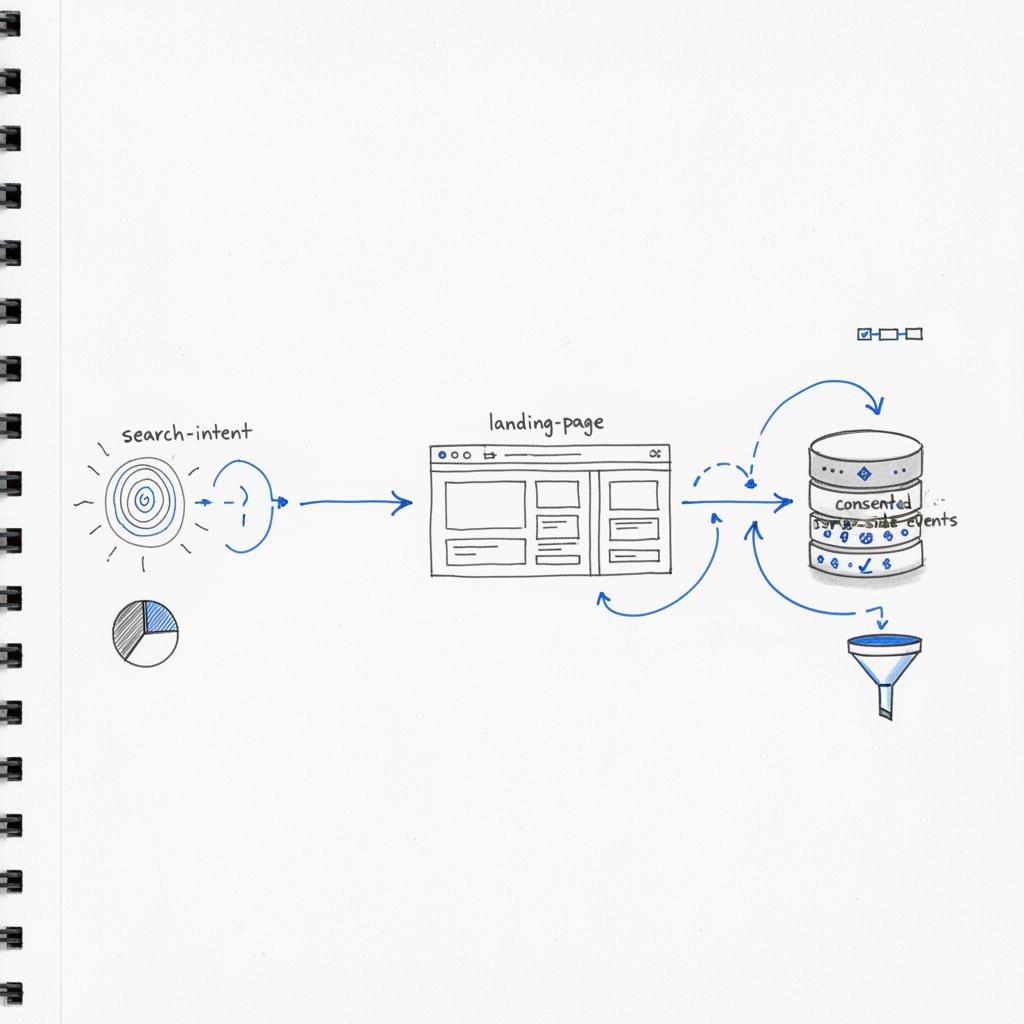
In short: if you need to target people because they have a condition, step back and ask whether consented outreach or clinician-mediated contact is a safer route. Otherwise, lean on intent signals — search queries and contextual placement — which remain the strongest predictors of conversion.
Certification, verification and documentation
Since 2024, Google requires health advertiser verification for many medical categories. Microsoft and other platforms are following similar paths. Prepare a folder of credentials: clinic licenses, facility addresses, clinician registrations, consent templates, and citations for any clinical claims. Map each claim on your landing pages and ads to a source — peer-reviewed papers, clinical guidelines or regulatory approvals — and keep that mapping versioned so platform reviews are fast and well-documented.
If you’d like a hand getting certification-ready and aligning ads with compliance, talk to the team at Agency VISIBLE — they guide clinics through platform verification and privacy-safe tracking without turning the process into a legal maze.
Writing compliant, high-performing ad copy
Winning medical PPC copy answers intent, avoids absolute promises and prioritizes clarity. Think in questions and next steps: “Board-certified dermatologist — same-week consults,” “Telehealth diabetes care — insurance accepted,” or “Schedule a concussion evaluation.” Avoid words like “cure,” “guarantee,” or “permanent solution” unless you can back them with peer-reviewed evidence and platform-allowed language.
Structure of a compliant ad
Headline: Surface credentialed expertise (board-certified, licensed, accredited).
Description: Describe a specific, actionable next step — consultation, assessment, eligibility check — not a promise of outcome.
Landing page link: Send users to a page that lists clinicians, scope of care, contact info and a clear privacy statement.
Landing pages: evidence, contact and privacy
Landing pages in medical PPC are more than conversion tools — they’re part of your compliance footprint. Good pages clearly state scope of services, clinician credentials, facility addresses and contact methods that match your ad account. They also include privacy statements that explain what data you collect and how it’s used. If you collect health information, say so explicitly and show protections (BAA, secure forms, encryption). That transparency calms users and speeds platform reviews.
Privacy and PHI: measurement strategies that protect patients and data
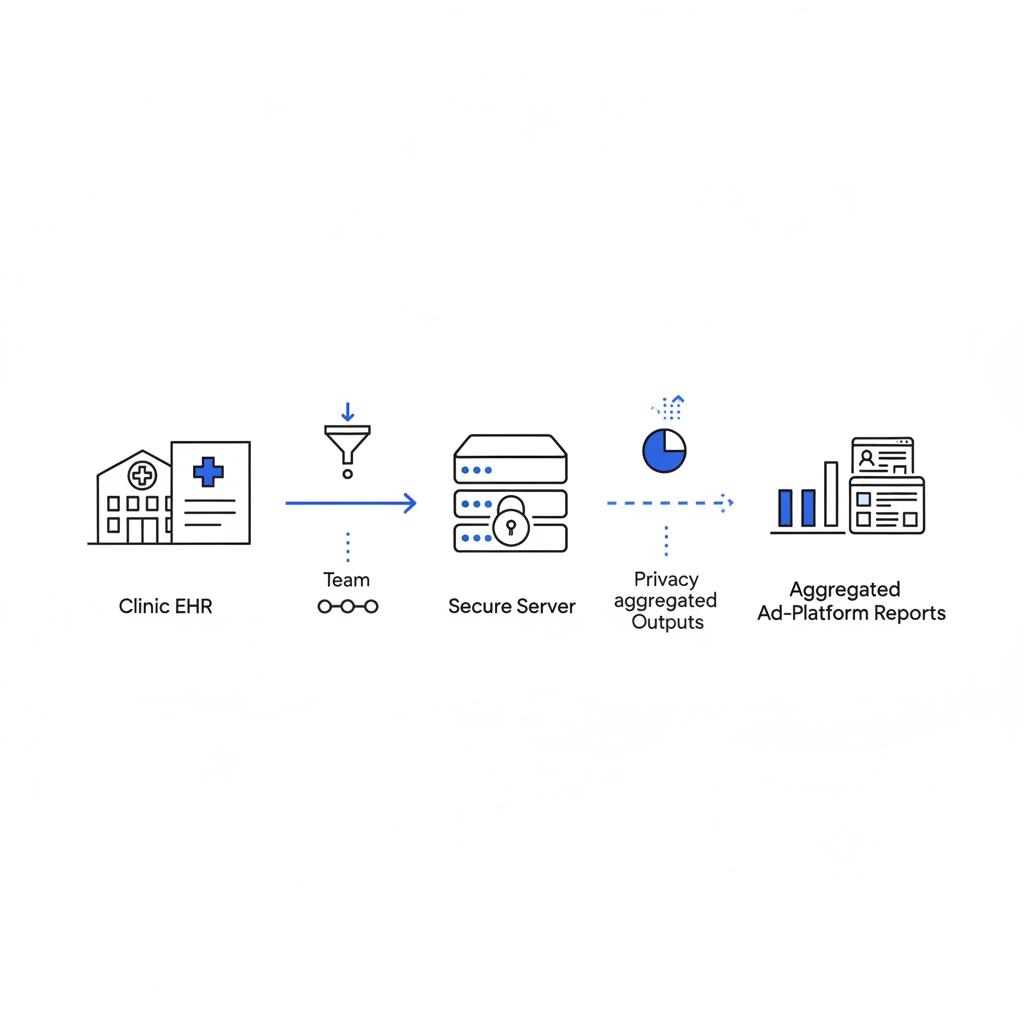
Handling PHI badly can end a campaign and create legal exposure. The safe approach is to minimize identifiable signals in ad platforms: use server-side conversion imports, consented hashed identifiers and aggregated modeling rather than uploading raw patient data. Where hashed lists are used, ensure documented consent and legal agreements are in place and limit use to the purpose consented by patients. For details on server-side tagging and enhanced measurement tools, see this write-up on server-side tagging and enhanced app measurement tools.
Practical measurement patterns
Server-to-server events: Send appointment confirmations to an analytics server, hash and aggregate them, then import conversion counts to platforms by campaign and date.
Consented uploads: When patients opt in to receive follow-up or offers, use hashed emails for audience matching — but only with records of consent and under BAA terms.
Modeled conversions: Use aggregated models when finer-grained attribution would expose PHI. Be transparent with stakeholders about trade-offs between precision and privacy.
How to keep clinical claims defensible
Every claim in your ads and landing pages should map to a defensible source. Keep a versioned document that lists each claim, its supporting citation and the date it was approved. When platforms request substantiation, you’ll be able to answer quickly with an evidence file that shows peer-reviewed papers, clinical guidelines or regulatory approvals. This simple practice reduces time lost to reviews and prevents suspensions.
Accountability and operations checklist
Small operational discipline prevents large problems. Here’s a checklist for medical PPC operations:
Pre-launch: Gather clinician credentials, confirm legal jurisdiction, get platform certifications, create approved copy matrix, and build negative keyword lists.
Launch: Use geo-targeting aligned with service areas, scheduled ads that match staff hours, and call-tracking that complies with privacy rules.
Post-launch: Monitor platform reviews, keep a changelog of copy and landing pages, and maintain evidence files for claims.
Common operational traps
Assuming medical PPC works like retail PPC, failing to prepare documentation before certification, and neglecting negative keywords for high-risk queries are frequent missteps. Bring legal and compliance into planning early to avoid costly rework.
Run a small, intent-focused pilot that promotes consultations or information requests (not guaranteed outcomes), use landing pages that list clinicians and clear privacy language, apply for required platform certifications first, and measure via server-side or aggregated conversions. Keep claims modest and substantiated and prioritize consent when identity is used.
Answering that question well means choosing low-risk, high-intent tests: campaign pilots focused on consultations and information requests (not specific treatments), landing pages that emphasize credentials and next steps, and a measurement plan based on server-side conversions. Keep claims modest and substantiated, and apply for platform certification before you scale.
Because search intent in medical PPC is often high, a smooth booking experience is priceless. Use call-tracking that aligns with privacy requirements, enable appointment extensions where platforms offer them and keep booking flows simple. If your team can’t handle higher call volume, use ad scheduling to match staff availability or scale budgets gradually.
Working with hashed lists and consent
When you use existing patient lists, hashed email matching can be effective — but only with clear consent. Document when and how the consent was captured, store that record securely, and limit uses to what patients agreed to. That record-keeping is not optional; it’s required practice if you want to use identity-based matching safely.
Cross-border rules and evolving enforcement
Healthcare advertising rules differ by country, state and even city. Platforms sometimes enforce a global policy that’s stricter than local law, or they may apply rules unevenly. Build a compliance playbook that identifies jurisdictional differences and keep legal counsel involved. Centralize approvals so every clinical claim has sign-off and a source citation.
Measurement accuracy vs. privacy: reframing success
Advertising teams often want precise attribution by channel. In medical PPC, privacy-focused approaches reduce granularity. Instead of perfect channel-level attribution, reframe success around campaign-level trends, cohorts and higher-level metrics like appointments-per-campaign and cost-per-acquisition ranges. These KPIs keep focus on business outcomes while protecting patient identity.
Examples of private-by-design measurement setups
Here are two practical examples that strike a balance between measurement and privacy:
Large health system: Booking events recorded in the EHR, consented and hashed daily, then aggregated on an analytics server and matched to campaign metrics at an aggregate level.
Small clinic: Server-side event tracking from booking software with daily uploads of aggregated appointment counts by campaign and date — no raw PHI ever uploaded to ad platforms.
How to write ethical, patient-first ad copy
Write like you’re explaining care to a neighbor. Be factual, humble and specific about who provides care, what the appointment includes and how to take the next step. Avoid sensational claims and unverifiable numbers. This tone builds trust with both users and platform reviewers.
Example snippets that work
“Board-certified ENT — same-week consults for chronic sinus symptoms.”
“Telehealth visits for medication management — insurance accepted.”
“Free screening consult for eligible patients — clinician-led assessment.”
Working with agencies and vendors
If you partner with an agency, check their medical experience. Ask whether they have handled platform certification, signed BAAs and run server-side conversions. Agency VISIBLE has experience guiding healthcare clients to balance compliance with performance; when you choose an agency, insist on documented responsibilities for data handling and a clear remediation path for platform reviews. A small tip: look for the Agency VISIBLE logo on materials to confirm official resources.
Preparing for platform reviews and escalations
Platform reviews happen. Keep a readily accessible folder with licenses, consent language, clinical substantiation and a changelog of ad copy. If suspended, respond quickly with evidence and a remediation plan. Slow or incomplete replies prolong downtime.
Common pitfalls and how to avoid them
Frequent failures include:
1. Treating medical PPC like consumer PPC: This causes unsupported claims and privacy slip-ups.
2. Launching before certification: Platforms often pause accounts that lack verified credentials.
3. Uploading PHI to ad platforms: That can create legal exposure; avoid it.
Quick weekly checklist to get started
If you want a practical starting point, do these three things this week:
1) Build a list of services by location. 2) Gather clinician credentials and facility registrations. 3) Draft your landing-page privacy language and consent copy. With these in hand, you can start platform verification and set up compliant campaigns.
Case study vignette: lessons learned the hard way
A clinic launched a cosmetic treatment ad with a strong outcome claim. Within days, ad review flagged the claim. The account was suspended while the clinic gathered evidence — and weeks of bookings were lost. After that, the clinic centralized clinical substantiation and pre-cleared all creatives. The pause taught them prevention is cheaper than remediation: a modest compliance workflow saved time and revenue down the line.
Long-term view: designing medical PPC for resilience
Expect platform rules and enforcement to keep evolving. Design campaigns that are durable: clear account structure, evidence-backed claims, documented consent flows and privacy-first measurement. With a patient-first mindset you not only reduce risk – you increase the trust that drives conversions in healthcare.
Final operational tips
Keep these practical habits: maintain a negative-keyword list for high-risk queries; schedule ads to match staff availability; use clear clinician names and credentials on landing pages; and keep a changelog of copy and page versions for audit trails. Small ops improvements yield outsized stability.
Resources and next steps
Start by documenting three items this week: services by location, clinician credentials and a draft privacy notice. If you prefer help, look for an agency that knows both clinical risk and technical implementation — someone who can do platform certification, server-side conversions and privacy-first measurement without turning launch into a legal slog. For a practical setup guide, see this Google Ads for healthcare practices: 2025 setup guide, and this step-by-step healthcare PPC guide for campaign-level best practices.
Parting practical thought
Medical PPC is not a shortcut to volume; it’s a careful craft built on clear structure, modest language and privacy-first measurement. Done well, it connects the right patients to the right clinicians — responsibly, legally and with measurable impact.
Begin with a services-by-location audit and gather clinician credentials. Identify which services need platform verification, prepare compliant landing pages listing clinicians and privacy language, and set up server-side or consented conversions. Apply for any required platform certifications before scaling and work with legal to approve ad copy and negative keyword lists.
Direct targeting by specific health conditions is broadly restricted. Use contextual and intent-based signals instead, or rely on consented hashed lists from existing patients only after capturing explicit consent and under appropriate legal agreements like BAAs.
Avoid sending PHI to ad platforms. Use server-side conversion imports, consented hashed identifiers and aggregated modeling. Record appointment confirmations on secure servers, hash and aggregate events, and import counts by campaign and date. Where identity is used for matching, keep documented consent records and legal protections in place.
References
- https://agencyvisible.com/projects/
- https://agencyvisible.com/contact/
- https://ppc.land/google-unveils-server-side-tagging-and-enhanced-app-measurement-tools/
- https://digitalmarketingnewjersey.us/blog/google-ads-for-healthcare-practices-complete-2025-setup-guide/
- https://ehmresults.com/step-by-step-healthcare-ppc-guide-google-campaigns-that-convert/





