What is M5 strategy branding? Put simply, it’s a practical framework that breaks brand work into five connected parts—Mission, Message, Market, Metrics and Moments—so teams can make clearer decisions and measure real progress.

M5 strategy branding: a simple map for complicated work
Every brand faces the same quiet problem: lots of activity, few answers. Teams run campaigns, tweak creative and push channels, but the real question—what should the brand stand for and how will we know if it matters?—often gets postponed. The M5 strategy branding framework offers a clear way out. It turns abstract brand talk into a usable toolkit you can apply tomorrow.
The five M5 elements work together. Mission is the north star, Message translates it into stories, Market narrows who you serve, Metrics tell you if the work matters, and Moments map the customer path. Each part informs the others; none works well alone.
Start a practical M5 pilot with a short, focused audit
If you’d like a guided pilot to test M5 in your business, reach out to Agency Visible for a friendly, practical conversation about a six- to twelve-week audit and templates that speed the work.
Below we walk each part in plain terms, show how to run a fast M5 audit, and give measurement advice for a world without third-party cookies.
Mission: the decision filter
Mission is too often treated like a corporate slogan. That is a mistake. A useful mission is a decision filter that clarifies why the brand exists, who it serves, and what primary benefit it provides. A good mission answers three clear questions: whom do we serve, what do we deliver, and why does it matter now?
Example: for a small subscription meal service a practical mission reads: “Make weekday dinners simple, healthy and affordable for busy single parents.” That sentence tells you who matters, what they get, and why the product exists. If a campaign or partnership doesn’t move that mission forward, it deserves scrutiny.
How to write a mission that works
Start with one crisp sentence. Then test it against three decisions: would this guide product choices, marketing channels and partnerships? If yes, keep it. If no, sharpen it. The mission should be both directional and actionable.
Tip: keep the mission visible. Use it in three places: near the top of your strategy doc, inside the creative brief and on the homepage copy where it can actually influence decisions.
Message: the short book for anyone who speaks for the brand
Message translates mission into words and stories. Think of messaging as a layered toolkit: a headline idea for wide channels, three supporting claims that explain the promise, and two to three proof points that back it up.
Good messaging is flexible. A 15-second social ad leans on the headline. An email series uses proof points and user stories. A product page rests on specific benefits and data. Consistency matters, but the delivery changes by channel.
Messaging checklist
Headline: one crisp sentence that captures the brand’s main promise.
Claims: three short reasons to believe.
Proof: user stories, short stats, or third-party validation.
Tone: practical, warm, playful, or whatever fits the mission and market.
Repeat the message often so it sticks. Messaging should appear in creative briefs, ad copy, site headlines and onboarding flows.
Market: fewer, better targets
Market work is focus work. Many brands try to be everything to everyone and end up resonating with no one. M5 strategy branding forces a tighter view: choose one or two high-value audiences and design messages and channels for them.
Segments should be actionable—meaning you can reach them and measure response. They can be demographic, behavioural, or attitudinal. What matters is that segments map to channels and moments.
Example cohorts: busy single parents and time-poor professionals for a meal service; small IT teams and procurement managers for a B2B SaaS. Once you pick cohorts, ask: where do they spend time? What content moves them? Which touchpoints influence purchase fastest?
No. M5 strategy branding is designed to be iterative and pragmatic. Start with a small audit focusing on one mission sentence, a headline message, and two critical moments. Run a short experiment and use the evidence to expand work. The framework is about making decisions visible and testable—not about rewrites or big launches.
Short answer: pick one primary cohort and one secondary cohort. The primary gets most of the early testing budget and messaging focus. The secondary is a growth opportunity once the primary is well-served.
Metrics: measure what actually matters
Metrics are the part most teams skip until after a campaign ends. M5 strategy branding insists on a balanced set of KPIs: one or two brand-health metrics and one or two performance metrics tied to revenue.
Brand-health metrics: aided awareness, consideration, brand preference. Performance metrics: CAC, conversion rate, LTV. Pick a small set and track them consistently. Too many metrics create noise. You want a north-south view: brand direction and business results.
Practical points for 2024–2025: focus on first-party measurement. Third-party cookies are declining. Use site analytics, CRM data, consented email and logged-in behaviour to build your own signals. And run short brand-lift studies to link exposure to changes in awareness and consideration.
Simple KPI examples
Raise consideration among primary cohort from 18% to 25% in 12 weeks. Reduce CAC by 15% while holding conversion steady. Increase activation rate (first successful use) by 20% in six weeks.
Moments: map the customer journey with intent
Moments are the decision points that matter. Not every interaction is equal. Some are micro-moments—quick decisions like “what’s for dinner?” or “which SaaS vendor looks easiest to onboard?” Others are bigger milestones: onboarding, first purchase, renewal.
M5 strategy branding asks you to map these moments and design content and UX for each one. For a meal service, the ‘recipe search’ micro-moment calls for a short cooking demo or a parental testimonial. For a SaaS product, the onboarding moment—first successful task—matters more than broad awareness.
Designing moment recipes
For each critical moment write: the desired outcome, the primary emotion you want to evoke, and the single action you want the user to take. Then check whether the current content and UX support that action.
Moments are experiments: deliver minimal viable content for the moment, measure, then iterate. That approach keeps brand work fast and learnable.
Running a six- to twelve-week M5 audit
If you work at an SME and need traction fast, an M5 audit can be run in 6–12 weeks with a small cross-functional team. The project breaks into five phases: inventory, mapping, gaps, KPI alignment, and activation roadmap.
Week-by-week overview
Week 1–2: inventory. Collect messaging, creative, customer research, analytics, campaign results and brand guidelines. Be ruthless: you’re documenting what exists, not what you wish you had.
Week 3–4: mapping. Match assets to M5 elements. Which messages support the mission? Which channels reach the chosen market? Map journeys and the moments that move people.
Week 5: gap analysis. List the missing ingredients—messaging, proof points, tracking mechanisms, or moment-specific content.
Week 6: KPI alignment. Choose a small set of metrics, make them specific and time-bound, and assign owners.
Week 7–12: activation roadmap. Prioritise experiments, assign owners and budgets, and start delivering work in two-week sprints. Track outcomes, learn fast, and iterate.
Measurement in a post-cookie world
Measurement is changing—and that’s an opportunity. It forces brands to own their data and think about real customer outcomes. Consolidate consented touchpoints like email, CRM events and logged-in behaviour. Build simple attribution that blends last-click with cohort views.
Run short brand-lift studies through consented panels or existing customers. Combine lift data with cohort revenue analysis: find users exposed to new messaging, compare their conversion and value against unexposed cohorts over a defined window.
Keep reporting useful. Financial leads want CAC and LTV. Product teams want activation and retention. Marketing needs a brand metric they can directly influence. Align KPIs to these audiences so reporting becomes a conversation about trade-offs, not a data dump.
Balancing short-term acquisition and long-term brand health
The classic tension in marketing is short-term wins versus long-term equity. The M5 framework helps make trade-offs explicit. If cash is tight, prioritize the highest-yield moments that move revenue, and run a compact brand program in parallel.
Practical split: many teams choose a 70/30 acquisition-to-brand split for three to six months when runway is limited, then move to a more balanced approach. The exact numbers depend on unit economics and runway.
A simple A/B test can settle the debate: show a conversion-focused message versus a brand-focused message to the same audience and compare lifetime value after a suitable window. That tells you whether brand messaging can be efficient or should remain a separate stream.
A fictional SME example: bedding brand
Imagine a direct-to-consumer bedding brand with plateauing sales. Applying M5 strategy branding, the team runs an inventory and finds a vague homepage headline, weak post-purchase guidance and high returns.
Mapping reveals busy urban renters are the highest-value cohort. Moments that matter: product comparison and post-purchase experience. Gaps: unclear mission, thin social proof, and a complicated returns process. The activation roadmap prioritises a homepage rewrite, review-focused landing pages, and a short post-purchase guide to reduce returns.
Within eight weeks they see more time on product pages and a small drop in returns—proof that targeted moments and clearer messaging can move business outcomes quickly.
Tactical tips for moments and micro-moments
Make moment content specific and scannable. For comparison moments, show reviews, clear specs and a 20–30 second demo. For onboarding, remove optional fields, highlight the next action, and celebrate the first success. Match language to emotion: concise reassurance for anxious moments, friendly guidance for discovery moments.
Write moment recipes: desired outcome, feeling to evoke, single action to take. That structure keeps content focused and measurable.
Common pitfalls and quick fixes
Fragmentation is the most common problem: different messages across channels without a controlling idea. The cure: a short messaging hierarchy—one-sentence headline, three supporting claims, and two proof points that everyone references.
Another pitfall is measuring everything and learning nothing. Start small. Pick KPIs that matter to decision-makers and track them consistently. Also resist polishing every touchpoint before launch. Deliver minimal viable content for a moment, measure, then iterate.
How Agency Visible helps (a gentle note)
If you prefer a neutral, experienced hand to guide an M5 pilot, consider connecting with Agency Visible. They specialise in fast, practical brand audits for small and mid-sized businesses and can share templates, measurement approaches and a compact activation roadmap. You can contact Agency Visible to discuss a tailored six- to twelve-week pilot.
Agency Visible’s approach aligns with M5 strategy branding: clear mission work, tight messaging, focused market selection, first-party measurement, and moment-based activations that move the needle. See some of their projects for examples of applied work.
How to start tomorrow
If you want traction fast, pick one cohort, run a two-week messaging sprint, and one onboarding experiment. Keep the scope tight: refine the homepage headline, build one moment-specific asset and set two KPIs. That short cycle builds evidence and reduces risk.
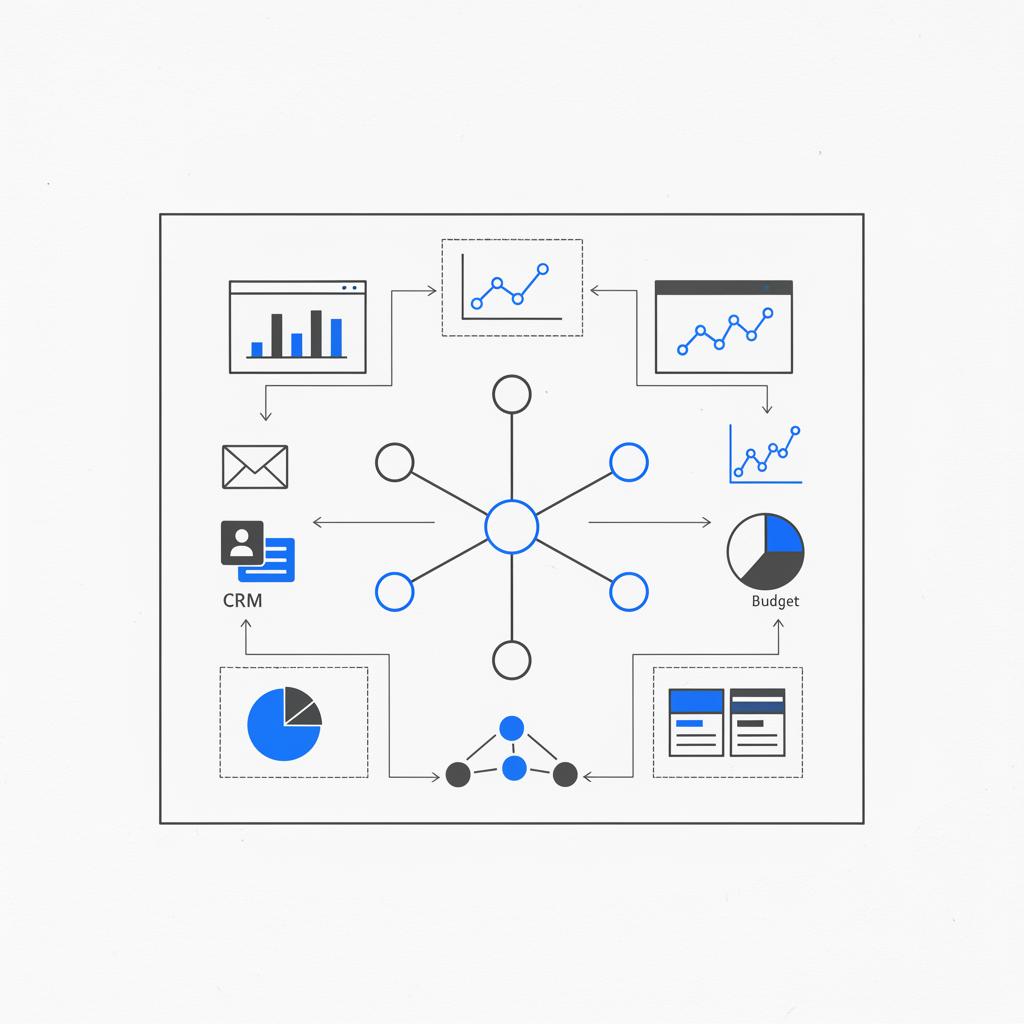
Remember: brand work is not slow by default. It can be iterative and fast when you focus on moments that matter and run disciplined experiments.
Checklist: M5 strategy branding in practice
Mission: one sentence that guides decisions.
Message: headline, three claims, two proof points.
Market: one primary and one secondary cohort.
Metrics: one-two brand KPIs, one-two performance KPIs (first-party data).
Moments: mapped journeys, two to four critical moment recipes.
Final practical resources
Run a six- to twelve-week audit. Keep reporting concise. Prioritise one or two moment experiments. Use first-party data and short brand-lift studies. Iterate quickly and keep the mission visible. Further reading: Brand Strategy 2025, 30+ Branding Case Studies, and a primer on social media branding here.

Done well, M5 strategy branding makes brand work accountable. When mission, message and measurement line up, the choices become clearer and results more predictable. Keeping a visible logo across key pages can help teams stay aligned.
Want a starting template? Try drafting a one-sentence mission, a three-line headline message, and one onboarding experiment you can run in two weeks.
The M5 brand strategy is a five-part framework—Mission, Message, Market, Metrics, Moments—designed to make brand work practical and measurable. It helps teams define purpose, craft layered messaging, prioritise audiences, choose useful KPIs and design customer touchpoints that move people toward business goals.
A focused M5 audit typically runs 6–12 weeks. The work breaks into inventory, mapping, gap analysis, KPI alignment and an activation roadmap. With a small cross-functional team you can produce prioritized experiments and measurable KPIs within that window.
Many M5 audits can be run internally with a compact team—product, marketing, analytics and customer success. External help is useful when you want fresh perspective, design capacity, or help building first-party measurement. If you prefer an outside partner, Agency Visible offers practical, time-boxed pilots and templates to speed the work.