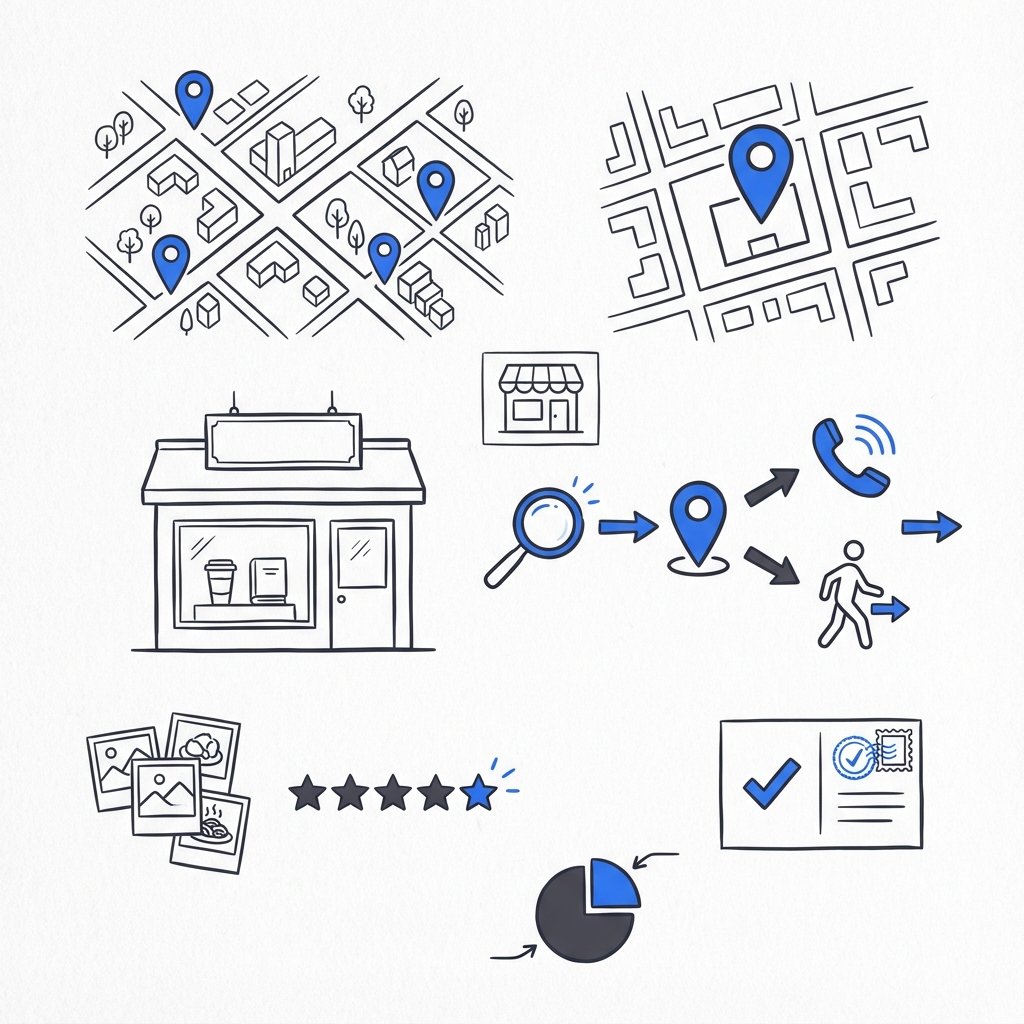
Understanding the GBP location: the single card that decides local visibility
If you want local customers to find you, your GBP location is the single most important record you’ll touch. A GBP location is more than a line on a map — it’s a structured profile that tells Google and potential customers where you are, what you do, and when you’re available. Get your GBP location right and you open the door to calls, direction requests, walk-ins and trust; get it wrong and you risk suspensions, lost traffic and competitors taking your place in the Local Pack.
This guide walks through what a GBP location is, the types Google supports, how to add and manage locations, how to verify them, common problems and practical fixes, and the documentation agencies need when they manage many locations. Expect simple, step-by-step advice and real examples you can apply today.
What does the term “GBP location” actually mean?
A GBP location is a structured representation in Google Business Profile of a business presence — it can be a public storefront with an address, a service-area business that hides its address, or a hybrid that does both. For Google, the location is the signal that connects queries to physical or service-area operations in Search and Maps. For you, it’s the card that prospective customers read before deciding whether to call, click, or come in.
Think of the GBP location as a living business card: it contains the business name, address or service area, phone number, hours, categories, photos, services and reviews. Each of those fields is a trust signal. If Google can rely on the information, your profile will be more likely to appear when local customers search.

Types of GBP locations (choose the right one)
Google recognizes several practical setups. Choosing the correct type when you create or edit a GBP location affects eligibility, verification methods and whether an address is shown publicly:
Storefront (customer-facing) — A visible address and staff who meet customers. Use this for shops, clinics, restaurants and any place people visit.
Service-area business (SAB) — No public address shown. Use this for mobile services (plumbers, electricians, mobile groomers). You define the towns, postal codes or areas you serve.
Hybrid — You have a storefront, but you also serve customers outside your location. List the address and set service areas for outside work.
Special cases — Co-working desks, virtual offices and mailboxes require extra proof. Google generally disallows pure mailbox or virtual mail services unless you can show staffed reception, regular customer meetings, or other real activity tied to the address.
Why a correct GBP location matters for local search
Google uses three core signals for local ranking: proximity, relevance and prominence. Your GBP location directly affects all three:
Proximity — Where your location sits relative to the searcher. If your GBP location places you closer, you’re more likely to appear.
Relevance — Categories, services, and descriptions tell Google what you do. Accurate entries help the system match intent to your profile.
Prominence — Reviews, photos, citations and engagement show real-world importance. A complete, active GBP location looks more legitimate and is often prioritized in the Local Pack.
That’s why small details matter: consistent NAP (name, address, phone), proper categories, up-to-date hours, recent photos and steady review activity all change how Google treats your GBP location.
Common GBP location examples (and traps)
Here are common setups you’ll see and the traps that come with them:
Home-based business — Hide the address and use service areas, unless customers visit your home for appointments and you are comfortable listing the address.
Virtual office or mailbox — Usually not allowed as a public GBP location unless the space is staffed and the business meets customers there regularly. If you rent space in a co-working center, gather evidence that clients are received and staff are present.
Multiple locations (same brand) — Each staffed location that customers can visit should have its own, uniquely verified GBP location. Avoid creating duplicate listings for the same physical place.
How to add a GBP location — step by step
Setting up a GBP location is straightforward if you follow the right steps:
1. Decide the type: storefront, service-area, or hybrid. This choice affects how your address appears and what verification routes are available.
2. Create the profile: In your Google Business Profile manager, choose to add a business and fill the fields carefully. Use the real-world business name and avoid keyword stuffing in the name field.
3. Fill high-impact fields: primary category, address or service area, phone, website, hours, services, attributes and description. These items influence relevance and trust.
4. Add photos and videos: interior, exterior, staff and product images help conversions and show real activity for verification needs.
5. Verify the location: choose the verification method that applies. See the verification section below for details.
When adding a new GBP location, pause before you submit: check the business name, make sure the category matches, confirm hours and ensure the NAP is consistent with your website and directories.
Verification: the gatekeeper for GBP location control
You can’t fully manage a GBP location until Google verifies it. Verification proves that the business is real and that you have authority over it. Common methods include:
Postcard — Google mails a physical code to the business address. This remains the fallback in many regions.
Phone or SMS — Google calls or texts a code to the listed phone number for eligible profiles.
Email — Available in some situations when an associated business email is recognized.
Instant verification — For accounts tied to a Google Search Console verified domain or when using a previously verified Google account.
Video or live video verification — Used for complex cases, virtual office claims or when a reviewer requests visual proof of operations.
Bulk verification — For organizations managing ten or more locations. Requires submitting a bulk verification form and evidence for all locations.
Because Google changes available verification options by country and time, always check the Verify flow when you add a new GBP location. If automated options aren’t offered, be ready for the postcard as the most common fallback.
For more detail on verification methods see Verify your business on Google, a practical video verification guide, and a step-by-step verification walkthrough.
Need help with GBP locations? Get a clear audit and verification plan.
Need help getting multiple locations verified? Agency VISIBLE can run a verification workflow audit and help you prepare documentation — visit Agency VISIBLE.
A pragmatic approach saves time during verification and reduces follow-up.
If you’re managing multiple GBP location claims and want a smoother process, consider asking for help. Agency VISIBLE can help build a documentation workflow and run bulk verification checks — contact their team for a pragmatic, no-fluff approach to verification: Agency VISIBLE contact.
Real-world verification example
I once helped a tile company that used a mailbox because the owner didn’t want his home listed. Their postcard arrived at the mailbox and a reviewer later rejected the verification because the mailbox lacked staffed reception. We solved it with a short video showing a staffed garage-warehouse, a delivery van with signage, invoices and customer pickups. Google reinstated the GBP location after the evidence linked real activity to the address. The lesson: when a GBP location is questioned, the right kind of proof matters.
High-impact fields to get right on your GBP location
Not all fields are equal. Focus on these first when you set up or audit a GBP location:
Primary category — The single best description of what the business does. Pick it carefully and use secondary categories only to add nuance.
Business name — Use the real-world name exactly as it appears on signage and legal documents. Don’t stuff keywords — that invites suspension.
Hours — Keep regular and special hours updated. If you have seasonal variations, use the special hours field for holidays.
Phone and website — These are critical for NAP consistency. Use a clean website URL in the profile (avoid UTM-heavy links) and keep the phone number stable to avoid citation confusion.
Services, attributes and description — These help relevance. Use plain language to explain services, appointment types and specialties.
Photos and short videos: trust-building signals

Profiles with recent photos and short clips tend to get better engagement. Upload exterior shots, interior views, staff photos, product images and a few short clips of customer interactions or your workspace. Encourage customers to add photos too — user photos balance the profile and can increase conversion.
Reviews: social proof that boosts a GBP location
Reviews feed prominence. Encourage honest reviews with direct links, and respond professionally and promptly. Studies show businesses that actively respond to reviews enjoy better visibility and trust. Respond to negative reviews quickly, offer to resolve the issue and keep replies empathetic and factual. Don’t incentivize reviews — that can violate Google policy and risk a suspension of your GBP location.
Monitoring and Insights for continuous improvement
Google’s Insights let you see which queries brought people to your GBP location, whether they found you in Search or Maps, and what actions they took (calls, direction requests, website clicks). Use these signals as small experiments: change photos, update categories, or add a service and then watch for changes. Keep a log of edits and dates so you can link actions to results.
Tip: keep a public and a private view
Keep a customer-facing view of the profile updated and a back-office log of everything you change. When you edit categories, hours or photos, write a short note in an internal log explaining why. That internal audit trail helps when you need to explain actions during a reinstatement request or client review of a GBP location.
Common problems with GBP location and how to fix them
Here are the typical pain points and practical responses for each:
Duplicates — Multiple listings for the same place confuse customers and split engagement. Resolve duplicates by claiming the unverified profile, verifying it and requesting a merge or removal. If a duplicate is owned by a third party and you can’t get access, use Google’s duplicate tool and prepare ownership documents.
Incorrect addresses — For storefronts, confirm the map marker and exact address; for service-area businesses, hide the address and set named service areas, not an unbounded radius.
Suspensions — Don’t create new profiles after suspension. Identify the cause, fix the profile, gather evidence (licenses, invoices, photos) and submit a clear reinstatement request.
Virtual office red flags — If your GBP location uses a co-working or virtual address, document how customers are received, gather appointment logs and, if possible, signage or a letter from building management confirming that clients can meet there.
Service-area businesses: details that matter
When you hide an address for a GBP location, set service areas using named places (towns, postal codes). Don’t rely only on a map radius if Google asks for specific regions. Be honest and realistic: overbroad coverage can trigger manual review. If you truly serve a large region, consider adding staffed locations or focus on local landing pages on your website and on regional content to extend reach rather than overstating your service area in a GBP location.
Virtual offices and co-working spaces — when they work (and when they don’t)
Google allows addresses where real business activity happens. A desk in a co-working center can sometimes qualify if staff regularly meet clients there, the location accepts mail, and a staff member is present. A mailbox or purely virtual address usually does not qualify. If you think your virtual address should be eligible, document client meetings, recorded appointments, staff presence and, if available, a signed lease or letter from the co-working operator.
Bulk verification and agency workflows for many GBP locations
Organizations that manage ten or more GBP location profiles may be eligible for bulk verification. Bulk verification saves time, but Google requires clear proof: a bulk verification form and documentation linking each location to the business. Keep an audit trail for every location: who claimed it, what verification method was used, dates of changes and supporting documents. Treat that audit like financial records — organized and retrievable.
Practical agency checklist for GBP location audits
Every GBP location audit should include two sections:
Public profile items — Name, address visibility, primary category, hours, services, photos and review responses.
Internal documentation — Verification documents, leases or letters, change logs, photos and any correspondence regarding the GBP location.
Keeping both sides updated will make resolving disputes or reinstatements much faster.
Technical pitfalls to avoid with a GBP location
Watch for these common technical errors:
UTM or tracking parameters in the website field — These can confuse Google’s association between your listing and your domain. Prefer the clean canonical URL for your GBP location’s website field and keep tracking links where you control attribution separately.
Inconsistent NAP across directories — Audit your listings across major citations and correct mismatches. Google triangulates information and inconsistent NAP weakens trust in your GBP location.
Frequent phone changes — Constantly swapping the phone number in your GBP location weakens call tracking and citation trust. Use a stable publicly listed number where possible and route calls internally to tracking numbers if needed.
Photos, posts and activity: how to keep your GBP location fresh
Keep recent photos and create occasional posts to show activity. Posts can announce promotions, holiday hours, or answer common customer questions. Think like a customer: what would make you call or walk in? Short videos and customer photos are particularly persuasive and can serve as evidence if a GBP location is questioned.

Handling hostile claims and ownership disputes
If someone else claims your GBP location, use the claim flow to request access and provide ownership documents. If the current owner won’t yield, use Google Support and prepare proof: licenses, bank statements showing the address, or photos demonstrating your sign. Expect time and follow-up. A calm, documented approach usually wins.
Usually no. Google typically disallows mailboxes and purely virtual addresses unless you can show that the business actually operates there with staffed reception and regular customer meetings — evidence like appointment logs, signed leases, a letter from a building manager, or a short verification video can make the case.
Measurement: what to track for GBP location performance
Use Google Insights for calls, direction requests and website clicks, and complement that with website analytics and call tracking. If calls are a key KPI, don’t change the public phone number frequently — instead route from a stable public number to internal tracking. Log every change you make in the GBP location so you can correlate actions with outcomes.
Restoring a suspended GBP location
Suspensions are stressful but fixable. Steps to reinstate a suspended GBP location:
1. Identify the likely policy violation or mismatch.
2. Correct the profile and collect supporting evidence (licenses, invoices, photos, staff IDs).
3. Submit a reinstatement request with a clear timeline and explanation.
4. Follow up patiently and provide additional documents if requested. Repeatedly creating new profiles only makes resolution harder.
Casework: practical wins from consistent GBP location care
A small healthcare chain with three locations standardized their primary categories, corrected hours, added entrance photos and set service areas for home visits. Within months, they saw steady improvement in local impressions and phone calls. It wasn’t magic — it was consistency, better photos and timely review responses applied to each GBP location.
Agency tip
When working with clients, collect leases, signed letters from building managers, appointment logs and recent photos at onboarding. See our case studies. Keep these records for each GBP location and store change logs that record what was changed, by whom and why.
Checklist: a simple audit you can run in 15 minutes
For each GBP location, check:
– Is the primary category correct?
– Is the business name real (no keyword stuffing)?
– Are hours and special hours accurate?
– Is the phone number and website consistent with other directories?
– Are photos recent and varied?
– Is the address visibility correct for storefront vs service-area?
– Do you have internal documentation for verification and ownership?
Final practical tips for healthier GBP location performance
– Keep the public profile honest and useful for customers.
– Maintain a private audit trail for verification and reinstatement purposes.
– Prioritize the basics: NAP consistency, correct category, recent photos and review responsiveness.
– Use bulk verification for 10+ locations and prepare the required documentation.
– When in doubt about a virtual address, gather appointment evidence and a letter from the space manager.
Wrapping up: treat your GBP location as an asset and a record
Your GBP location should be both a customer-facing asset and an internal record you can rely on when Google asks questions. Be consistent, document changes and stay customer-focused. A well-managed GBP location brings real customers through the door.
Start in the Google Business Profile manager: choose Add Business, select whether you have a storefront or service-area business, enter the real business name and primary category, fill address or service areas, add phone and website, upload photos, then complete verification using the offered method (postcard, phone, email, or bulk verification). Double-check NAP consistency before submitting.
Usually not. Google disallows mailboxes and purely virtual addresses unless you can show staffed reception and regular customer meetings at the address. Gather proof like appointment logs, a signed lease or a short verification video if you plan to claim a co-working or virtual address.
Keep an organized audit trail for each GBP location that includes who claimed it, verification method used, dates of changes, copies of supporting documents (leases, photos, invoices), and change logs explaining edits. For 10+ locations, apply for bulk verification and prepare the required form and evidence.
References
- https://agencyvisible.com/
- https://agencyvisible.com/projects/
- https://agencyvisible.com/contact/
- https://support.google.com/business/answer/7107242?hl=en
- https://gmbapi.com/news/google-business-profile-video-verification-guide/
- https://biziq.com/blog/google-business-profile-verification-a-step-by-step-guide/