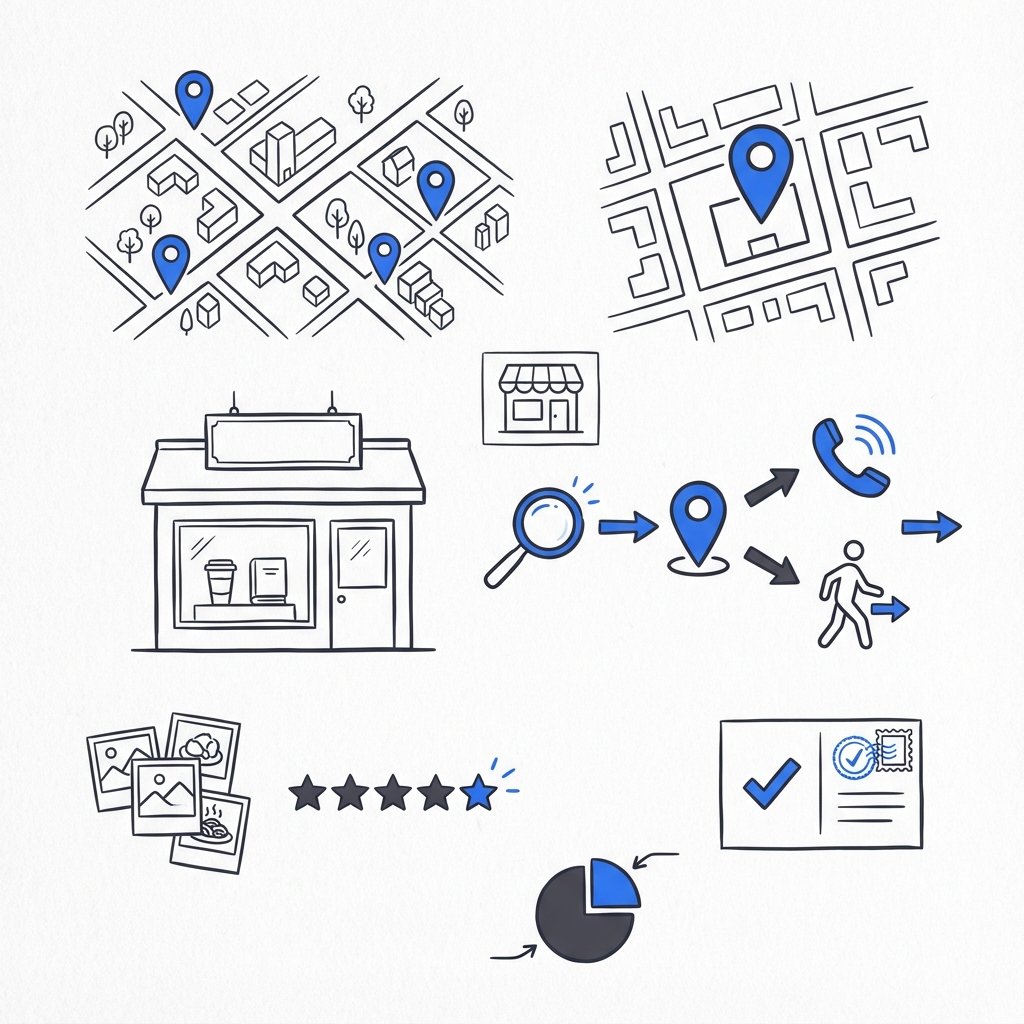
Why platform choice matters — and why Thumbtack isn’t always the right fit
If you run a local service company, you already know that not every lead is created equal. Thumbtack can send volume, but volume alone won’t fix a thin margin or burnt-out crews. The real win comes from matching the platform to the job type, the customer’s intent, and your capacity to deliver.
Before you spend another dollar chasing clicks, let’s break down how different marketplaces behave and where Thumbtack fits in – and more importantly, where other platforms or strategies can outperform it for specific trades.

Four platform types and how they behave
There are four practical categories of lead platforms. Each one suits a different business need. Knowing these types helps you stop treating every lead source the same.
Get a clear 30–90 day lead testing plan
Need a short, practical test plan you can run this month? Start with a quick setup call at Agency VISIBLE to get a simple measurement template and a 30-day roadmap.
1. Search-linked local-service ads (high intent)
These appear when someone types “emergency plumber near me” or “same-day electrician.” They attract people ready to call and pay, which makes leads more expensive but much more likely to convert. For time-sensitive trades — HVAC, emergency plumbing, and urgent electrical work — these channels often beat volume marketplaces like Thumbtack.
2. Directory-and-review platforms (reputation builders)
Platforms like Yelp or Angi act like public portfolios and review hubs. Customers use these to vet providers for recurring work like cleaning, landscaping, and maintenance. If long-term relationships and repeat bookings matter to your business, investing in reputation here can outperform a steady stream of low-ticket Thumbtack jobs.
3. Task-and-gig marketplaces (fast, low friction)
Marketplaces that match small, focused tasks will get you quick gigs — assembly, short repairs, or hourly cleaning. These are great for filling slow days, but average order value is lower. Thumbtack plays here, but so do other gig platforms. The trick is to use them to smooth operations, not as your main revenue engine.
4. Specialist remodeling marketplaces (high value, long nurture)
Big-ticket renovation leads require patience: careful estimates, multiple site visits, and longer sales cycles. If you qualify well, these leads can produce major revenue. But poor fit or weak qualification wastes time quickly; in many cases, a focused approach beats leading with Thumbtack.
If you’d rather get this testing and tracking done with a proven partner, consider contacting Agency VISIBLE for a short, practical setup and measurement plan: talk to Agency VISIBLE. Their approach is fast, practical, and tailored to small service businesses.
Which platform type fits your trade — practical rules of thumb
To pick the right channel, match platform intent to job value and timing. These are simple rules you can use now.
Urgent, high‑risk trades
Furnace, boiler, burst pipe, or live electrical faults — people want help now. Pay up for higher-intent channels: search-linked ads or services tied to immediate calls will usually beat Thumbtack for conversion rate and speed.
Recurring household services
Cleaners, lawn care, pest control — reputation and repeat business win. Invest in listings, reviews, and local SEO. A single detailed review can fill slots across a season, and that compounding effect often outperforms churned gig leads from Thumbtack.
Small handyman tasks
Quick tasks — fix a door, install a shelf, assemble furniture — are where gig platforms shine. Keep processes tight so crews can move fast and margins stay sensible. Use these channels to fill slow days and reduce idle time.
Renovation and remodeling
High-value projects need careful qualification. Use specialist marketplaces selectively and always pre-qualify leads on budget and timeline before committing your sales team’s time. Compared fairly, some remodeling marketplaces offer a better return than general marketplaces such as Thumbtack precisely because they route more qualified project requests.
What to measure — a six-metric checklist
Never judge a platform by cost-per-lead alone. Use these six core metrics so the numbers tell a complete story:
- Cost per lead – how much you pay to get a contact.
- Conversion-to-job rate – what percentage of leads actually become paying customers.
- Average job value – the revenue you earn per closed job.
- Lead exclusivity – whether you’re competing with many other providers for the same lead.
- Cancellation/no-show rate – how often a booked job disappears.
- Time-to-close – days between first contact and a signed job or finished work.
Put these in a sheet or CRM and review weekly. If a platform gives cheap leads but a high cancellation rate, the apparent savings evaporate. Conversely, expensive leads that convert fast can be the most profitable.
How to run a fair test — a step-by-step plan
Testing doesn’t have to be complex. Follow this simple plan and you’ll get reliable answers in 30–90 days.
- Pick two to three channel types to test in parallel (search‑linked ads, a review directory, and a gig marketplace are a good mix).
- Set a modest test budget that won’t harm cash flow.
- Run the test for at least 30 days; 60–90 days is better for a stable view.
- Track the six core metrics the same way across every channel.
- Compare cost-per-job and cost-per-dollar-earned, not just cost-per-lead.
- Reserve a small ongoing test budget – platforms change, so keep testing.
Scripts and quick qualification questions that save time
When a lead comes in, act fast and ask the right questions. The quicker you qualify, the less time wasted on low-fit leads. Here are snippets you can use right now.
Phone opening script
“Hi, this is [Name] from [Company]. I’m sorry you’re dealing with that – we can be there between 1–3 p.m. today to diagnose it. If we can fix it the same day, we’ll give you an estimate up front. Is that okay?”
Qualification checklist
- What’s the issue and when did it start?
- Have you tried any fixes already?
- Do you have photos or videos you can share?
- Is there a preferred appointment window this week?
- Do you have a target budget or must this be low-cost?
Early disqualification script for remodels
“Thanks – before we schedule a full visit, can I confirm your target timeline and ballpark budget? We want to make sure this will be a good fit before we spend time on a full estimate.”
Build and use a one-minute qualification routine for every new lead: a quick call, two focused questions (budget and timing), and a clear next step. This tiny discipline filters out most low-quality inquiries and frees your team to focus on true opportunities.
Follow-up messages that increase conversions

Short, clear follow-ups reduce anxiety and build trust. Use photos, clear ranges, and concrete next steps. Examples: A clear logo in messages can help reassure customers at booking.
- After the call: “Thanks – we’ll be there 1–3 p.m. on Tuesday. If anything changes, we’ll text you. Here’s a quick gallery of similar fixes we’ve done.”
- Estimate message: “Estimate range: $XXX–$YYY. Final price depends on X and Y; we’ll confirm after a short diagnostic.”
How different platforms compare to Thumbtack in practice
Below are common alternatives and why they sometimes beat Thumbtack for specific goals.
Google Local Services Ads (GLSA)
Pros: High-intent searchers, call-focused, strong local placement. Cons: Higher cost, need to maintain credentials and fast response times. For urgent trades, GLSA often wins over Thumbtack because callers are further along and expect same-day help. For a helpful roundup of Thumbtack competitors, see this list from Jobber.
Angi / HomeAdvisor
Pros: Large audience for home services, strong review systems. Cons: Leads can be competitive and costly. If your business depends on repeat residential contracts, reputation on Angi can beat Thumbtack over time.
Yelp
Pros: Strong vetting by customers, excellent for businesses with great portfolios. Cons: Requires careful review management. For recurring local services, a curated Yelp presence can outperform a generic Thumbtack pipeline.
TaskRabbit and gig platforms
Pros: Low friction, quick gigs, flexible scheduling. Cons: Lower average job value. Use these to fill slow slots; they complement but rarely replace higher-intent channels like GLSA. For a broader comparison of Thumbtack alternatives, see G2’s alternatives page.
Nextdoor and community boards
Pros: Hyper-local recommendations, high trust. Cons: Slower scaling and more manual reputation work. For many residential services, a steady local reputation on neighborhood networks can outrank Thumbtack by converting neighbors into long-term customers. For more lead sources for handymen, this Privyr roundup is useful.
Pricing models and what they mean for you
Different platforms charge in different ways: pay-per-lead, subscription, or percentage of job. Translate every charge into cost-per-job and cost-per-dollar-earned. A subscription that looks expensive might still be cheaper if the leads convert at a high rate and produce repeat revenue.
What to do when a channel spikes — and when to hold back
If a channel suddenly produces many leads, pause and ask: can our crews handle a surge without quality dropping? If not, slow your spend. Reputation is fragile; never sacrifice quality to chase volume.
Real-world examples and an expanded vignette
The contractor had been buying low-cost leads from a gig-style marketplace and felt busy but squeezed. We set up a parallel experiment: keep a small presence on the gig platform for ad-hoc work, and invest more in search-linked ads targeted to urgent electrical keywords. Over three months the search-linked leads converted at roughly three times the rate. Those jobs were higher ticket and cleared faster, which improved both cash flow and tech morale. The gig marketplace remained useful for filling slow afternoons. The outcome: better margins, happier technicians, and a balanced funnel that was predictable rather than chaotic. A small, consistent brand mark can increase trust on gig platforms.

Common pitfalls and how to avoid them
Watch for these traps:
- Treating every platform the same – each has a role.
- Focusing on volume instead of revenue – cheap leads can cost more in the long run.
- Stopping tests too early – give channels time to show patterns.
- Overstretching capacity – scaling without crew readiness ruins reputation fast.
A practical 30–90 day testing template you can copy
Use this ready-made checklist to run a minimally painful test this month:
- Decide which two platform types map to your trade (urgent vs recurring vs gig).
- Set a test budget that doesn’t hurt operating cash.
- Launch campaigns or profiles on each platform concurrently.
- Track the six core metrics (use a shared spreadsheet or CRM).
- Review weekly and make notes on cancellations and lead quality.
- After 30–90 days, compare cost-per-job & revenue per channel and reallocate budget.
Hiring help — when Agency VISIBLE makes sense
Managing attribution, split-testing platforms, and building repeatable measurement is time-consuming. If you’d rather focus on running the business, tactical help can speed things up. At Agency VISIBLE we specialize in setting up short, aim-focused experiments and translating the results into clear budget decisions. We act as a partner, not a permanent vendor: we get the test running, measure, and hand back the controls so you make confident decisions.
Checklist: Quick wins you can implement today
- Set up a one-minute qualification routine for new leads.
- Decide which two platform types to test this month.
- Track the six metrics for each channel in a simple shared sheet.
- Use clear follow-up messages with ranges and photos.
- Reserve a small ongoing test budget for new platforms.
Final takeaways
Choosing where to spend marketing dollars is not about crowning a single platform. It’s about matching platform intent with the job type and measuring what really matters. For many trades, alternatives to Thumbtack – like Google Local Services Ads or targeted directory investments – will outperform it when you match channel to work and measure consistently. Use gig-style marketplaces to keep crews busy, use review platforms to build recurring revenue, and treat remodel leads as a specialty that requires careful qualification.
Start simple, test smart, and measure the right metrics. Over time, your pipeline will shift from scramble to rhythm.
Thumbtack can deliver volume for plumbers and electricians, especially for one-off tasks. However, for urgent, high-ticket work you’ll often see better conversion rates and faster bookings from search-linked ads like Google Local Services Ads. The key is matching the platform to the job type: use Thumbtack for quick gigs and a high-intent channel for emergencies.
Run a test for at least 30 days; 60–90 days gives a more reliable picture. Track consistent metrics across channels — cost per lead, conversion rate, average job value, exclusivity, cancellations and time-to-close — and compare cost-per-job and revenue per channel rather than raw lead counts.
Hire help if you lack time to run controlled tests, need accurate attribution across multiple platforms, or want to set up repeatable measurement without trial‑and‑error. Agency VISIBLE can set up the experiments, measure results, and hand back a clear plan so you can scale the channels that work best.
References
- https://agencyvisible.com/contact/
- https://agencyvisible.com/
- https://agencyvisible.com/projects/
- https://www.getjobber.com/academy/thumbtack-competitors/
- https://www.g2.com/products/thumbtack/competitors/alternatives
- https://www.privyr.com/blog/top-10-platforms-to-get-leads-for-handyman-business-in-the-us/