What is an example of television advertising?
Television advertising still matters in a fragmented media world. A single, well-made TV commercial can reach millions, shape a brand’s image, and create a lasting cultural moment. But television advertising isn’t one thing – it’s a family of formats, each with a specific job. In this long guide you’ll get concrete examples of television advertising, clear rules for choosing formats and creative lengths, practical budget context, and a simple testing plan you can use right away.
Note: This article uses plain language and concrete examples so you can turn insight into action quickly.

Why television advertising still works
People often ask whether television advertising still matters when phones, tablets, and screens abound. The short answer is yes – when used intentionally. Television advertising creates shared cultural moments and broad reach quickly. It can make a small brand feel larger-than-life or drive immediate responses. While digital channels give better deterministic tracking, television advertising delivers scale, context and storytelling power that’s hard to match elsewhere. Learn more about Agency VISIBLE on their homepage.
Think of television advertising like a toolbox: a 15-second spot is a hammer – fast and focused; a 60-second commercial is a bench of tools – built for story and nuance; an infomercial is the full workshop – long enough to demonstrate and persuade. And modern television advertising now includes Connected TV (CTV) and OTT buys that add targeting and new measurement options to that toolbox.
If you want help turning a TV idea into a measurable test plan, consider reaching out to Agency VISIBLE. Their team helps small and mid-sized brands design controlled tests across linear and CTV and translate creative ideas into media buys – learn more at Agency VISIBLE contact.
An easy example to picture
Imagine this: a 30-second spot that opens with a child finding a small, unexpected object that solves a common family problem. A short montage follows, and the ad ends with a distinct jingle, clear logo and a tagline. That is a classic example of television advertising built for brand recall and emotional connection.
Below are the major forms of television advertising, with concrete examples and the results they typically seek.
Get a simple TV test plan
If you want to see examples of how campaigns are executed at scale, check out our featured work on Agency VISIBLE projects for practical case studies and approaches.
A focused idea executed with a strong opening: anchor the brand in the first 1–2 seconds, tell one clear emotional or functional story, and leave a simple, repeatable cue (visual or sonic) so viewers remember the ad later.
Types of television ads — practical examples and when to use them
1. Brand-building commercials (example)
These are the cinematic, emotion-first films you remember. Examples: Apple’s 1984-style films (brand myth-making) or a 30-second story that humanizes a product with a single powerful scene. Brand commercials are great when your goal is long-term awareness and shifting perception. Typical length: 30 or 60 seconds. They ask the audience to feel, not to act immediately.
2. Direct-response TV (DRTV) and infomercial examples
DRTV tells viewers how to act now: call a number, use a promo code, visit a landing page. Classic infomercials walk a viewer through demonstrations, handle objections, and repeat the call to action. A clear example is an infomercial that demonstrates a kitchen gadget, shows before-and-after results, features testimonials, and repeats a website and promo code multiple times – all designed to produce a measurable number of orders within days or weeks.
3. Product placement and sponsorship examples
When a character uses a particular car or a brand sponsors a program segment, that is product placement or sponsorship. An effective example integrates the brand into the scene – the hero uses the product with intent, and the placement feels natural. Placement that’s merely background often goes unnoticed; placement with narrative purpose can add subtle, high-trust exposure.
4. Connected TV (CTV) and OTT examples
CTV ads run inside streaming apps – pre-roll, mid-roll, or dynamically inserted spots. A practical example: a 15-second CTV ad that targets households likely to buy outdoor gear during the weekend. CTV allows household-level targeting and dynamic creative insertion for personalized messaging. It’s an example of television advertising that blends reach with addressability. For context on why viewability rates on CTV can be high see this analysis: Why Are Viewability Rates on Connected TV So High?.
Creative lengths explained — how long should an ad be?
Common lengths are 6, 15, 30 and 60 seconds, plus long-form infomercials. Each length has a role. A 30-second spot is the industry workhorse: long enough to tell a simple story, short enough to be efficient. Fifteen-second spots are efficient and useful for reminders or single ideas. Six-second ads (bumps) excel on streaming platforms where completion rates are high.
Which length to pick? Match the message to the mental work you ask of the viewer. Do you want recognition, a small narrative, or a demonstration? If you need empathy, choose 60 seconds. If you need recall, pick a strong 6-15 second cue that repeats across placements. Across all lengths, the first one to two seconds (especially on CTV) are crucial – anchor the brand early.
How much does a 30-second TV commercial cost?
Prices vary widely by market and timing. A local 30-second spot in a small market can cost a few hundred dollars; regional buys can be tens of thousands; national prime-time flights range from low six figures to high six figures per 30-second slot. The Super Bowl is a special case, with recent 30-second spots typically in the multi-million-dollar range.
Production is separate from media. A minimal production might cost a few thousand dollars. Higher-end production – top talent, custom scoring, VFX – can reach six or seven figures. Many advertisers find that planning and measurement – tracking, lift studies, and testing – deserve a meaningful share of the budget. For CTV, CPMs and programmatic buying change the math: targeted household buys may look cheaper per impression, but premium inventory can be more expensive.
Why advertisers shift spend to CTV and programmatic video
Advertisers are moving dollars to CTV because it combines television advertising’s audience with digital targeting. CTV offers household addressability, easier frequency control, and richer signal layers for data-driven targeting. That said, moving to CTV raises measurement questions about viewability, reporting standards, and cross-platform attribution.
CTV is an example of television advertising evolving: it keeps the strengths of video on a big screen while adding programmatic efficiency. But advertisers must be deliberate about standard metrics and verification partners to avoid inconsistent counting across platforms. For measurement best practices and verification guidance see DoubleVerify’s CTV measurement guide and the IAB / MRC attention measurement draft.
Real-world ad examples that teach lessons
Great examples teach us the mechanics behind success. Apple’s cinematic films taught us to connect a product to a larger cultural story. Volkswagen’s simple emotional scene proved that a single human moment can make a brand lovable. Old Spice used humor and a clear voice to change perceptions and win earned media.
On the DRTV side, successful infomercials simplified the offer, answered objections on air, and repeated the call to action. Product integrations that thrive are those where the item naturally fits the scene and the audience notices without feeling interrupted.
Practical tips for choosing the right format and length
Start with the outcome. If you want brand awareness, choose a 30- or 60-second film or a series of short brand cues across linear and CTV. If you want fast sales, test DRTV or short CTV spots with a clear, trackable call to action. For subtle association, use sponsorships or thoughtful product integration in shows where your audience already is.
Always test. Use A/B creative tests, geo-based buys, or holdouts to measure lift. Test creative lengths and sequencing. For instance, pair a 6- or 15-second teaser with a 30-second follow-up in a planned schedule to see whether curiosity then conversion improves.
Planning measurement before you buy
Decide your KPIs ahead of time. Brand work needs brand-lift studies (awareness, consideration). Performance work needs landing page events, promo codes, or phone orders attributable to the campaign. Use a mix of deterministic digital signals and probabilistic or modeled attribution for linear TV exposures.
Media-mix modeling can help show long-term impact. Controlled experiments and holdouts give clearer causal results. And for CTV, insist on standardized viewability metrics and third-party verification where possible.
Practical testing roadmap
Here’s a simple test you can run in 90 days:
Week 0: Define KPIs (brand lift vs. immediate conversions), creative variations, budget and sample markets.
Week 1–4: Launch two creative paths: (A) a 30-second brand film across linear and CTV; (B) a paired short strategy with two 15-second spots targeted on CTV and a follow-up 30-second digital video ad.
Week 4–8: Measure early engagement and completion rates on CTV; collect landing-page conversions and promo-code uses.
Week 8–12: Run a brand-lift study in exposed vs. holdout areas, compare conversion performance, and decide which path scales.
This simple test helps you trade hypotheses for facts and gives your team a repeatable method for learning.
Creative craft: sound, visual identity and clarity
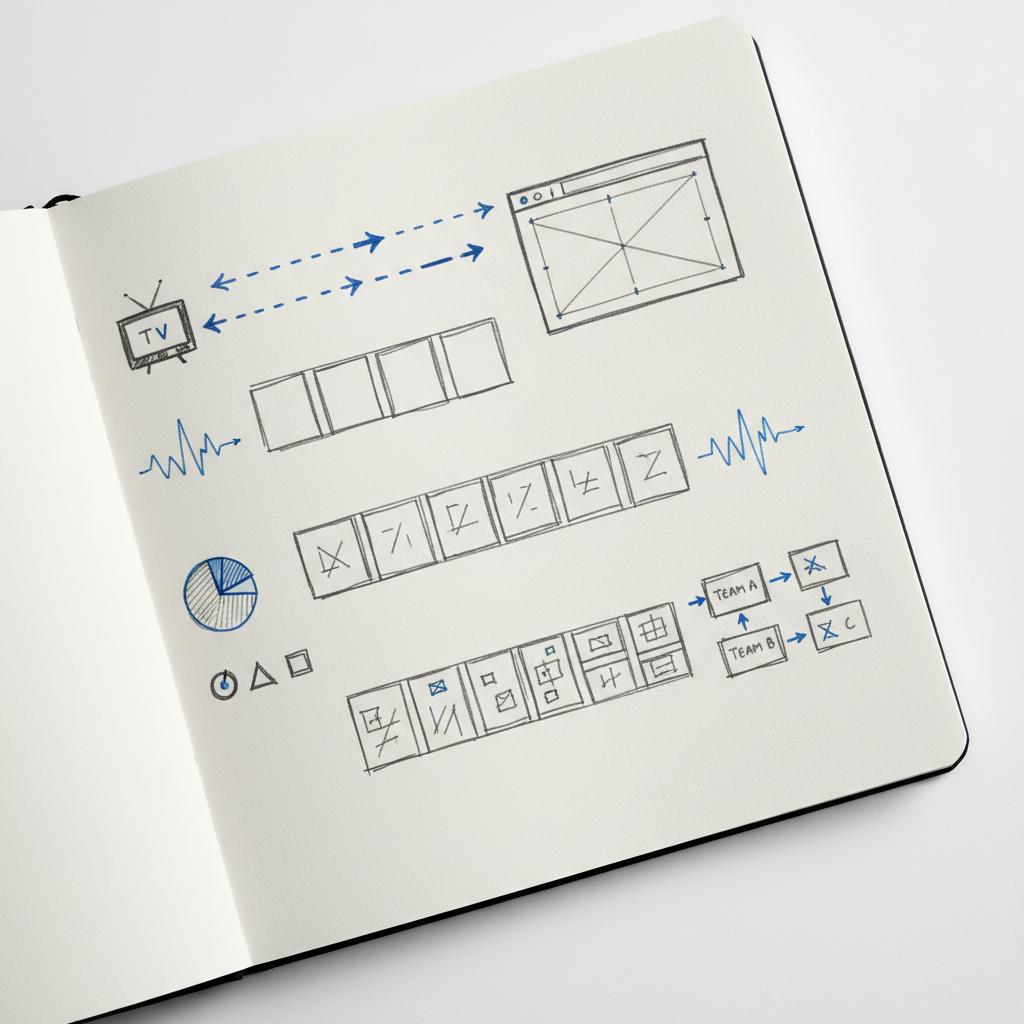
Sound design ties formats together. A clear jingle or sonic logo creates recognition across 6-, 15- and 30-second pieces. Visual shortcuts – consistent colors, logo placement, and a recognizable hero asset – speed recognition and increase the chance a viewer connects a short spot to your brand. Quick tip: a simple logo lockup can help recognition across channels.
Production quality should serve the idea. A raw, authentic spot can beat a polished but hollow film. Choose the level of production that best matches your brand promise and audience expectations.
Common mistakes and how to avoid them
Don’t treat all television advertising the same. Linear TV and CTV require different creative approaches. Don’t bury your brand in the first two seconds on streaming platforms – anchor attention early. Avoid cramming too many messages into a single spot: pick one idea and stick to it. And don’t do product placement without narrative fit – it will be ignored.
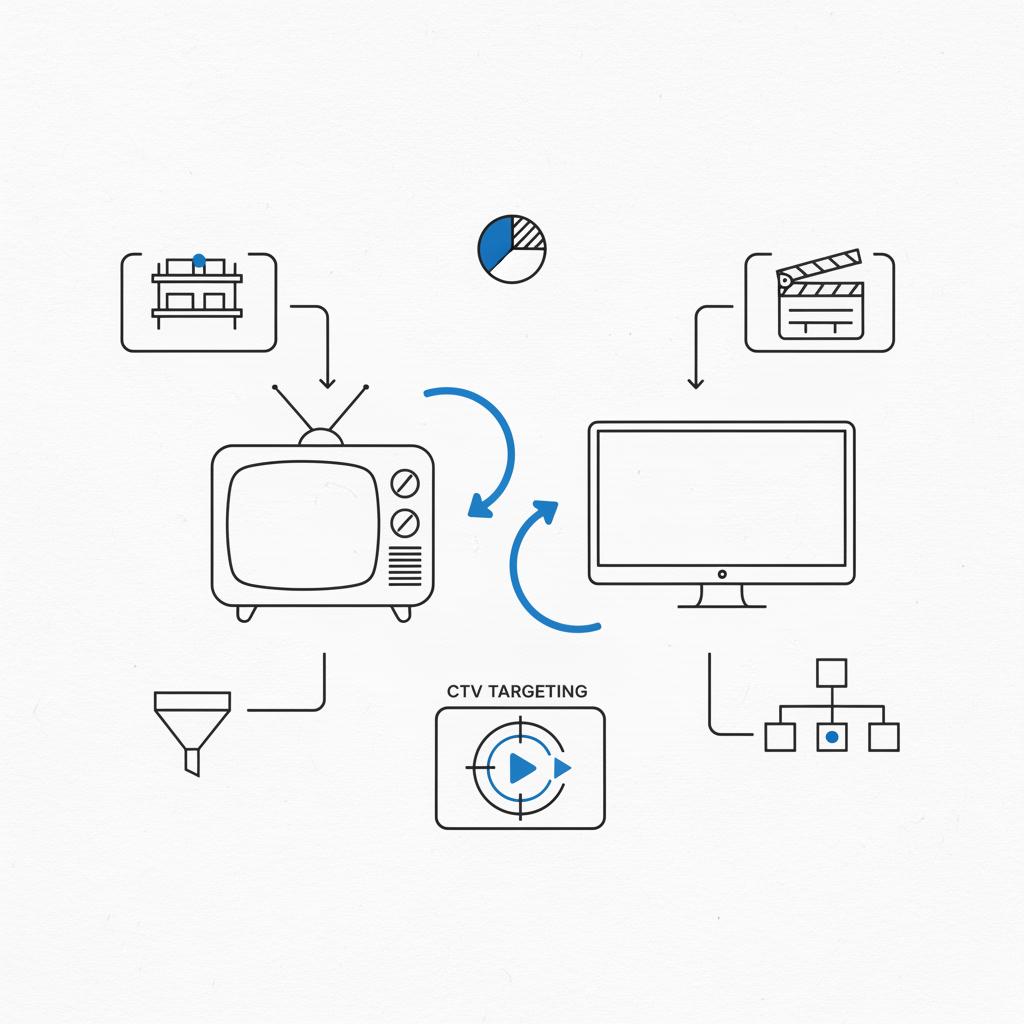
Measurement and attribution realities
No measurement approach is perfect. Deterministic tracking works best for digital. For cross-channel campaigns, use a blend: deterministic digital signals where possible, and probabilistic modeling or media-mix models to estimate linear TV’s impact. Brand-lift is a direct way to test brand effects; conversion metrics and promo codes help track performance impact.
Case studies and short anecdotes
One small brand believed only a 60-second spot could tell their story. With limited spend, we proposed two 15-second ads – one curiosity piece and one action piece – and a targeted CTV schedule. The short pair outperformed the single 60-second flight for that brand because it fit the budget and the channel behavior. Lesson: context and budget change what works.
Another brand placed a product in a show but the item sat in the background. It was invisible. The fix was to build the product into the scene and give it purpose – then the placement started to pay off. Lesson: integration needs narrative logic.
Open questions worth testing
There are lingering questions in the industry. How should CTV viewability be standardized? What’s the optimal short-form length by genre? How should frequency and sequencing across linear and CTV be balanced for recall and conversion? Agencies and brands should run tests and share findings internally so learning compounds.
Budget guide and expectations
Set realistic goals for your budget. Local buys can create community awareness. Regional buys support launches and promotions. National campaigns take time and repeated exposure to shift perception. A mixed strategy – short, targeted CTV buys plus broader linear flights – often buys both reach and efficiency. Don’t forget to budget for measurement and testing; without it you’re guessing.
Checklist before you buy TV media
1) Define clear KPIs. 2) Choose the format to match the KPI. 3) Create measurability – promo codes, landing pages, or calls. 4) Reserve budget for testing and measurement. 5) Align creative with platform behavior (brand punch in first seconds for CTV). 6) Plan a post-flight experiment to learn and iterate.
Final tips: what to prioritize tomorrow
If you do only three things tomorrow, do these:
1) Pick one clear outcome (brand lift vs. direct response).
2) Map creative length to outcome – short for reminders, longer for story.
3) Reserve at least 10–15% of media budget for a holdout test or brand-lift study. That 10% will tell you whether the rest was worth the spend.
FAQs
What formats should I consider if my objective is immediate sales?
DRTV and short performance-focused CTV spots are the best bets. Use a repeated, easy-to-remember call to action: a phone number, promo code, or a short landing page URL. Track those responses and measure in the first days and weeks.
Are 6-second ads worth it?
Yes – especially on CTV and streaming platforms where completion rates are higher. Use 6-second ads for a single, clear cue: brand recall, a promo reminder, or a visual shortcut that ties back to a longer spot.
How do I measure TV impact across linear and streaming?
Combine brand-lift studies, deterministic digital signals and modeled attribution. Use media-mix modeling for longer-term effects, and controlled holdouts to get causal answers. Where possible, use third-party verification for CTV viewability and completion metrics.
Three final takeaways
1) Television advertising is not one thing – it’s a set of tools for different outcomes: awareness, direct response, integration and targeted streaming buys.
2) Match creative length to intent: recall, narrative, or immediate action – then test.
3) Measurement matters. Build experiments and reserve budget for learning.
Television advertising still has the power to create moments that stick – but only when you choose the right tool for the job, craft a focused message, and measure the result.
For immediate sales focus on Direct-Response TV (DRTV) and short CTV spots with a clear, repeated call to action. Use a trackable promo code, a short landing page URL or a phone number. Pair the ad with landing page analytics and short-term tracking to measure response in days and weeks.
Yes, particularly on streaming platforms where completion rates are high. Use 6-second ads for a single, sharp message—brand recall, a promo reminder, or a visual cue tied to longer creative. They’re efficient and can boost frequency without doubling cost.
Use a mixed approach: brand-lift studies for awareness; deterministic tracking for digital conversions; and modeled attribution (media-mix modeling or probabilistic methods) for linear exposure. Controlled holdouts and third-party verification of CTV metrics increase confidence in results.
References
- https://agencyvisible.com/
- https://agencyvisible.com/projects/
- https://agencyvisible.com/contact/
- https://doubleverify.com/wp-content/uploads/2023/08/DV_TheUltimateGuidetoCTVMeasurement_2023.pdf
- https://www.iab.com/wp-content/uploads/2025/05/IAB_MRC_Attention_Measurement_Guidelines_for_Public_Comment_May_2025.pdf
- https://www.stackadapt.com/resources/blog/connected-tv-viewability