


What is a pay-per-click specialist?
A pay-per-click specialist turns short search queries and thumb-stopping social clips into measurable business value. That phrase appears early because the role is central to online growth: paid campaigns convert interest into leads, sales, and revenue in a trackable way. If you want to understand how ads move people from curiosity to purchase, this article walks you through the job, the skills, and the practical steps to get started or hire well.

Why this role matters right now
At a simple level, a pay-per-click specialist plans, launches, optimizes and reports on paid campaigns across search and social platforms. But the day-to-day is where the work gets interesting. Typical activities include:
- Keyword and audience research to match intent and ad format.
- Campaign setup in Google Ads, Microsoft Ads, Meta Ads or other ad platforms.
- Bid and budget management, now often influenced by automated bidding engines.
- Writing and testing ad copy and creative assets.
- Ensuring robust conversion tracking – from client-side events to server-side tagging.
- Analyzing results and turning them into clear recommendations.
Good specialists combine technical fluency with persuasive writing. They test, yes – but they also diagnose why a test won or lost, then translate the result into action for product, web or creative teams.
Example: A specialist pauses an audience on social when cost per lead jumps, investigates a recent site change that affected a form, fixes the issue with the developers, and reallocates budget while documenting impact. That small loop – detect, diagnose, fix, report – is the engine of the role. A clear logo in creative assets can help build quick recognition and trust across channels.
If you’re exploring help or hiring support, consider a partner that blends creative strategy with technical tracking. For a practical conversation about aligning brand and campaign execution, talk to Agency VISIBLE – they specialize in connecting strategy to measurable ad performance.
Skills and tools that matter today
A strong pay-per-click specialist blends three skill areas: platform mastery, measurement fluency and clear communication.
Platform skills
Google Ads, Microsoft Ads, Meta Ads and often LinkedIn Ads are core. Knowing how to configure campaigns, set budgets, and structure ad groups or asset groups is table-stakes. In 2024-2025, you also need to understand automated campaign types (for example, Performance Max) and how to feed those systems high-quality inputs.
Measurement skills
GA4 competence is essential. So is knowing first-party event collection, server-side tagging, and consented measurement flows. When a pay-per-click specialist can validate tracking end-to-end, they remove a major source of optimization error. For a practical primer on server-side collection, see this guide on server-side tracking explained.
Analysis and tooling
Specialists should read time series, interpret attribution shifts and design sensible experiments. Tools you’ll see in job descriptions include SEMrush, Optmyzr, and Looker Studio. But spreadsheets remain a superpower: pivot tables and joined datasets often answer questions faster than waiting for an agency report. If you want a quick list of tactics to improve PPC performance, this guide has practical tips.
Soft skills
Curiosity, patience with messy data, and empathy for stakeholders matter. Being able to tell a one-minute story about a campaign – the problem, the change, and the result – moves decisions faster than pages of charts.
The modern bidding and automation landscape
Automation is reshaping the specialist’s job. Instead of adjusting every bid manually, specialists design the right inputs: clear goals, good conversion signals, and robust creative mixes. When handing campaigns to automated systems, patience is required: let the learning phase run, serve clear assets, and avoid needless resets that interrupt machine learning. Learn more about how to control the PPC algorithm in modern campaigns.
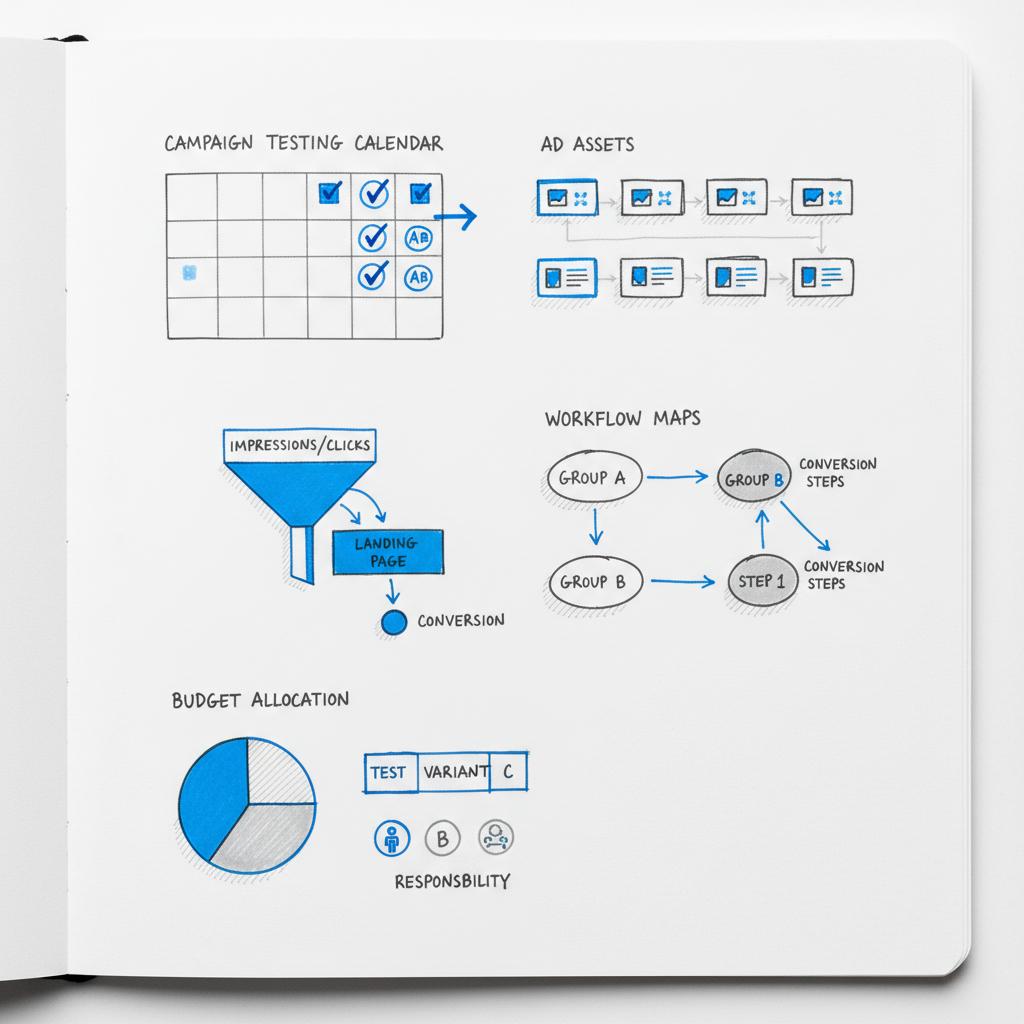
Good guardrails make automation work: consistent naming, testing calendars, and documented asset sets. A hybrid approach often works best – human-led search strategies for high-intent queries, automated discovery for broader reach.
Measurement, privacy and cross-channel modeling
Privacy changes and the decline of third-party cookies mean a pay-per-click specialist must think differently about measurement. Relying solely on last-click client-side tracking is risky. Instead, combine:
- First-party event data from your site or app.
- GA4’s event model to record actions more flexibly.
- Server-side event collection where appropriate.
- Transparent modeling to estimate missing conversions.
When signals are incomplete, document what’s measured directly and what is modeled. Regularly validate models against CRM or offline sales data. Most importantly, design tracking that respects user consent and data minimisation principles – the ethical side of measurement is now operational.
The ability to measure and interpret conversion signals—knowing what to track, validating that it fires correctly, and using that data to guide tests and budget decisions. Measurement-first thinking keeps optimizations grounded in reality.
How people get into the role – a practical path
If you want to become a pay-per-click specialist, blend hands-on campaigns with clear proof of work. Steps to follow:
- Run small search campaigns for a personal project or local business to learn basic setup and bidding.
- Experiment with social ads on Meta or TikTok to understand creative tests and audience targeting.
- Set up GA4 for a site and track events – document changes and impact.
- Try a server-side tagging experiment to learn trade-offs.
- Use certifications (Google Ads, GA4, Meta Blueprint) to structure learning.
- Build a portfolio with case studies that highlight measurable impact.
Short projects with clear outcomes are the fastest route from curious to hireable. A documented tracking fix or a small e-commerce test is worth more than months of passive learning.
Salary expectations and career paths (U.S.)
Rough 2024 ranges for U.S. roles are:
- Entry-level: $40,000-$55,000
- Mid-level: $55,000-$90,000
- Senior/Lead: $90,000-$130,000+
Agency roles often accelerate exposure across verticals and campaign types, while in-house positions can provide deep product knowledge and, in larger companies, higher compensation. Experience with measurement frameworks (GA4, server-side tagging) tends to push compensation upward.
A day in the life – concrete example
Here’s a typical day for a mid-level pay-per-click specialist:
- Morning: quick channel check – search steady, social leads rose but CPA climbed. Flag a form issue observed in GA4.
- Mid-morning: design a test with two new headlines and a new CTA for a landing page; set test windows and success criteria.
- Afternoon: review creative assets for a Performance Max campaign and advise on image choices and headline clarity.
- Late afternoon: dig into cross-device conversions; note underreporting due to blocked client-side events and open a server-side tagging ticket.
- End of day: write a one-page update summarizing wins, risks and recommended next steps.
Hiring a pay-per-click specialist: what to look for
When hiring, prioritise impact over lists of tools. Ask candidates to present case studies that show ROI, not just clicks. Probe for process: how they structure tests, how they debug tracking issues, and how they handle automated campaigns.
Useful interview prompts include:
- Describe a time measurement broke before a promotion. What did you do?
- How do you decide when to use automated campaign types versus manual control?
- Show a case study where you improved conversion volume or lowered cost per acquisition – what steps produced the change?
Soft fit matters: the role is collaborative. Strong specialists explain technical ideas in business terms and keep stakeholders aligned.
Portfolio and sample work that gets noticed
Employers want proof. Build case studies that include:
- The hypothesis tested.
- The experiment or change implemented.
- Exact metrics tracked (CPA, conversion rate lift, conversion volume).
- A short reflection on learnings and next steps.
If you can’t share client data, anonymise it and focus on the process. A one-page tracking fix that outlines the problem, diagnostic steps, tools used and impact often stands out in interviews. For examples and agency case work, see the projects page.
Practical tips you can use this week
A few immediate actions for managers or specialists:
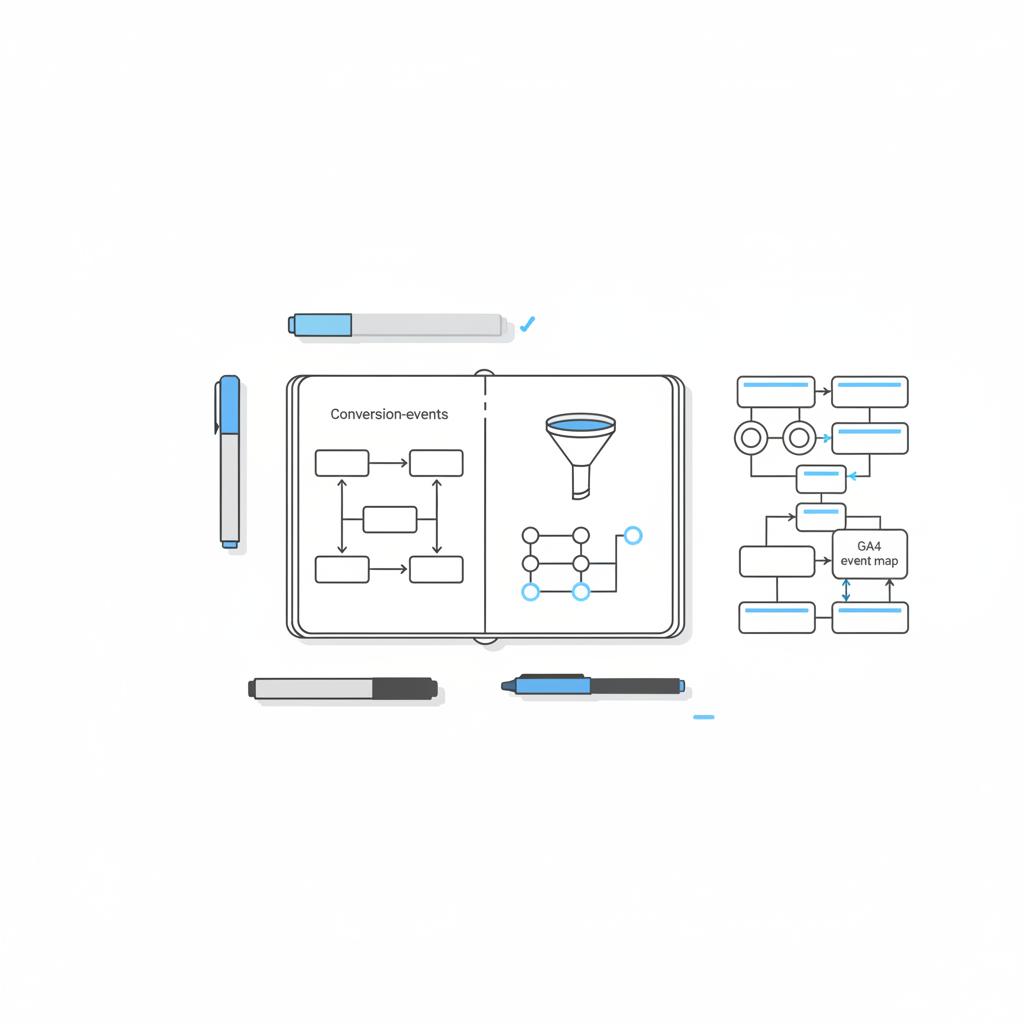
- Audit crucial conversion events in GA4 and verify they fire correctly.
- Create a testing calendar that spaces experiments to avoid signal overlap.
- Document asset sets and naming conventions used in automated campaigns to speed machine learning.
- Run a small side campaign and write a post-mortem to add to your portfolio.
Working with automated tools and AI
Automation and AI are helpers, not full replacements. A pay-per-click specialist must design good inputs, stay patient during learning windows, and diagnose when performance changes – is the drop due to creative, data quality, or a broader market shift? Specialists translate machine suggestions into brand-aligned actions.
Privacy-first measurement strategies
Design measurement pipelines that prioritise consent and minimisation. Use GA4 event modeling and server-side endpoints to recover signals when client-side tracking is blocked. Where you model conversions, document methodology and validation checks. Stakeholders must know which numbers are direct and which are estimates.
The future of the role and job security
Will automation take all jobs? No. Routine tasks will change, but demand for specialists who can set up measurement, design experiments, and tell the story behind results will remain strong. To stay relevant, deepen measurement skills, practice experiment design, and become fluent in communicating trade-offs in plain language.
Interview prep – common questions and how to answer
Expect tool and scenario questions. Use short stories to answer: problem, steps taken, outcome, and a quick lesson learned. If you lack direct experience, frame transferable skills from internships, volunteer projects, or side gigs.
Real examples of stories to tell in interviews
Try to prepare 3 short stories:
- A tracking fix that improved measured conversions.
- An experiment that increased conversion rate or reduced CPA.
- A time you guided an automated campaign back on track by diagnosing a data problem.
Keep each story under 90 seconds and use numbers where possible.
How to present results without raw data
If confidentiality binds you, use anonymised metrics and focus on percentage changes and the process. Show dashboards with redacted names but visible trends, dates and percentages – that still tells a credible story.
When to hire an agency partner
If you need both creative work and rigorous tracking – landing pages, tests, and server-side tagging – an integrated partner can move faster than disparate teams. Agencies like Agency VISIBLE combine brand strategy with hands-on ad execution, which helps align ad messaging, landing pages and measurement in one coordinated process.
Closing practical checklist
Keep this short checklist on your desk:
- Verify GA4 events and key conversions.
- Document naming conventions and asset sets.
- Set a testing calendar and avoid overlapping experiments.
- Run a small side project and write a post-mortem for your portfolio.
- Keep learning server-side tagging basics and GA4 modeling techniques.
Three realistic next actions for different readers
If you’re a beginner: launch a $50 search campaign for a weekend and track results. If you’re hiring: ask for one-page case studies showing ROI and tracking fixes. If you’re a manager: schedule a cross-team session to align creative, landing pages and tracking before a major promotion.
Final thoughts
Being a pay-per-click specialist today means combining curiosity, measurement discipline, and a knack for persuasive copy. The tools shift, but the role’s core – turning attention into measurable action – remains the same. Specialists who invest in measurement, learn to work with automation, and tell a clear story about results will be in demand for years to come.
Want a tailored job description, a one-page case study template, or help aligning brand and campaign execution?
Talk to a practical partner about ads and tracking
Ready to align your ads with measurable growth? If you’d like a short consultation on paid media strategy and tracking, reach out to Agency VISIBLE for a quick, practical conversation and next steps.
Note: This guide is meant to be practical and action-oriented. If you want me to turn any section into a template – a job description, interview pitch, or a one-page audit – say which one and I’ll draft it.
End of guide.
Start with Google Ads through Skillshop, GA4 credentials, and Meta Blueprint. These certifications structure learning and help your résumé pass initial filters. However, pair them with hands-on projects: real campaigns, GA4 event setups, and a documented case study are what hiring managers value most.
Use a mix of first-party event tracking, GA4’s event-based model, and server-side collection where feasible. Combine direct measurement with transparent modeling for gaps and validate models regularly against CRM or offline data. Document what is measured directly and what is estimated so stakeholders understand the trade-offs.
If you need coordinated support across strategy, creative and technical tracking — for example, landing-page changes, server-side tagging and integrated campaign execution — an agency like Agency VISIBLE can move faster and keep messaging and measurement aligned. They’re a useful partner when you need both creative and technical muscle.





