Every business owner asks roughly the same thing at some point: what is a good budget for Facebook ads? The short, useful truth is that there isn’t a single universal number. Instead, a smart starting point ties budget to measurable outcomes – conversion goals, realistic cost-per-conversion targets, and the amounts needed to feed Facebook’s learning algorithms.
Start by treating month one as an experiment. That simple shift – from guessing to testing – changes how you set a number. Pick a conversion goal and a target cost per conversion, multiply them, and you have a defensible test budget. Want 200 purchases and expect $20 per purchase? Plan for about $4,000 that month. This conversion-driven approach is the backbone of an effective facebook ads budget.
Build a test budget that drives real results
Need a tailored one-month test plan? Review our project case studies or contact our team to discuss a custom plan that maps conversions to budget.

How to convert a business goal into a facebook ads budget
Budget math removes guesswork. Follow these steps:
1) Define the conversion you measure
Is it a purchase, a trial sign-up, a qualified lead, or a booked demo? Be explicit. Your conversion definition should match business outcomes – not vanity metrics.
2) Set a target CPA
Choose a realistic target cost per acquisition (CPA). Use historical data if you have it, or industry benchmarks if you don’t. Remember: benchmarks (CPAs, CPMs) are context, not instruction manuals.
3) Multiply conversions × target CPA
That gives you the month-one test budget. It’s simple arithmetic and it forces clarity: how many conversions do I need to evaluate this channel? For many small businesses, this process defines a meaningful band for a facebook ads budget.
Feed the learning phase: why budgets matter early
One of Facebook’s central realities is the learning phase. Meta’s algorithms need conversion events to model who is likely to convert. A practical rule of thumb – often cited by advertisers and recommended by Meta – is about 50 conversions per ad set per week to exit the learning phase and reach stable delivery. If you split your budget across many tiny ad sets, each may never reach that threshold. The result? Cost fluctuation, unstable delivery, and slow learning. See Meta’s guide: About the Learning Phase and further reading on the mechanics: Facebook ads learning phase explained.
So when you plan a facebook ads budget, concentrate spend where it can produce conversions at scale. Consolidation is often better than fragmentation, especially in early tests.
Daily budget heuristic: a quick rule to avoid unstable delivery
If you’re wondering what daily budget to set per ad set, use a practical heuristic: pick a daily budget at least ~5× your target cost-per-result. That gives the algorithm enough opportunity each day to learn. If your target CPA is $10, a daily budget of $50 per ad set is a sensible lower bound. Many marketers use $20-$50 per day as the bottom edge for a basic test, but higher-cost actions need higher starting points.
This rule helps prevent a stretched-out learning phase and reduces the chance an ad set never exits learning. It’s a core consideration when you design your initial facebook ads budget.
Benchmarks, but not destiny
Benchmarks are useful for sanity checks. In 2024, many global reports showed CPMs commonly between $5-$20 and CPAs clustering around $15-$30 for a wide range of industries. E-commerce and high-intent lead gen sometimes sit outside that band depending on product price and funnel quality. Industry cost summaries such as this one can help set expectations: How Much Do Facebook Ads Cost in 2025?
Still, your results will be driven by creative, audience fit, seasonality, and competition in auctions. Use benchmarks to set expectations – don’t let them decide your budget.
Budget creative — it’s not optional
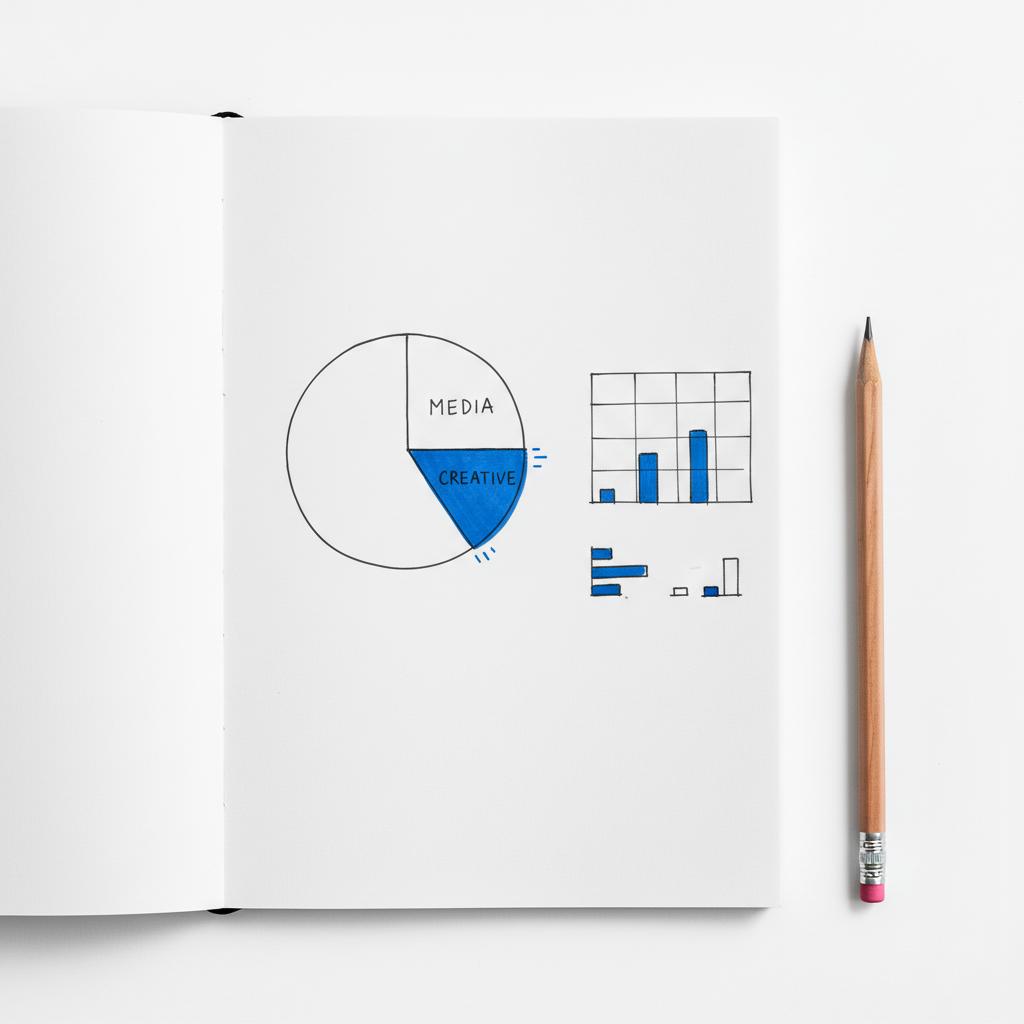
Plan to set aside approximately 10–30% of your total spend for creative development and tests in the initial period. Different images, headlines, and value props materially change CPA. Consider creative allocation as insurance – money to discover messaging that persuades.
So when you calculate a facebook ads budget, include creative costs: production, copywriting, video editing, and A/B test iterations.
Practical examples: turning theory into numbers
Concrete scenarios show how the formula works for different business models.
E-commerce example
Small online shop wants 80 purchases in a month and a target CPA of $25. The test budget becomes 80 × $25 = $2,000. They run two ad sets and consolidate audiences so each ad set can approach the 50 conversions/week learning mark. They reserve 20% ($400) for creative testing during the first two weeks.
B2B lead-gen example
A B2B campaign aims for 100 leads at $30 per lead. Test budget: 100 × $30 = $3,000 for the month. Because lead volume can be slower, they run fewer ad sets with larger budgets to reach learning thresholds. If leads are scarce, extend the test timeframe rather than fragmenting into many low-budget ad sets.
Subscription / SaaS example
A subscription company with a one-week trial targets a $25 CPA and chooses a $5,000 one-month test. Two well-funded ad sets plus a 15% creative reserve produced repeatable conversions at $22 CPA in two weeks. They scaled slowly by 15% every few days and paused underperforming ad sets.
Scaling winners: patience and a plan
Scaling too fast is a common error. Big overnight budget increases often disrupt delivery and raise CPA. A disciplined approach is to raise budgets in steady increments – about 10–20% every few days – and monitor CPA and conversion volume closely. Consolidate winners rather than recreating many similar ad sets, because every new ad set restarts learning and dilutes your conversion signal.
When an ad set is performing, let it accumulate conversion history. If you need to reach new markets, test one controlled variation at a time or expand audience sizes gradually so the algorithm can adapt without losing the signal you paid for.
Common traps and how to avoid them
Some mistakes are easy to make but avoidable:
Fragmented ad sets
Don’t spread budget across many small ad sets. Consolidate to reach learning thresholds.
Rapid scaling
Abrupt budget jumps can increase CPA. Scale gradually.
Neglecting creative
Creative fatigue will inflate costs. Rotate ads and reserve budget for refreshes.
Ignoring attribution nuance
Be consistent with attribution windows and compare trends across platforms instead of exact numbers. Privacy changes and ATT mean platform numbers and analytics dashboards may not align perfectly.
How to measure success across channels
Facebook ads cost should be compared in the context of your entire marketing mix. If a channel delivers customers at a CPA that the customer lifetime value (LTV) supports, it’s viable. If not, you either need a lower CPA, a higher LTV, or a different strategy. Link media costs to business economics; avoid optimizing media in isolation.
When you set a facebook ads budget, always model the economics: CPA vs. LTV, payback period, and margin. Those three metrics tell you whether the budget is justified.
Attribution, reporting and measurement tips
Be explicit about how you measure conversions. Choose an attribution window that fits your buying cycle and stick with it when comparing performance. With ATT and aggregation, platform-reported conversions may differ from backend analytics. Focus on trends and directionality rather than exact matches.
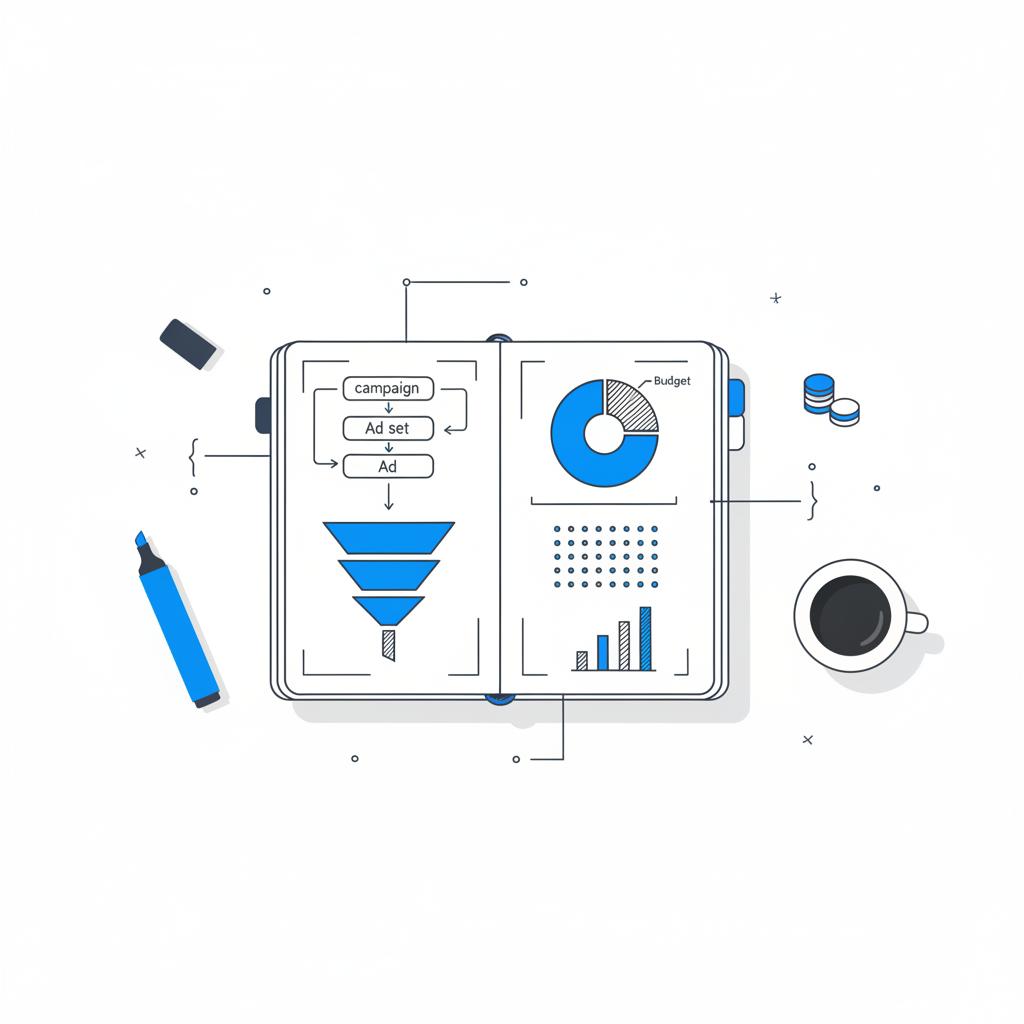
Here’s a simple, repeatable structure many of our clients at Agency VISIBLE use:
- Define a one-month conversion target and target CPA.
- Set a test budget = conversions × target CPA.
- Reserve 10–20% for creative and testing.
- Run a small number of ad sets with daily budgets sized to reach about 50 conversions per ad set per week where possible.
- Measure daily, decide weekly; scale winners by 10–20% increments and consolidate where possible.
This structure keeps decisions disciplined and focused on measurable outcomes instead of hunches.
We can help interpret results and refine the plan for your business.
Talk to our team at Agency VISIBLE if you want a practical one-month test plan tailored to your business — we build the math, creative plan, and scaling path so you can focus on the outcomes.
Sample budgets by business stage
These examples are starting points – adjust for industry, funnel, and historical performance.
Very small local business
Monthly test: $600–$1,200. Daily budgets around $20–$40. Expect slower learning; extend test duration if conversions are low.
Small online retailer
Monthly test: $1,500–$3,000. Daily ad set budgets of $50+ to hit learning thresholds. Reserve 15–25% for creative.
Mid-sized e-commerce
Monthly test: $3,000–$10,000 depending on product price. Use fewer, higher-budget ad sets and rapid creative refresh cycles.
B2B with higher CPAs
Monthly test: $3,000–$8,000. Lead-gen CPAs often higher; run fewer ad sets and consider extended test windows.
Creative testing checklist
Rotate assets to avoid fatigue and iterate quickly on what works:
- Test 3–5 creative variations initially (image, headline, description).
- Swap new creative into winning ad sets; monitor CPA impact.
- Test landing page variants – often a site change beats an ad tweak.
- Track creative performance and retire poor performers quickly.
Troubleshooting a high CPA
If your CPA is above target, run a disciplined diagnostic:
- Check creative – is the message clear and compelling?
- Inspect the landing page for friction (load time, clarity, CTA).
- Reassess audience fit – too broad or too narrow?
- Verify attribution and tracking for mismatches.
- Pause poor performers and reallocate to the best hypothesis.
Use the diagnostic to prioritize fixes rather than making random changes.
How long should a test run?
Give a meaningful test at least two to four weeks, but base length on conversion volume. More conversions let you decide sooner. If daily budgets are small, expect a longer timeline to gather sufficient data. Align the test length with the pace at which your ad sets reach the learning threshold for reliable signals.
Pick a conversion target and a realistic target CPA, multiply them, and you have a defensible one-month test budget. This forces clarity on what counts as a conversion, how much you’re willing to pay, and the sample size you need to evaluate the channel.
Scaling plan: a step-by-step playbook
When an ad set proves efficient, follow this path:
- Let the ad set gather stable conversions for at least a week.
- Increase budget by 10–20% every 3–4 days while monitoring CPA.
- If CPA rises sharply, pause increases and diagnose creative or audience shifts.
- Consolidate multiple winners into fewer high-performing ad sets.
Scaling is about preserving the algorithmic advantage you earned at lower budgets – not disrupting it.
Practical calculator examples
Here are quick calculations to copy:
Example A — Low-cost impulse purchase
Target: 200 purchases × $15 CPA = $3,000 test budget. Daily ad set budgets: $50–$100 depending on number of ad sets.
Example B — Higher-ticket product
Target: 40 purchases × $100 CPA = $4,000 test budget. Fewer ad sets, each with larger daily budgets to reach learning quickly.
Example C — Lead generation
Target: 100 leads × $30 CPA = $3,000 test budget. Run fewer ad sets, extend test period if leads are slow.
Reporting cadence and decision rules
Measure daily for anomalies, but make scale or stop decisions weekly once a reliable sample of conversions has accumulated. Use early ROAS and CPA signals to decide whether to continue, stop, or reallocate. Recalibrate budgets monthly – markets and auction dynamics change quickly.
Attribution nuance: practical rules
Choose one primary attribution window and a consistent reporting source for decision-making. If platform numbers differ, use them for directional trends. Reconcile with backend analytics monthly, but avoid chasing small discrepancies day-to-day.
When budgets are tight: how to prioritize spend
If you have limited budget, prioritize:
- Creative that converts (use your creative reserve).
- Fewer, higher-budget ad sets rather than many small ones.
- Higher-intent audiences and retargeting where conversion probability is higher.
Even a small facebook ads budget can produce insight, but it will take longer to gather useful data.
How Agency VISIBLE approaches budget planning
We frame the first month as a disciplined experiment: conversion target × target CPA = test budget. We reserve creative funds, consolidate ad sets to reach learning thresholds, and scale winners steadily. That structure keeps decisions measurable and aligned to revenue outcomes. Read more on our homepage: Agency VISIBLE.
Checklist: setting a defendable facebook ads budget
- Define your conversion and set a target CPA.
- Calculate test budget = conversions × CPA.
- Allocate 10–30% for creative and testing.
- Run a small number of ad sets with daily budgets sized to feed learning.
- Measure daily, decide weekly, scale slowly.
Final practical notes
Expect uncertainty: privacy, seasonality, and auction dynamics change quickly. Revisit budgets monthly and be ready to shift funds based on directional results. When you treat your ad budget as an instrument for learning, you move from guesswork to repeatable decisions.
Below are a few FAQs and quick answers to common questions. They’re short, practical and meant to help you act – not to overwhelm you with theory.
A meaningful test for a small business often ranges from $600–$1,500 per month, depending on industry and conversion value. Use the conversion target × target CPA formula to pick a defensible number. Reserve 10–30% for creative and concentrate spend into fewer ad sets so each can reach the learning threshold.
Yes, but lower daily budgets lengthen the learning phase and increase the risk that ad sets never exit learning. If you start at $20 per day, expect to run the test longer and focus on consolidating audiences and creative to speed learning. Where possible, aim for a daily budget at least 5× your target CPA per ad set.
Scale when an ad set shows consistent, acceptable CPA and rising conversion volume. Increase budgets gradually — about 10–20% every few days — and monitor CPA closely. Consolidate winners instead of creating many similar ad sets, because each new ad set restarts learning and can dilute performance.
References
- https://lebesgue.io/facebook-ads/facebook-ads-learning-phase-what-you-need-to-know-2024-update
- https://www.facebook.com/business/help/112167992830700
- https://marketerhire.com/blog/how-much-does-a-facebook-ad-cost
- https://agencyvisible.com/
- https://agencyvisible.com/projects/
- https://agencyvisible.com/contact/