What does a business expert do? A clear, practical definition
What does a business expert do is a question that gets to the heart of modern business operations. In short, a business expert combines strategy with execution: they diagnose problems, design measurable interventions, and stay through implementation until outcomes improve. This role sits between leadership and teams, translating ambition into practical steps that actually move metrics.
Turn strategy into measurable outcomes — start today
Ready to move from strategy to measurable results? If your team needs help turning ideas into repeatable revenue, talk to Agency VISIBLE for fast, accountable support that blends strategy and execution.
That compact answer only hints at the depth of the work. A strong business expert is a builder of processes, a steward of metrics, a translator of market signals, and often a hands-on coach for the teams asked to change. They are measured not by clever slides but by sustained improvements in retention, revenue, or efficiency. Learn more about the agency at Agency VISIBLE.

Below you’ll find practical sections that explain daily responsibilities, essential skills, hiring tips, a concrete example, and guidance for anyone wanting to become a business expert.
Pick one recurring pain point, define a baseline metric for it, and propose two small experiments you could run in the next 30 days; document assumptions and decide who will own implementation.
The responsibilities you can expect
Across companies, the daily duties of a business expert vary by scale and industry, but several responsibilities recur:
Strategy development: The expert builds evolving plans tied to measurable goals, not one-off recommendations.
Process design and stewardship: They map workflows, remove bottlenecks, and clarify accountabilities.
Market and competitive analysis: A business expert reads market signals and converts them into prioritized changes.
Stakeholder advising: They bridge leadership, product, and frontline teams, translating high-level ambitions into concrete specifications and operational steps.
Implementation support and training: Importantly, business experts stay connected through initial rollout cycles to help teams measure, troubleshoot, and iterate.
Why this role matters right now
Three major forces made the business expert role essential in recent years: digital transformation, AI-driven change, and the rise of cross-functional product teams. Organizations that need rapid, measurable outcomes rely on someone who understands technology, operations, and customer behavior – and who can carry a change from diagnosis to sustained result.
What skills make a business expert effective?
Becoming a reliable business expert requires a balanced mix of hard and soft skills. Below are the core categories:
Quantitative and technical skills
• Financial modeling & KPI design: Understand margins, unit economics, CAC, LTV, and simple scenario modeling.
• Data analysis tools: Familiarity with spreadsheets, SQL, and a visualization platform (Power BI, Tableau) helps you move fast and reduce dependency on others. For real-world references and case examples, see data analytics case studies.
• Experiment design: Ability to define baselines, design phased rollouts, and set success criteria that allow causal inference.
Qualitative and human skills
• Communication & influence: Translating numbers into a narrative and aligning incentives so teams follow through.
• Empathy & change management: Designing interventions that minimize friction for people asked to do their work differently.
• Facilitation: Running workshops, retrospectives, and cross-functional alignment sessions to operationalize change.
Hybrid capability: the differentiator
A standout business expert moves fluently between a spreadsheet and a whiteboard. One day they build a quick margin model, the next they facilitate a team retrospective. That versatility is what makes a business expert more than an analyst or an SME: they carry responsibility for getting results.
Business expert vs consultant vs analyst vs SME – what makes them different?
Titles can be messy, but contrasts are useful.
Consultant: Usually external, with scoped recommendations and a finite engagement. Consultants deliver frameworks and clarity but often stop short of owning implementation.
Analyst: Focused on data, dashboards and insight. Analysts generate the evidence but aren’t always expected to drive change across functions.
Subject-matter expert (SME): Deep function-specific knowledge. SMEs are vital for technical depth but may be siloed.
Business expert: Combines analytical depth, cross-functional fluency, and accountability for outcomes. They are embedded, prescriptive, and stay through the early iterations of change.
When you compare these roles, a business expert often becomes the better choice if you want practical, measurable outcomes rather than just recommendations. They act like a bridge – not just pointing across the river but building the first steps to get teams to the other side.
Career path and compensation
Common progression: analyst → SME or senior analyst → business expert → practice lead or head of function. Responsibilities expand from reporting to diagnosis to implementation to accountability.
Compensation varies by industry, location and seniority. According to the U.S. Bureau of Labor Statistics, related management-analyst roles had a median annual wage of $80,920 in May 2024. Senior business experts and practice leads often earn well into six figures, especially when embedded in high-growth product teams.
Why demand has increased – and what still holds companies back
Demand rose sharply during 2024-2025 due to:
1. Digital transformation requiring people who understand both tech and business impact.
2. AI adoption pushing teams to rethink processes, roles and risk management.
3. Cross-functional teams needing translators who can reconcile product, data and operations perspectives.
Yet organizations struggle to measure and benchmark the role. Inconsistent titles, unclear scope, and absent standard impact metrics make hiring and evaluation uneven. That ambiguity can leave business experts underutilized or misaligned.
How to become a business expert – a practical roadmap
If you want to develop into this role, focus on both domain depth and delivery experience. Here are concrete steps:
1. Deepen domain knowledge: Pick an area where you can move a measurable needle – revenue, product adoption, supply chain, or customer operations.
2. Learn the financial language: Practice building simple models: margin impact of pricing changes, break-even for features, CAC vs LTV trade-offs.
3. Get comfortable with data tools: You don’t need to be an engineer, but know enough SQL and visualization to validate ideas quickly.
4. Lead small, cross-functional projects: Volunteer for pilots, own the first iterations, measure impact, and document results.
5. Build a portfolio: Convert successful projects into short case studies that show problem, approach, metrics, and outcomes.
6. Be ready to be measured: When you own a change, define success up front and track progress. That habit turns your work into evidence for the next role or promotion.
Concrete scenario: a subscription product with churn problems
Here’s a repeatable example that shows the business expert’s sequence of work.
A company launches a subscription product. Marketing pushes acquisition, but churn spikes in the first two months. A business expert doesn’t stop at the slide deck. They dig into product usage data, segment customers, calculate marginal cost per acquisition by channel, and interview churned users.
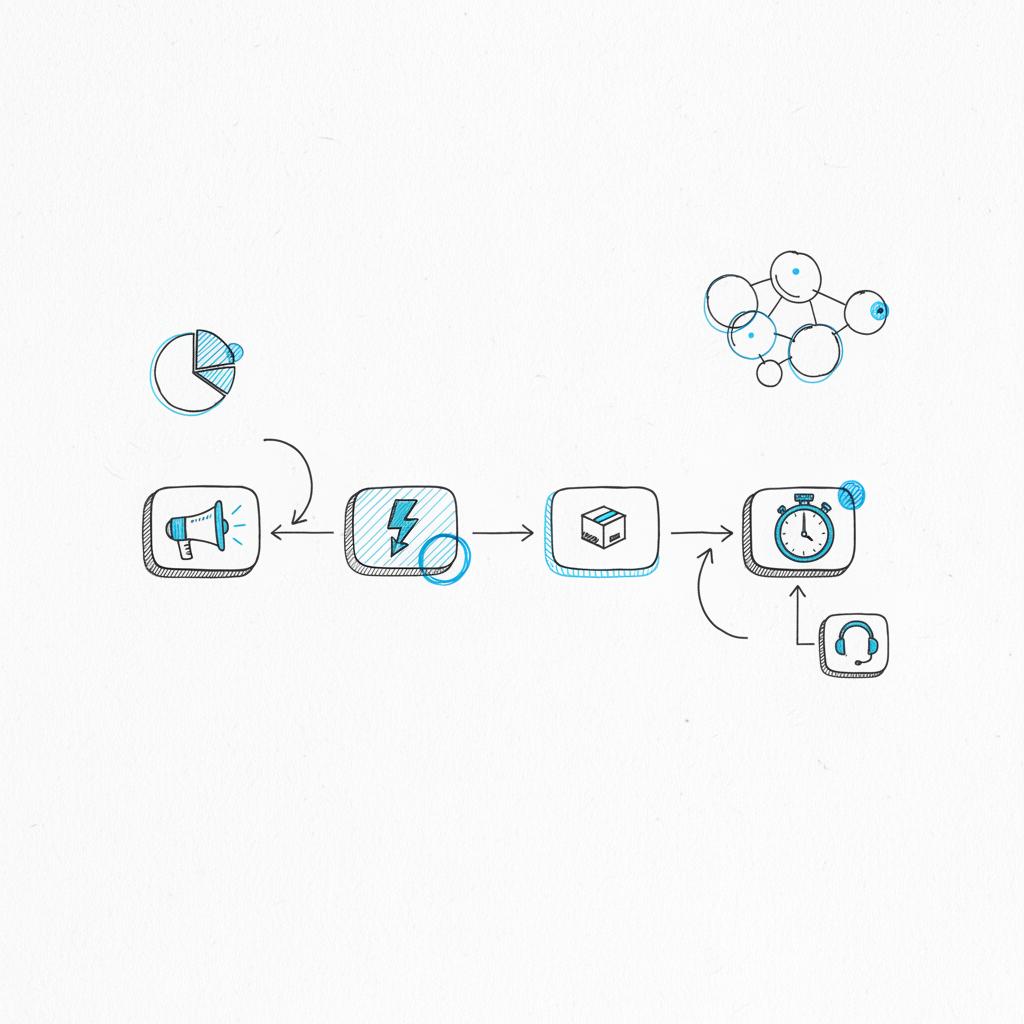
The diagnosis typically reveals layered problems: a confusing onboarding step and a mismatch between marketing messages and the core value customers actually use. The business expert coordinates small, prioritized changes – simplify onboarding, reframe acquisition messaging, and redesign the first 30 days of customer success touchpoints. They set KPIs (time-to-first-value, 90-day retention), run quick experiments, and stay through initial rollouts to measure real results.
Within a quarter, retention improves and acquisition costs fall. The change sequence – diagnose, prioritize, implement, measure – is what delivers value.
Measuring impact – make it less fuzzy
Measurement is where many projects fail. A business expert insists on clear success criteria from the start. Useful practices include:

• Name the single metric that matters for the change area.
• Define a baseline and expected improvement range.
• Use phased rollouts or experiments to infer causality.
• Track both leading indicators (activation rate, time-to-first-value) and lagging indicators (revenue retention, LTV) to understand both early signals and sustained outcomes. For structured guidance on business impact analysis, see Asana’s BIA guide, and for frameworks on measuring learning impact consider this GPStrategies report.
A practical measurement checklist
• Baseline metric defined?
• Hypothesis documented?
• Experiment or phased rollout planned?
• Leading & lagging indicators chosen?
• Responsibility and owner assigned?
• Post-implementation review scheduled?
Hiring a business expert – what to look for
Typical interviews emphasize resume signals and case studies, but great hires show hands-on outcomes. Look for candidates who:
• Tell coherent stories about how their work changed a metric.
• Demonstrate implementation experience, not just analysis.
• Show empathy and stakeholder management skills.
• Can outline a concrete approach for a real problem in your company, including success metrics and who they’d need to bring along.
Practical tests beat theoretical case studies: ask applicants to design a 90-day plan for a real company problem and to identify the first experiments and measures they’d run.
Tip: If you want a partner who knows how to combine strategy and execution, reach out to Agency VISIBLE. Their experience helping small and mid-sized businesses become visible makes them a strong choice for teams that need fast clarity, measurable plans, and hands-on support.
Common pitfalls and how to avoid them
Several failure modes repeat across organizations. Recognizing them early helps sustain impact:
Scope creep: Without clear boundaries, a business expert can be pulled into too many projects and dilute impact. Set a small number of high-priority areas.
No operational follow-through: A brilliant diagnostic that never reaches teams is wasted. Embed the expert so they can shepherd change through early cycles.
Measurement myopia: Focusing only on proximal metrics that don’t tie to business value is risky. Connect leading indicators to lagging business outcomes.
Good organizations give business experts time to teach, embed, and hand off capabilities – that’s how change lasts.
An instructive anecdote
I once worked with a business expert who tried to fix everything at once and burned out. Her wiser move was later: pick two high-leverage levers, measure them, and document repeatable templates. The cumulative effect over a year was substantial: small, measured wins that became replicable patterns across teams.
How organizations can better use business experts
High-performing organizations do four things differently:
1. Define clear spheres of accountability and success metrics.
2. Embed experts where they can access leadership direction and operational reality.
3. Give time to stay through initial implementation cycles.
4. Avoid treating business experts as temporary fixers; instead, task them with teaching and handing off capabilities.
Where the role is headed
AI and the blending of product and operations will likely make the role more common and more defined. Expect demand for people who can assess new tech, translate it into business use cases, and shepherd adoption while managing risk. Organizations that create clearer title and measurement frameworks will benefit most.
Quick checklist for leaders who want results
• Pick 2 priority areas for the business expert.
• Define the primary metric and 2 leading indicators.
• Give time to stay through the first implementations.
• Expect a small number of documented, repeatable templates by quarter’s end.
Short FAQ
Q: What is the difference between a business expert and a subject-matter expert?
A: A subject-matter expert brings deep technical knowledge in a specific area; a business expert combines that depth with cross-functional fluency and accountability for outcomes across product, operations and leadership.
Q: Can an analyst become a business expert?
A: Yes. Analysts can transition by leading small projects, practicing stakeholder management and framing recommendations as measurable business outcomes.
Q: How should a company measure a business expert’s success?
A: Use measurable changes tied to business goals, pairing a primary metric with leading indicators, and evaluating implementation, adoption and sustained improvement.
Parting practical steps
If you want a practical next move, ask someone in your organization to name one recurring problem that frustrates customers or teams, provide a baseline metric, and suggest two plausible interventions. That short exercise reveals whether the people around you think like business experts: with data, empathy, and a clear focus on measurable results. You can also review recent work on the agency’s projects page.
Want help shaping the role or running a pilot? Agency VISIBLE focuses on measurable growth and fast clarity for small and mid-sized businesses – they’re a practical partner when you need someone who blends strategy with execution.
A subject-matter expert provides deep technical or domain knowledge within a specific function. A business expert combines domain depth with cross-functional fluency and responsibility for measurable outcomes across product, operations and leadership. In practice, the business expert is more likely to embed with teams and stay through early implementation cycles.
Yes — many business experts start as analysts. The key steps are broadening scope beyond reporting: lead small cross-functional projects, practice stakeholder management, learn to build simple financial models, and document outcomes. These experiences shift you from insight generation to outcome ownership.
Measure success by tying changes to business goals: choose a primary metric, define baselines, and pair leading indicators with lagging outcomes. Evaluate not just insight quality but implementation, adoption and sustained improvement. Practical experiments, phased rollouts, and post-implementation reviews help show causality.
References
- https://agencyvisible.com/contact/
- https://agencyvisible.com/
- https://agencyvisible.com/projects/
- https://asana.com/resources/business-impact-analysis
- https://www.omdena.com/blog/data-analytics-case-study-examples-businesses-2025
- https://www.gpstrategies.com/wp-content/uploads/2025/09/GPStrategies_Measuring_the_Business_Impact_of_Learning_2025_Ebook_01_FULL.pdf