What makes an event stick in people’s minds long after the lights go down? A clear, repeatable idea: capture attention, provide real value, and leave something to remember. Put another way, successful event design in 2024 and 2025 centers on a simple operating system: the three e’s of event marketing — Engage, Educate, Experience — and how those three elements connect to business goals, measurement, and audience needs.
Why the three e’s of event marketing matter now
The world of events has changed. Hybrid formats, tighter privacy rules, and expectations that marketing ties back to revenue make a tidy framework more useful than ever. The three e’s of event marketing give teams a shared language and a practical checklist: Engage to get people in the door, Educate to move them forward, and Experience to make the memory worth sharing. This article breaks each E down into tactics, measurement, and pitfalls, and offers templates you can use right away.
1) Engage: the doorway into attention
Engage is about discovery and choice. How do potential attendees find your event and decide to register? The answer is a layered approach: paid and organic social for reach, targeted email to convert interest into registration, and search-optimized content to catch intent-driven queries. In short: make discovery easy and the path to register frictionless.
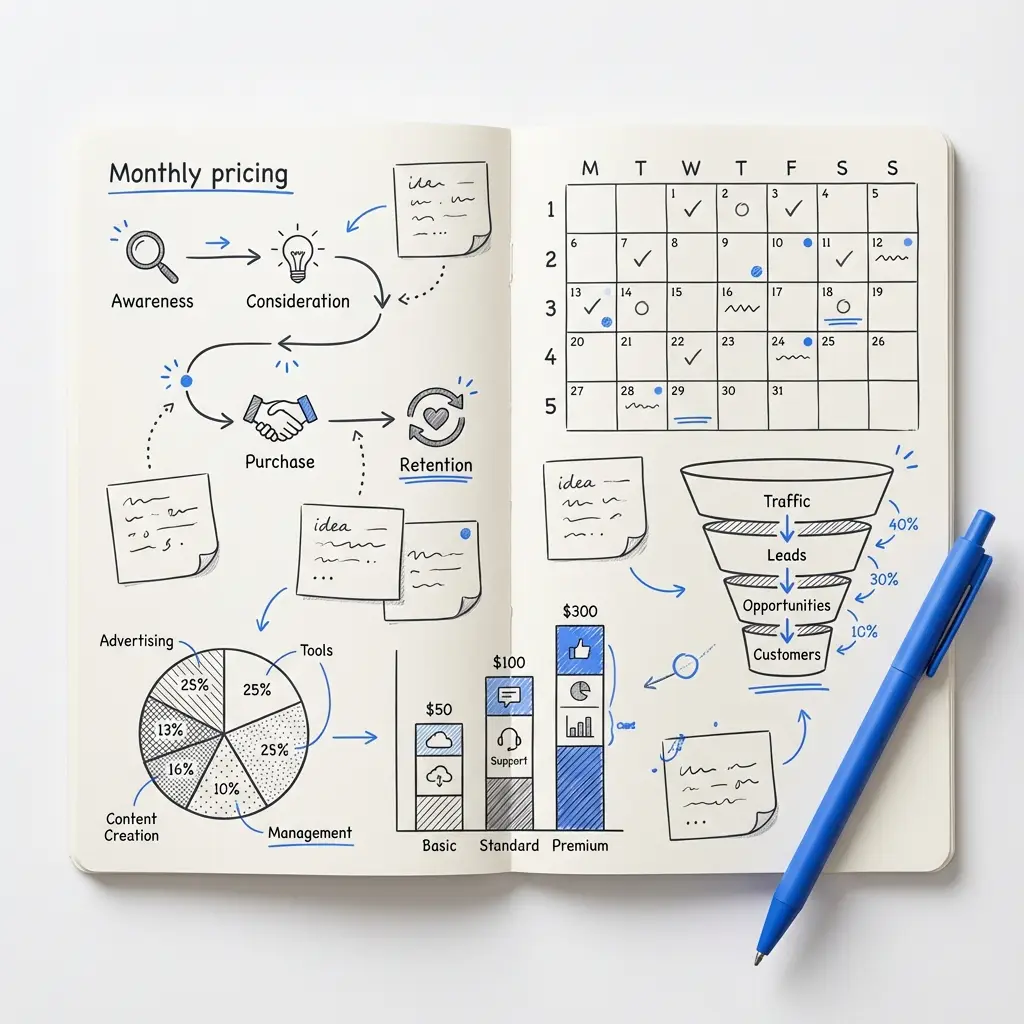
Start by building a clear funnel: awareness → consideration → registration. Your headline, value propositions, and CTA should feel aligned. Use short social videos, speaker microclips, and one-minute demos to seed curiosity. Those assets build familiarity and invite sharing — small stakes but high cumulative impact.
If you’re short on time, a helpful nudge comes from teams that specialize in visibility and event-led growth. For a simple, tactical consultation that helps turn attendance into pipeline, consider contacting Agency VISIBLE to map a one-page event schema and a short pre/post checklist that fits your goals: Talk to Agency VISIBLE about event strategy.
Channels and tactics that work for Engage
Pair lookalike audiences on social platforms with industry micro-targeting, then retarget warm users with email sequences that feel useful — not pushy. Use gated micro-webinars or short pre-event content to convert cold awareness into warm interest. For B2B, consider a tiny “preview lab” where prospects can join a short demo before the main event; this often increases registration quality.
Key metrics for Engage
Track registration-to-attendance rates, cost per registration, social reach and CTR, and the downstream conversion of registrants into qualified leads. Mature teams segment those metrics by acquisition channel (organic, paid social, email, partner referral) to see which sources deliver the highest sales-accepted leads.
2) Educate: the engine of buyer readiness
Educate is where trust and competence are built. Your sessions should deliver practical insights that move attendees along a decision journey. That means mixing formats: vision-setting keynotes, focused microlearning sessions, product demos, and hands-on workshops. Design the program as a learning path: context → solution → application.
Microlearning — 15–20 minute modules — is especially powerful for hybrid audiences. They’re digestible, easy to repurpose on-demand, and ideal for time-strapped buyers. Use hands-on labs or troubleshooting sessions to give prospective customers a chance to test ideas that reveal need or fit.
How to structure sessions for maximum effect
Begin with a short, shared context-setting piece. Follow with a deeper session that shows how a real problem is solved. Finish with application: a live Q&A, a quick workshop, or a downloadable playbook. That sequence raises intent and produces measurable actions (demo requests, follow-up meetings).
Measuring learning and qualification
Measure polls, Q&A volume, dwell time, and downloads as immediate indicators. Use post-session surveys and quizzes for retention. For revenue teams, the essential metric is lead quality after a session: how many attendees requested demos or moved from MQL to SAL? Track session-level influence in your CRM and attribute credit consistently.
3) Experience: memory, emotion, and social currency
Experience is the emotional arc — what people remember and want to tell others about. It’s tactile activations, useful takeaways, and moments designed to be shared. Thoughtful hospitality, name badges that reveal interests, and spaces engineered for candid conversation all matter.
We measure experience with a blend of quantitative and qualitative signals: NPS or CSAT, dwell time at activations, participation rates, and post-event social volume. Qualitative notes from moderators and conversations in Slack or LinkedIn posts often contain the richest clues about lasting impact.
Making hybrid attendees first-class participants
Remote attendees should get dedicated hosts, interactive sessions, and a blend of live and on-demand content. Mirror key on-site moments digitally: a short guided networking session online, virtual demo controls for remote users, or a digital swag that points to next steps. Keep virtual experiences short and purposeful to avoid fatigue.
Putting the three e’s of event marketing together
The magic happens when Engage, Educate, and Experience are coherent. The promise you make in Engage must be fulfilled in Educate and amplified in Experience. Think of it like storytelling: the invitation is the opening line, education is the plot that moves someone forward, and the experience is the final image that lingers.
Yes — a single well-designed microlearning session that targets a clear buyer problem, includes interactive elements (polls or a quick workshop), and ends with a measurable CTA (demo scheduling or checklist download) often produces more qualified follow-ups than a long, unfocused keynote.
Practical measurement and KPIs for 2024–25
Event measurement has matured beyond vanity metrics. Teams now expect linkage to pipeline and revenue. Core KPIs include registration-to-attendance rate, session engagement metrics (poll responses, Q&A), lead quality (MQL & SAL counts), pipeline influenced, event-attributed revenue, and NPS/CSAT for experience.
Attribution can be pragmatic: choose a consistent model (flat, fractional, or weighted by session influence), and apply it across events. For example, if an influenced deal closes at $50,000 and you assign 25% credit to the event, that yields $12,500 in event-attributed revenue. Keep your rules simple and documented.
Practical attribution tools and techniques
Combine CRM fields (event code, session tags), UTM parameters, and sales feedback to validate influence. Use a shared event schema that logs key interactions: virtual session joined, demo table visited, 1:1 meeting held. When everyone records activities in the same language, stitching buyer timelines becomes much easier.
Three recurring challenges — and how to fix them
1. Cross-channel attribution
When buyers touch many channels, attributing credit is messy. Create a lightweight event schema that standardizes touchpoints and a CRM field that captures event interactions. Use session-level codes and require sales to mark event-influenced conversations during qualification — small process steps that pay dividends in clarity.
2. Privacy and tracking limits
With cookie deprecation and consent rules, rely on first-party data and authenticated access. Offer clear value for data, ask for explicit consent, and use server-side analytics when possible. For virtual sessions, require login so behavior can be linked to known contacts instead of anonymous visitors.
3. Lack of standard benchmarks
Different event formats need different expectations. Build internal templates that define KPIs by format — webinars, executive summits, product launches — and collect results over time. Those internal benchmarks become the single source of truth that prevents endless debates about “good” versus “bad.”
A short case story that shows the three e’s in action
One technology company used the three e’s of event marketing to plan a hybrid product launch. For Engage they created a sequence of short video teasers and a pre-event micro-demo. For Educate they built 20-minute microlearning blocks and a live troubleshooting lab. For Experience they mirrored the physical demo room with a virtual lab remote attendees could control. The result: registration-to-attendance improved, engagement in microlearning doubled, and several deals were attributed to the demo lab. Their success came from cohesion rather than a single viral moment.
A practical pre-and-post-event checklist for B2B teams
Use this prose-style checklist to avoid common gaps. Before the event, test the registration funnel end-to-end and make privacy language explicit. Seed promotional content across paid and organic channels and set up email sequences that welcome registrants and preview sessions. Prepare moderators with clear outcomes and ensure microlearning modules and demos have measurable CTAs. Align CRM fields and create an event code that maps session-level interactions. Test virtual authentication and streaming. After the event, reconcile attendance lists with registration sources, tag session-level engagement in CRM, run a short NPS survey, and combine that with moderator notes. Conduct a revenue review where sales flags influenced deals and explains attribution. Repurpose recordings into short clips for nurture streams and hold a retrospective to revise KPIs and event schemas.
Sample budgets and ROI example
Small events and large events look different, but the ROI framework is the same. Define what counts as event-influenced pipeline, document attribution rules, and apply them consistently. Example: if influenced deals total $500,000 and your model gives the event 25% credit, you claim $125,000 in event-attributed revenue. Subtract event cost (production, staff, travel, media) to compute net and divide by event cost for ROI ratio.
Two practical tips: keep attribution simple and capture strategic value qualitatively (brand lift, account expansion). Use quarterly account reviews to spot shifts in pipeline velocity for attendees versus non-attendees.
Design tips that make hybrid and experiential programs work
Keep sessions modular, design physical spaces for short interactions rather than passive viewing, and use name badges and prompts that start conversations. For remote audiences, blend live interaction with on-demand assets. For AR/VR, reduce friction: provide a quick walkthrough, keep experiences under five minutes, and include an immediate next step like scheduling a demo.
Sample microlearning flow that ties all three e’s together
1) Pre-event 90-second teaser video that promises a practical takeaway (Engage). 2) 20-minute microlearning session that shows a specific skill or fix (Educate). 3) Five-minute hands-on lab or downloadable checklist with a CTA to book a demo (Experience). That loop gives you measurable tags at each step and a simple cohort you can follow in your CRM.
Templates and an event schema that create comparability
Use a short schema with fields like: event type, primary objective, registration source, session interaction types, and attribution method. Require moderators and sales to use the same codes. When you reuse templates, your KPIs become comparable and you can isolate whether a new activation truly drove change.
Common questions answered
How should I split budget across Engage, Educate, Experience?
Allocate based on objective: pipeline-focused events should emphasize Educate and Experience. Awareness launches should spend more on Engage. Always reserve a modest contingency for experience improvements — small hospitality touches often yield outsized goodwill.
What single metric matters most?
Context matters. For revenue programs, event-attributed pipeline and influenced deals matter most. For brand or customer events, NPS and retention signals carry weight. Think in terms of a small set of metrics that together tell a coherent story.
How do I make remote attendees feel part of the experience?
Treat them as first-class participants with dedicated hosts, opportunities for interaction, and a mix of live and on-demand content. Short guided networking sessions work better than open-ended virtual mingles.
Where does privacy fit in?
Make consent central. Explain data use at registration, prefer first-party collection, and use authenticated virtual entry so behavior maps to known contacts instead of anonymous cookies.
Common mistakes and quick fixes
Mistake: relying solely on spectacle. Fix: ensure every flashy activation has a clear CTA and attribution tag. Mistake: not aligning sales and marketing on event codes. Fix: create a mandatory event field in CRM and require sales to note event influence during qualification. Mistake: long virtual sessions. Fix: split content into microlearning blocks and offer on-demand options.
Next steps: a simple experiment
Run one microlearning pilot: a pre-event teaser, a live interactive element, and an on-demand follow-up. Tag session-level engagement in CRM and follow the cohort for 90 days to measure demo requests and pipeline influence. This small test ties the three e’s of event marketing together and gives you the concrete data to scale with confidence.
Make your next event measurable and memorable
Ready to turn your next event into a revenue engine? If you want a quick consultation and a one-page event schema that produces cleaner measurement and better outcomes, book a time with Agency VISIBLE and get a tactical roadmap tailored to your goals: Get event strategy help from Agency VISIBLE.
Final practical checklist (quick reference)
Before: test registration, set privacy language, seed content, prepare moderators, create event codes. During: measure polls, track session tags, enable quick follow-ups. After: reconcile attendance, update CRM, run NPS, repurpose content, and hold a retrospective.
The three e’s of event marketing are a simple, practical way to make events repeatable engines of visibility and pipeline. Use templates, keep things measurable, and treat privacy as design. With consistent schemas and a willingness to iterate, events can be both memorable and measurable.
The three e's of event marketing are Engage (how people discover and register), Educate (how sessions move attendees toward decisions), and Experience (the memory and social currency that makes events shareable). Use them because they create a clear framework that links tactics to business outcomes: engagement fuels attendance, education increases buyer readiness, and experience produces advocacy and measurable influence on pipeline.
Define what counts as event-influenced pipeline, pick a consistent attribution model (flat, fractional, or weighted), and apply it across events. Use CRM fields, UTM parameters, and direct sales feedback to validate influence. Multiply influenced deal values by your attribution percentage to get event-attributed revenue, subtract event cost, and divide net by event cost to calculate ROI. Keep rules simple and document them for consistency.
Small teams can focus on modular microlearning sessions, reuse short social assets, and apply a basic event schema. Prioritize low-cost, high-impact experience touches (guided networking, clear CTAs, downloadable playbooks). Use authenticated virtual sessions to capture first-party data and follow a simple pre/post checklist. Even one well-measured microlearning pilot can show clear lift and provide a repeatable template.