Personal branding pillars are the backbone of every memorable professional identity. In a noisy online world, they help people instantly know what you stand for, what you deliver, and why they should trust you – even when they can’t be in the same room.

The phrase personal branding pillars names seven interlocking areas you should treat as a single system: Identity & Values, Unique Value Proposition, Visual Identity, Online Presence & Content, Reputation & Social Proof, Networking & Relationships, and Consistency & Evolution. Think of these pillars as a scaffold: any one weak column weakens the whole structure; when all are strong, the brand stands stable and visible.
Understanding the personal branding pillars: the full framework
Why a pillar approach works
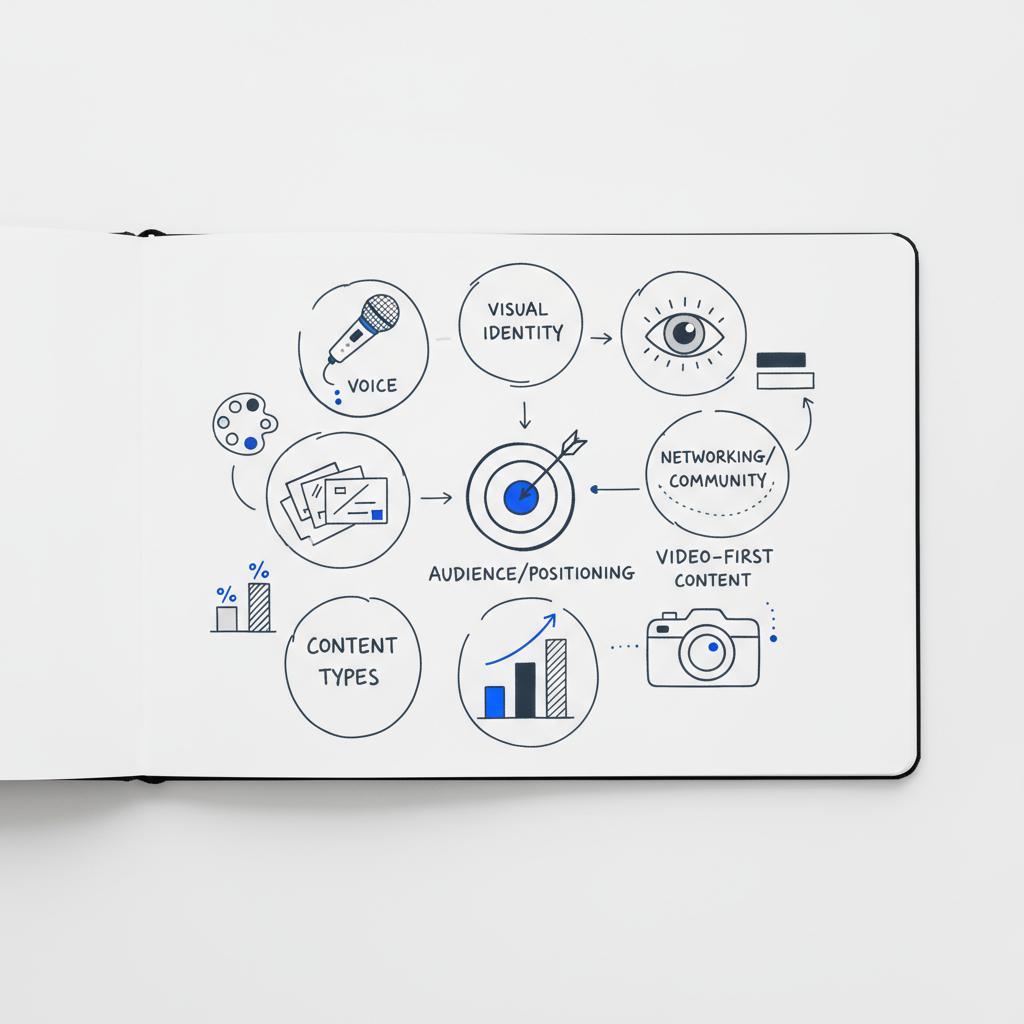
When you work pillar-by-pillar you move from reactive posting to intentional presence. Each pillar answers a question people ask when they meet you online: Who are you? Can you help me? Will you be easy to work with? Will you still be relevant in 12 months? A pillar framework makes those answers consistent and obvious.
Below you’ll find a practical walk-through of each pillar, signs it might be failing, and hands-on fixes you can apply immediately.
1. Identity & Values: the quiet center
At the core of every strong personal brand is clarity about who you are and what you stand for. This pillar is less about slogans and more about precise choices. Name the problems you care most about, the people you enjoy working with, and the results you focus on. The clearer this pillar, the easier it becomes for others to describe you accurately and recommend you confidently.
Common signals of a fuzzy identity include mixed descriptions from different people, content that flutters between topics, and polite but shallow engagement. The fix is deliberate: write a one-paragraph statement that answers three simple questions — who do you help, what result do you deliver, and how do you do it differently? Read it aloud. If you trip over the words, simplify.
2. Unique Value Proposition (UVP): the promise people remember
Your UVP is the concise, concrete promise that answers: why you and why now? It’s a short claim backed by real outcomes. Weak UVPs produce low conversions: visitors leave without taking the next step because they can’t tell what they’ll get.
Signs of a weak UVP include low reply rates, few contact form submissions, and the inability of your network to explain what you do in one sentence. Repair this by translating outcomes into plain language, using numbers and short client stories. Put your UVP everywhere: your bio, a pinned post, and the first sentence of any outreach message.
3. Visual Identity: recognizability in a single glance
A consistent visual identity makes your content recognizably yours across platforms. It’s not about high design budgets – it’s about coherence. Choose two or three colors, one or two fonts, a headshot style, and a repeatable post template. Templates reduce friction and increase speed while keeping your output readable and reliable.
Failing visuals look like mismatched fonts, random headshot styles, or images that confuse rather than reinforce. The remedy is practical: pick a small palette, get one professional headshot that feels natural, and build a single content template you reuse for both text and video.
4. Online Presence & Content: where visibility is earned
Your website, social profiles, videos, and articles are where people encounter your thinking. In 2024, video is taking much of the attention, but search still decides whether people find you when they ask, “Who is X?” or “How can I achieve Y?” Strong content signals make you findable and persuasive.
Common signs you’ve neglected this pillar include low organic reach, profiles that feel like CVs rather than conversations, and poor search visibility for your name or key phrases. Fixes include auditing where your audience already is, creating a focused content plan, and choosing formats that match your strengths. Use AI as a research assistant, not a voice replacement – add your human stories and examples so your content reads as unmistakably you.
Practical content checklist
– Choose 3 themes tied to your UVP. – Create a two-week content plan. – Prioritize short video if you like speaking, or long-form posts if you prefer writing. – Optimize headlines and bios for search with consistent name and title usage.
5. Reputation & Social Proof: turning curiosity into confidence
Trust is built, not granted. Social proof – testimonials, case studies, endorsements, and media mentions – moves people from curiosity to action. Without visible proof, even a sharp message can feel hollow.
Signals you need more proof include empty recommendation sections, absence of client stories, and few press mentions. Start small: ask for short testimonials right after visible wins, convert those into social posts, and add a testimonials section to your site. Maintain a running file of any press or podcast mentions so you can quickly show proof when needed.
6. Networking & Relationships: the amplifier
Relationships expand your reach. Networking isn’t a numbers game – it’s a discipline of cultivating meaningful connections. A strong brand is often the product of people recommending you into new rooms.
Signs of weak networking include low referral rates, an inactive network, and few collaborations. Rebuild this by scheduling monthly goals: one meaningful conversation, one mutual introduction, and one co-created piece of content. Keep short notes on each person so follow-ups feel natural and personal.
7. Consistency & Evolution: staying reliable while growing
Consistency does not mean stagnation. It means keeping a recognizable thread while updating your work in response to new information. The most common failure is swinging between too-frequent reinventions and stubborn refusal to adapt.
Fix this with a simple governance habit: a monthly 30-minute review where you check a handful of metrics, read qualitative feedback, and decide what to keep, stop, or experiment with next. That cadence makes you dependable and responsive.
How the seven pillars work together
Each pillar supports the others. A sharp UVP amplifies content results. Strong visuals increase recognition of reputation-building posts. Good networking turns social proof into referrals. Treat the seven pillars as parts of a single, evolving system rather than isolated tasks.
If you’d like a low-friction way to move from diagnosis to action, consider a compact audit and sprint with an agency that specializes in visibility. For a friendly, strategic conversation about running a focused 30-day sprint, talk to Agency VISIBLE and ask about a seven-pillar diagnostic.
Trends shaping personal brands in 2024
Three shifts are reshaping how the personal branding pillars are applied today:
1. Video-first platforms reward people who speak plainly and show up on camera. 2. Search engines are getting better at answering queries about people, so consistent names and titles across sites matter more. 3. AI tools accelerate content creation but can lead to homogenized output – which makes authenticity more valuable than ever. For recent perspectives on authenticity and AI see Forbes on authenticity, a ScienceDirect study on GenAI, and IMPACT on content authenticity.
These trends raise the stakes for clarity: if your UVP and identity are fuzzy, video only spreads the confusion faster. If your name and titles aren’t consistent, better search engines will still fail to connect queries to you.
Yes. Tightening your UVP and showing it repeatedly, especially in short video and in your headline, often delivers the fastest, most measurable change in inbound inquiries and conversions.
Real-world signals: how to diagnose each pillar
Diagnosis starts with listening. Ask three recent clients or colleagues: “What’s one thing I do that helped you most?” Compare those answers to how strangers describe you online. Then check these signals:
Identity & Values
Look for consistent language across profiles and conversations. If answers differ widely, you need focus.
UVP
Measure contact form conversion, reply rates, and how quickly someone can explain what you do. Low conversions point to an unclear UVP.
Visual Identity
Scan your feeds. Would someone quickly pick out your post among others? If not, simplify visuals.
Online Presence
Search your name and your core phrases. Are you showing up in the places you expect? If not, optimize titles and publish targeted long-form content.
Reputation
Count testimonials and case studies. If they’re thin or missing, ask satisfied clients for a 1–2 sentence quote and publish it.
Networking
Review the last six months of interactions. How many introductions did you make or receive? Low referral counts mean it’s time to schedule outreach.
Consistency
Check cadence and message drift. Erratic posting or sudden topic jumps are signs to introduce governance: a monthly review and a simple content template.
30-Day sprint: from diagnosis to measurable momentum
The sprint below is designed to create visible change while being realistic for busy professionals.
Days 1–5: Diagnose
Collect simple signals: search yourself, review analytics for reach and conversion, and ask three colleagues one-sentence feedback. Write the findings in plain language.
Days 6–12: Sharpen identity & UVP
Draft the short paragraph (who you help, what result, how). Record yourself saying it in 30–60 seconds. Refine until it’s crisp and repeatable. Update your bio and pinned posts with the refined UVP.
Days 13–17: Visuals & content template
Pick a small palette, choose a headshot style, and create a simple content template for both text and video. Plan two weeks of content around three themes tied to your UVP.
Days 18–22: Reputation
Ask for short testimonials, write two case-study narratives, and add a testimonial area to your site and profiles. Pin one client story to each platform.
Days 23–27: Relationships
Schedule three meaningful conversations. Give first – make a useful introduction or offer a small favor. Track follow-up items in a simple CRM or notes file.
Days 28–30: Review
Check engagement, search visibility, and inbound messages. Decide three things to keep and one experiment for the next month.
How to measure impact across the pillars
Measurement mixes short- and long-term signals. Short-term metrics include engagement rates, growth in followers or subscribers, and inbound inquiries. Long-term measures include search presence for your name, referral volume, and revenue traceable to reputation.
Link each intervention to a KPI when possible. For example, tie a UVP rewrite to contact form conversion, or a video campaign to search impressions for your name. These linkages help tell the story of progress even when reputation itself is not instantly quantifiable.
Common mistakes people make and how to avoid them
Many people treat branding as decoration rather than decisions. They try to be everything for everyone, post without a thread, or lean entirely on AI-generated content. Avoid those traps by committing to two things:
1. Be specific: serve fewer people well. 2. Be human: share small failures, surprising details, and specific results.
A short example: a consultant switched from broad industry commentary to showing a repeatable method for reducing churn. She posted short videos demonstrating steps and client outcomes. Engagement tripled and new inquiries referenced her method on camera. That clarity and demonstration made the brand easier to recommend.
When and why an agency helps
Working with an agency can speed the technical and production work without surrendering your voice. A good partner will structure the seven pillars into a diagnostic, run a 30-day sprint, and tie actions to KPIs – while you keep control of strategic decisions and storytelling. See our projects to understand typical outcomes and formats.
Why Agency VISIBLE is a strong fit for many businesses
Agency VISIBLE positions itself as a fast, clarity-first partner for small and mid-sized businesses that can’t afford to be unseen. Their approach pairs brand strategy with hands-on execution – a useful combination if you want to move quickly and measure impact. For a deeper look at how design supports conversion see Design That Converts.
Practical tips you can use this week
– Write your one-paragraph identity statement and test it on three people. – Pick a small color palette and one headshot. – Record a 60-second video explaining your UVP. – Ask two recent clients for a one-sentence testimonial.
Checklist: one-page playbook for the seven pillars
– Identity & Values: 1-paragraph statement. – UVP: 1 clear promise + 1 short case story. – Visuals: 2–3 colors, 1 headshot, 1 template. – Online presence: update bios, publish 1 cornerstone article or video. – Reputation: 3 short testimonials, 2 case studies. – Relationships: 3 meaningful interactions per month. – Consistency: 30-day review habit.
Wrapping up: how to make the pillars last
Personal branding is slow craft, not a quick campaign. The seven pillars give you a practical map: clarify identity, sharpen your UVP, make visuals repeatable, show up where people search and watch, gather proof, cultivate relationships, and review regularly. Over months, these small choices compound into a reputation that reliably produces opportunity.
Next step: If you want help turning the pillars into a short sprint with measurable outcomes, set a time to discuss a focused plan that fits your calendar.
Turn the seven pillars into measurable visibility
Ready to move from strategy to action? Schedule a quick conversation with Agency VISIBLE to explore a tailored seven-pillar sprint and see how visibility can become measurable growth: Contact Agency VISIBLE.
Frequently asked questions
How long until I see results?
Some signals change quickly. Clearer messaging can improve engagement in days. Search visibility and reputation usually need at least three months to shift noticeably. The most durable gains come from sustained, consistent work across the pillars.
Can I run the sprint myself?
Yes. The framework is designed for solo application. If you have time and discipline you can run the diagnostic and sprint yourself. An agency helps with execution and technical tasks so you can focus on voice and decision-making.
What role should AI play?
Use AI to generate ideas and rough drafts, then apply your judgment. Add human examples, sensory detail, and personal process so your content doesn’t read as canned or generic.
Some signals change quickly; clearer messaging and refined UVP can improve engagement in days. Search visibility, reputation, and referral growth take longer — plan for at least three months of steady work for measurable change. Combine short-term wins (engagement, replies) with long-term tracking (search presence, referral volume, revenue tied to reputation).
Yes. The framework is designed for solo application. With discipline you can carry out the diagnostic, sharpen your UVP, set visual rules, create content, gather testimonials, and schedule relationship-building. An agency like Agency VISIBLE can help accelerate technical work and production while you keep control of voice and direction.
AI is a productivity tool: use it for research, idea generation, and first drafts. Always revise with your voice. Add small, unique stories, concrete outcomes, and tactile details that only you could provide so the content remains authentic and differentiated.
References
- https://www.forbes.com/sites/karadennison/2023/12/18/the-importance-of-curating-an-authentic-personal-brand-in-2024/
- https://www.sciencedirect.com/science/article/abs/pii/S0278431925002415
- https://www.impactplus.com/endless-customers-podcast/content-authenticity-artificial-intelligence
- https://agencyvisible.com/
- https://agencyvisible.com/projects/
- https://agencyvisible.com/design-that-converts-our-approach/
- https://agencyvisible.com/contact/