Start with a clear north star: the 5 W’s of event marketing
The best events begin with a question: why are we doing this? When you make the 5 W’s of event marketing the spine of your plan, every tactical choice – from messaging and pricing to timing and measurement – stays tied to a clear objective. The 5 W’s of event marketing give you a compact, operational framework that turns scattered effort into momentum and predictable outcomes.
Think of the 5 W’s of event marketing as a conversation you have with your team before you ever spend a dollar on promotion. Write one clear sentence for each W and let those sentences guide your decisions. Who are you trying to reach? What will they experience? When should it happen? Where will it take place? Why are you doing it and how will you know it worked? Answer them with discipline and you’ll find messaging, pricing, timing, and measurement fall into natural alignment.
How to use this guide
This article breaks the 5 W’s of event marketing into practical steps you can use today: persona briefs, format decisions, timing and cadence, venue and platform choices, measurable goals and the outputs that make execution repeatable. Read it as a planning checklist and a playbook – and return to it before every campaign.

Why this matters: Many teams treat events like a series of tactical checkboxes. That often produces tidy logistics but little momentum. By contrast, the 5 W’s of event marketing keep your choices strategic and tied to business outcomes.
Simplifying the registration form—removing unnecessary fields and adding a single open-text question about the attendee’s top challenge—often reduces friction, increases completion rates and produces more candid, higher-quality leads.
Who: audience first, channels second
The first W – Who – is your operating assumption for everything that follows. When you make the 5 W’s of event marketing work, start with prioritized audience personas and let those personas dictate messaging, pricing, acquisition channels and promotional cadence.
A useful persona brief is short and operational, not aspirational. Answer practical questions: What everyday pressures does this person face? Which newsletters and publications do they trust? Which social channels do they use for professional content? Who signs off on travel and training budgets? These details determine when and how to reach them.
A realistic persona brief (example)
Senior product manager at a mid-stage SaaS company. Priorities: reducing churn and shipping faster. Barrier: limited headcount for travel. Channels: LinkedIn and product newsletters. Messaging: practical frameworks and a post-event resource showing ROI. Use this brief to set ticket price (account for time away from work), craft messaging (acknowledge headcount limits), and choose partners who reach product managers – not a generic marketing crowd.
Practical persona tips
• Keep the brief one paragraph. Make it human. Name a real fictional person. • List top priorities and likely objections. • Add sample headlines that match the persona’s language.
What: concept, content and clarity
The second W – What – asks: what will the event actually look like? The format you choose drives your staffing, measurement, and cost. A one-hour webinar and a two-day conference require very different plans.
Let the What follow your goals and your persona. If you want awareness, the right What might be a low-barrier webinar with a strong speaker. If you want qualified pipeline, the right What might be an intimate, hands-on workshop capped at a small cohort.
Define success for the What
Be explicit: volume of registrations? depth of engagement? number of qualified follow-ups? These answers determine agenda and content plan. For a workshop, center practical exercises. For a conference, design networking flow and content tracks that align with personas. The What also decides which metrics matter: a hybrid roundtable may prioritize meaningful conversations and post-event meeting bookings over raw registration numbers.
When: timing matters more than many teams assume
Timing affects attendance, pricing and staffing. Poor timing can sink a strong program. Consider seasonality, industry calendars and competitor activity. Avoid late December for corporate buyers and major conference dates if you’re targeting the same audience.
Timing is also tactical: promotional cadence matters. A large, in-person conference typically needs promotion three to four months ahead; a focused online workshop can convert in three weeks with higher-frequency outreach. Use your persona brief to tailor cadence — busy executives need longer lead time; independent professionals may respond to a shorter, higher-intensity burst.
Staffing and launch windows
Be realistic about internal ramps. If your team needs two weeks to build registration pages and rehearse speakers, don’t promise a launch in five days. Plan decision points and milestones so you can track readiness at each stage.
Where: design the experience that fits the audience

Where you host the event – physical venue or virtual platform – shapes logistics and perception. Accessibility, travel costs and the ease of joining remotely are all part of this choice. The same content lands differently in different spaces. A networking-heavy agenda needs physical nooks and flow; a data-heavy demo needs quiet rooms and reliable bandwidth.
Don’t let cost alone dictate Where. A cheap venue that repels your target persona is a false economy. Align venue with expectations and intended experience.
Why: a measurable north star
The final W – Why – is your north star. It must be specific, measurable and honest. Vague goals like “raise awareness” don’t guide decisions. Instead, pick targets that matter: attendance numbers, qualified leads, pipeline value, or Net Promoter Score grounded in historic benchmarks.
The Why also determines attribution: a demand-generation event needs a clear path from registration to conversion; a branding event focuses on reach and sentiment. Choose KPIs that enable decisions after the event, not just shiny numbers you can’t act on. For more on measuring event ROI and attribution, see Bizzabo’s guide to event ROI and attribution.
From 5 W’s to practical outputs
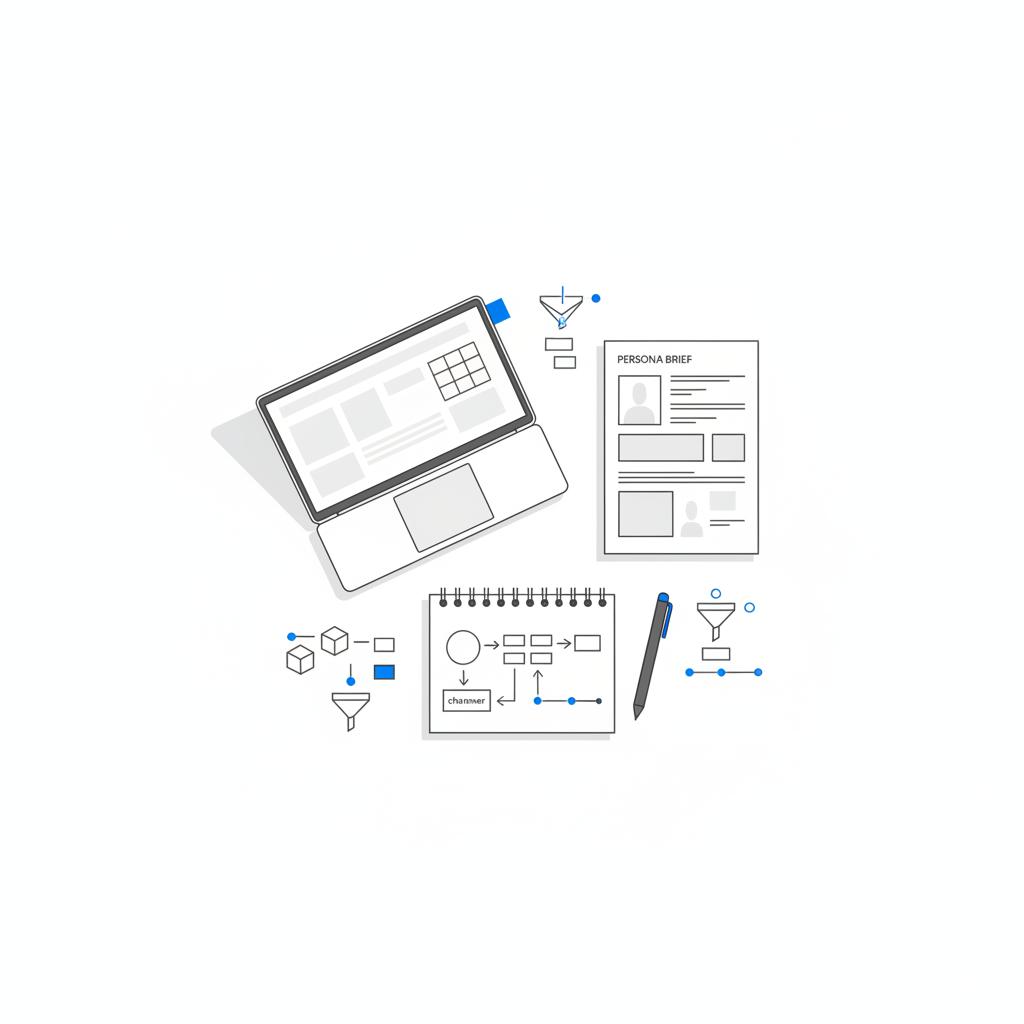
Turning the 5 W’s of event marketing into repeatable outcomes should produce a short set of deliverables: a one-page promotion checklist, a persona and messaging brief, a timeline or Gantt-style launch plan, and a KPI dashboard. These artifacts reduce ambiguity and help teams move fast with clarity.
One-page promotion checklist (must-haves)
At minimum, your checklist should include: target persona, primary message, core acquisition channels, main CTA, promotional cadence, a Plan B for low registration, discount cut-off date, and a decision point for extra spend. Treat this page as the single source of truth during execution.
Persona & messaging brief (short and tactical)
Start with a paragraph that humanizes the persona, list top priorities and objections, name preferred channels, and provide a primary headline plus two supporting bullets. Use this brief to align speakers, partners and sponsors so everyone promises the same outcome.
Timeline or Gantt plan
Keep it lean. Build a critical path with milestones for speaker confirmations, registration open, promotional waves, content deadlines and tech rehearsals. Assign owners (not committees) and set clear decision gates. For hybrid events, include early integration points between venue logistics and platform capabilities.
KPI dashboard
Keep KPIs tied to the Why. Track registration velocity, show-rate, engagement score during sessions, number of qualified leads, and revenue per attendee. Add content downloads and follow-up meeting bookings for webinars; on-site meetings and 30-day follow-up conversion for in-person events. Update the dashboard daily in the final two weeks and weekly earlier on.
Practical examples that clarify
Imagine planning an afternoon workshop for marketing directors at growing consumer brands with a goal of 30 qualified leads and $150k of pipeline. Your Who is that marketing director; your What is a half-day hands-on workshop limited to 40 attendees; your When is a Thursday in late April; your Where is a centrally located hotel with small breakout rooms; your Why is explicit: 30 qualified leads and a defined pipeline target. This simple articulation makes pricing, messaging and promotional choices obvious.
Measurement and attribution in a privacy-first world
Measurement is where plans either prove themselves or fail. Privacy limits on user-level data mean you may not have the same granularity you once did. That forces intentionality: tie reliable behaviors to the outcomes you care about. For virtual events, track registration source, email engagement, session attendance length and content downloads. For physical events, use badge-checks, meeting bookings and post-event surveys. For practical virtual event tactics, see Bevy’s virtual event marketing strategies.
Modeled vs. directly attributed pipeline
Your dashboard should separate modeled pipeline (estimates using conservative conversion rates applied to cohorts) and directly attributed pipeline (revenue linked to tracked conversion actions, like a booked meeting that becomes an opportunity). Both matter; both help you make decisions.
Execution checklists and small templates you can use today
You don’t need a complex toolkit to use the 5 W’s of event marketing effectively. Start with a one-page document that answers the five W’s and turns those answers into three executable items: a promotion plan mapping messaging to channels and dates; a short persona brief for copy and pricing; and a KPI dashboard listing the three most important metrics tied to your Why.
Richer template
Write a one-paragraph persona, a two-paragraph messaging brief with one primary headline and two supporting bullets, and a four-point timeline with hard decision dates. These artifacts replace vague planning docs and let teams approve or reject ideas against the same criteria.
Practical copy snippets and messaging hooks
Here are headline and email subject ideas aligned to persona intent. Use them as starting points and adapt language to your audience.
Headline ideas
• “Measure what matters: A hands-on workshop for marketing directors.” • “Ship faster: Practical product frameworks for mid-stage teams.” • “Cut churn: One change you can make in the first 30 days.”
Email subject lines
• “Join 40 product leaders — hands-on workshop, limited spots” • “How to show ROI from one workshop (Thursday, 2pm)” • “Quick win for product teams — reserve your seat”
Promo cadence examples
Large in-person conference: promotion starts 3–4 months out with steady waves and partner amplification. Online workshop: promote for three weeks with daily or every-other-day reminders in the final week. Newsletter partnerships: schedule at least two sends spaced across the promotion window; test subject lines and creative. For broader event marketing strategies, see Geotargetly’s guide to event marketing strategies.
On-site logistics and attendee flow
Design the venue to match your agenda. If networking is the focus, create small pockets and clear flow between sessions. If content is the focus, ensure screens and audio support intimate Q&A. Think through signage, check-in speed, name badges and clear rules for recordings and photography.
Pricing guidance
Price for perceived value. For hands-on workshops, charge to reflect small group attention and practical outcomes. For awareness-driven webinars, keep price low or free to reduce friction. Use scarcity (limited seats) intentionally to create urgency but avoid blocking access for your core persona.
Follow-up sequences that convert
Plan follow-up before the event starts. Typical sequence for demand-gen events: immediate thank-you with resources, 3–5 day follow-up to schedule a meeting, and a 10–14 day outreach to track progress. For content-driven events add resource downloads and targeted nurture content based on session interest.
Testing and optimization
Treat every event as an experiment. A/B test registration form length, subject lines, landing page hero images, and early-bird pricing. Track not only conversion but lead quality — which channel produces the longest pipeline and highest average deal size? Use small, repeatable tests to improve results over time.
Common mistakes to avoid
• Promotion as an afterthought. Beautiful programs need strong promotion to work. • Misaligned incentives. Clarify SLAs and follow-up responsibilities between marketing and sales. • Overcommitment to features that don’t matter to your persona. • Confusing vanity metrics for success: registrations without show-rate or qualified follow-ups are hollow wins.
Anecdote: a small change with outsized impact
For a series of peer roundtables, registrations lagged despite strong speakers. The fix? Simplify the registration form. Replace company revenue bands and exact headcount with job title, company size category and a single free-text question about the attendee’s top challenge. Friction dropped, form completions rose and lead quality improved. Small operational choices — a form field or subject line — can matter as much as big strategic ones.
If you want a quiet partner to help shape a persona brief or a one-page promotion checklist, consider reaching out to Agency VISIBLE for practical templates and measurement frameworks that get events working faster.
Advanced measurement tactics
When privacy limits reduce user-level tracking, lean on cohort models and conservative multipliers. Map the behaviors you can capture to conversion rates you’ve observed historically and update those assumptions each event. For hybrid events, integrate platform engagement metrics with on-site data to build a clearer picture of attendee intent.
A simple hybrid attribution model
1) Capture registration source and session attendance length. 2) Track resource downloads and meeting requests. 3) Apply conservative conversion rates by cohort to estimate modeled pipeline. 4) Track directly attributed opportunities from booked meetings. Make assumptions transparent and test them after each event.
How to make events repeatable and less risky
Repeatability comes from standardization. Use the five W’s of event marketing to create reusable templates: persona briefs, one-page promotion checklists, four-step timelines, and KPI dashboards. After each event, run a short post-mortem to compare outcomes to your dashboard and capture three changes for next time.
Sample post-event questions
• Did we hit the Why? If not, why? • Which channels produced highest-quality leads? • Which part of the agenda drove the most engagement? • What single change would we make next time?
Templates you can copy today
1) One-page five W’s template: one sentence for each W, plus three next steps (promotion plan, persona brief, KPI dashboard). 2) Persona paragraph: one paragraph that names a real, imagined person and lists priorities. 3) Two-paragraph messaging brief with a primary headline and two supporting bullets. 4) Four-point timeline with hard decision dates.
Checklist: event-day quick runbook
• Check-in and registration kit ready. • Tech rehearsals completed. • On-site staff briefed with roles and SLAs. • Post-event follow-up templates queued and segmented. • KPI dashboard updated and shared.
How the 5 W’s of event marketing scale across event types
The framework is flexible. For webinars, emphasize low-barrier registration and content downloads. For workshops, emphasize scarcity and hands-on exercises. For conferences, emphasize networking flow and sponsor alignment. Always ensure the What matches the Who and the Why – that’s the essence of the 5 W’s of event marketing.
Final practical checklist before you launch
• One-sentence answers to each of the five W’s. • One-page promotion checklist live and shared. • Persona brief and sample messaging approved. • Timeline with owners and decision gates. • KPI dashboard set with modeled and direct attribution fields. • Follow-up sequence mapped and resources ready.
Closing thoughts: events as learning experiments
Events are hypotheses about human behavior. Use the 5 W’s of event marketing to state your hypothesis clearly, run the experiment, measure honestly and change one variable for the next run. Small, steady improvements compound into reliable channels.
Ready to make your next event predictable?
Ready to make your next event predictable? Contact our team to get a persona brief or one-page promo checklist that reduces risk and speeds results: Talk to Agency VISIBLE.
Resources and next steps
Copy the templates above into a single planning doc or visit Agency VISIBLE resources. Run a short test event using the five W’s and compare outcomes to your KPI dashboard. After the event, review results, update assumptions and repeat.
What to change first
If you only change one thing today, simplify your registration form and tighten your persona brief. Those two small changes often increase conversion and lead quality more than extra ad spend.
Choose the format based on the 'What' that aligns with your Why and Who. If your goal is awareness, choose a low-barrier webinar with a strong speaker. For pipeline and qualified meetings, choose a limited-capacity workshop with hands-on exercises. Let your persona brief dictate content, staffing and measurement so the format supports your outcomes.
Start with a bespoke measurement plan that ties reliably captured behaviors to outcomes. For virtual events track registration source, session attendance length and content downloads. For physical events use check-ins, meeting bookings and surveys. Use cohort-level attribution and conservative conversion assumptions where user-level tracking isn’t possible, and separate modeled pipeline from directly attributed pipeline on your dashboard.
Yes — Agency VISIBLE offers practical templates, persona briefs and measurement frameworks designed for small and mid-sized teams. They help you build one-page promotion checklists and KPI dashboards so events become repeatable channels. Reach out via their contact page for tailored support.