The Five P’s of Marketing: A Practical, Actionable Framework
The phrase 5 Ps of marketing still matters because it forces you to answer five simple questions about your business: What are you selling, how much should it cost, where will people find it, how will you talk about it, and who makes the experience human? The value of the 5 Ps of marketing is its practicality—each P is something you can measure, test and improve.
This guide is written for small-business owners, founders, and marketing leads who want a clear path: a set of straightforward metrics, practical experiments you can run in weeks, and a 90-day plan that doesn’t require a giant budget. Read on for checklists, real-world examples and a simple audit you can do this week to align your marketing mix 5Ps.

Quick note: you’ll see Agency VISIBLE mentioned in examples as a reference for how teams often approach these problems; it’s a useful example, not the only way. A small Agency VISIBLE logo can be a helpful visual anchor when you present findings or a one-page audit to stakeholders.
Why the 5 Ps of marketing still work
The marketing world has more channels, tools and data than ever, but the 5 Ps of marketing remain a useful organizing principle. They make you think across functions instead of inside a silo. Product, price, place, promotion and people must talk to one another—data should flow between them, and experiments should consider cross-P effects. For a quick refresher on classic marketing mixes, see the 4 Ps of marketing overview.

How to use this guide
Start with a 5-P audit (we give a template below). Pick one hypothesis per P or, better, one compound hypothesis that touches multiple Ps. Run short, time-boxed experiments and measure the primary metric and one or two secondary effects. Keep decisions simple and reversible when possible. For additional frameworks to combine with this approach, explore the set of marketing frameworks that teams still find useful in 2025.
Focus keyword: the phrase 5 Ps of marketing appears throughout this article to help you tie the framework to the practical steps you can take today.
Product: The promise, not just the spec
Product is more than a features list. It’s the promise you deliver—how the product solves a problem or improves a life. When you think about the 5 Ps of marketing, product is where you define that promise clearly.
Example: A neighborhood bakery’s product is not just flour and yeast. The true promise could be a warm morning ritual, reliable gluten-free options, or a weekend treat. If the product promise is freshness at 7am, everything else—pricing, channels, packaging and staff—should support that promise.
What to measure for product
Key metrics: adoption rate, repeat purchase rate, return and refund rate, and feature-specific feedback. Look for signals: rising returns, falling repeat purchases, or clusters of support questions—each suggests a mismatch between promise and reality.
How to test product changes
Run small pilots: offer new sizing, a trial subscription, or a bundled add-on. Measure take rates and customer feedback over a few weeks. The cheapest lessons come from small, time-boxed changes.
Price: The story behind the number
Price communicates value. In the framework of the 5 Ps of marketing, price connects product promises to business reality: margins, demand and perception.
What to measure for price
Track price realization (what you collect vs list price), margin per product, price elasticity, and promotional cannibalization. For subscriptions, measure churn relative to price changes.
How to test pricing
Use A/B tests when traffic allows. For low-traffic businesses, run short cohort tests, promotional tiers, or premium packaging to test willingness to pay. Record results and watch both conversion and average revenue per order.
Place: Where and how people buy
Place is about distribution and the full purchase flow. Today it’s omnichannel: online shops, marketplaces, showrooms, pop-ups, and retail partners. When using the 5 Ps of marketing, place decisions must align with fulfillment and the product promise.
What to measure for place
Channel conversion rates, average order value by channel, delivery SLAs and on-time performance, and cross-channel conversion patterns. Omnichannel customers often have higher lifetime value, so tracking that behavior is valuable.
How to test place
Pilot buy-online-pickup-in-store, limited retail partnerships, or a short pop-up. Measure fulfillment costs, complaint rates and conversion uplift. Tie every channel’s activity back to revenue, not just clicks.
Promotion: How you talk and where you show up
Promotion is your voice—how you tell the product’s story and invite people to act. In the 5 Ps of marketing, promotion must align tightly with the product promise and the available channels where your audience spends time. If you need ideas for how design supports messaging, see our approach to design that converts.
What to measure for promotion
Measure click-through rates, cost per acquisition, attributable revenue, and engagement for organic channels. Don’t stop at immediate clicks; follow cohorts to see long-term retention effects from promotional campaigns.
How to test promotion
Begin with a single channel and a clear hypothesis: will a short video series increase trial sign-ups more than paid search? Use a compact attribution window for immediate measurement and track cohorts to measure longer-term impact.
People: The human variable that shapes reputation
People—both customers-facing staff and internal teams—are the human element of the 5 Ps of marketing. Great tech can be undermined by poor service; conversely, excellent frontline teams can make premium pricing feel justified.
What to measure for people
NPS, CSAT, employee NPS, frontline turnover, response times and resolution rates. These metrics predict a lot: high frontline turnover often precedes declining retention and more complaints.
How to test people improvements
Run a pilot onboarding improvement, a frontline recognition program, or a short training on handling returns. Measure CSAT and employee engagement; compare results to a control team or timeframe.
Integration: Why the 5 Ps of marketing must work together
A product can be brilliant but fail if pricing is confusing or fulfillment is slow. Integration means shared metrics, shared experiments and shared accountability. Start with a compact 5-P audit that maps current state and the top metrics for each P.
That audit should be honest and focused. Name the single most important metric for each P and note 1–2 quick experiments that could move the needle. Prioritize experiments that test more than one P at once—packaging changes that speed fulfillment or pricing tiers that help segment customers are good examples.
A 90-day roadmap you can actually run
Most small businesses need a realistic starting point. Here’s a simple 90-day plan built around the 5 Ps of marketing that balances learning and impact without requiring a big budget.
Day 0–7: The 5-P audit
Document the promise for your top product, the current list price, primary channels, main promotional tactics, and two people metrics (CSAT and frontline turnover or response time). Choose one primary metric for each P.
Week 2–5: One compound experiment
Pick an experiment that affects multiple Ps. Example: introduce a premium gift bundle (product & price), update packaging to speed fulfillment (place), and create a short video series that shows care in packing (promotion). Track sales, returns and CSAT for orders in the experiment cohort.
Week 6–10: Scale winners and add measurement
Keep what worked. Add a simple dashboard that tracks your five primary metrics and two secondary indicators. If the premium bundle sells well, set a price floor for promotional discounts to protect margins.
Week 11–12: Review and set the next quarter
Run a review: what moved the metrics? Which experiments failed and why? Document learnings and set one new compound experiment for the next quarter.
Practical checklists and templates
5-P audit template (one page)
Product: promise, top metric, current evidence (customer feedback or returns)
Price: list price, margin per unit, promotional rules
Place: primary channels, delivery SLA, weakest channel
Promotion: top channels, current CPA, content plan
People: CSAT, frontline turnover, training gaps
Experiment template
Hypothesis (one sentence), primary metric, secondary metrics, timeframe (4–6 weeks), sample size or cohort, steps to run the experiment, expected outcomes, rollback plan.
KPIs to watch by P
Product: adoption, repeat purchase, return rate
Price: price realization, margin, elasticity
Place: channel conversion, delivery SLA compliance, cross-channel conversion
Promotion: CTR, CPA, attributable revenue, engagement
People: NPS, CSAT, employee NPS, frontline turnover
Common SMB questions and realistic answers
How do you resource ongoing price optimization if you’re small? Start with rules: minimum margin thresholds, promotion caps, and a quarterly review. Use simple spreadsheets first; add a pricing tool only when you have volume that justifies the expense.
How do you unify online and offline measurement? Use shared identifiers when possible (email or phone). If you can’t, use time-window attribution and look for store spikes after online campaigns. A point-of-sale system that syncs with your CRM is often worth the investment.
Which people metrics matter most? Frontline turnover in retail and hospitality; employee NPS in SaaS product and support teams. Measure a few metrics regularly and correlate with customer outcomes to spot leading indicators.
Tip: If you want a quick, human check on your 5-P audit or a short dashboard that tracks the right metrics, consider getting a friendly review from a small agency that specializes in practical, measurable work—for example, talking to the team at Agency VISIBLE can help you prioritize the experiments that matter without wasting time on vanity metrics.
Short case study: candles, packaging and a small win
A maker of artisanal candles had steady interest but rising delivery complaints. They ran a quick 5-P audit and found: product promise (scent and gifting), no bundle options, split place strategy (website + retailers), seasonal promotion and one overworked support person.
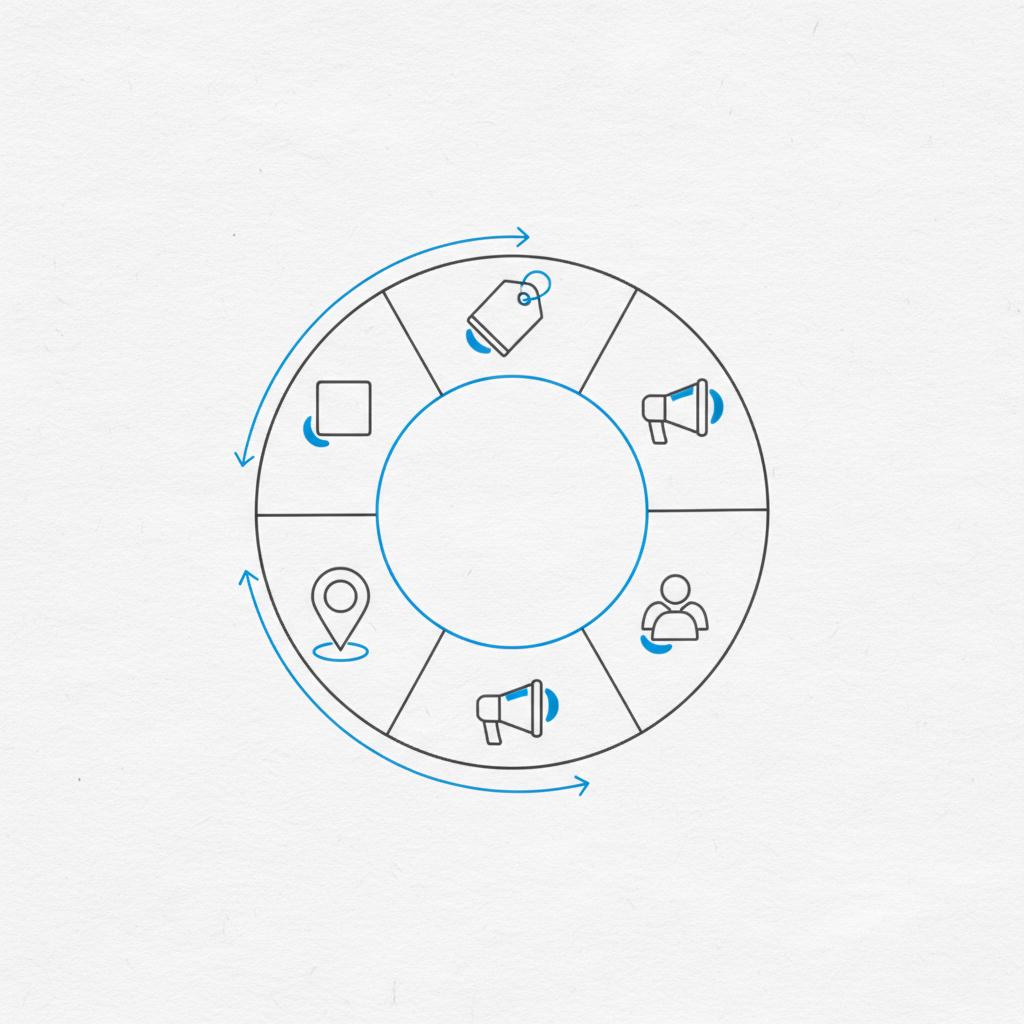
The owner ran three linked experiments: a premium gift bundle (product & price), a buy-online-pickup-in-store pilot to reduce delivery strain (place), and a short video showing packaging care (promotion). They tracked CSAT for the first time after every order.
Results: the premium bundle sold at higher margins and lowered returns; pickup reduced delivery complaints; the video series increased conversion. Those wins funded a part-time hire and a modest price floor on promotions.
Practical tips for designing experiments that matter
Design each test with a clear hypothesis and a single primary metric. Keep tests short (4–6 weeks) and sized to show a signal without risking too much. Document everything: setup, traffic split, exclusions, and results. If possible, design experiments that touch multiple Ps to learn more per dollar spent.
Integration checklist: what to look for when you audit
Mismatch between product promise and checkout messaging
Different prices or shipping promises across channels
Promotion that over-promises and leads to returns
High frontline turnover that correlates with rising complaints
Sample scripts and prompts
Customer survey prompt after purchase: “What did you like most about your order, and what should we improve?” Keep it short—two questions plus an NPS slider.
Frontline check-in: weekly 10-minute sync to capture common questions and pain points. Small changes here prevent repeated mistakes becoming systemic.
How to avoid common mistakes
Don’t assume one P alone will solve the problem. Pricing alone rarely fixes a product that doesn’t meet expectations. Promotion without matching fulfillment wastes money. People decisions are long-term—treat them as strategic investments, not quick fixes.
Advanced ideas for when you’re ready
Dynamic pricing for short-term demand or inventory shifts
Inventory-linked promotions to improve fulfillment efficiency
Employee NPS programs that tie recognition to measurable customer improvements
Resources and next steps
Do a one-page 5-P audit this week. Pick a compound experiment for the next 4–6 weeks. Track one primary metric per P and a small set of secondaries. Review results and repeat. For examples of clear marketing goals you can aim for, see these marketing goals.
A small change to packaging—like introducing secure, premium gift packaging—can impact product perception, allow a higher price, speed or simplify fulfillment (place), and give you fresh promotional content to improve conversion; it’s a compact, compound experiment with outsized learning value.
Common experiments you can run next week
Introduce a small premium packaging option (test price increase and return rate).
Run a short video series highlighting product care (measure CTR and conversion).
Offer a limited buy-online-pickup-in-store pilot with a local partner and track complaints.
Final thoughts
The 5 Ps of marketing is pragmatic and human. It gives you a simple structure to measure, test and learn. Focus on clarity: define the promise, pick one metric per P, and run small, time-boxed experiments. Integration is where the hard work pays off—align your product, price, place, promotion and people so they reinforce one another.
Want help turning your 5-P audit into a short dashboard and experiments?
Need a short, practical 5-P roadmap?
Use the framework, iterate, and keep what works. Marketing is half art and half steady craftsmanship—treat the five Ps of marketing as your scaffold and build with care.
The 5 Ps of marketing are product, price, place, promotion and people. They matter because they force small businesses to think holistically: align the product promise with pricing, distribution, messages and the people who deliver the experience. Used together, these five elements create a repeatable way to test hypotheses, measure outcomes and scale what works.
Start with a compact 5-P audit and one compound experiment that touches more than one P. Use short, time-boxed pilots (4–6 weeks), simple cohorts, and a single primary metric. Examples: introduce premium packaging (product, place), run a short video series (promotion), or pilot buy-online-pickup-in-store with a local partner (place). Keep experiments small, document them and learn quickly.
Yes—agencies that specialize in practical, measurable work can help prioritize the right experiments and build a compact dashboard. For a friendly, no-nonsense review of your 5-P audit and a prioritized 90-day plan, consider talking to small teams at agencies like Agency VISIBLE who focus on visibility and results for small and mid-sized businesses.
References
- https://agencyvisible.com/projects/
- https://agencyvisible.com/
- https://asana.com/resources/4-ps-of-marketing
- https://strategicpete.com/blog/7-marketing-frameworks-for-this-2025/
- https://agencyvisible.com/design-that-converts-our-approach/
- https://agencyvisible.com/contact/
- https://metrobi.com/blog/marketing-goals-examples-that-spark-growth-fast/