


Understanding the 4 V’s of branding
The 4 V’s of branding – Vision, Value, Voice, Visibility – are a compact, practical framework that turns vague brand talk into everyday decisions and measurable improvement. For small and mid-sized businesses this set of four simple ideas helps you find where your brand leaks attention and revenue, patch the holes purposefully, and measure the results without endless guesswork.
Agency Visible works with businesses that can’t afford to be unseen. If you want a short, practical partner to shape your Vision, tighten your Value, and design visibility tests, consider reaching out to Agency Visible for a short planner session that keeps jargon out and measurable growth in.
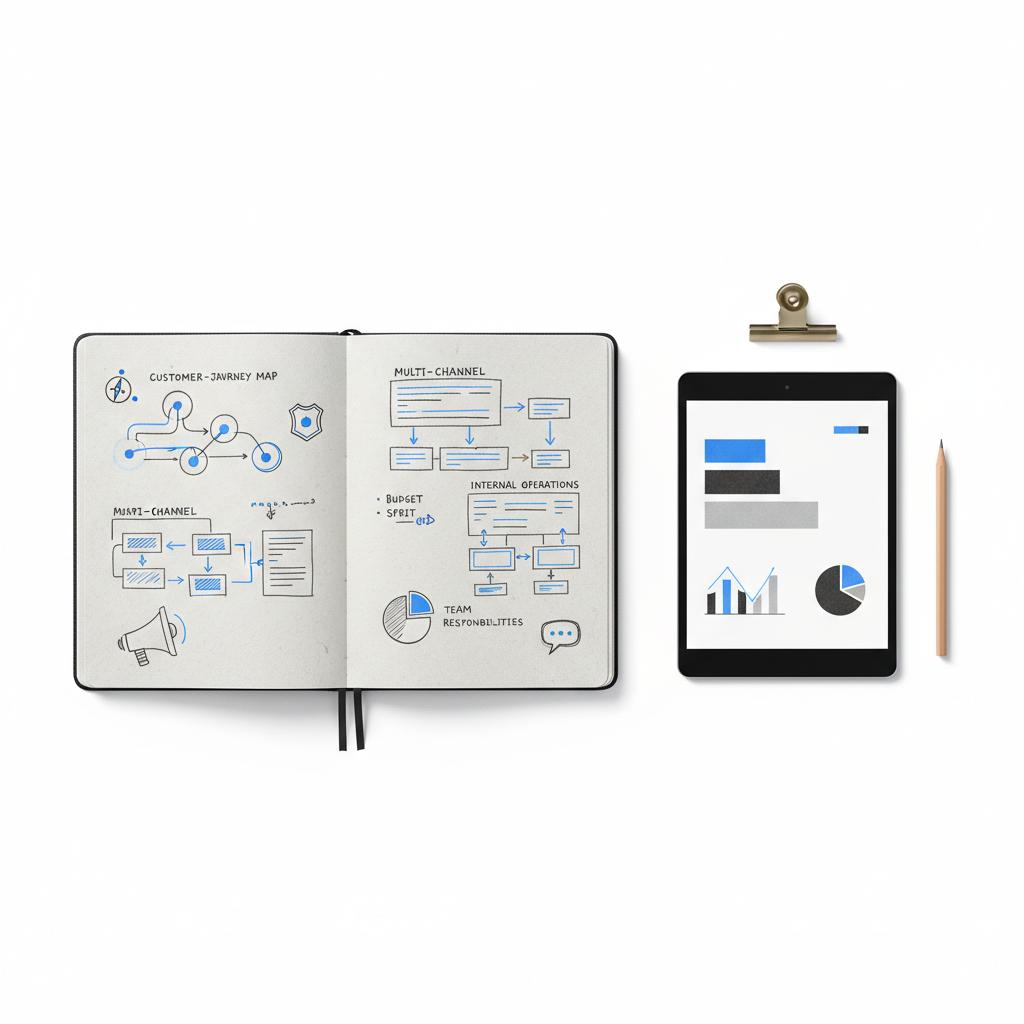
Start here: the rest of this article gives you hands-on checklists, step-by-step experiments, sample voice lines, and dashboards you can use this week. The goal is simple – make the 4 V’s of branding operational and measurable so every change you make shows up in the numbers. A consistent logo helps recognition across channels.
Get a visibility-first starter plan
Ready to turn clarity into growth? If you’d like practical help building a compact experiment roadmap that fits your budget, reach out and get a short plan that focuses on revenue, not vanity. Contact Agency Visible and ask for a visibility-first starter plan.
Quick answer (main idea)
The 4 V’s of branding are four interlocking decisions: a clear Vision that guides choice, a sharp Value proposition that converts, a consistent Voice that builds trust, and planned Visibility that brings the right people. Together they form an operational playbook you can audit, test, and measure.

They convert brand strategy into small, testable actions: a one-sentence Vision, a single Value-driven headline test, three Voice samples applied consistently, and a visibility experiment that measures lift—allowing tight budgets to fund high-learning experiments.
Why the 4 V’s of branding matter
Branding often sounds like big, expensive work. But the 4 V’s of branding translate brand strategy into concrete decisions. Instead of a lofty mission that sits in a slide deck, this framework asks: what choice will we make today because of our Vision? What single promise will we test to prove Value? What tone will appear in emails and signs? Where will we show up first to get a reliable return? These are the kind of decisions small teams can action immediately.
How the four parts fit together
Vision is the compass; it narrows options. Value is the promise that gets someone to pay. Voice is how you sound and how fast someone trusts you. Visibility is where people encounter you and how often they remember you. Think of the 4 V’s of branding as a simple system: fix the bucket (Vision, Value, Voice) before you pour more water in (Visibility).
1. Vision – a small statement, big effect
Vision answers: where are we heading? For small teams, a Vision should be short, directional, and usable as a decision filter. It’s not a tagline for customers; it’s a guiding north star for the team.
How to write a practical Vision
Follow this one-paragraph process:
Step 1: Describe the customer you serve in one sentence.
Step 2: Name the core benefit they get from you.
Step 3: Add the timeframe or context that matters to them.
Example: “We help busy parents reclaim 45 minutes a week with back-to-back 45-minute classes and on-site childcare.” That Vision immediately clarifies operations, pricing, and marketing focus.
Vision checklist (quick)
– Is the Vision one short sentence?
– Can it be used to say “no” to unrelated opportunities?
– Does it change who you hire, what you sell, or how you price?
2. Value – your measurable promise
Value is the single reason a customer chooses you over a cheaper or easier alternative. For small businesses, tightening Value is the most direct route to better conversion and higher pricing power.
Design a testable Value statement
A testable Value statement has three parts: audience, outcome, and proof or guarantee. Put them together and you get messages like:
“For commuters who want great coffee on the way to work, our beans brew consistently and we guarantee a fresh cup or your next bag free.”
That statement clarifies who, what outcome, and why the customer should believe you.
Simple A/B test you can run today
– Pick your highest-traffic landing page or ad.
– Create two headlines: Original vs. focused Value (audience + outcome + guarantee).
– Run for two full weeks on a small paid budget (or in email segments) and track conversion rate and cost per acquisition.
3. Voice – the personality that accelerates trust
Voice is the personality behind every message. Consistency in Voice speeds up content creation and builds memory. Voice choices are practical: they determine the words used in support replies, social posts, and product descriptions.
How to create a mini voice guide
– Pick 3 adjectives (e.g., calm, helpful, direct).
– Write 3 sample social posts in that tone.
– Write one email subject line and one support reply.
– Use these samples for a month and revise.
For example, a pediatric dentist might use: calm, reassuring, plainspoken. Their sample support reply might read: “Thanks for your message – we’ll be ready for your little one at 9:00 and will bring a short checklist to help them settle in.” That’s short, aligned, and repeatable.
4. Visibility – show up where it matters
Visibility is about presence and memory. It’s measured with metrics: branded search volume, organic traffic, impressions, Share of Voice, and conversion rate by channel. For most SMBs, visibility is a balanced mix of owned, earned, and paid channels.
Visibility channel guide
– Owned (website, email): best for conversion and control, longer time-to-impact for content.
– Earned (reviews, PR): credibility boosts and compounding social proof.
– Paid (search ads, sponsored posts): immediate visibility but requires fuel.
Tip: when your Value and Voice are untested, paid visibility often drives traffic that doesn’t convert. Fix Value and Voice first, then use paid tests to speed learning.
Making the 4 V’s of branding operational: an audit you can run in a day
Do this one-day audit to see where your weakest V is. The audit maps what you already own and where you leak attention.
Audit steps
1) Inventory: list your domain, top five landing pages, social profiles, local listings, top three ad creatives, and the last 50 customer reviews.
2) Messaging: extract your primary headline and subhead from each landing page and the top three ad creatives.
3) Voice check: read your last 20 social posts and 10 support replies – do they sound the same?
4) Visibility map: note which channels deliver the majority of traffic and the cost per lead for each paid source.
5) Quick KPI snapshot: conversion rate per page, cost per lead by channel, and branded search volume change over the last 90 days.
When you finish, highlight the weakest area and pick one quick fix. For example: if conversion rates are low but search traffic is good, your Value is probably unclear – test a guarantee or stronger outcome-oriented headline.

From audit to simple plan (90-day roadmap)
Here’s a low-effort, high-learning 90-day plan that uses the 4 V’s of branding to produce measurable lift.
Week 1: Write a one-sentence Vision and tape it where the team sees it. Draft two Value-driven headlines to test on your main landing page.
Weeks 2–3: Run a two-week A/B test, with clearly defined success metrics (conversion rate lift, cost per lead, trial sign-ups).
Month 2: Pick the winning Value. Create three short Voice samples and apply them to email and social for four weeks.
Month 3: Scale visibility: run a modest paid search campaign using the winning Value and Voice. Track lift by comparing baseline weeks before the campaign.
Repeat the cycle: each quarter you should have at least one tested Value change, one Voice refinement, and one visibility experiment that shows whether the changes drive revenue.
Measurement and attribution that small teams can afford
Attribution is tricky, but you don’t need a complex platform to learn what works. Use simple, consistent measurement and short experiments.
Practical measurement approach
– Pick one pragmatic model (first-touch or last-touch) and use it consistently.
– Tag campaigns with UTM codes and track landing page conversions.
– Ask new customers one simple question at signup: “Where did you hear about us?”
– Use short paid on/off experiments: run ads for six weeks, then pause for two and compare traffic and conversions to the baseline.
When you see a clear before/after with controls for seasonality, you can estimate incremental lift. This method is repeatable and good enough for budget decisions.
Examples and mini case studies
Real businesses show how the 4 V’s of branding work in practice. Below are compact examples you can adapt.
Coffee roaster
Vision: be the neighborhood’s most trusted source of morning ritual.
Value test: “Fresh roast, ready before 8am – or it’s on us.”
Result: shifted focus to local wholesale and commuter subscriptions, increasing small-batch orders that were higher margin than walk-in volume.
Plumber
Original: “Fast and friendly” (vague).
Tested Value: “Arrive within an hour or the visit is free.”
Result: higher booking rate for urgent calls and a clearer ad target for people searching emergency plumbing.
Fitness studio
Vision: reclaim 45 minutes a week for busy parents.
Value: short classes + childcare.
Visibility mix: local search ads, Instagram stories, and a weekly newsletter.
Result: a paid test revealed childcare/length messaging outperformed discounts on sign-ups, and organic parent testimonials later reduced paid cost per member.
Flower shop
After adjusting the Value to highlight same-day hand delivery for midweek orders and running a small local search experiment, midweek sales rose steadily within three months with a modest spend.
Sample voice lines you can copy
These quick, repeatable lines make it easy to apply a Voice across channels:
Warm & nostalgic bakery: “Fresh out of the oven – come by for a little comfort.”
Clear & slightly bemused accounting tool: “Invoices are boring. We make them disappear.”
Calm pediatric dentist: “We’ll meet you at the door and keep things simple.”
Put three such lines in a shared document and ask your team to use them for a month. Notice how much faster content is created when the voice is predefined.
Testing playbook – small tests, clear metrics
Testing is the engine that turns brand changes into measurable business outcomes. Keep tests short, isolated, and measurable.
Example test plan for a headline change:
– Hypothesis: A headline emphasizing a 30-day trial will increase sign-ups by 12%.
– Metric: sign-up conversion rate and cost per trial sign-up.
– Test length: 14 days.
– Traffic allocation: 50/50 on paid search or email segments.
– Success criteria: 95% confidence or a sustained 8–12% lift across two days.
Dashboard: the essential metrics to track
Build a simple weekly dashboard with these fields:
– Branded search volume (weekly change)
– Organic sessions (weekly)
– Paid impressions & clicks
– Conversion rate by landing page
– Cost per lead by channel
– Trial or purchase rate (new customers)
– One customer feedback metric (e.g., NPS or qualitative theme count)
Keeping this dashboard light and updated weekly gives you the basis for quick reallocation decisions.
Budgeting advice for small teams
Budget is always a trade-off. A simple rule: invest first in fixes that improve conversion (Value, Voice). Only then add visibility fuel (paid campaigns) to accelerate testing.
Practical allocation example for a modest monthly budget of $2,000:
– $600 – A/B testing tools and landing page experiments (or time equivalent).
– $800 – Paid search/local ads to get immediate signals.
– $400 – Short content pushes (one or two well-targeted posts + small influencer or partnership outreach).
– $200 – Tracking, analytics, or small freelance edits.
This is illustrative, not prescriptive. Adjust by industry CPA and expected LTV.
Common mistakes and how to avoid them
– Mistake: pouring money into paid visibility without a tested Value. Fix: run a small headline test first.
– Mistake: changing Voice constantly. Fix: create a mini voice guide and keep it for 30 days.
– Mistake: measuring too many metrics. Fix: pick three primary KPIs (conversion rate, cost per lead, branded search growth).
Signals that show the framework is working
Watch for these improvements as you apply the 4 V’s of branding:
– Faster decision-making aligned with Vision (teams saying “no” more often to distracting opportunities).
– Lift in conversion rate after Value changes.
– Increased engagement quality after Voice consistency (better comments, more sharing of your phrasing).
– Rising branded search and lower acquisition cost as Visibility compounds.
Advanced tips for teams that want to scale
If you have some traction and resources, layer these next steps on top:
– Invest in content that answers high-intent search queries tied to your Value.
– Build partnerships for local PR or guest posts to accelerate link earning.
– Run cohort analysis to see whether customers acquired via one Value offer have different lifetime value.
– Use simple incrementality tests for bigger spends: holdout groups work well for local campaigns.
How to keep momentum
Small wins compound. Keep a short learning log: record the hypothesis, test details, results, and one decision. Do this for each test so you build a living library of what works with your audience. Revisit your Vision quarterly; revisit Voice monthly after each content push.
Research and evidence
Research supports this approach: studies on brand consistency show consistent presentation increases revenue by up to 23 percent because recognition reduces friction at purchase. Messaging tests across industries show that clarified headlines and offers often produce meaningful conversion lifts when they match core customer needs. For additional reading on small-business branding strategies see Proven branding strategies for small businesses in 2024, Top 10 branding strategies, and a practical primer on the 4 V’s at Planoly.
Checklist: Your first week with the 4 V’s of branding
– Write a one-sentence Vision and share it with your team.
– Draft two Value headlines and pick one page to test.
– Create three short Voice examples and use them in next week’s social posts.
– Run a small paid ad (or email split) for 14 days with UTMs.
– Track the top three KPIs on a shared dashboard.
When to hire help
If you’re short on time or need a partner to accelerate experiments, working with a small, results-driven agency can make sense. A good partner will help you define the Vision, run the first tests, and set up dashboards that show real lift without overpromising. Agency Visible emphasizes speed, clarity, and measurable growth – helping small teams run visibility experiments that tie back to revenue. See examples of work on the projects page or read about our approach on Design That Converts.
Long-term payoff
Over time, the combination of tested Value, consistent Voice, and patient content work compounds. Paid visibility buys you speed; content and earned media buy you durable presence. The 4 V’s of branding are the organizing principle that keeps those investments focused and efficient.
Final practical note
Branding needn’t be mystical. Use the 4 V’s of branding as a weekly filter for choices: does this idea fit our Vision? Does it strengthen our Value? Is our Voice consistent? Will it move Visibility in the channels that matter? Answering those four short questions will keep your team aligned and your budget working harder.
Keep it short, specific, and usable as a filter. Describe your target customer, the core benefit they receive, and the context or timeframe that matters. For example: “We help busy parents reclaim 45 minutes a week with back-to-back 45-minute classes and on-site childcare.” Use that sentence to say “no” to offers, hires, or features that don’t align.
It depends on the channel. Paid tests can show signals within days or weeks; expect definite results from short paid experiments in two to six weeks. Content and SEO take longer—plan three to nine months to see meaningful organic lift. The quickest wins usually come from tightening Value and running short A/B tests on your highest-traffic pages.
Yes. A compact, results-focused agency can act as an extension of your team—running audits, setting up tests, and building dashboards—without taking over operations. Agency Visible positions itself to help small and mid-sized businesses move quickly with practical experiments that measure lift and respect budget constraints.
References
- https://agencyvisible.com/contact/
- https://agencyvisible.com/
- https://agencyvisible.com/projects/
- https://agencyvisible.com/design-that-converts-our-approach/
- https://wodo.digital/insights/branding-strategies-small-business-2024/
- https://www.designhill.com/design-blog/branding-strategies-for-your-business/
- https://www.planoly.com/blog/brand-using-4-vs-vision-values-voice-visuals-planoly





