What are billboard ads? A practical guide for 2024
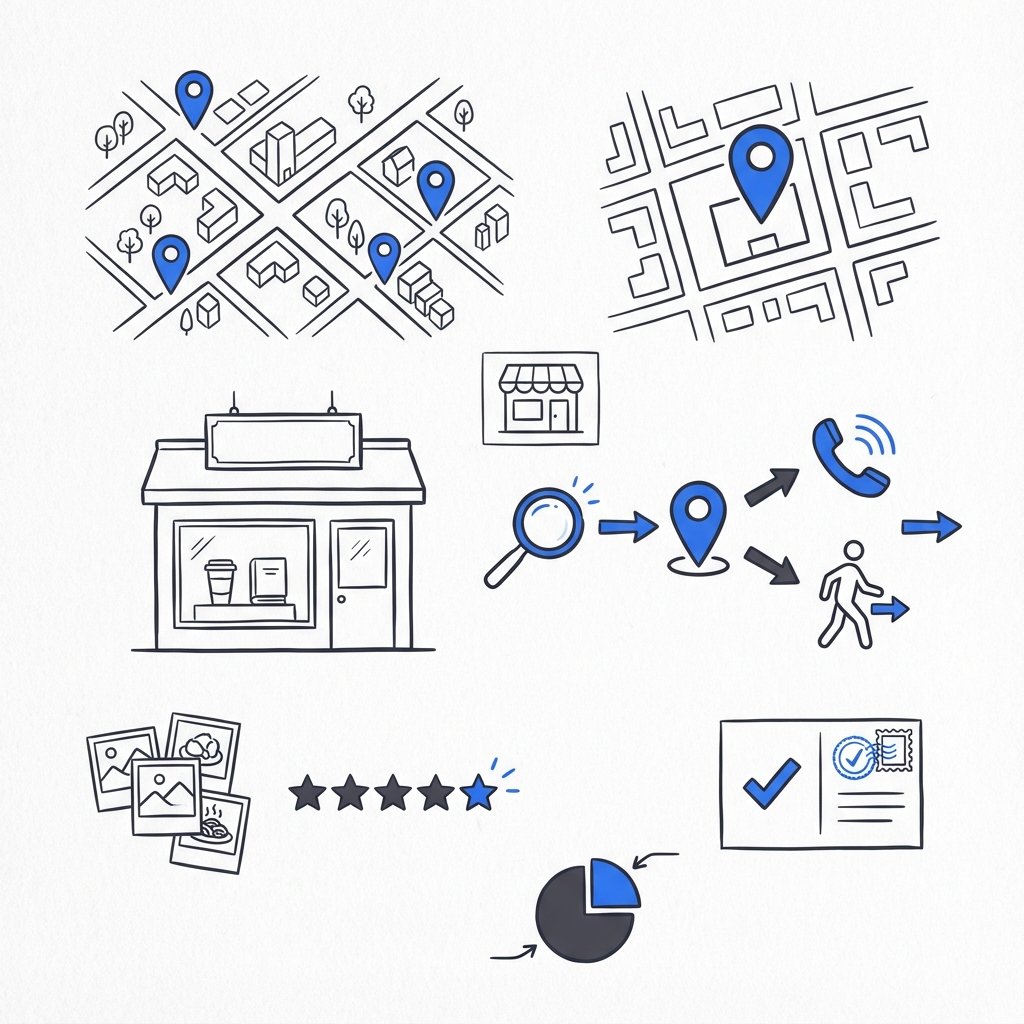
What are billboard ads? At their simplest, what are billboard ads are large-scale out-of-home (OOH) advertising formats designed to stop a passing viewer, create a visual impression, and nudge behavior later – whether that’s remembering a brand, searching online, or walking into a store. They appear along highways, on building walls, at transit hubs, and even on moving vehicles. In 2024, billboards include traditional printed posters and fast-growing digital out-of-home screens (DOOH).

This guide explains how billboard ads work, how much they cost today, when to choose static versus digital, how performance is measured, and how to write creative that actually gets noticed. Along the way you’ll find checklists, practical examples, and ethical considerations so you can plan a campaign that brings real results.
Why billboard ads still matter
Billboard ads matter because they buy attention through scale and context. One well-placed board can be seen by thousands daily; a wallscape can dominate a city block and become a landmark. Unlike many online formats, billboards are public, physical, and often unavoidable. That visibility helps brands build awareness quickly and feed other channels – search, social, and direct visits.
Think of billboard ads as the broad, steady drumbeat in a marketing plan: they aren’t always the click that closes a sale, but they make other messages land more easily. For small and mid-sized businesses, a handful of right-located boards can have an outsized impact – especially when paired with simple, memorable creative and measurement that ties back to footfall or local search lift.
Where billboards appear (formats and placements)
Common billboard formats include:
Roadside bulletin: Large highway boards for high-speed viewing. Poster panels: Smaller, dense panels in urban areas. Wallscapes: Massive building wraps used for dramatic brand statements. Transit placements: Platforms, buses, and shelters near high-footfall locations. Mobile billboards: Truck-mounted or van-mounted ads that move through neighborhoods. Digital screens (DOOH): Static or dynamic displays that rotate multiple creatives per minute.
How digital billboard ads and programmatic DOOH are changing the game
Digital billboards let advertisers rotate creative, target by time of day, and – when combined with programmatic buying – purchase inventory quickly across many screens. Programmatic DOOH introduces automation familiar from online advertising: real-time bidding, frequency caps, and dynamic creative optimization. That agility matters when you need to react to weather, events, or time-sensitive promotions.
Still, programmatic DOOH has limits. Inventory is fragmented across networks, measurement standards are emerging, and integration between buyers and owners can be uneven. For advertisers who prioritize flexibility and contextual messaging, programmatic DOOH is a powerful tool. For those needing a long-term, dominating presence in a specific location, a direct, multi-week static buy still wins. For an industry view on measurement standards see the IAB DOOH measurement PDF: IAB DOOH measurement PDF.
How much does a billboard cost per month in 2024?
Costs vary widely based on market, format, and location. To give realistic ranges:
Small community poster: a few hundred to around $1,000/month.
Suburban bulletin: $1,000–$3,000/month.
Urban bulletin or large poster in a mid-market: $3,000–$10,000/month.
Premium wallscape or big-city highway board: $10,000–$50,000+/month.
DOOH single showing: tens to hundreds of dollars per showing, or CPM-based buys that scale with audience.
Don’t forget production: static posters need design and printing; DOOH needs animated creatives and sometimes platform fees. Programmatic buys may carry minimums and platform commissions. The practical rule: match the cost to the campaign goal – use fewer, bigger sites for pure awareness; cluster smaller, local sites for footfall or store openings.
Budget planning examples
Example 1 — Local coffee shop: $2,500 total monthly budget
– One suburban poster near commuting route: $700/month
– Two digital 15-second morning shows at commuter kiosks (programmatic): $900 total
– Creative/production: $400
– Measurement (footfall tracking or local survey): $500
Example 2 — Regional product launch: $25,000 total monthly budget
– Three city-center bulletins: $9,000/month
– One wallscape in a key neighborhood: $6,000/month
– DOOH flight for evenings: $4,000
– Creative production and motion assets: $3,000
– Measurement and agency support: $3,000
If you’d like a friendly second opinion on creative or site selection, Agency VISIBLE’s campaign planning team can help map options and set up simple experiments—start the conversation at Agency VISIBLE’s contact page.
Plan a billboard campaign that drives real visibility
Ready to test a two-week pilot near your store? Start a pilot with Agency VISIBLE and we’ll help map sites, creative, and a simple measurement plan.
How billboard performance is measured—and where uncertainty remains
Measurement of billboard ads uses a mix of traditional audience estimates (traffic counts, sightlines, model-based impressions) and modern techniques that combine mobile location and experimentation. Each method has value – and limits (see the IAB DOOH measurement guide).
Standardized audience estimates: Tools like Geopath (U.S.) and other local panels calculate potential impressions based on traffic and view geometry. These provide a baseline reach estimate used by media buyers.
Mobile location-based attribution: Vendors infer which devices passed a billboard and then measure whether those devices later visited a store. This is powerful for footfall but raises privacy and methodological questions. For more on metrics and methods see DOOH measurement methods.
Controlled experiments: Turning sites on and off or using matched control locations provides stronger evidence of incremental effect. Brand-lift surveys before and after exposure add qualitative confirmation.
Key caveats: mobile data samples may not represent all consumers, deduplication can be imperfect, and claimed visit lifts need experimental validation to prove causation. The best campaigns combine several methods to triangulate real impact.
Benefits and limitations of billboard advertising
Benefits:
– Broad scale reach
– High visual impact and memorability
– Great for brand awareness and top-of-funnel work
– Local presence that supports footfall and immediate actions
Limitations:
– Limited individual-level targeting (though DOOH narrows that)
– Short dwell time – messages must be quick
– Measurement complexity compared with online clicks
– Cost variability and sometimes high minimums for premium sites
Creative that works: street-tested rules
Because viewers often have only a few seconds, good billboard creative is disciplined. Use these practical rules:
1. One idea per board. Pick a single primary message—sale, time, place, or brand slugline. Don’t clutter with multiple calls to action.
2. Supercharged typographic hierarchy. Big, high-contrast type for the headline; smaller for supporting info. Sans-serif fonts with strong letterspacing read better at speed.
3. Focal visual anchor. A single image or brand mark that anchors the eye. Faces, products, or bold shapes work well.
4. Minimal copy. For highway boards, aim for 3–6 words. Urban or pedestrian contexts can stretch to 8–12.
5. Strong contrast and color. High contrast beats clever color palettes for legibility.
6. A clear follow-up action. If you want an action, make it easy—short URL, memorable phone number, or a single hashtag.
Practical creative template:
– Line 1 (very large): One punchy phrase or value proposition.
– Line 2 (medium): A benefit or time cue (optional).
– Visual: Product or face occupying half the canvas.
– Footer: Logo + short CTA (url, hashtag, or location).
A quick creative test you can run
Split two nearby sites or two time slots: one board with a clear time-limited offer (“Fresh croissants: 7–10am”) and another with a brand message (“We bake all day”). Measure morning footfall for both. The focused, action-based creative usually wins for immediate visits; the brand message builds recognition over weeks.
Programmatic DOOH: promise and practical limits
Programmatic DOOH gives advertisers fast access and contextual triggers. Use it when you need targeted time windows, geo-contextual messaging, or the ability to test many placements quickly. But be clear on the tradeoffs:
– Fragmented inventory across owners can complicate reach planning.
– Measurement standards are still evolving – ask vendors how they calculate impressions and viewability.
– Platform fees and minimums can erode small budgets.
How to buy programmatic DOOH in 7 steps
1. Define objective (awareness vs footfall).
2. Choose geo and time windows (rush hour vs evenings).
3. Select screens and audiences based on footfall and context.
4. Upload dynamic creative and rules (time/weather triggers).
5. Set caps and frequency controls.
6. Run a small pilot and measure with mobile-location or control sites.
7. Scale the buys that show consistent incremental lift.
Ethics, privacy and mobile location data
Modern measurement often uses anonymized mobile location signals. This gives useful insights but comes with responsibility. Always ask providers:
– Where does data originate?
– Is it anonymized and aggregated?
– How do you deduplicate and prevent re-identification?
– How are opt-outs handled?
– What retention policies apply?
Good vendors document compliance with local privacy laws and will explain their sampling and error margins. If you value long-term trust, pair mobile-location methods with broader, privacy-safe measures like brand-lift surveys and randomized tests.
Planning a billboard campaign that actually works
Here’s a practical planning checklist you can adapt:
1. Clear objective: Awareness, footfall, or short-term action.
2. Audience map: Who are they, where do they travel, and at what times?
3. Location shortlist: Rank sites by visibility, audience fit, and cost.
4. Creative brief: One idea, one CTA, visual anchor, and technical specs.
5. Measurement plan: Impression estimates, footfall tracking, and control design.
6. Timeline & production: Print schedules or DOOH creative deadlines.
7. Vendor checks: Contracts, measurement claims, insertion orders, and insurance.
Practical tip: For local businesses, target a tight radius around your location and match times to operating hours – this often yields higher ROI than broad, unfocused buys.
Practical tip: For local businesses, target a tight radius around your location and match times to operating hours – this often yields higher ROI than broad, unfocused buys.
Choosing a vendor: what to ask
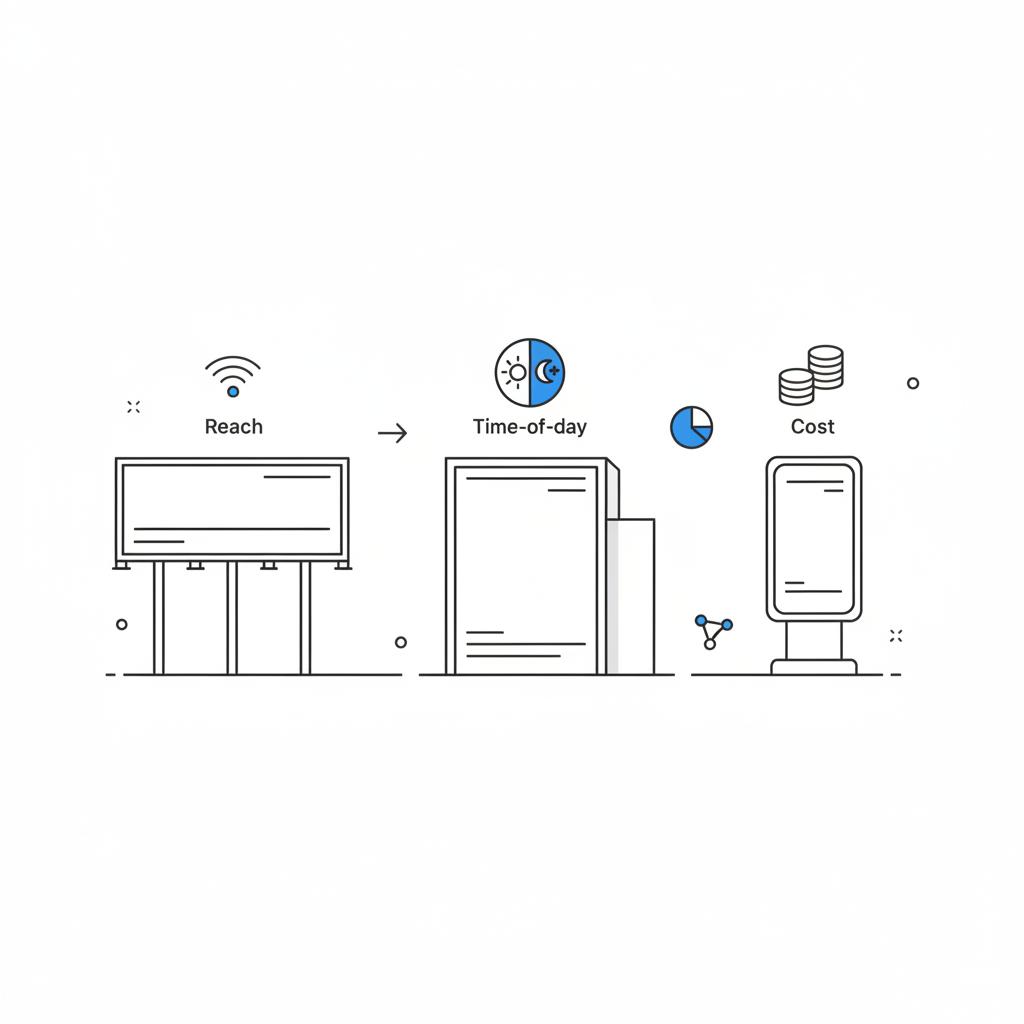
– Can you show audited impression numbers or third-party estimates?
– What are the audience demographics for this site?
– How do you measure viewability and duration?
– What are production and installation timelines?
– What are cancellation terms and makegoods (remedies for downtime)?
Common advertiser mistakes—and how to avoid them
Mistake: Trying to say too much. Fix: Strip to one idea.
Mistake: Buying the most expensive site without a measurement plan. Fix: Reserve budget for tracking and an experiment.
Mistake: Ignoring local context (e.g., placing nightlife creative in a commuter corridor). Fix: Match creative to moment and audience.
Case studies & experiments (practical examples)
Local bakery experiment: A roadside poster reading “Fresh croissants: 7–10am” ran for two weeks. Result: the shop reported a clear morning uptick vs previous months and increased social mentions. The simple, time-bound CTA cut through commuter noise.
Regional product launch: A brand combined a two-week DOOH morning flight in commuter hubs with a weekend wallscape near the retailer. Short-term store visits rose and search volume for the product increased by a measurable margin. The combination of repeated morning exposure and a single big visual landmark drove both awareness and local discovery. See similar work in our projects.
Measurement recipes you can use
Recipe A — Awareness: Use standardized impression estimates + pre/post brand-lift survey.
Recipe B — Footfall: Use mobile-location attribution + control site or time-window experiment.
Recipe C — Direct action: Use a short URL, dedicated coupon code, or SMS link to measure response triggered by outdoor exposure.
Designing a simple on/off experiment
Turn the billboard on for weeks 1 and 3 and off for weeks 2 and 4, or run a comparable control site nearby. Compare footfall and local search volume across periods. If visits rise significantly during ‘on’ periods versus ‘off’ periods, you’ve likely captured incremental effect.
Legal and local considerations
Check local regulations for outdoor advertising: permits, size limits, brightness rules for digital screens, and restrictions near certain civic sites. Many cities cap animated content or require shields for lights that affect traffic. Ask vendors for copies of permits and proof of compliance before signing insertion orders.
Small-advertiser strategies
Small budgets can win by being surgical:
– One very local poster near your business entrance.
– A short DOOH morning flight during rush hour.
– A mobile billboard parked during a weekend event.
– Coupling the board with a single, memorable CTA (“Buy 1, get 1 today!” with a short URL).
How to measure creative effectiveness
Creative A/B testing on DOOH is easier than with static posters: rotate creatives on the same screen across adjacent dayparts and measure relative lift in nearby footfall or search. For static posters, parallel placements (two sites with different creatives) and short-run flights provide the clearest comparison.
Programmatic checklist for buying teams
– Confirm screen taxonomy and IDs.
– Verify floor price and auction mechanics.
– Set daypart targeting and triggers.
– Upload creatives in correct specs.
– Confirm reporting cadence and attribution windows.
– Run pilot and analyze results before scaling.
Future trends to watch
– Better programmatic supply-chain standards and unified measurement.
– DOOH creative that adapts to more real-time signals (crowd size, transit delays).
– Increased use of privacy-preserving measurement techniques. These trends make outdoor advertising more accountable and flexible – without sacrificing audience trust.
A clever billboard can attract quick attention, but a consistent, well-placed billboard usually builds longer-term memory; the best strategy often combines a steady presence with occasional clever flights for spikes in attention.
Checklist: launch-ready items before you go live
– Insertions order signed and dates confirmed.
– Creative files approved and uploaded to specs.
– Measurement provider or method contracted.
– Production and installation schedule confirmed.
– Permits and insurance in place.
– Reporting dashboard set up.
Questions to ask your media partner
– How do you calculate impressions and viewability?
– Can you share real-world examples or case studies for similar businesses?
– Will you provide a post-campaign analysis with raw metrics and comparisons?
– What remedies exist if the site goes dark?
Wrapping up: practical first steps
Start small and measure. Run a two-week pilot near your business or in a commuter hub and use a simple on/off experiment to test impact. Keep creative simple and direct. If the pilot delivers consistent lift, scale thoughtfully to maintain measurement quality.
Extra resources and tools
– Geopath and local traffic data firms for reach estimates.
– Mobile-location attribution vendors with privacy-first documentation.
– Programmatic DOOH platforms for quick buys and pilots.
– Local outdoor vendors for direct, long-run placements.
Final thought
Billboard ads remain one of the most straightforward ways to buy shared attention. With clear goals, simple creative, and a thoughtful measurement plan, OOH still rewards the advertiser who respects the viewer’s time and context.
Costs vary by market and format. For a small business in 2024, expect a local poster or suburban panel to range from a few hundred to around $1,000 per month. A focused DOOH morning flight or short programmatic run can cost a similar amount if targeted tightly. Always factor in production and measurement costs when budgeting.
Yes—when creative, location, and timing are aligned. Time-bound messages near points of sale (for example, "Fresh croissants: 7–10am") often produce measurable footfall bumps. The most reliable evidence comes from on/off experiments and mobile-location attribution combined with control sites.
Agency VISIBLE helps small and mid-sized businesses plan location, creative, and measurement in practical, budget-aware ways. If you want a sounding board to choose sites, design a simple experiment, or set up DOOH buys, start the conversation at Agency VISIBLE’s contact page for tailored guidance.
References
- https://s3.amazonaws.com/media.mediapost.com/uploads/IAB_DOOH_Measurement_Guide_July_2025.pdf
- https://www.iab.com/guidelines/dooh-measurement-guide/
- https://www.stackadapt.com/resources/blog/dooh-measurement-methods-performance-metrics
- https://agencyvisible.com/contact/
- https://agencyvisible.com/projects/