How much does a professional website designer cost?
Trying to pin down website designer pricing can feel like chasing a moving target. One quote looks reasonable; the next is five figures. That’s because a website is not a single SKU – it’s a bundle of design choices, development work, content, and ongoing operations. In this guide I’ll walk you through realistic price bands for 2024-2025, explain the main cost drivers, and give practical examples and questions you can use to estimate your own project.
Think of buying a meal: steak or salad, sides, a glass of wine. The choices you make change the bill. In the same way, website designer pricing depends on feature needs, integrations, content readiness, compliance, and whether you hire a freelance specialist or a full-service agency. Two businesses asking for an “online catalog” can receive very different quotes if one needs real-time inventory and ERP connections while the other simply uploads product photos.

Hourly rates are a big factor. Freelancers often charge roughly $30-$150 per hour depending on location and seniority. Agencies tend to bill at higher effective hourly rates because they include project management, QA, and specialized team members. That is why survey averages drift toward the tens of thousands for agency projects. For a practical pricing framework see the Elementor pricing guide.
Common price bands (practical quick reference)
Here are the typical ranges you’ll encounter:
- Template-based brochure sites: $500-$2,500 – good if you can provide content and prefer a polished theme.
- Custom small business sites: $2,500-$15,000 – branded design, CMS, and basic SEO; common for professional firms.
- Complex e-commerce or web apps: $15,000 and up – integrations, custom checkout, subscriptions, or ERP work can push costs above $100,000.
These bands are guidelines. The exact quote depends on decisions you make early in the project. For further industry comparisons see Website Cost in 2025 and a US pricing guide at DigitalPresent.
Understanding the three cost buckets
To keep things simple, think of any website project as three buckets: design & development, content & assets, and ongoing operations. That framing helps you spot where costs live and which items you can control.
Design and development
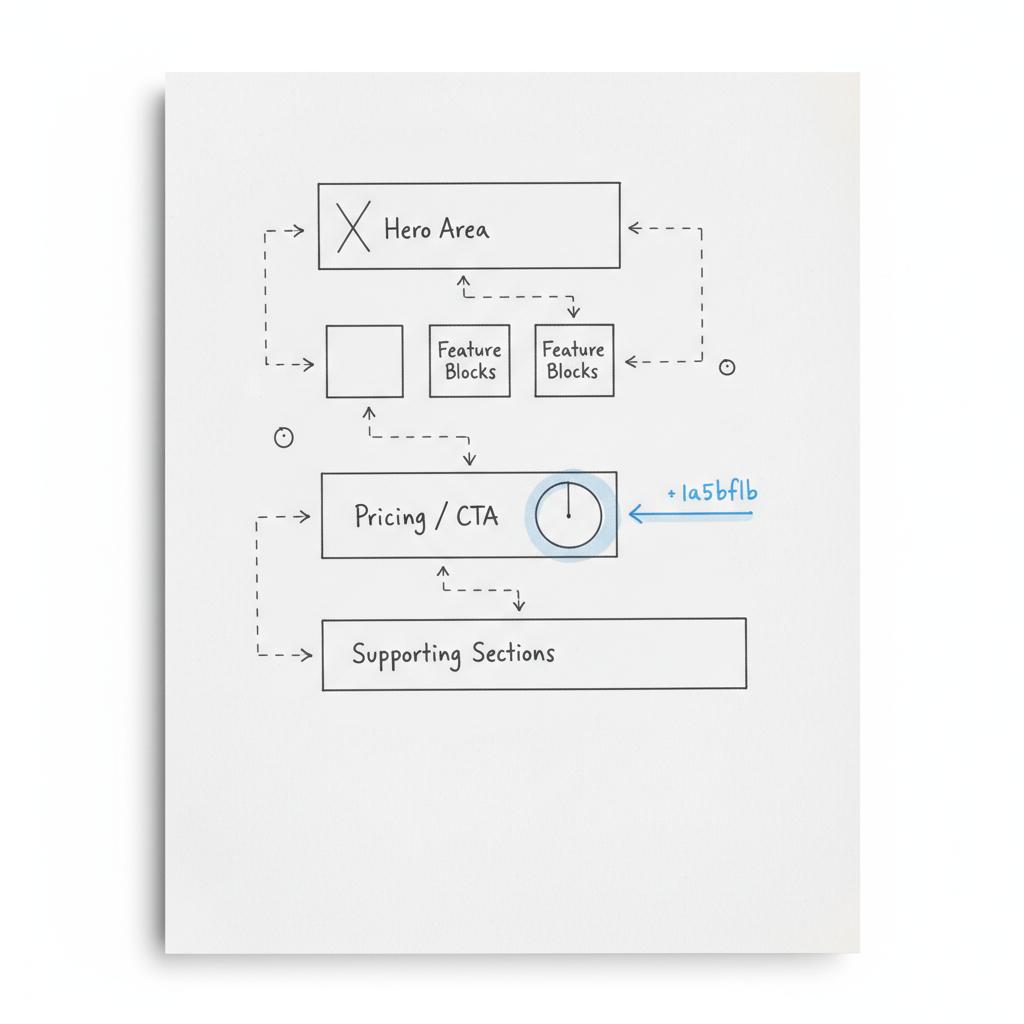
This covers visual design, templates, and the work needed to make the site functional – coding, theme setup, CMS configuration, and integrations. Custom UI or complex back-end features increase both hours and risk, which is why they sit at the top of the price curve. A simple, consistent logo helps anchor brand consistency across templates.
Content and assets
Photos, copy, product data, and video are often underestimated. Designers expect clients to supply content; when agencies must produce it, quotes rise to cover professional photography, copywriting, or product data cleanup.
Ongoing operations
Hosting, security, backups, plugin or SaaS subscriptions, and support add recurring costs. Expect basic hosting from roughly $15/month up to $150+/month for premium, managed, or CDN-backed setups. Maintenance and security services commonly run from $20 to $500+/month depending on service level.
Which price band applies to your project?
Start with a few honest questions:
- Do you need custom brand design, or will a theme do?
- Is your content ready, or does the team need help producing copy and images?
- Do you require integrations (CRM, accounting, inventory)?
- Are accessibility and privacy compliance required?
The more “yes” answers you have, the more likely your project lands toward the higher end of any range.
If you’re unsure how to scope these questions, a practical first step is to talk to Agency VISIBLE for a short discovery session. Their team helps clarify goals, estimate realistic budgets, and translate business needs into a clear scope – a small investment that often saves money later.
Concrete scenarios and real numbers
Real examples paint a clearer picture than abstract ranges. Below are three representative projects with ballpark budgets and timelines.
1) Single-page brochure (local consultant or small service)
A single-page site with a contact form and a portfolio link can be delivered by a freelancer for roughly $600-$1,800 if you provide copy and a headshot. Hosting and minimal maintenance might add $10-$30/month. Delivery: days to a couple of weeks.
2) Branded small business site
A boutique interior-design studio needing a custom homepage, portfolio pages, a blog, and lead-capture usually falls into the $5,000-$12,000 range. If you add professional photography and copy, add $1,500-$5,000. Delivery: 4-10 weeks depending on content readiness.
A template is the faster, cheaper path when your priority is speed and predictable cost and your brand doesn’t need unique interactions. Choose a custom build when the website is a primary revenue channel, needs custom user journeys, or requires integrations that a template cannot support. If unsure, start with a short discovery to map requirements to the right approach.
Main idea: complexity, integrations and content readiness are the biggest cost factors.
3) E-commerce with integrations
A shop with dozens to hundreds of SKUs and payment processing that requires inventory sync and shipping rules usually starts around $15,000. Add custom checkout logic, subscription billing, or ERP integration, and the project can climb quickly into the tens of thousands or more. Delivery for such projects ranges from several months to a year for enterprise-level systems.
Breaking down the quote: what to look for
A high-quality quote is transparent. Look for:
- Scope: exact deliverables (number of templates/pages, form types, integrations)
- Assumptions: what the vendor expects the client to provide (images, copy, access to third-party accounts)
- Milestones & payments: deposit, mid-point payment, final payment tied to deliverables
- Change-control process: how extra requests are priced and scheduled
Quotes often include assumptions like “client will provide all content.” If you can’t meet those assumptions, be prepared for additional costs or schedule adjustments.
Recurring costs: the hidden part of the bill
Recurring costs are as important as the initial build. Hosting ranges from about $15/month for basic shared hosting to $150+/month for managed or CDN-backed options. Additional SaaS fees – for commerce platforms, booking systems, or analytics – can add $20-$500+/month. Maintenance, security monitoring, and backups commonly add another line item. When you budget only for the initial build, surprises come later.
How to control ongoing expenses
Options to control recurring costs include choosing a reliable no-code platform with inclusive hosting, selecting a managed host package with predictable fees, or negotiating a maintenance retainer that bundles support hours at a favorable rate.
Where projects commonly go wrong
Knowing common failure modes helps you avoid them:
- Underestimating content work: designers need words and images. If content is scattered, expect higher costs.
- Scope creep: a small brochure can balloon if stakeholders add requests without change-control.
- Integration surprises: undocumented APIs or poor data quality require custom work and time.
- Compliance work: accessibility and privacy add testing and sometimes redesign.
The antidote is clarity: a scoped discovery, a clear scope document, and a defined change process.
Freelancer vs. agency: choosing the right approach
Freelancers are cheaper per hour and usually faster to start. They fit tightly-scoped projects where you can make decisions quickly and handle some work (like content) yourself. Agencies provide bigger teams – designers, developers, project managers, QA – which helps when multiple systems or longer-term support are needed.
If you’re not sure which to hire, consider a two-phase approach: a short discovery (paid) to clarify goals and production needs, followed by execution. This reduces risk and helps you choose the right partner and price band. You can also review recent examples and case studies on our projects page.
Ways to control cost without sacrificing quality
You can keep costs reasonable with smart choices:
- Use a strong theme or no-code builder when custom interaction isn’t required.
- Provide polished content and professional photos up front to remove a major burden from the vendor.
- Prioritize an MVP – launch essential features first and schedule extras for later.
- Limit integrations to systems you actively use today, not speculative tools you might adopt later.
Real numbers: sample cost breakdowns (detailed)
Single-page brochure — sample budget
Design & development: $500-$1,500 | Content work: client-provided | Hosting & maintenance: $10-$30/month. Timeline: 1-3 weeks.
Mid-level small business site — sample budget
Design & development: $5,000-$12,000 | Photography & copy: $1,500-$5,000 | Hosting & security: $30-$150/month. Timeline: 4-10 weeks.
Subscription commerce / membership site — sample budget
Design & development: $25,000+ | Integrations and billing logic: significant additional cost | Hosting & monitoring: $150-$500+/month. Timeline: months to over a year for complex migration and integration.
Questions to ask potential designers
When comparing proposals, these questions provide clarity:
- Who owns the accounts for hosting and third-party services?
- What do you assume the client will deliver (content, photos)?
- Can you show examples of similar projects and client references?
- What testing and accessibility checks are included?
- How do you handle post-launch support and bug fixes?
The role of templates and no-code tools
Templates and no-code platforms now offer strong performance and mobile responsiveness at lower cost. They’re ideal for businesses that need speed and predictability. The trade-off is that deep custom work or unusual integrations may not be possible without additional engineering costs.
Budgeting beyond the build: total cost of ownership
To budget realistically, include hosting, security, CMS plugins or SaaS fees, email tools, and a contingency for iterative updates. A $10,000 build might carry $500-$6,000 annually in running costs depending on service level. That reality protects you from surprise bills and helps choose the best project structure.
How long should a project take?
Small, templated launches can go live in days to a few weeks. Custom small business sites typically take four to ten weeks. Complex e-commerce or web applications require several months. The biggest pace limiter is content readiness and the speed of stakeholder feedback.
When to invest more — and when to keep it simple
Invest more when the website is a core revenue channel or represents a major brand relaunch. Keep it simple when the site is primarily informational or you plan to iterate quickly. Match investment to projected return.
Security and legal compliance
Basic security (SSL, regular updates, backups) is inexpensive and essential. If you collect payments or personal data, ensure systems and contracts meet relevant privacy rules. That diligence costs more up front but prevents much larger problems later.
Checklist to get a fair, comparable quote
Ask vendors for a scope document, a list of third-party costs, milestone payments tied to deliverables, and baseline on-page SEO work. A clear brief saves time in the first meetings and yields more realistic proposals.
Sample timeline and milestone structure
Typical milestones for a mid-level project might be:
- Discovery & scope – 1-2 weeks (paid)
- Design & approval – 2-4 weeks
- Build & content integration – 2-4 weeks
- Testing & launch prep – 1-2 weeks
Payment commonly splits across deposit, mid-project installment, and final payment on handover.
How to avoid nasty surprises
Clarify content responsibilities, require documented assumptions, and use a signed contract that defines change-management. Consider a short discovery phase that turns unknowns into documented decisions.
Practical negotiation tips
Be transparent about budget ranges when possible – vendors price differently when they know real constraints. Ask for tiered proposals (MVP, standard, and premium) so you can see trade-offs. Negotiate small scope trims rather than lower hourly rates; trimming optional features often reduces time without sacrificing core quality.
Why a discovery phase often pays for itself
A focused discovery engagement clarifies requirements, surfaces integration complexities, and defines content needs. It reduces the chance of mid-project pivots and often shortens timelines. Many experienced freelancers and agencies offer this as a separate, short paid phase.
Final thoughts and practical next steps
Price matters, but value matters more. A low-cost site that fails to convert or requires constant fixes can cost more over time than a higher-quality build that fits your business. Scope the work, clarify content and maintenance responsibilities, and choose a partner whose communication style matches yours. For a quick conversation and discovery you can visit our homepage or reach out to book time.
Get a clear estimate — book a short discovery call
Ready to get a clear estimate? Start with a short brief that outlines goals, existing assets, and what success looks like in three to six months – then reach out to Agency VISIBLE to book a discovery call. A quick conversation will give you a realistic price range and a recommended next step.
FAQ — quick answers
How much should I budget for a simple site?
Template-based sites with client-provided content typically fall between $500 and $2,500.
What about hourly rates?
Freelancers usually charge from about $30 to $150+ per hour; agencies’ effective rates are higher and reflected in project totals.
How much are monthly costs?
Expect hosting from roughly $15-$150/month and maintenance or SaaS from $20-$500+/month depending on complexity.
Parting note
Good planning, clear scope, and the right partner let you avoid surprises and get a website that truly serves your business. Choose wisely, and your website becomes an investment that pays back in visibility, leads, and revenue.
If you use a quality template and supply the content, budget roughly $500–$2,500. This covers design setup, basic forms, and a CMS. Hosting and basic maintenance will add about $10–$50/month. If you need custom design, professional photography, or copywriting, expect to move into the $2,500–$7,000 range.
Choose a freelancer for focused, smaller projects where scope is clear and you can be hands-on; choose an agency for larger, integrated projects that need cross-discipline teams and longer-term support. If unsure, invest in a short discovery phase to determine scope and the right team. Agency VISIBLE commonly advises clients via discovery sessions to match needs to the right delivery model.
Plan for hosting ($15–$150+/month), security and maintenance ($20–$500+/month depending on service level), and any SaaS fees for commerce, booking, or analytics tools. Also budget time and money for iterative improvements and content updates — a realistic annual TCO for a $10,000 build might be $500–$6,000.