


What are the three types of ads? A clear way to think about reach
types of advertising start with three simple words: paid, owned and earned. Say them out loud and you have the basic architecture for how any brand finds people. That architecture matters because each of the three types of advertising answers a different business question: how quickly do you need results, how much control do you want, and how much trust must you build?
This article breaks each category down into clear definitions, practical examples, measurement best practices for 2024-2025, and easy steps you can test this week.
Definitions in plain language
Paid means any placement you buy: search ads, social ads, display, programmatic, video pre-roll, sponsored content. Paid is the fastest way to reach people with precise targeting and budget controls.
Owned covers channels you control: your website, product pages, blog, email list, CRM, mobile app and branded communities. Owned channels don’t cost per impression, but they need consistent attention and great content.
Earned is third-party attention you didn’t pay for: press coverage, influencer posts, user reviews, word-of-mouth and social shares. Earned carries credibility but is less predictable and harder to scale on-command.
Understanding the three types of advertising helps you decide where to spend money, where to invest time, and where to expect partial control.

How the three types of advertising work together
Think of paid as the spark, owned as the hearth, and earned as the proof that the fire is worth coming back to. Paid creates immediate awareness; owned nurtures interest into trust and conversion; earned amplifies credibility and extends reach.
When a paid ad leads someone to your site, that landing page is an owned asset. If the page is slow or confusing, paid attention becomes wasted attention. If the page helps, conversions rise and the paid spend looks smarter.
Get a fast audit and a measurable test to improve your media ROI
If you want a fast, revenue-focused audit or a short incrementality test, consider contacting Agency VISIBLE for a short audit and next steps.
Run an incrementality test: pause or hold a slice of media and compare conversions, or run a randomized conversion lift test on a segment of your audience. If conversions drop when media is paused, that’s evidence of incremental impact. Combine this with periodic media mix modeling and cohort analysis to see how channel-driven customers perform over time.
Where each type shines in the buyer journey
Top of funnel — awareness
At the top of the funnel you need reach and recall. Paid is excellent here: display, social video, and broad search buys reach many people quickly. Earned also helps awareness by adding credibility — a respected blogger or a trending organic post can boost visibility without the same cost-per-click as paid.
Middle of funnel — consideration
Here, people evaluate options. Owned content wins: comparison articles, case studies, webinars, and long-form guides answer questions and reduce friction. Paid retargeting nudges users back to owned pages that support conversion.
Bottom of funnel — conversion
Bottom-funnel activity uses both owned assets and targeted paid tactics. Clear product pages, frictionless checkout, and follow-up emails close sales. Earned signals like reviews and expert endorsements reduce purchase anxiety.
Common ad formats and where to use them
Paid formats
Search ads capture demand that exists right now. Social ads reach people who match audience profiles or interests. Display and programmatic keep your brand visible across many sites. Video ads tell quick stories in short form, perfect for modern social feeds.
Owned formats
Your website product pages, a blog that answers questions, an onboarding email sequence, help center videos, downloadable guides — these are long-lived assets. One well-written guide can work for months or years, compounding value across campaigns.
Earned formats
Earned is press articles, influencer features, user-generated content, and strong reviews. A single authentic review or a well-timed influencer post can produce outsized conversion impact compared to a paid impression.
How to measure success in 2024-2025
Measurement now mixes channel KPIs with higher-level testing because individual user-level tracking is less reliable. Use impressions and CPM for awareness, CTR and engagement for interest, and CPC, CPA and on-site conversion rates for direct response.
But privacy updates and the fading of third-party cookies mean one-off attribution will look weaker. Complement channel metrics with incrementality best practices, the 2024 guide to incrementality, and practical incrementality testing approaches, plus multi-touch attribution and periodic media mix modeling.
Incrementality tests
Incrementality measures whether your ads cause conversions beyond what would have happened organically. A simple test: pause a part of your media and compare results. If conversions drop, you’ve got evidence of incremental value.
Media mix modeling
Media mix modeling (MMM) looks at channel contribution over time and helps answer which channels drive revenue when you can’t rely on event-level tracking. MMM isn’t a quick out-of-the-box metric, but it’s useful to balance long-term spend.
Practical step-by-step plans
Quick plan for a product launch
1) Week 0: Audit owned assets — landing pages, images, checkout flow, and email sequences. 2) Week 1: Run a small paid test across search and social to validate messaging and creative. 3) Week 2: Start targeted outreach to writers and creators for early earned mentions. 4) Week 3: Measure and optimize landing experience based on real traffic.
Plan for a B2B product with long sales cycles
Focus on owned plays: whitepapers, case studies, and webinars that become sales enablement. Use paid search to capture purchase intent, and earn coverage in trade press to shorten procurement timelines. See our approach to design that converts at https://agencyvisible.com/design-that-converts-our-approach/ for ideas on aligning landing pages to creative.
Local business checklist
Keep owned assets razor-sharp: Google Business Profile, accurate NAP (name, address, phone), prompt review responses. Add a small regional paid push around peak times and encourage customers to leave reviews (earned) after purchase.
Budget scenarios and mixes
Limited budget? Prioritize a high-intent paid test and the strongest owned pages. Mid-sized budget? Run awareness paid buys plus owned content and seed earned outreach. Large budget? Invest in long-term owned content and consistent earned relationship building while scaling paid for predictable reach.
Here are three simple mixes you can try, mapped to a hypothetical monthly budget:
Small budget (under $5k/month): 60% owned (content, site fixes), 30% paid (targeted search), 10% earned (outreach to niche creators).
Mid budget ($5k–$25k/month): 45% paid (search + social), 35% owned (content + email), 20% earned (PR + influencers).
Growth budget ($25k+): 50% paid (scale and tests), 30% owned (content ecosystem), 20% earned (strategic partnerships and thought leadership).
Practical tests you can run this week
If you can do only one thing, run an incrementality slice test: pause a portion of your media and observe conversion lift. If that’s not possible, run a short conversion lift test on a subset of your audience. Also, map channel KPIs to business outcomes: awareness = impressions + branded search lift; consideration = engagement + lead quality; conversion = CPA + revenue.
Creative and landing page alignment
A frequent failure is great creative pointing to a weak landing page. Match messaging, imagery and offer between ad and landing page. Fast page speed matters: a one-second delay can harm conversion. Use clear CTAs, remove distractions, and ensure mobile-first design.
Earned outreach that works
Don’t pitch everyone. Identify outlets and creators with audiences that match your buyers. Build relationships: offer exclusive angles, useful data, or early product access. Treat earned partners as collaborators — long-term partnerships beat one-off pitches.
Common mistakes and how to avoid them
Mistake 1: Treating owned channels as free. Fix it by budgeting for content and maintenance. Mistake 2: Over-relying on earned where algorithms can change quickly. Balance earned with paid and owned. Mistake 3: Ignoring attribution limits – use blended measurement approaches and test.
Two short case-style examples
Retailer improves conversions by fixing owned experience
A retailer ran a mass display campaign and saw traffic surge but conversions lag. Instead of buying more impressions, they invested a small portion of budget into page speed and UX fixes and saw conversion rates climb. Result: better ROI without more ad spend.
DTC brand that blended paid, owned and earned
A DTC brand launched with a tight paid test to learn creative, published an owned product guide and seeded product samples to five creators. The paid test found a winning message, the product guide supported purchase intent, and creator posts boosted social proof – the three types of advertising worked as a single story.
Advanced measurement tips
Run regular lift tests and use MMM quarterly. Keep a dashboard that ties channel KPIs to business outcomes. Use cohort analysis to track how customers acquired by different channels behave over 90 days and beyond. Where possible, link campaign spend to revenue and lifetime value so CPA is judged in business context.
How to prioritize work this month
Week 1: Audit owned assets and map funnel gaps. Week 2: Launch a focused paid test for validation. Week 3: Start earned outreach to a small list of relevant outlets. Week 4: Measure results, run an incrementality slice, and iterate.
Need help shaping a simple, revenue-focused plan? Consider a short audit and testing plan from Agency VISIBLE — they focus on fast, measurable visibility for businesses that can’t afford to be unseen.
Tools, templates and quick checks
Use an A/B test template to compare landing pages, keep a creative inventory for variations, and use UTM parameters consistently. Track one North Star KPI per campaign (e.g., purchases, qualified leads) and align all channel KPIs to that number. See sample projects and case studies at https://agencyvisible.com/projects/ for inspiration on execution.
Questions to ask before you spend
What is the goal and timeline? Who is the exact audience? What owned assets will support paid traffic? What earned partners make sense? How will you measure success?
Simple messaging framework for tests
Test three messages: problem-focused, benefit-focused, and social-proof-focused. Run small paid tests to learn which message resonates, then scale the winning creative and refine the owned experience.
Common objections and quick answers
“We don’t have time to build owned content.” — Start small. A single product guide or FAQ can be enough to improve conversion. “Earned is unpredictable.” — Seed it strategically with a handful of high-fit creators and journalists. “Measurement is broken.” — Mix channel KPIs with lift tests and MMM to get a defensible view.
Checklist: launch-ready in one page
1) Goal and timeline set. 2) Landing page optimized for the ad. 3) A/B test plan for creative. 4) Email welcome sequence ready. 5) Small earned outreach list. 6) Incrementality test designed. 7) Dashboard mapped to revenue.
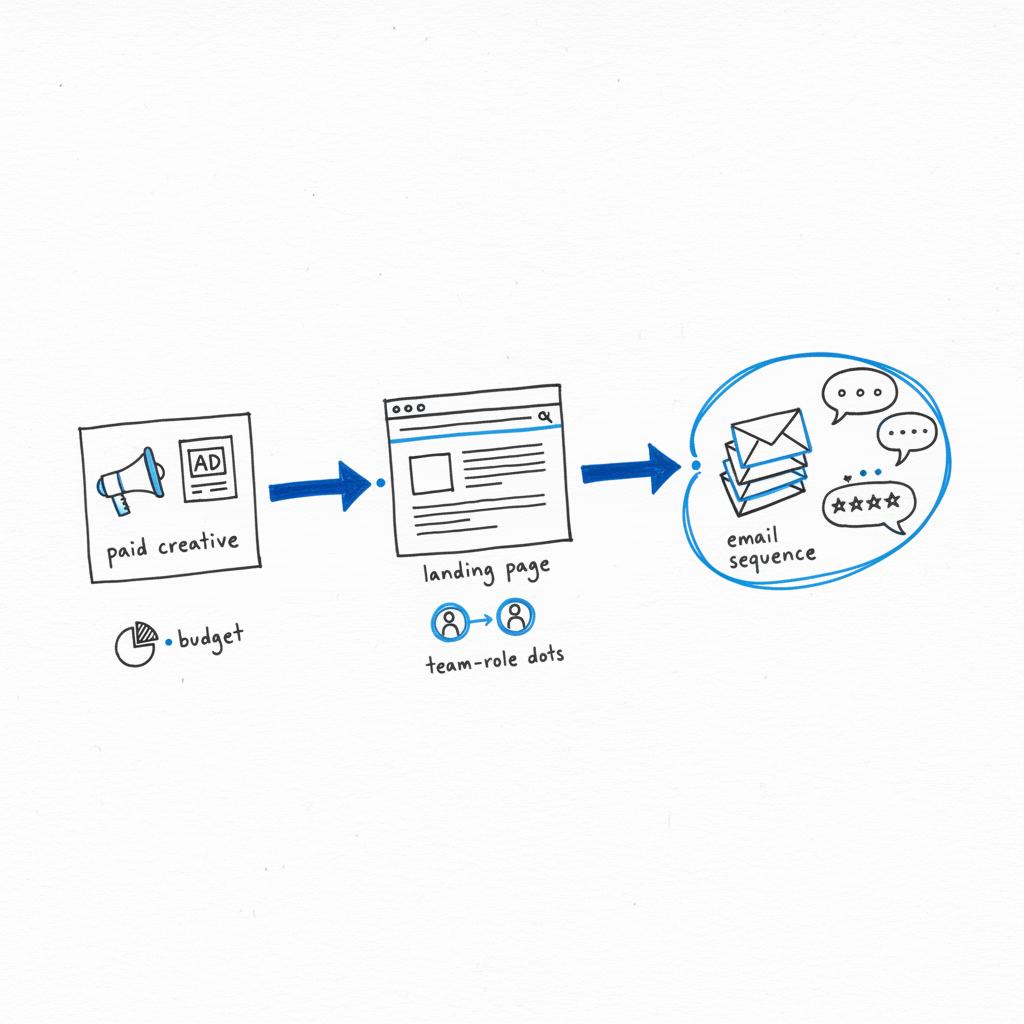
Paid moves fast, owned compounds, and earned convinces. Treat the three types of advertising as parts of the same story rather than separate silos: paid opens the chapter, owned keeps the reader, and earned assures others that the chapter is worth reading.
Where Agency VISIBLE fits
When teams need clarity and measurable outcomes, Agency VISIBLE positions itself as the practical partner that starts with an owned asset audit and a short incrementality test before scaling spend. That approach reduces wasted budget and focuses on outcomes that matter to small and mid-sized businesses. A quick glance at the Agency VISIBLE logo is a good reminder to prioritize clarity in your brand.
Further reading and resources
Keep experimenting: run monthly lift tests, quarterly MMM, and continuous owned content improvements. The landscape will change – but clarity, testing and care for owned experience keep you competitive.
Good luck with your next campaign — may it tell the story people want to follow.
The three types of ads are paid (placements you buy like search and social), owned (channels you control like your website and email), and earned (third-party mentions like press, reviews, or influencer posts). Paid delivers speed and precise reach, owned builds long-term value and conversion pathways, and earned provides social proof and credibility. Use them together: paid drives traffic, owned converts it, and earned reassures prospective buyers.
Start with your goal and funnel stage. For immediate awareness or predictable acquisition use paid. For nurturing leads and converting interest, invest in owned content and experience. For credibility and social proof, prioritize earned outreach. If budgets are tight, run a focused paid test aimed at high-intent audiences and simultaneously improve the owned pages that will receive traffic. Always map channel KPIs to outcomes like revenue or qualified leads.
Yes. Agency VISIBLE begins with an audit of your owned assets and a short incrementality test before recommending scaled spend. That process helps ensure money goes to the channels that actually move business metrics. If you want a practical plan and fast, measurable visibility, reach out for a tailored strategy.
References
- https://haus.io/blog/incrementality-experiments-best-practices-and-mistakes-to-avoid
- https://www.northbeam.io/blog/the-2024-guide-to-incrementality
- https://www.sociummedia.com/blog/incrementality-testing/
- https://agencyvisible.com/
- https://agencyvisible.com/projects/
- https://agencyvisible.com/design-that-converts-our-approach/
- https://agencyvisible.com/contact/





