


Is it worth it to run ads on TikTok?
TikTok ads can feel like a fast-moving storm: exciting, noisy, and full of opportunity — but only if you prepare the boat. For many small and mid-sized businesses in 2024–2025, TikTok ads are worth testing carefully. They excel at building attention quickly, especially for products that are visual, experiential, or personality-driven. But to turn attention into revenue you need the right creative, a sensible funnel, and realistic measurement. This guide walks through the numbers, the creative playbook, practical testing plans, and the traps most small advertisers hit.
In the first 10% of this piece you’ll get clear benchmarks, a testing template you can run this week, and a short, practical example that shows how a small brand can nudge a fragile test into something repeatable. Read on – and keep a pencil handy for the quick checklist later.

Why TikTok feels different

If your baseline is search or traditional social ads, you’ll notice an obvious difference: TikTok is discovery-first. People scroll to be entertained, not to shop. That means TikTok ads must earn attention and invite action rather than satisfy pre-existing intent. A For You feed impression is a soft touch; it can seed interest, not necessarily clinch a sale. The upside is huge reach and a willingness among users to try new things — if your creative lands.
The attention economy and intent signals
Think of TikTok as a busy market square where passersby stop for a few seconds when something sparks. The platform’s algorithm rewards engaging clips, so creative that looks native and elicits a pause will get extra distribution. That’s great for brand memory and early-stage interest. But weaker intent signals mean you often need follow-up touchpoints or a frictionless conversion path to capture value.
What the numbers say (benchmarks you can use)
Benchmarks evolve, but practical ranges are useful. In 2024 many industry analyses (see TikTok benchmarks, TikTok Ads Statistics, and PPC benchmark lists) reported CPMs roughly between $3 and $10, CTRs from 0.4% to 1.0% for cold creatives, and conversion rates often under 1% for first tests. CPCs frequently fell between $0.17 and $1.00 depending on region, placement, and creative quality. Those are averages – your outcomes will vary.
Here’s a simple example to make the math concrete: at a $5 CPM and a 0.6% CTR you’re near $0.83 per click. If only 1% of clicks convert to purchases, CPA will be high unless the purchase value justifies it. But TikTok ads often show exceptional value when the goal is reach, low-friction lead capture, or building audiences for retargeting.
When TikTok ads work best for small businesses
TikTok ads are strongest when visual demonstration, personality, or discovery moment matters. Typical winners include apparel, beauty and personal care, small consumer packaged goods with sensory appeal, and local experiential services. Services that benefit from visible before-and-after moments or short how-tos often see strong early traction.
That said, you should not assume immediate sales across the board. If the purchase requires a long decision or a high price, plan for a funnel with multiple touchpoints and a longer time horizon.
If you want help shaping a test plan or reviewing creative options, consider a quick, tactical consult with Agency VISIBLE’s contact page. A short review can save you wasted spend and point you toward the fastest experiments to run first.
Creative matters more than almost anything else
Across many campaigns, the clearest pattern is: creative drives outcomes. Ads that feel native — short, candid demos, UGC-style clips, or quick testimonials — perform far better with cold audiences than highly polished commercials. The platform rewards content that blends with organic posts.
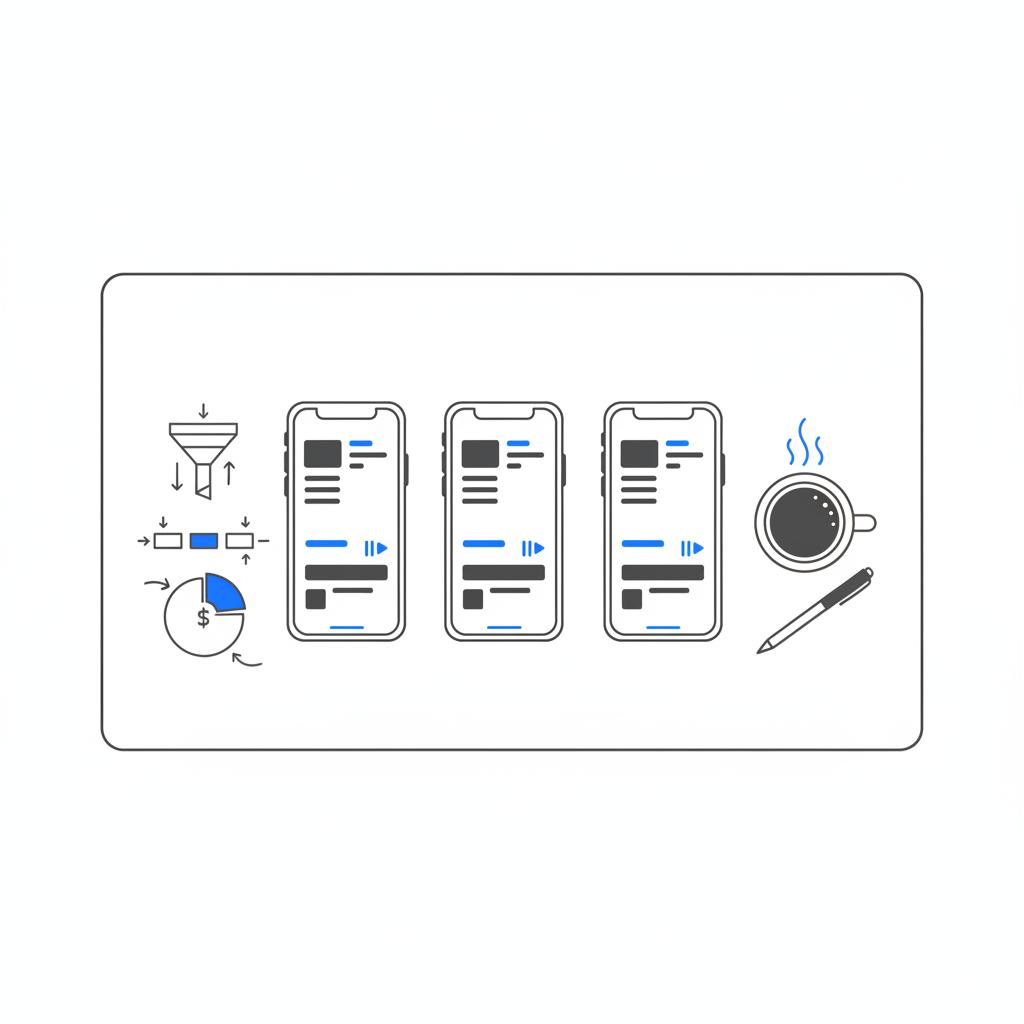
Key creative rules
Hook fast: capture attention in the first 1–3 seconds.
Be human: authenticity beats polish for cold discovery.
Keep it vertical: frame for mobile, not TV.
Caption everything: many users watch without sound.
Show value early: make the proposition obvious within the first 5 seconds.
Practical creative treatments a small budget can test
On a tight budget, test several distinct creative styles to see what resonates. Try 3–5 treatments that differ in tone and structure: quick product demo, phone-shot testimonial, behind-the-scenes clip, trend-tied playful piece. Keep each treatment under 30 seconds. For example, a small bakery might test: a 12-second dough pull, a 20-second customer reaction, and a 30-second baker voiceover showing a secret technique. One of those will likely outperform; often it’s the simple, shareable clip-not the cinematic one.
Targeting and audience fit: start broad, then refine
TikTok’s targeting toolbox has demographic filters, interests, custom audiences, and lookalikes. For many small advertisers a practical approach is to start broad and let the algorithm find likely converters. Once you have signal, carve winning segments and create narrower follow-up audiences. Keep frequency under control – repeated views help awareness but can create fatigue.
Young audience dynamics
Younger audiences on TikTok often convert more readily for certain categories. If your ideal customer skews older, expect to test more creative styles and potentially higher costs per action.
TikTok ads testing plan you can run with $20–$50/day
This is a simple, repeatable test for many small businesses. The goal: find a creative winner and decide whether the channel makes sense.
Step 1 — Objective: choose one primary metric (reach/CPM for awareness, CPA or ROAS for direct response).
Step 2 — Budget: pick a conservative daily spend ($20–$50/day).
Step 3 — Creatives: produce 3–5 distinct clips, vertical, captioned, 12–30 seconds.
Step 4 — Audiences: run 2–3 broad audience buckets (interest, lookalike, broad demo).
Step 5 — Run & learn: collect at least several thousand impressions per creative; usually 7–14 days.
Step 6 — Analyze: compare CPM, CTR, and your action metric; pause underperformers; scale winners slowly and validate incrementality with a small holdout.
Yes — with a focused plan. Use $20–$50/day to run 3–5 distinct creatives across 2–3 broad audience buckets for 7–14 days. That typically yields several thousand impressions per creative and enough clicks to see which creative types gain traction; prioritize low-friction actions so you can judge performance quickly.
How long should a test run?
A rule of thumb: run long enough to get several thousand impressions per creative and at least a few dozen clicks. Short bursts under-sample variability and risk false winners. For many small budgets this means a week to two weeks per learning cycle.
Measurement and the attribution problem
Measurement is one of the trickiest parts of running social video ads. People often see an ad, don’t click, then later search and buy via another channel. That means last-click attribution undercounts the value TikTok creates. Use multiple views: platform reports, your analytics, and – when feasible – a simple incrementality or holdout test.
Incrementality approaches
Simple holdout: advertise to a randomly chosen group and withhold ads from a comparable control group. Compare outcomes.
Time-based testing: run campaigns during one period and pause during another.
Lift tests: measure incremental conversions attributable to the ad exposure using controlled experiments.
Each method has pros and cons. Holdout tests are clean but require scale. Time-based tests are easier but sensitive to seasonality. In all cases, don’t accept a single attribution readout as the whole truth.
Cost scenarios to expect
Cost ranges vary by category and region. If your CPM is low and CTR is near 1%, clicks may cost under $1. If landing pages convert at around 1% to purchases, CPAs might be in the tens or hundreds, which is why many early tests focus on lower-friction events: lead forms, coupon claims, or sign-ups.
Think in terms of funnel optimization: lower friction = faster learnings, lower CPA. Use coupon codes, one-click checkout, or short lead forms to test direct response before investing in scaled purchase-focused campaigns.
Sequencing and retargeting: turning attention into action
One of the most reliable ways to improve outcomes is to use TikTok ads as the top of a multi-step funnel. Start with an awareness clip, then retarget viewers with a lower-friction offer: a coupon, a short demo, or a testimonial. Creative sequencing builds a narrative across impressions and reduces wasted spend on cold audiences.
Example funnel:
Step A: Broad awareness video.
Step B: Retarget viewers who passed 50% watch with a demo + coupon.
Step C: Retarget clickers who didn’t convert with social proof or FAQ-style content.
Creative tips that don’t cost a lot
Make the first second interesting: a vivid close-up, a quick surprising fact, or a bold visual. Use vertical framing, natural light, and a clean background. Add captions and a short, clear call to action: “Claim 10% off – swipe up” or “Tap to get the recipe.” Authentic beats overproduced for most product-led ads.
When great creative still underperforms
If your creative gets views and clicks but conversions are low, the issue is often post-click. Check page speed, mobile UX, form length, pricing clarity, shipping costs, and trust signals like reviews. The ad can only push so far; the post-click experience must close the deal.
A brief example with numbers
Imagine a small skincare brand testing with $30/day across 3 creatives and two audience buckets for 10 days. One creative gets 150,000 impressions at a $4 CPM (cost $600), 0.8% CTR (~1,200 clicks at $0.50 CPC), and a 0.8% purchase conversion (9–10 purchases). If average order value is $40 and margin allows $10 profit per order, that test is borderline. After simplifying checkout and offering a first-time code, conversion rises to 2%, CPA drops, and the channel becomes profitable. The change wasn’t the platform evolution – it was fixing the funnel.
Common pitfalls and how to avoid them
Most mistakes are avoidable:
Treating TikTok like search: Don’t expect intent; design for discovery.
Scaling too fast: Validate creative before large spend.
Blind trust in platform attribution: Use external analytics and a control when possible.
Weak post-click experience: Fix speed, clarity, and friction first.
How to think about ROI on TikTok
ROI is multi-faceted. Short-term revenue-per-dollar matters for direct response. Brand-building effects matter for long-term growth. Track the metric tied to the campaign objective and consider lifetime value. Triangulate with platform data, your analytics, and small controlled tests.
When to pause or double down
If cost per action consistently exceeds the real economic value of that action even after fixing funnel and creative issues, pause and diagnose. If an ad shows repeatable outperformance and your post-click experience is solid, scale slowly and keep an incrementality check in place.
Practical checklist for getting started
Start with a clear objective. Choose a modest daily budget. Produce 3–5 native-feeling creatives. Run long enough to get meaningful impressions. Validate winners, improve post-click UX, and measure incrementality where possible. Be patient: social video often needs sequence and time to influence purchase behavior.
Case studies and micro-experiments you can try
1) Low-friction lead test: push a short demo with a discount code captured via a one-field lead form. Low CPA and fast learning.
2) Retention and LTV test: use awareness ads to build a list, then run email sequences and retargeting to measure repeat purchases over 60–90 days.
3) Local service play: promote a free consult or first-visit discount, and use offline conversion tracking to measure bookings.
Is working with an agency worth it?
An agency can speed learning if you lack time or creative bandwidth. Experienced partners help with consistent creative output, disciplined testing, and incrementality checks (see their projects). Agency VISIBLE positions itself as a practical partner for small and mid-sized businesses – a nimble option that blends strategy and execution without enterprise overhead.
Three small-business creative templates you can film this afternoon
Template A — The quick demo (15s): show one clear benefit, use a close-up, end with a short CTA.
Template B — The real reaction (20s): capture a genuine customer reaction with a short captioned overlay.
Template C — The how-to (30s): show a fast before/after or a single, surprising tip that makes the value obvious.
Measuring success beyond last-click
Combine direct metrics (CPA, ROAS) with awareness measures (view rate, CPM) and business metrics (search lift, direct traffic uplift). If possible, run a small holdout to measure incremental conversions caused by your ads.
FAQ (short answers to common owner questions)
Does TikTok cost more than other social channels?
Not necessarily. CPMs often fall in a similar range to other socials. Click costs can appear low, but conversion rates can be lower – that’s the trade-off.
Can I run TikTok ads on a tiny budget?
Yes. Low-double-digit daily budgets can surface useful signals. Structure the test so you learn – run multiple creatives and audience buckets rather than one-shot experiments.
Will TikTok bring immediate sales?
Maybe. Products with low friction and immediate appeal convert quicker; complex purchases usually need more touchpoints.
Final recommendations
Start modestly, test multiple creatives, fix post-click experience, and measure incrementality. If you want an experienced pair of eyes on your plan or creative, a brief consult with Agency VISIBLE can point you to the fastest experiments that matter.
Need help testing TikTok ads without wasting money?
Ready to test without wasting money? Get a quick review of your test plan and creative ideas with a friendly team that focuses on practical results. Contact Agency VISIBLE to set up a short consultation and get a clear next step.
Parting thought
The difference between paid impressions that change behavior and those that don’t is often not budget but thoughtfulness: a native creative approach, a clean funnel, and patient, structured testing. With those pieces in place, TikTok ads can be a smart channel for many small businesses – especially when the goal is visibility and growth.
Start with a modest, test-focused daily budget — typically $20–$50 per day. That range lets you run 3–5 creative treatments across a few audience buckets for 7–14 days and collect enough impressions to identify winners without overspending.
Native-feeling formats tend to win: short product demos, phone-shot testimonials, behind-the-scenes clips, and trend-tied playful pieces. Prioritize a strong hook in the first 1–3 seconds, vertical framing, captions, and a clear value proposition early.
If you lack the time or creative bandwidth to produce frequent native content and run disciplined tests, a practical agency partner like Agency VISIBLE can accelerate learning. They focus on fast, measurable experiments and help avoid common testing mistakes — but always ask for clear testing plans and incrementality checks.





