Can small businesses use TikTok ads? Short answer: yes – but you need a plan, a testing mindset, and creative that speaks the platform’s fast, visual language.
In this guide you’ll find practical steps that any owner or small marketing team can apply right away. We walk through costs and ad types, show how to test without wasting cash, and explain measurement, attribution and scaling in plain language. If you want controlled experiments rather than wild guesses, this is the map.

Why TikTok ads for small business work – and what to watch for
TikTok ads for small business can be a powerful channel because the platform rewards native creativity and fast decision cycles. The same qualities that make organic content go viral also help paid creative break through: short, vertical clips, strong hooks, and simple visual stories. But success isn’t automatic. Expect platform minimums, a learning phase for the algorithm, and pricing that varies by region and objective.
In plain terms: TikTok ads for small business give reach and fast feedback, but you must treat early spend as learning money and not as a definitive profitability test.
Which ad types should small businesses try first?
Start simple. For many small teams, In-Feed and Spark ads are the easiest place to begin. They look like natural posts in the feed and can serve both awareness and direct response. Other formats—TopView, Branded Hashtag, Branded Effects—are useful but usually need more budget and production planning. Pick two formats and test them; don’t try them all at once.
Agency VISIBLE often recommends starting with In-Feed or Spark ads because they let you amplify content that already resonates organically. That approach saves production time and helps you learn faster.
Before we dive deeper, here’s one short rule of thumb: creative matters more than polish. A native, simple clip that feels like the rest of the feed typically outperforms a glossy, TV-style ad that feels out of place. A small visual tweak like a clear logo lockup can help brand recall without interrupting the native feel.
Often, yes. Short, tight clips with a strong 1–3 second hook tend to perform better on TikTok because the platform rewards quick attention and completion. Test both short and longer cuts, but prioritise short versions first—then amplify winners with Spark ads or small paid pushes.
How much do TikTok ads cost for small businesses?
There’s no single price. Benchmarks from 2024 point to CPMs often between $3 and $10 and CPCs between $0.25 and $4 depending on region and objective. Research on CPM and ad formats and reporting on campaign minimums show TikTok’s own campaign minimums commonly near $50 and ad-group daily minimums around $20. For wider market context, see the TikTok Ads Cost overview.
To make sense of those numbers, reverse-engineer from your business: what CPA can your margins support? If your margin allows for a $30 CPA, that is your guardrail. Run tests that respect that guardrail and measure toward it.
Budgeting and the learning window
TikTok’s algorithm needs time and data to optimise. Plan tests that run 7–14 days so the platform can gather enough events to stabilise performance. Launching a test for only one or two days usually yields noisy results.
Run multiple creatives at small daily budgets rather than putting all budget behind one creative. A simple framework: three creatives, each at the ad-group daily minimum, running for 10 days. Use the relative performance to choose winners.
Creative that stops thumbs: practical tips
Creative on TikTok is a different language. Short, vertical, and immediate beats long and explanatory. Here are practical habits to adopt.
Hook fast: aim to arrest attention in the first 1–3 seconds. Ask a question, show a striking visual moment, or start mid-action.
Think vertical: shoot vertical with a clear subject in the frame. Fill the screen in the first second.
Keep it short: many successful ads sit between 9 and 15 seconds. If you have a story that needs more time, test both the short version and a longer cut.
Use captions: a lot of people watch without sound. Add on-screen text to communicate the main point quickly.
Show the benefit: make outcomes visible. A product that solves a frustration is easier to sell when viewers see the problem and the solution in quick succession.
Repurposing organic posts as Spark ads is often the fastest path to a useful signal. If a post already performs well organically, boosting it gives you paid reach on creative that has proved emotional resonance.
Testing framework for small budgets
Testing is the heart of a sustainable TikTok ads program for small businesses. Treat each early spend as an experiment meant to teach, not to prove success at scale.
Here’s a repeatable testing playbook that fits modest budgets:
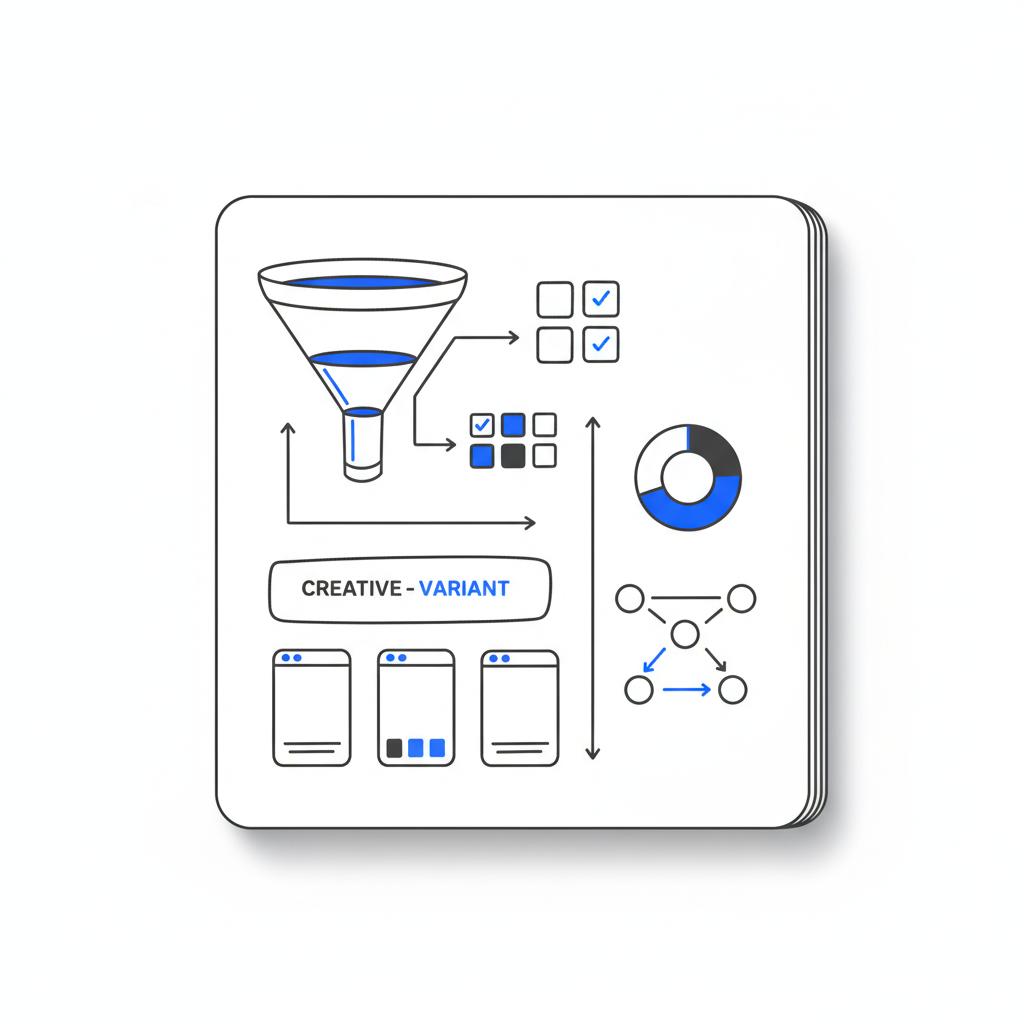
Day 0: prepare three creative concepts. Keep each film short, vertical and focused on a single idea. Prepare tracking: Pixel, UTMs and a dedicated landing page if possible.
Days 1–10: run three ad groups (one creative per ad group) with ad-group daily budgets near the platform minimum. Keep targeting sensible and avoid overlap between ad groups.
Days 11–14: analyse results on metrics that matter: CPA, cost-per-lead, ROAS tied to lifetime value. Pause the two weakest performers and reallocate to the winner. Refresh the winner with small variant edits every 2–3 weeks.
Repeat the cycle. The goal is to build a library of winning creative and audience pairings you can scale slowly.
Sample metrics to track
Track these across tests: CPM, CPC, cost-per-view, cost-per-lead, CPA, ROAS (if you can), view-through rate, and engagement rate. For awareness-focused tests, use view-through and watch-time; for direct response, focus on CPA and conversion rate.
Audience targeting: broad vs. narrow
Many small businesses default to broad targeting to get reach. That’s okay for awareness, but direct-response campaigns typically need tighter audiences to avoid waste. Use a mix of:
Interest layers to focus on topical relevance,
Lookalike audiences based on high-value customers, and
Custom audiences from web traffic and CRM lists.
Try the same creative across two slightly different audiences. Then test two creatives against the same audience. Patterns will emerge. That interplay between creative and audience is why we always test both variables.
Measurement and attribution: practical approaches
Tracking is messier than it used to be. Apple’s privacy changes and attribution windows add complexity. Your practical response is to make measurement probabilistic and grounded in server-side signals where possible.
Install the TikTok Pixel and validate it on critical pages. Add server-side event capture if you can. Use UTMs and a consistent landing page system to compare platform-reported conversions to your server logs. Expect discrepancies. Reconcile them, but don’t let perfect measurement prevent useful decisions.
When you see a mismatch
Compare three sources for each conversion: platform reports, your analytics (Google Analytics or equivalent), and server-side records. If TikTok reports more conversions than your backend, check for duplication, time-window differences, and cross-device behaviour. If your backend reports more, check for tracking failures on the platform side.
Scaling without exploding CPA
Scaling is a different skill than testing. Many small businesses see strong results at low budgets and then watch CPA rise when they increase spend. That’s normal. Auctions change as you add budget and new audience segments get involved.
A conservative scale path looks like this:
1) Increase budgets 20–30% at a time for winning ad sets. 2) Keep an experiment running alongside scale so you can compare. 3) Refresh creative frequently to combat ad fatigue.
If CPA rises as you scale, tighten audiences, refresh messaging, or split audiences into narrower segments. Expect some rising costs; plan for them.
Do-it-yourself vs agency help
Should you hire an agency? Many small businesses begin in-house to learn tone and audience quickly. An agency makes sense when you have clear goals, repeatable tests and a budget to scale. If you choose an agency, pick one experienced in short-form creative testing and transparent about measurement and fees.
For a low-key, partnership-style engagement, consider a team that focuses on building repeatable experiments and clear metrics rather than flashy campaigns. They should help you set up the Pixel, design tests, and translate organic winners into paid Spark ads.
When to call for help
Call for support when you’ve run 2–3 testing cycles and still don’t have a repeatable winner, or when you want to scale but lack bandwidth to maintain testing. A good agency can accelerate learning and reduce wasted spend.
Practical checklist before launch
Run these checks before you launch a test campaign:
• Pixel is installed and firing on key pages. • Conversion events mapped (purchase, lead, add-to-cart). • UTMs and dedicated landing pages in place. • Three short creatives ready. • Clear CPA target or lead-cost target based on margins. • Budget committed for at least 7–14 days.
Four common mistakes and how to avoid them
Mistake 1: Running a one-day test and drawing big conclusions. Fix: run tests for 7–14 days.
Mistake 2: Using overlapping audiences that compete in auction. Fix: segregate audiences and keep a testing plan.
Mistake 3: Relying only on platform-reported conversions. Fix: use UTMs, server-side events, and reconcile numbers.
Mistake 4: Neglecting creative refresh. Fix: plan small weekly creative variants.
Real micro case studies
Here are two short examples that show how small teams actually win on TikTok. See similar examples in our projects.
Case A: A neighbourhood bakery filmed three short clips — a hands-in-dough close-up, a baker’s morning routine, and a croissant slice slow-mo. The croissant slice ad proved best for web clicks. They ran it as a Spark ad, kept budget small, and scaled slowly. Their first-time-order CPA stayed within target because they tested patiently and refreshed visuals weekly.
Case B: A niche toolmaker focused on solving a single pain point with a 10-second demo. They split audiences into DIYers and trade professionals and tailored copy to each. CPCs were low; CPA climbed when they doubled spend too fast. The fix was narrower audience segmentation and a slow scale plan.
Content ideas that convert
If you need quick concepts that often work, start with these themes:
• Problem/solution clips that show a frustration then a fast fix. • Quick demos that highlight one tangible benefit. • Social proof: short customer reaction clips or before/after shots. • Behind-the-scenes storytelling that humanises the brand.
Write short on-screen captions that make the message clear with or without sound.
Creative production hacks for small teams
You don’t need a big studio. Some production tips:
• Use a modern smartphone with vertical frame. • Use natural light and simple stabilisation. • Keep cuts fast and the focal point obvious. • Add captions in-app or in post-production tools. • Save master files and make quick variants by changing copy and music.
Building a 14-day test: a practical template
Follow this template to run a low-cost, insightful experiment.
Day 0: Prepare creative and tracking. Day 1: Launch three ad groups with different creative, each at a small daily budget. Day 2–9: Monitor frequency, CPM and early conversion signals; don’t panic at volatility. Day 10: Review performance and identify the best creative. Day 11–14: Pause underperformers and reallocate budget to the winner; test a small variant on the winner.
Clear documentation of each test’s settings (audience, bid type, budget, creative assets) makes learning reproducible.
How to choose objectives and bid strategies
Pick objectives that match the metric you care about. If you want direct sales, optimise for conversions and ensure your conversion window aligns with your sales cycle. If you want leads, use lead gen forms for cheap volume. If you’re building awareness, choose reach or video view objectives.
When budgets are small, manual bidding rarely helps. Let the platform optimise within your CPA guardrails and focus on creative and audience tests instead.
Attribution experiments you can run
Set up a short attribution experiment to understand discrepancies. Run a restricted campaign to a single landing page with strict UTM rules. Compare TikTok numbers to server-side captured purchases and to Google Analytics. Note where windows differ and use that to adjust your reporting approach.
Local businesses and store visits
If you have a physical location, test TikTok ads for store visits with clear offers and short directions. Track redemptions with unique codes or ask customers how they heard about you. Local targeting plus a visible, immediate offer often converts well.
Long-term play: combine organic and paid
Organic and paid feed each other. Use organic content to test tone and formats. When something performs organically, amplify it with Spark ads. Treat organic reach as your test-bed and paid as the amplifier.
Troubleshooting common failures
Problem: high CPC but low conversion. Check your landing page speed, messaging match, and tracking. Solution: align creative and landing page tightly and reduce friction.
Problem: sudden spike in CPA after scaling. Check audience overlap, auction changes and creative fatigue. Solution: scale slowly and run fresh creatives.
How Agency partners can help without taking control
Working with a partner can be a force-multiplier if they help you build repeatable tests and transfer knowledge. A good partner focuses on creative testing, measurement hygiene and slow scaling. If you want a discreet, results-focused partnership, consider contacting a team that emphasises clarity and measurable growth.
Start a focused TikTok testing plan with expert support
Checklist to take action today
1) Set a modest budget that respects platform minimums. 2) Choose In-Feed or Spark for your first tests. 3) Produce three short vertical clips with a 1–3 second hook. 4) Run them for 7–14 days. 5) Use the Pixel and server-side events. 6) Measure CPA or ROAS relative to lifetime value. 7) Refresh creative as you scale.
Final thoughts
TikTok ads for small business can move from gamble to predictable channel if you treat early spend as education. Build simple experiments, measure carefully, and keep creative native to the platform. Over time, the knowledge you collect compounds – every test teaches you about hooks, audiences and messages that actually work for your customers.
If you take one idea away: plan your tests, guard your CPA, and keep learning.
Start with a modest budget that respects TikTok’s minimums: plan for a campaign-level test near $50 and ad-group daily spends close to $20. Run three parallel creatives at those small daily spends for 7–14 days to gather meaningful data. Treat this money as a learning investment and reverse-engineer your CPA target from margin and lifetime value before you scale.
Use the TikTok Pixel and validate that it fires on key pages, add server-side events where possible, and use consistent UTMs on campaign links. Run a short attribution experiment to compare platform-reported conversions with server-side records and analytics. Expect discrepancies and reconcile them rather than seeking perfect one-to-one agreement.
Consider agency help once you’ve run several test cycles and need to scale or to speed up learning. Choose an agency experienced in short-form creative testing, transparent reporting, and measurement hygiene. For a discreet partnership that focuses on results and learning, teams like Agency VISIBLE can help structure experiments and improve measurement while keeping your voice intact.