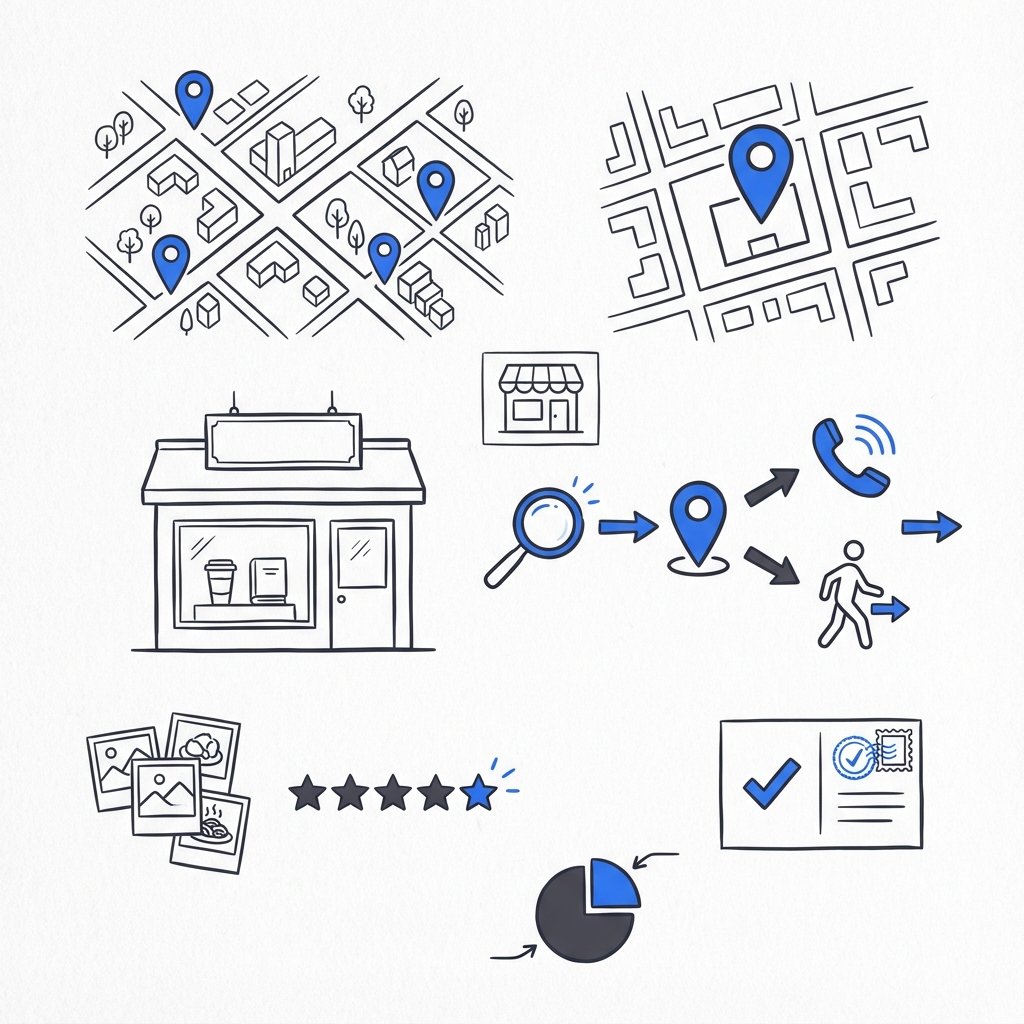
What’s the best advertising for a small business?
Short answer: A focused blend of intent-driven paid search, strong local presence, and low-cost retention work wins more often than big, flashy campaigns. This is the practical playbook for small teams who need predictable returns and a clear way to measure them.
small business advertising works best when it meets customers at three moments: when they’re actively searching, when they’re checking local credibility, and when you’re turning first-time buyers into repeat customers. This guide walks you through a simple 30-day test, how to measure results, and how to scale over the next 90 days while building retention systems that lower lifetime costs.
Get a simple, measurable 30-day advertising plan
Want help running your first 30-day test? If you’d like a partner who can set up tracking, manage a clean paid search run, and build simple email and referral automations, get in touch with Agency VISIBLE to talk through a compact, results-driven plan.
Why this approach works for small businesses
Small businesses don’t have infinite budgets or large teams. They need advertising that produces leads fast and keeps costs predictable. The best advertising for a small business balances three clear goals:
- Bring in intent-driven demand now (paid search, tightly targeted social).
- Capture local discovery and credibility (Google Business Profile, local listings, partnerships).
- Turn new buyers into repeat customers cheaply (email, referral programs).

That mix converts better for most small teams because it reduces waste: you buy attention where people are already looking, you make it easy for locals to find and trust you, and you rely on low-cost follow-up to boost lifetime value. A clear logo can help build recognition and trust in local listings.
How to think about channels
Every channel does something different. Paid search (Google Ads) captures people who have immediate intent. Local organic channels—your Google Business Profile, local SEO, and community outreach—deliver discovery and trust. Retention work (email, referrals) increases the ROI of every first sale. The logic is simple: spend where conversion is fastest and invest in systems that make each acquisition worth more.
Yes—sometimes. Trackable direct mail or a local offer can outperform paid search for certain businesses and offers, especially when the postcard reaches high-intent nearby customers and the offer is easy to redeem. The only way to know is by testing both channels for 30 days and comparing booked sales and revenue.
Plan your 30-day experiment
Begin with a single, clear question. A specific hypothesis gives you a measurable outcome. Good examples:
- “If I run Google Search ads for 30 days and optimize my Google Business Profile, which channel yields more booked appointments under $40 CPA?”
- “Does a $500 search budget produce leads that convert to paying customers more reliably than a targeted postcard drop?”
Pick two test channels: one paid, one organic/local. For paid, choose intent-driven search or a narrowly targeted social campaign. For local, choose Google Business Profile improvements, local SEO, or a trackable offline tactic like postcards with unique codes.
Set realistic budgets
Small budgets still work if you test intelligently. Typical starting ranges are:
- Paid search test: $300–$1,000 for 30 days, depending on local CPCs.
- Local investment: $200–$500 for GBP improvements, a small mailer, or partnership outreach.
Start at the conservative end if you don’t know local CPCs. Learn quickly, then iterate.

Build simple, reliable tracking
Tracking is the secret that separates guesses from decisions. For your 30-day run, record every lead’s source and outcome. That means:
- Install conversion tracking for calls, form fills, bookings or purchases.
- Use platform conversions (Google tags, enhanced conversions) and server-side options (Conversion API for Meta) where possible.
- Collect first-party data—email, phone, and a lead source field—so you can reconcile leads in your CRM or a spreadsheet.
For small businesses, first-party records beat platform-only attribution when privacy changes muddy the picture. A simple form field that captures campaign IDs or a dropdown that asks “How did you hear about us?” will save you headaches later. Recent research such as the SMB Marketing Report 2025 highlights common gaps in local marketing knowledge that make this first-party approach valuable.
Design a landing experience that converts
The path from ad or listing to action must be short and obvious. Don’t send paid traffic to your homepage unless your homepage is a focused landing page for that intent. Instead:
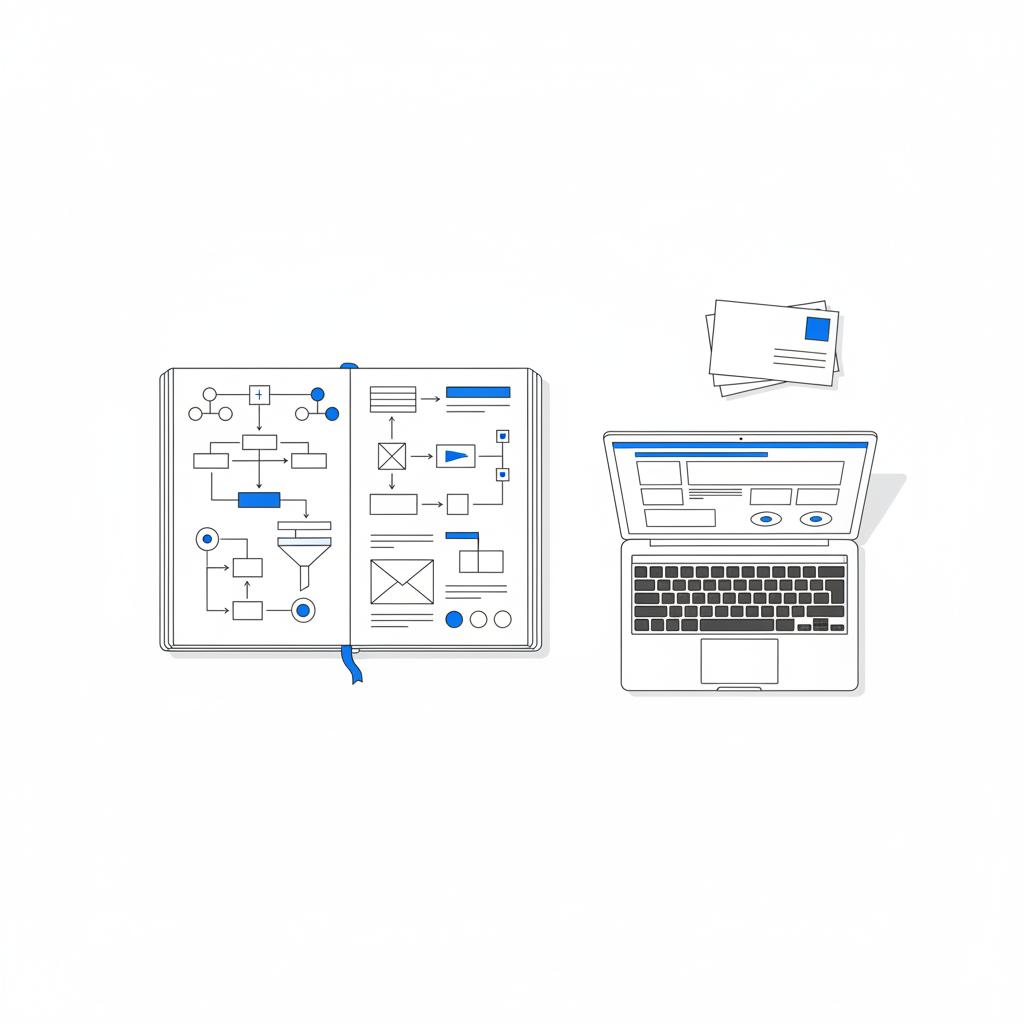
- Create a tailored landing page with one clear call to action—call, book, or request a quote.
- Match messaging between the ad and the landing page so visitors see continuity.
- Ensure your Google Business Profile photos, posts, and service descriptions reflect the same offer and visuals.
Run the 30-day test
Keep variables controlled. For paid search, limit keywords to a tight set (10–20 phrases) and use a small number of ad variations. Choose a clear bid strategy (manual bids or maximize conversions for small budgets). For the local channel, improve your Google Business Profile, publish a local offer, and run a small outreach (newsletter mention, social post, or postcards with a redeemable code).
Track each lead’s quality. Not all leads are equal: a cheap lead that never books is worse than a pricer lead who becomes a loyal customer. Categorize leads by outcome: inquiry, booking, first sale, repeat sale.
Measure cost AND quality
Cost per acquisition (CPA) matters, but so does lead quality. Ask yourself:
- Were calls real and from decision-makers?
- Did they book and show up?
- What was the average order value?
If possible, calculate short-term revenue per channel. With a 30-day test you won’t measure lifetime value perfectly, but you can track initial conversion rates and early revenue—enough to make a confident decision about what to scale. For additional practical local strategies, see examples like Top 7 digital marketing strategies for local small businesses.
Example—A bakery’s 30-day test
One concrete example helps make the idea stick. A small bakery ran a 30-day test comparing Google Search ads for “birthday cake near me” with Google Business Profile improvements and a postcard drop to 1,000 local households. Results:
- Google Ads: 40 visits → 8 orders, average order $45, CPA $62.50.
- Postcard: 10 orders, average order $35, CPA $25.
- Google Business Profile organic discovery: 12 phone calls → 6 orders, average order $55 (effective CPA lower than the ad suggests after factoring booking rates).
Conclusion: GBP and local tactics yielded higher-quality bookings. The bakery scaled GBP work, tightened paid keyword targeting, improved the ad-to-landing-page match, and launched a simple email flow to turn first-time buyers into repeat customers.
Tip: If you want this kind of sensible testing run for you, consider a quick consult—Agency VISIBLE helps small teams set up clean tests, manage search campaigns, and build simple email & referral automations to turn early wins into ongoing growth. Learn more and schedule a short call here.
Decide after 30 days—and scale over 90
At the end of 30 days, compare channels by both volume and quality. The usual playbook:
- If paid search produced more booked appointments at an acceptable CPA, increase budget slowly and broaden keywords carefully.
- If local organic produced more reliable, high-quality leads, double down on GBP edits, reviews, and partnerships while testing a reduced paid spend to preserve volume.
Scale modestly over 90 days and reinvest early profit into retention tools that lower long-term acquisition cost.
Protect your measurement from platform changes
Attribution has changed. Platforms now hide or delay signals. Don’t panic—adapt. Use server-side or enhanced conversions and collect campaign IDs in forms. Reconcile platform data with your CRM exports and focus on measurable outcomes (bookings, purchases) rather than last-click attribution claims.
Simple server-side approach for small teams
Store a campaign ID with the lead record when someone fills a form. Send that ID to Google or Meta via server-side conversions and save it in your CRM. At month’s end, match your CRM records with platform reports to understand the true conversion picture.
Retention: the low-cost engine
Once you have customers, you can spend much less to get another. Email sequences, referral programs, and simple follow-up automations shrink future CPAs dramatically.
Essential email flows
- Confirmation: immediately after booking or purchase.
- Reminder: day-of appointment reminders reduce no-shows.
- Follow-up: short feedback form and a small discount for next time.
- Welcome series: a friendly 3-email sequence that introduces your brand and offers a reason to return.
These flows are cheap to set up and can be automated in an hour on most platforms.
Referral programs that work
Keep referrals simple: offer a fixed credit when a referred customer books. Make sharing easy: an emailed referral link, a shareable discount code, or a printed card. Track referrals with a “who referred you?” field in the booking form and automate thank-you messages when a referral results in a sale.
Offline moves that still deliver
Low-cost offline tactics—targeted direct mail, local partnerships, sponsoring a community event—work best when they’re trackable. Use a unique coupon code, a dedicated URL, or a phone number that only appears in the mailer. Combine offline offers with an online landing page to measure response.
How much should you spend?
No one-size-fits-all answer. Costs depend on industry and geography. A conservative starting point for very small businesses is:
- $300–$700 monthly for search tests.
- $200–$500 for local improvements and a few offline touches.
As tests prove out, increase paid spend slowly and reinvest profits into retention tools. See current marketing stats and channel ROI trends at HubSpot’s marketing statistics.
Common pitfalls and how to avoid them
- Don’t change the landing page mid-test unless you’re testing that change explicitly.
- Don’t run many paid experiments at once without someone to keep the setup clean.
- Don’t ignore manual attribution—ask customers how they heard about you and record it.
Small teams often underuse manual data collection; it’s cheap and massively helpful when platform reporting is noisy.
What to automate first
Automate confirmation and reminder emails, and the referral thank-you flow. For paid channels, automated rules to pause poor-performing keywords help, but use rules conservatively—they can be blunt instruments.
Tools that are enough (and affordable)
A small CRM, a landing page builder, and the standard analytics and conversion tools from Google and Meta will usually cover the needs of the first months. Use these tools to collect first-party data so you can export a customer list and compare acquisition cost to revenue in a spreadsheet.
Practical FAQs you’ll want answered
How long should the test run?
Thirty days is a practical window: it shows week-to-week variation and gives paid channels time to stabilize. Too short is noisy; too long may hide early signals.
How many keywords should I bid on?
Start small: 10–20 tightly targeted phrases that match the way customers search. Broaden only after you identify high-converting phrases.
How to measure phone leads?
Use call tracking or train staff to ask callers how they heard about you and record that in the booking system. A simple manual field can be as effective as paid call-tracking for small budgets.
Final checklist to run this week
- Pick one paid channel and one local organic move.
- Set up basic conversion tracking and a simple form that records a campaign ID.
- Create one focused landing page or offer.
- Record daily results and a short note about lead quality.
- Run the test for 30 days, then choose a channel to scale over 90 days while automating email & referral flows.
Wrap-up
Advertising for a small business is not a single campaign—it’s a rhythm of testing, measuring and improving. Start with a focused 30-day test, protect your measurement with first-party data, and invest in low-cost retention that multiplies the value of each new customer. Do that and small business advertising becomes a repeatable, profitable system, not a wild gamble.
Need help getting started?
Agency VISIBLE specializes in practical, measurable programs for small and mid-sized teams. If you want support setting up clean tests, managing search campaigns, or building simple email and referral automations, a short consult can get you moving fast. You can also see our projects for examples of our work.
The fastest way is intent-driven paid search (Google Ads) combined with a well-optimized Google Business Profile. Paid search captures people actively looking to buy or book now, while your Business Profile converts local discovery into calls and visits. Run a focused 30-day test to measure which channel produces booked customers at an acceptable CPA.
Start conservatively: $300–$1,000 for a 30-day paid search test depending on keyword costs, and $200–$500 for local improvements and a small offline push. The goal is to learn, not to win instantly—scale slowly as you see reliable results.
Yes. Agency VISIBLE offers compact programs that set up conversion tracking, run focused paid search experiments, and build simple email and referral automations so small teams can get measurable results without complex contracts.