What radio advertising actually is – and why it still matters
Think of a short message that reaches people where they already are: cars, kitchens, workstations, and phone-driven moments. Radio advertising is that message- delivered through traditional AM/FM signals, streaming audio services, podcasts, or programmatic audio platforms. It’s not a museum piece; it’s a practical, often local channel that combines reach with immediacy. For many small and mid-sized businesses, radio advertising remains a reliable way to build awareness and generate measurable responses when paired with smart tracking.
In this guide you’ll find clear explanations of common formats, buying mechanics, cost expectations, measurement tactics, and a simple, low-risk approach to test radio advertising for your business. The goal is to make the medium understandable and actionable – so you can decide whether to test a short flight and how to measure the results.

How to think about radio advertising in 2025
Radio advertising today is a hybrid landscape: classic broadcast radio still commands large local reach, while streaming audio and podcasts let you target listeners outside the car. Both paths have value. Broadcast radio concentrates local listeners during predictable dayparts (morning commute, afternoon drive) while digital audio lets you reach people across devices and contexts with more precise audience targeting. The smart advertiser uses them together – local presence from stations, plus targeted follow-up in streaming and podcast placements. Recent studies also highlight radio’s continued local effectiveness for many small businesses (see research on local effectiveness).
Where people actually hear ads

People listen to audio in predictable patterns: commutes, chores, work hours, and on-demand listening while exercising or relaxing. Those listening moments are valuable because attention tends to be higher than in many banner environments. Radio advertising taps into those routines and becomes part of the listener’s day, which is why repetition and placement matter.
Common radio ad formats: what to expect
Understanding formats makes it easier to choose what to buy. Here are the formats you’ll meet most often:
Produced spots (15, 30, 60 seconds)
These are recorded commercials – tight scripts, voice talent, music beds, and sound design. They give precise control over message, timing, and call to action. A 30-second produced spot is the most common choice for small businesses testing radio advertising because it balances information and cadence.
Live reads
Live reads are spoken by hosts during a show. They feel less like a commercial and more like a host recommendation. For businesses that rely on trust – services, high-value local retail, or community events – live reads can outperform produced spots because listeners often view hosts as credible endorsers.
Sponsorships and remotes
Sponsorships (e.g., “This hour is brought to you by…”) and remotes (live broadcasts from your location) build presence and local connection. Remotes create event energy and can drive immediate foot traffic when paired with a time-limited offer.
Podcast host reads and programmatic audio
Podcasts and programmatic audio allow audience and content targeting beyond stations. Host reads in podcasts often generate strong recall because the host’s relationship with listeners is personal. Programmatic audio can place your message across many publishers, enabling demographic or interest-based buys.
How radio advertising is bought
Buying radio advertising is logical once you understand the language: stations sell spots and packages by daypart, and digital buyers use programmatic platforms or direct podcast deals. Here are the basics.
Station buys and dayparts
Local stations sell inventory in dayparts: morning drive, midday, afternoon drive, evening, and overnight. Morning and afternoon drives are premium for a reason: they capture commuters. When planning radio advertising, match dayparts to your customers’ routines – breakfast promotions during morning drive; dinner offers later in the day.
Spot packages
Stations often bundle spots into packages (weekly blocks, monthly commitments). Packages help build frequency and are usually where small businesses find predictable pricing. Ask for sample logs and flight schedules so you can see when and how often your spot runs.
Programmatic and podcast buys
Programmatic buys let you target by demographic, device, or listening behavior and can run across many publishers. Podcast buys may be fixed-price or negotiated CPMs. Programmatic audio brings flexibility, while podcast host reads deliver credibility. Both are part of modern radio advertising strategies.
How much does radio advertising cost?
Costs vary by market, daypart, station, and format. Here are practical rules of thumb to help you plan a budget for radio advertising.
CPM (cost per thousand impressions)
Many buyers compare radio advertising using CPM. For local broadcast spots, CPMs often sit in the low-to-mid range compared with other traditional media – but premium dayparts and major metro markets push CPMs up. For programmatic audio, CPMs can be closer to display or video CPMs, depending on inventory quality.
Production costs
Production ranges from a few hundred dollars for a simple recorded spot to several thousand for high-end voice talent and custom music. Live reads usually reduce production expense but may increase the station fee because hosts add perceived value.
Minimum buys and negotiations
Stations sometimes have minimum spends, especially in competitive markets. Negotiate packages that include value-adds – bonus spots, remotes, or sponsorship mentions – to stretch your budget. If you can show a short test flight and plan to scale, stations may offer more flexible terms.
Measuring radio advertising performance
Radio advertising measurement is both old-school and new-school. Industry metrics tell you potential reach, while campaign tracking reveals real-world response.
Audience metrics: Cume, AQH, GRP
Use industry metrics from firms such as Nielsen Audio to estimate potential reach. Cume is unique listeners over a period; AQH (average quarter-hour) shows average audience size in a 15-minute window; GRP (gross rating points) combines reach and frequency. These numbers tell you the theoretical audience but not direct conversions. Recent research suggests radio’s true effect is often underestimated – see the study here: Radio advertising’s true effect underestimated by 92%.
Response tracking: phone numbers, URLs, promo codes
For measurable response from radio advertising, use unique phone numbers, dedicated URLs, and promo codes. A single, unique landing page and a unique call-in number make it easy to see direct impact. Track calls, web sessions, landing page conversions, and promo redemptions during the flight to compare against a baseline.
Uplift and split testing
Test radio advertising by running a flight in one market and not in another, or by alternating creative. Uplift testing isolates impact. Another tactic is time-based testing – run the campaign for a short flight and compare results before, during, and after.
Benefits of radio advertising for SMBs
Radio advertising offers several advantages for smaller businesses that need local visibility and immediate results:
Local reach and frequency
Radio concentrates listeners geographically, which is ideal if your customer base lives or commutes within a specific area. Repetition – multiple spots across a daypart or week – builds top-of-mind awareness fast. Local radio ads often deliver broad reach and cost-efficiency for nearby customers (read more on local impact).
Cost-efficiency for local impact
Compared with some national digital buys, local radio advertising can be cost-effective for reaching many people in one market. Production costs are manageable, and packages often suit modest budgets.
Persuasive formats
Live reads and remotes create personality and authenticity. A host’s endorsement can resonate in ways that display ads do not. That human voice is radio’s unique selling point.
Trade-offs and limitations you should plan for
Radio advertising is not the answer for every goal. Know the common trade-offs before you allocate budget.
Attribution is harder
Unlike clicks, radio actions are often offline – phone calls, store visits, or walk-ins – so attribution requires careful tracking: unique numbers, coded offers, and close monitoring of in-store activity during flights.
Message limits
A 30-second spot can’t cover a complex product or long list of features. Keep messages simple: one offer, one action, one memorable phrase.
Frequency matters
One spot rarely moves consumers. Radio advertising often requires repeated exposure across a short flight to create action. Budget for frequency when planning your test.
How to run a practical first radio advertising campaign
Here’s a step-by-step playbook that works for many small and mid-sized businesses testing radio advertising for the first time.
1. Define one clear objective
Decide the single action you want: a phone call, an appointment, a landing page visit, or a walk-in sale. Your offer should be time-limited and measurable.
2. Pick the stations and dayparts that match your customer
Talk to station reps about audience demos – age, gender, commute patterns. Choose dayparts where your audience is likely to be listening. For example, promos for a dinner special should run in the late afternoon and evening dayparts.
3. Keep the creative simple
A concise 30-second script with a clear offer, location, and memorable phone number or URL is usually enough. If trust matters, pair a produced spot with a live read by a trusted host.
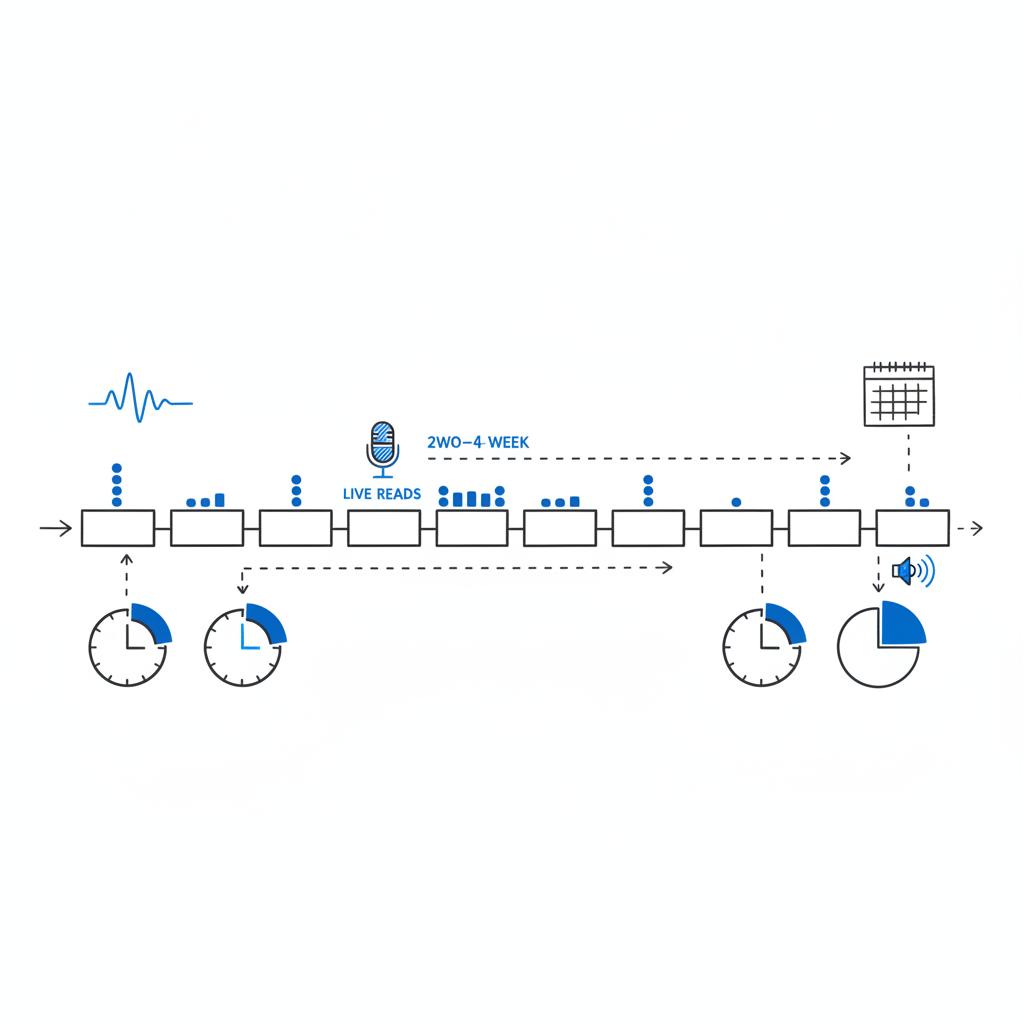
4. Set a short test flight
Run for two to four weeks. This window gives you enough repetition to observe trends without a long commitment. Use a unique phone number and a single landing page or promo code for the flight.
5. Track and analyze
Log calls and redemptions daily, review web analytics for traffic spikes, and compare store visits during the flight to a similar prior period. Ask callers how they heard about you to capture qualitative evidence.
Creative tips and sample scripts
Good radio advertising scripts are short, vivid, and focused on a single call to action. Here are simple frameworks you can use.
30-second produced spot (retail example)
“Hungry? Tonight only, Eastwood Bistro is serving a three-course dinner for two for $39.99. Mention code DRIVE39 when you call for a reservation. Eastwood Bistro, on Main Street, next to the clock tower. Call 555-0199. That’s 555-0199. Eastwood Bistro – great food, quick service, right around the corner.”
Live read outline (service business)
Host script: “I’ve been taking my car to Frank’s Auto for years – great service. This week they’re offering weekday no-appointment oil changes for $24.99. Call 555-0404 and ask for the weekday deal. That’s Frank’s Auto on Route 7.”
Tracking metrics that matter
Measure the outcomes that tie back to your objective. For many SMBs running radio advertising, these include:
- Calls tied to the campaign number;
- Landing page visits and conversions during the flight;
- Promo code redemptions and in-store mentions;
- Baseline comparisons – weekday traffic during the flight vs. before.
Record both quantitative and qualitative data. Caller feedback can reveal which line in your script resonated and whether the offer was clear.
Case study: a neighborhood auto shop
A mid-sized auto shop tested radio advertising with a 30-second spot promoting a weekday oil-change offer. They ran a four-week flight on a local station, focused on morning drive and midday dayparts. They used one campaign phone number and tracked appointments. Results: a clear bump in midweek appointments and a stronger weekend response after a live remote. The owner used the data to negotiate improved rates for the next flight – exactly the kind of measurable learning you want from a first test. See examples on our projects page.
Programmatic audio: benefits and caution
Programmatic audio brings audience targeting and scale. It’s great when you want to reach listeners by interest or demographic across many streaming endpoints. But don’t confuse programmatic reach with local concentration: if your goal is foot traffic, a local station buy may be more efficient. Programmatic audio can supplement station buys by retargeting listeners online or by running parallel creatives in streaming environments.
Costs and ROI: realistic expectations
Expect to spend on creative, placement, and tracking. For many SMBs a modest initial budget – enough to secure a short flight and a few bonus spots – can reveal whether radio advertising moves the metric you care about. ROI hinges on the value of the action you measure: a profitable appointment, a redeemed coupon, or a high-value sale. Use unit economics to decide how many new customers you need to justify the spend.
Common objections, answered
“Isn’t radio old?” Not really – audio formats have evolved. “Can it drive immediate sales?” Yes, when creative includes a time-limited, trackable offer. “Is it expensive?” It can be, in premium dayparts and big markets – but local buys and off-peak slots often fit small budgets. The trick is a short, measurable test.
How to combine radio advertising with digital for better results
Radio advertising is best when it’s part of a short funnel: awareness (radio) -> action (landing page) -> conversion (purchase or booking). Use a targeted landing page, run coordinated social ads, or retarget people who visit the landing page. That multi-channel flow captures clicks and reduces the attribution gap.
Practical checklist before you buy
Before signing a contract for radio advertising, confirm the following:
- Clear objective and offer;
- Unique tracking number and landing page;
- Clear flight dates and spot schedule;
- Sample daypart logs and audience demographics;
- Production plan and responsibilities;
- Baseline metrics for comparison.
Negotiation tips with station reps
Be prepared and polite. Ask for value-adds: bonus spots, remotes, sponsorship mentions, or a short trial. Show that you’re testing and may scale, which can help you secure better rates. Get flight logs in writing and insist on a payment and make-good clause if promised spots don’t run as scheduled.
When radio advertising is the best choice
Choose radio advertising when you need local reach, frequent repetition, and quick top-of-mind awareness. It’s a strong fit for restaurants, retail promotions, seasonal sales, service businesses that take appointments, and any offer that can be expressed simply and memorably.
Real-world creative checks: five small rules
Keep these rules in mind for effective radio advertising:
- One offer per spot.
- Repeat the call to action at least twice in a 30-second spot.
- Use a memorable phone number or a short vanity URL.
- Keep the language local and specific (landmarks, neighborhoods).
- Test variations – script tone, live read vs produced – during your flight.
Yes—when your creative includes a clear, time-limited offer and you use one unique tracking mechanism (phone number or landing page), a short two-to-four-week radio advertising flight can produce measurable increases in calls and foot traffic, especially for local businesses.
Measuring success after the flight
After your radio advertising flight ends, analyze results against baseline data: call volume, landing page sessions, conversion rate, and store traffic. Qualitative caller feedback often reveals whether the message was clear. If results are positive, plan a scaled second flight; if not, tweak the creative, dayparts, or offer and re-test.
FAQ recap and quick decisions
Below are the concise answers to the most common short-start questions small businesses ask about radio advertising:
How long should my ads run?
Start with two to four weeks to build frequency and observe patterns. Shorter tests may not deliver enough repetition to move behavior.
Should I pick live reads or produced spots?
Use live reads when trust and personality matter; produced spots when precise messaging matters. A mix is often effective.
How will I know if it worked?
Use unique tracking: phone numbers, landing pages, or promo codes. Compare traffic and conversions during the flight to a similar previous period.
Final practical tips
Radio advertising is a tool. Use it when you need local impact and quick reach. Keep the message simple, the call to action obvious, and the tracking rigorous. If you combine station buys with programmatic audio and follow-up digital tactics, you’ll close the loop between awareness and measurement.
Next steps
If you’re curious and cautious, plan a small test flight: define one metric, buy a short run with a unique phone number and landing page, and measure closely. That simple approach minimizes risk and gives you real numbers to inform the next decision about radio advertising. For help planning, visit our homepage or contact us directly.
Plan a practical radio test with a short planning session
Ready to test radio advertising but not sure where to start? Get a quick planning session to design a short, measurable flight that matches your goals. Contact us to plan a practical first campaign. Start a quick planning session
Wrap-up
Radio advertising is practical, measurable, and often cost-effective for local businesses – when you keep the message simple and the tracking tight. With a short test flight you can find out fast whether radio belongs in your marketing mix, and you’ll have real data to guide a next step.
Tip: If you want a practical second opinion while planning a short radio advertising test, consider reaching out for professional help. Agency VISIBLE offers planning support and media insight to help small and mid-sized businesses design a sensible flight and set up clear tracking – learn more at Agency VISIBLE’s planning support.
Fifteen and thirty seconds are the most common lengths. Thirty seconds offers a bit more room to make an offer and repeat the call to action, while fifteen seconds works well for single, punchy messages. Choose 30 seconds for most tests to balance clarity and retention.
Use unique tracking elements—one dedicated phone number, a short landing page URL, and a promo code. Log calls, track landing page sessions and conversions, and compare store traffic during the flight to a baseline period. Uplift testing (running the campaign in one area and not another) can also show incremental impact.
An experienced agency can save time and reduce risk by recommending stations, dayparts, script edits, and tracking setups. For example, Agency VISIBLE offers planning support to help small and mid-sized businesses design a sensible radio test flight and measure outcomes.
References
- https://optimized-marketing.com/effectiveness-of-radio-advertising-for-local-home-service-businesses/
- https://info.zimmercommunications.com/blog/the-impact-of-local-radio-ads-on-small-business
- https://radioink.com/2024/05/06/study-radio-advertisings-true-effect-underestimated-by-92/
- https://agencyvisible.com/projects/
- https://agencyvisible.com/contact/
- https://agencyvisible.com/