PPC in dentistry: What it is and why it matters
PPC in dentistry is paid advertising that places your practice in front of people actively looking for dental care. When a prospective patient searches “emergency dentist near me” or scrolls past a sponsored post that shows a friendly office chair, PPC (pay-per-click) puts your clinic where it counts. Done properly, it becomes a predictable pipeline of the right patients: those who need a filling, a crown, an implant consult, or a hygienist visit.

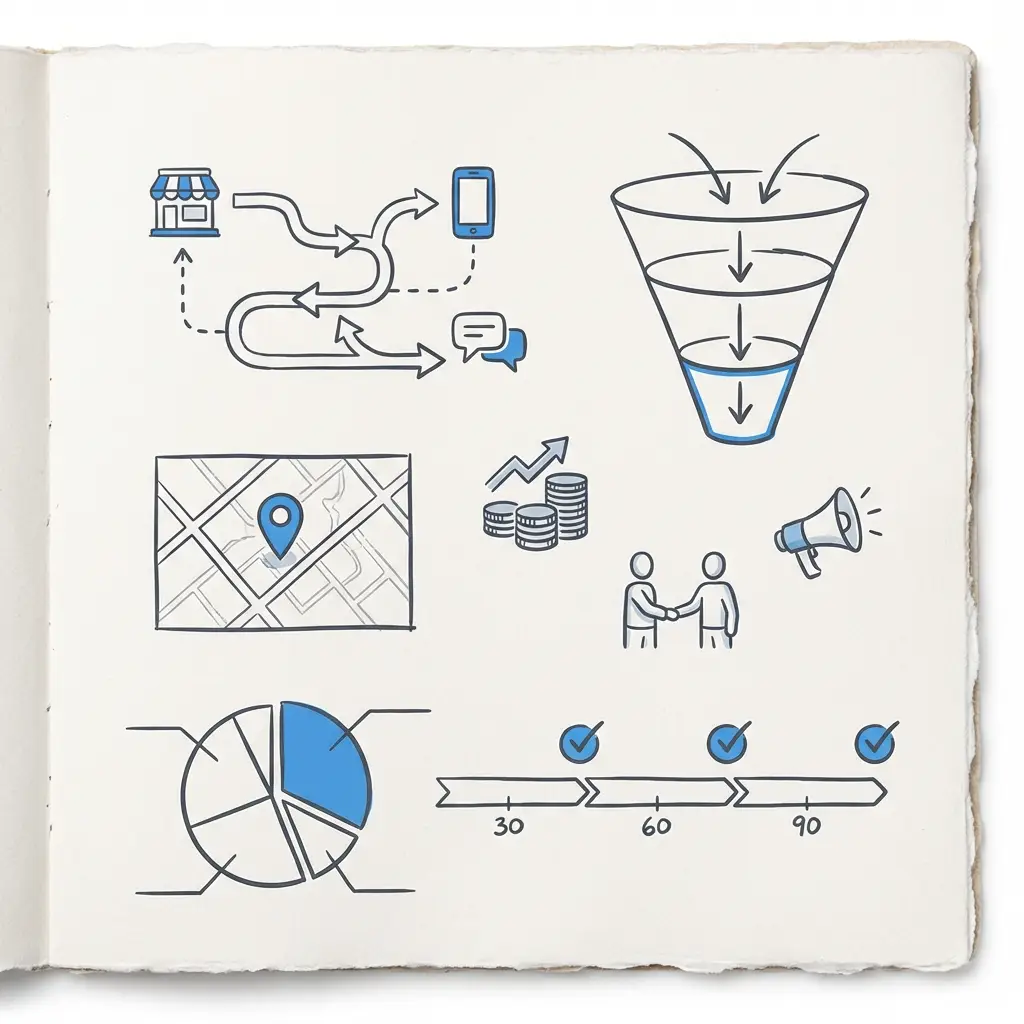
Paid search, local formats, social ads and remarketing each play a different role in the patient journey. The trick is knowing which channel fits which intent and how to measure the outcomes that actually matter to your practice.
Why dentists use paid ads
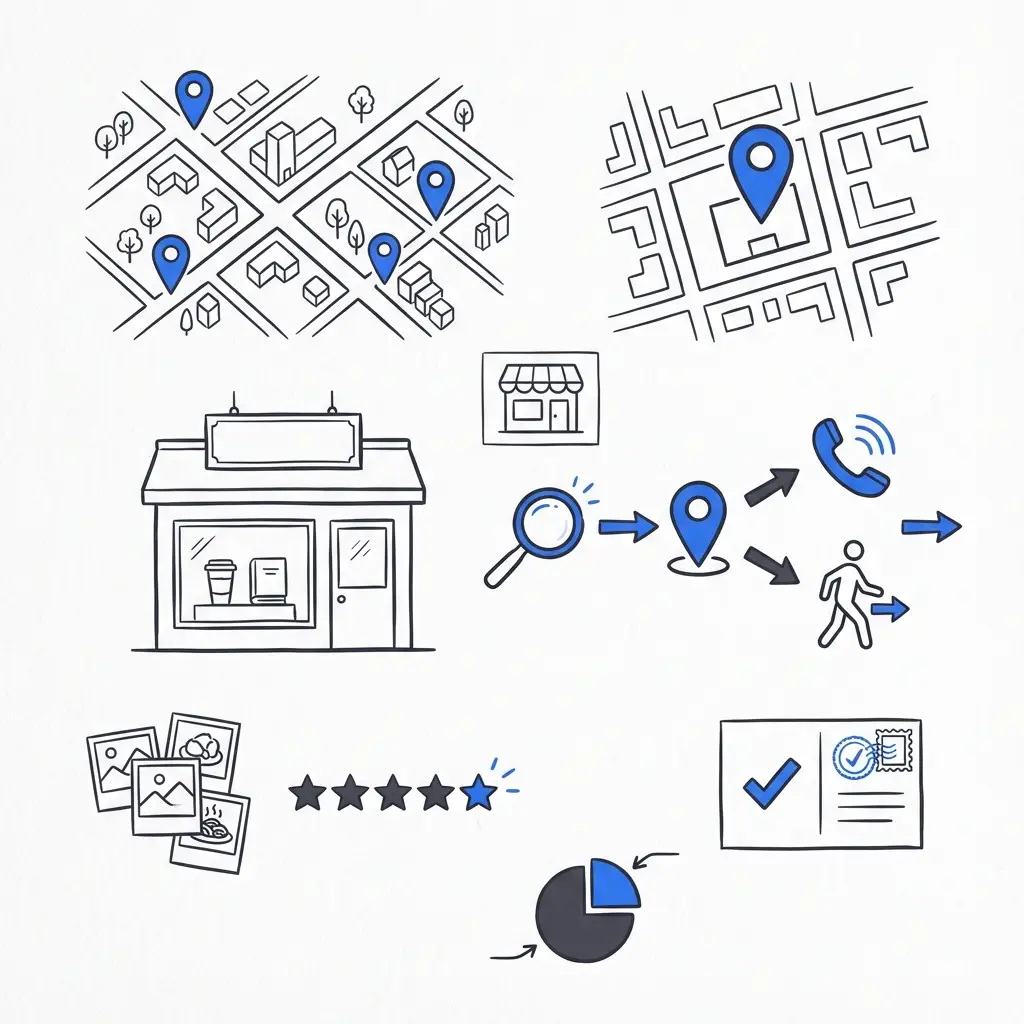
Search queries for dental care are direct and urgent. People type phrases like “dental implants cost near me” when they’re close to making a decision. Google Search lets you capture that intent with text ads and call-only formats. Local Services Ads (LSAs) are designed specifically for location-based intent and often appear above regular search results with direct call and message options. Social platforms such as Facebook and Instagram are better for earlier-stage awareness: they build familiarity and can feed patients into search later on. Display and remarketing keep your clinic top-of-mind for visitors who left without booking.
Quick benchmark: average search CPCs in dental categories were around $7.65 in early 2024, and reported CPLs commonly ranged from roughly $50 to $85, varying by treatment and competition. For broader industry context see Google Ads Benchmarks 2024.
Set sensible expectations: what “good” looks like
There is no universal CPL or CPA target for every dental clinic. What matters is the value a new patient brings to your practice. If a new patient spends an average of $500 upfront but $2,500 over their lifetime, you can justify higher acquisition costs than a practice that only sees single, low-value visits.
Tracking lifetime value (LTV) is essential. Without it you’re guessing. Track how many paid leads become booked appointments, how many booked appointments convert into paid treatments, and what those patients spend over time. This turns raw CPL into a meaningful CPA target.
Simple LTV math you can use
Imagine: an implant patient yields a $3,000 net value over their lifecycle and you win one implant patient per 20 leads. That means a cost-per-lead up to $150 could be justified in that segment (20 leads x $150 = $3,000). For routine exams with much lower lifetime value, you’d aim for a far lower CPL.
Campaign architecture that makes sense
Structure is the backbone of efficient campaigns. The core idea is separate intent. That means:
Branded campaigns for searches using your clinic name. These protect brand traffic, usually have low CPCs, and should use call extensions and location info.
Non-branded treatment campaigns grouped by treatment family: emergency care, implants, cosmetic, orthodontics, and routine care. Each group needs tailored ads, keywords and landing pages that speak to the searcher’s intent.
Local Services Ads (LSAs) should run alongside search where available. LSAs operate pay-per-lead and often deliver phone-first leads that are high intent. For display and remarketing, craft gentle follow-up messages: testimonials, simple process explanations, and convenient booking prompts.
Example campaign groups
1) Branded – Protect name & promote hours/call options.
2) Emergency / urgent care – High-intent, call-first messaging.
3) Implants & cosmetic – High-value, consider extended sales cycle messaging.
4) Orthodontics / Invisalign – Education + consult booking.
5) Routine care – Exams & cleanings, easier conversions.
Landing pages and the phone: where bookings are won and lost
A click is only valuable when it converts. Appointment-focused landing pages remove distractions and guide a visitor to one of two outcomes: call or book online. A great page matches the ad’s promise, shows trust signals (reviews, accreditations), places a click-to-call button front and center on mobile, and uses a short booking form that only asks what you need. A small logo like the Agency Visible logo can help build recognition across channels.
Phone calls still drive many dental bookings. Implement dynamic number insertion (DNI) so the phone number on a page changes with the visitor’s source and campaign. This makes call tracking accurate and lets you assign calls to campaigns and landing pages.
Record calls or capture call metadata (duration, outcome) and import offline conversions back into Google Ads so the platform knows which leads turned into paid appointments. This closes the loop between ad spend and actual revenue.
Tracking, attribution and why LTV completes the picture
Use Google Ads conversion tracking and GA4 to measure clicks-to-bookings online. For calls and in-office bookings, set up a routine import of offline conversions. When the ad platform sees which leads became patients, it can optimize bids against real outcomes instead of form fills alone.
Without offline conversion imports you under-report performance. Many patients still prefer to call and a portion of those calls become paid treatments after speaking with staff. Importing these conversions back into the ad platform helps the algorithms bid smarter and helps you evaluate true ROI.
Practical bidding and keyword guidance
Protect branded terms with a dedicated campaign and visible bids. For non-branded search, segment keywords by intent: emergency, consult, pricing, and education. Emergency and urgent keywords convert well; they often justify higher bids. Cosmetic and implant keywords are expensive but reflect higher LTV.
Use negative keywords aggressively. Exclude terms like jobs, training, cheap (unless you advertise on price), insurance-only queries if you don’t accept them, or school-related listings. Negative keywords prevent wasted clicks and improve account efficiency.
Automated bidding strategies can be powerful if you have reliable conversion data (including offline conversions). If not, start with manual or enhanced CPC until the data quality improves.
Regulatory points and ad policy matters
Healthcare advertising has constraints. Google and social platforms have policies restricting certain claims, promotions or medical statements. Avoid guaranteeing outcomes, and ensure any before-and-after images have proper patient consent and meet platform standards. Check local regulations and ADA requirements for site accessibility and advertising claims.
Platform choices: search, LSAs, social and display
Search is the baseline for intent-driven queries. When someone types “root canal near me,” you want to be competitive in search. LSAs are effective for urgent, local needs because they appear prominently and prioritize calls and messages.
Social (Facebook, Instagram) helps with awareness and education. Use short educational videos and patient-story creative to build interest. Expect higher CPLs for direct bookings from social; treat social as a long-game channel that feeds search and remarketing efforts.
Display and remarketing let you nudge visitors who didn’t book on their first visit. A targeted remarketing ad can remind a visitor about a free consult or show a patient testimonial that reduces hesitation.
Cost expectations and sample budgets
There’s no one-size-fits-all budget, but here are practical starting points. Small clinics in modest markets can start with $1,000–$2,000 per month on Google Ads to test and collect data. Medium clinics with multiple doctors often start at $3,000–$6,000. Aggressive growth goals or competitive markets (implants, cosmetic focus) may need $8,000+ per month.
Sample math: If your CPL is $60 and you want 20 new patients per month, plan a monthly spend of $1,200 on leads alone (20 x $60). Add a conservative buffer for wasted clicks and testing. If your LTV supports higher spend, scale gradually and track which channels deliver the best lifetime return. Industry-specific benchmarks for dentists are discussed at Google Ads for Dentists 2025 and practical examples at Do Google Ads Work For Dentists in 2024.
Treatment-level cost patterns
Routine exams and cleanings: lower CPLs.
Orthodontics & implants: higher CPLs but higher LTV.
Emergency care: often high-intent and may deliver faster bookings.
Testing and iteration: a 90-day starter plan
Treat the first 90 days as learning. Run tests that compare formats and messages, and measure real outcomes such as booked appointments and paid treatments.
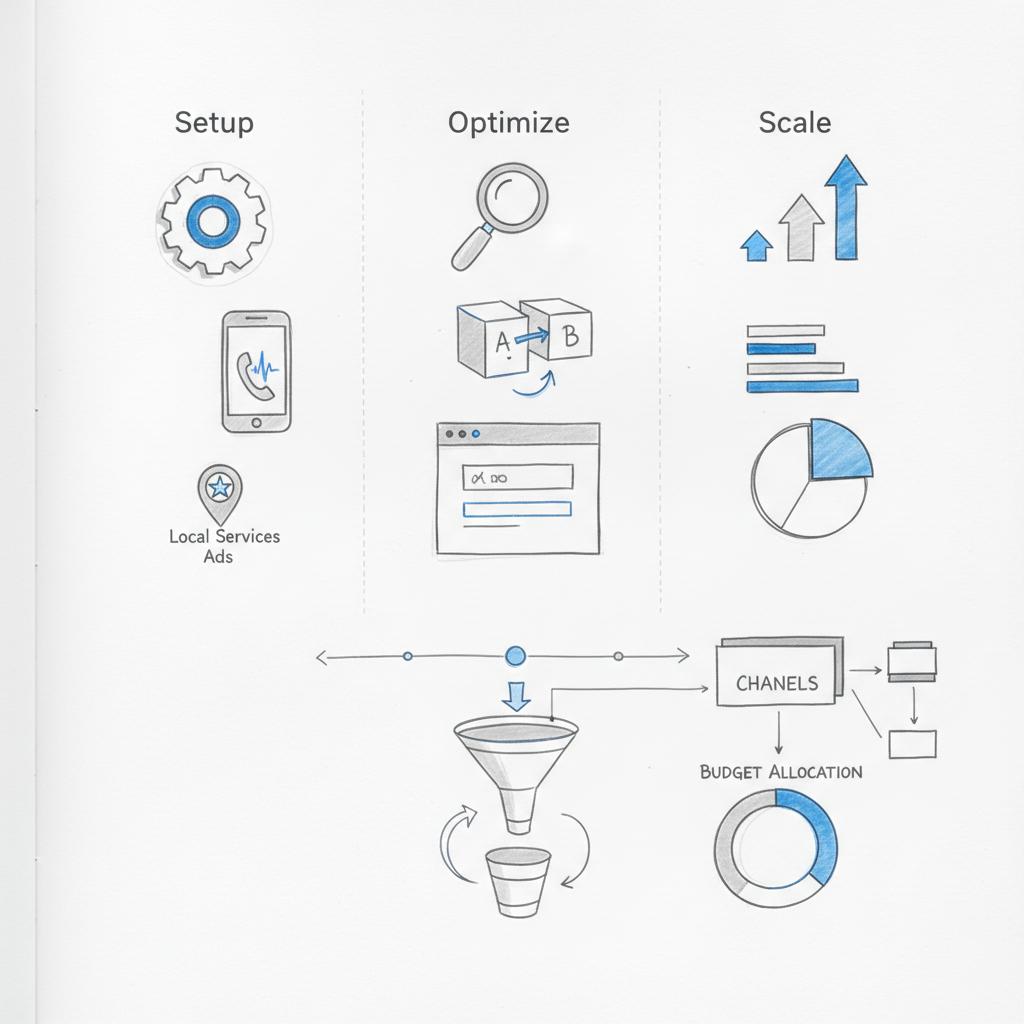
90-day phased plan (high level)
Days 1–30: Setup and baseline data collection. Configure Google Ads, LSAs (if available), basic social awareness tests, call tracking with dynamic numbers, GA4, and offline conversion imports. Launch branded and 2–3 non-branded treatment campaigns with focused landing pages.
Days 31–60: Optimize for conversions. Add negative keywords, refine ad copy, and test two landing-page variants for the highest-volume treatment family. Begin small display remarketing to recent site visitors.
Days 61–90: Scale winners and test bids. Increase spend on campaigns with stable CPLs and good booking-to-treatment conversion rates. Try an automated bidding strategy in a controlled campaign that has reliable offline conversion imports. Document outcomes and prepare a scaling plan for month 4.
Ad copy and creative tips for better results
Match your ad copy to the search intent. For urgent keywords, use time-sensitive language: “Same-day appointments” or “Open now.” For cosmetic services, use confidence-building language and an invitation to a consultation. Avoid medical guarantees and unsupported outcome claims.
On social, use short stories and explainers. A quick video landing page that explains the implant consult process reduces friction and improves conversion rates for higher-cost treatments.
Common mistakes to avoid
Ignoring call tracking and offline conversion imports is a frequent error. Other common mistakes include mixing intent across ad groups, failing to use negative keywords, treating ads as a one-time set-and-forget project, and not using tailored landing pages for different treatments.
Short technical checklist (plain language)
1. Track all meaningful conversions: online bookings, calls and in-office bookings.
2. Use LSAs where available and test against search.
3. Group non-branded keywords by treatment family.
4. Exclude irrelevant queries with negative keywords.
5. Use appointment-focused landing pages with clear click-to-call on mobile.
6. Import offline conversions and refine bids based on real outcomes.
Sample keywords list to get started
Use these to seed your campaigns and then refine with local and negative keyword additions. Examples:
“emergency dentist near me”
“dental implants cost [city]”
“kids dentist open now”
“teeth whitening near me”
“Invisalign provider [city]”
“root canal specialist near me”
How to measure success beyond clicks
Clicks and impressions are vanity metrics unless they tie back to booked treatments. The primary metrics to track are:
Calls that lead to booked appointments
Online bookings that turn into paid treatments
Revenue or net value per new patient (LTV)
Cost per booked appointment and cost per paid treatment
When you track these you can compute return on ad spend (ROAS) for patient acquisition and compare channels fairly.
Real-world example (expanded)
A midsize clinic I worked with spent most of their budget on broad search terms and got lots of irrelevant traffic. Their ads appeared for “dentistry jobs” and “dental school” searches. We reorganized their account: split by treatment, added strict negative keywords, launched LSAs, and improved landing pages to make booking obvious. We also set up DNI and offline conversion imports. Within three months their cost per booked appointment fell and the lead quality improved—calls were from people ready to book, not just curious searchers. The change was practical: clearer intent, better tracking, and small, steady optimizations.
Yes—if campaigns are structured by intent, tracked end-to-end (including calls and offline bookings), and optimized using real patient value (LTV). The difference between noisy traffic and valuable patients is matching the right ad, keyword and landing page to the searcher’s intent and measuring whether they actually become paying patients.
Regulations and patient trust
Be careful with claims and images. Use consented photos and compliant language. Make sure your website is accessible and that your ads don’t promise medical results. Transparency builds trust: include staffing credentials, facility accreditations and patient testimonials where appropriate.
When to involve an agency (and how to choose one)
If you don’t have time to test, set up robust tracking or manage bids, bringing in a focused partner can speed learning. Look for an agency that prioritizes clear reporting, shows how ad outcomes relate to patient value, and helps you build measurement into processes. Agencies like Agency VISIBLE specialize in helping clinics get visible quickly and measure outcomes—see their projects for examples, and a short consult can identify opportunities fast.
For clinics that prefer tactical help, you can reach out to Agency VISIBLE for a short consultation to review your conversion tracking and first 90-day test plan: contact Agency VISIBLE.
Scaling: when to spend more
Scale when you have repeatable, profitable campaigns. That means stable CPLs, a reliable booking-to-treatment conversion rate, and confidence in your LTV estimate. Increase budgets in measured increments-10–30% for proven campaigns-and monitor conversion rates closely.

Measuring the long view
Paid search is part of a longer marketing system. Combine search efficiency with social awareness and remarketing to capture people at different moments. Over time, analyze cohorts of patients acquired through paid channels and compare their LTV and retention to patients from other sources. This reveals whether paid acquisition is delivering sustainable value.
Putting it into action: a practical checklist
1. Define your LTV and a revenue-to-ad-spend ratio you’re comfortable with.
2. Set up call tracking with dynamic numbers.
3. Configure Google Ads, GA4 and offline conversion imports.
4. Create separate campaigns for branded and non-branded treatment families.
5. Build appointment-focused landing pages with fast click-to-call and a short booking form.
6. Add negative keywords regularly.
7. Test LSAs where available.
8. Run small social awareness campaigns for higher-cost treatments.
9. Measure booked treatments and import them as conversions.
10. Iterate every 2–4 weeks with one change at a time.
Final advice: patience and curiosity win
PPC in dentistry is less about clever hacks and more about disciplined measurement. Run short, focused tests; know which conversions count; and use data to make bidding decisions. Over time, you’ll turn paid ads into a steady, predictable source of the right patients for your clinic.
Get a quick, practical PPC review for your clinic
Ready to test the right channels for your clinic? If you want a practical 90-day test plan or help tying offline bookings back to ad spend, start with a quick review: Get a free consult from Agency VISIBLE.
Thanks for reading – keep testing, and remember that small improvements compound into steady growth.
Start with a budget that gathers meaningful data. For many small clinics, $1,000–$2,000 per month is enough to test campaigns. Medium clinics often begin at $3,000–$6,000, while aggressive growth goals or highly competitive markets (implants, cosmetic work) may need $8,000+ per month. Use CPL targets and desired patient volume to reverse-engineer the budget.
Yes. LSAs are frequently worth testing because they prioritize phone and message leads for local, urgent searches. They often deliver high-intent calls that convert to bookings. Since LSAs operate on a pay-per-lead model, they can be especially efficient for urgent, location-based queries—test them alongside search to compare real outcomes.
Use dynamic number insertion for accurate call attribution and a call-tracking provider that records call metadata. Record or log call outcomes and regularly import booked appointments as offline conversions into Google Ads. This ensures the ad platform optimizes for real-world outcomes, not just form fills.