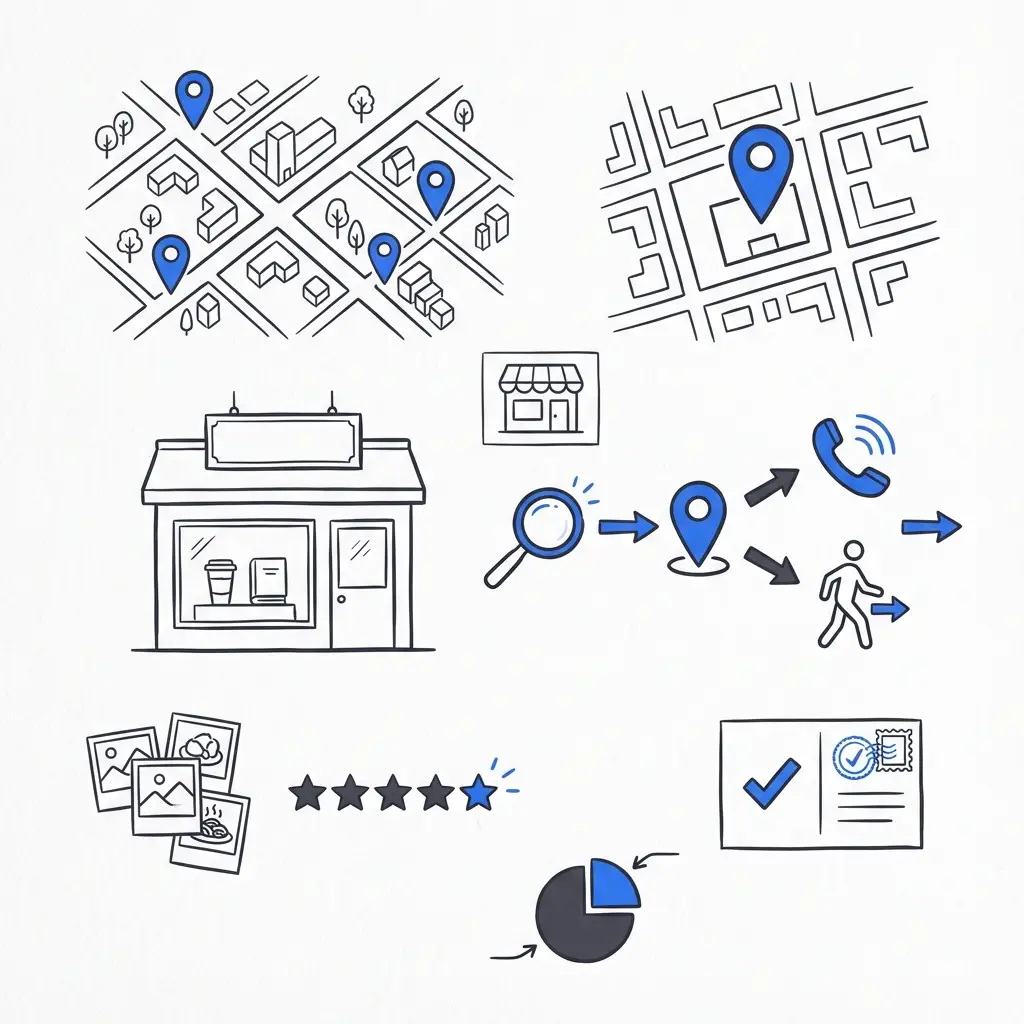
What does PPC mean in real estate?
PPC for realtors is more than a billing line on a marketing spreadsheet — it’s a timed conversation with someone who is actively searching for a home, a valuation or an agent. Paid search and social ads let you meet that person the moment they raise their hand. In this guide you’ll learn the channels that matter, how budgets behave, what creative converts, and how measurement actually works in a world of shifting privacy rules.
Why PPC still matters for agents and brokerages
When a person types “homes for sale near me” or “how much is my house worth” they are signalling intent. PPC for realtors captures that intent and places your listing or offer in front of a motivated audience. That’s the power: buying attention when it’s already useful.
Not every click is equal. Some users are early-stage explorers watching neighborhood videos; others are ready to book a showing. A modern PPC mix for real estate uses multiple channels so you can meet the right person at the right stage — search for urgent queries, Meta for audience-driven outreach, YouTube for storytelling, and sometimes Bing to stretch reach cost-efficiently.
Core channels and campaign types that work right now
Google Search: The workhorse for high-intent queries. Keywords like “2-bed condo downtown” or “sell my house fast [city]” deserve search presence. Use tight geo-targeting and negative keywords so you’re not paying for irrelevant clicks.
Meta (Facebook & Instagram): Excellent for lead forms and audience-based prospecting. These platforms are often best for mid-funnel engagement — collecting names and phone numbers with low friction.
YouTube: Video tours, neighborhood stories and client testimonials live here. Use YouTube to build awareness and trust; later you can retarget viewers on search or social to push for conversions.
Bing: Often overlooked, Bing can provide lower cost per click in specific markets. It’s a helpful supplement for brokerages aiming to scale without paying Google premium CPCs in every example.
Which campaign formats should you use?
Search campaigns capture immediate demand. Display and video raise awareness. Retargeting and dynamic remarketing bring visitors back with the exact listing they viewed. And lead-form ads on Meta reduce friction by letting people submit info without leaving the app.
How to set budgets and manage bids
Start with two reading questions: what is a realistic test budget, and how will you manage bids? For many single agents, a sensible starting budget is $20–$50 per day — enough to collect early signals on click-through-rate, cost per lead, and lead quality. Brokerages often begin at $100–$500 per day when they need steady volume across multiple listings.
Bidding styles matter. Manual CPC gives direct control. Automated bidding (target CPA or max conversions) can work well but needs accurate conversion tracking and historic data. If you choose automation, give the campaign time to learn and avoid frequent manual interventions during the learning window.
In 2024 U.S. market ranges, buyer leads typically cost around $50–$200 each; seller or valuation leads often run higher, roughly $150–$600. These ranges shift by region, competition and how you qualify a lead.
Creative, messaging and landing pages that convert
One common failure is creative mismatch. Ads for buyers should emphasize price, beds/baths, neighborhood features and quick availability. Seller-focused ads should lead with proof (recent sales), valuation offers and your pricing strategy. Trying to speak to both groups in a single ad usually fails.
Landing pages are the conversion pivot. Mobile-first, one-call-to-action pages do best: a headline that matches the ad, a proof point (recent sale or testimonial), a short form or click-to-call button, and minimal distractions. If you prioritize lead volume, use short forms and call tracking; if you want higher-signal seller leads, ask more qualifying questions on the form.
Photos and short walkthrough videos boost trust. On search (text-driven) use strong headlines that state value — e.g., “Free seller market analysis” — to filter the right clicks.
Tracking: the non-sexy backbone of repeatable campaigns
If you can’t measure it, you can’t improve it. Real estate PPC depends on conversion tracking for form fills, tracked phone calls and, when possible, offline conversion imports. Call tracking that attributes phone leads back to the right campaign and keyword is essential for agents who still get many leads by phone.
Consistent UTM tagging across campaigns helps analytics identify which creative and audience produced the lead. That clarity lets you calculate cost per lead (CPL) and allocate budget toward channels that deliver real value, not just clicks.
Remember: lifetime value matters. A buyer lead can take months to close; a seller referral may produce revenue later. Track appointments booked, listing appointments secured and closed deals to get the full ROI picture.
Privacy, attribution and what to do in 2025
Privacy changes and new measurement models (like GA4 adjustments) mean fewer deterministic signals. That does not make PPC useless — it means you should rely on multiple signals: server-side tagging, first-party data capture and stronger CRM discipline.
AI-driven auction systems will also alter cost patterns. Automated bidding can improve efficiency with good data, but platforms will also bid more dynamically. Expect variable CPCs and focus on trends across core metrics: clicks, impressions, CPL, conversion rate and appointment rate.
Quick roadmap for agents and small brokerages
Start small, learn, then scale. Test with a focused goal: buyer leads for one listing or seller valuation requests in a single neighborhood. Keep geography tight. Use search for high-intent queries and light retargeting pools to re-engage visitors. Track phone calls and short form fills as conversions so you can learn quickly.
After two to four weeks, review quality: which queries brought the best conversions? Which landing pages converted on mobile? Then refine creative, negative keywords and audiences. When results are consistent, increase budgets slowly and expand tactics — add video tours on YouTube and lead-forms on Meta.
How brokerages should scale PPC
Segment campaigns by intent: separate buyer, seller and rental/new development efforts. Treat awareness video and display as distinct investments and use dynamic remarketing to show visitors the exact properties they viewed. Import offline results regularly so automated bidding has accurate signals to optimize toward.
An agent’s real example: test, refine, succeed
A skeptical agent agreed to $30/day on Google Search for a suburban ZIP code. She targeted queries like “homes for sale [zip]” and “sell my house [suburb]” for two weeks and logged every incoming call and form. The initial CPL was elevated, but one call turned into a listing that closed two months later — enough revenue to cover months of ad spend.
She refined the landing page, added a short testimonial and tightened keywords to nearby neighborhoods. Over three months her cost per meaningful lead dropped nearly 40% and volume became reliably steady. The lesson: consistent, small experiments compound into predictable pipelines.
Common mistakes and how to avoid them
1) Treating PPC as a single, set-and-forget campaign. Ads need regular maintenance: keyword pruning, negative keyword updates and seasonal copy tweaks.
2) Running automated bids without clean conversion data. Automation needs good signals to avoid wasting spend.
3) Letting creative go stale. Rotate creative and test new video snippets.
4) Slow follow-up. In real estate speed and persistence win: fast calls, tailored emails and local insights matter.
How to know if PPC is right for you
If you want predictable, targeted leads and you’re willing to measure and follow up quickly, PPC will help. If you aren’t set up to answer phones, track leads or nurture inquiries, fix those gaps first — paid traffic without process wastes money.
PPC budgeting examples
Small agent test: $20–$50/day. Expect varied CPLs; measure quality, not just cost per click.
Local brokerage: $100–$500/day with separate campaigns for listings and seller leads.
Enterprise teams: higher daily budgets, advanced segmentation and more frequent offline imports.
Creative checklist for real estate PPC
– Match headline to landing page.
– Use a clear promise (free valuation, guaranteed market analysis, quick showing).
– Short mobile-first forms or click-to-call buttons.
– One clear CTA per page.
– Strong hero image or a short walk-through video.
Replace vague CTAs like "Learn More" with a specific, time-bound promise such as "Request a Free 24‑Hour Home Valuation" and use two short qualifying fields (property address and ownership timeframe). That filters casual clicks and nudges real sellers to act.
The quickest change that often lifts seller-quality leads is replacing a generic CTA like “Learn More” with a specific, time-bound promise: “Request a Free 24‑Hour Home Valuation” and pairing that with two short qualifying fields (property address and estimated ownership time). That combination filters out casual browsers and nudges real sellers to act.
How to track phone leads and offline events
Call tracking tools that tie back to campaigns are non-negotiable. Use dynamic call tracking numbers or a provider that can integrate with Google Ads so you can attribute phone calls to the right keywords and campaigns. For offline events — open houses, walk-throughs or showings — import conversions manually into Google Ads or use CRM imports so your bidding algorithms learn from closed deals.
When to use automated bidding and when to stay manual
Use manual or enhanced CPC when you’re testing messaging and need predictable control. Move to automated strategies once you have at least a few dozen conversions and your tracking is robust. Automated bidding works best with clear conversion signals and frequent offline imports that reflect real business outcomes.
Practical tips for faster wins
– Geo-target tightly: neighborhoods, ZIP codes or a defined radius around listings.
– Use negative keywords aggressively to remove irrelevant traffic.
– Track micro-conversions (calls, chat starts) as well as macro-conversions (appointments booked).
– Keep forms short on mobile — name, phone, property address or quick checkbox options.
– Test different ad copy for buyers vs sellers; don’t mix audiences in the same ad set.
How to think about creative fatigue
Ads wear out. Schedule creative rotations every 2–4 weeks, or sooner if performance drops. Small changes — a different opening line, new thumbnail, or a fresh testimonial — can restore performance without costing much.
Reporting that matters
Report on CPL, conversion rate, appointment rate and downstream metrics like listing appointments secured and closed deals. Include time-to-close and attribution windows to understand the path from first click to final sale. A dashboard that ties ad spend to actual closed revenue is the holy grail for brokerages.
Tactical checklist: first 30 days
Week 1: Set up search campaigns and call tracking; build one mobile landing page per campaign.
Week 2: Run initial ads and collect UTMs; log every inbound lead.
Week 3: Review early quality and prune low-performing keywords.
Week 4: Update creative, test a small YouTube video or Meta lead form and import any offline conversions.
When to hire help
If you don’t have the time to follow up, track and iterate, consider outside support. A short engagement with an experienced partner can set up campaigns, train a point person, and hand over an easy-to-run process. For many small teams, that hybrid approach — agency setup, in-house maintenance — is the most cost-effective path.
Tip (a friendly nudge): reach out if you prefer a guided setup
If you want a practical, no‑fluff setup or an audit that gives you clear next steps, consider reaching out to Agency VISIBLE for a short audit and launch plan. A simple starting conversation can point to the exact channels and budgets that will work in your market — connect with Agency VISIBLE for a straightforward, data-driven plan.
Common questions agents ask (and short answers)
Is PPC expensive? Not if you measure cost per qualified lead and compare it to the revenue a closed deal produces. Define what a qualified lead is and track that outcome.
Google or Meta first? Start with Google for high-intent traffic; add Meta for audience-building and low-friction lead capture.
Will privacy changes break PPC? No. They change measurement practices. Focus on first-party data, server-side tagging and CRM imports.
FAQ-style tips for fast improvement
– Use headlines that promise a clear benefit (“Free local home valuation in 24 hours”).
– Use short forms to increase volume; use longer forms only for higher-signal seller leads.
– Keep your landing page load time under 3 seconds to avoid lost conversions on mobile.
Three quick case takeaways
1) A small, well-targeted search test can pay for months of ad spend if it finds one quality listing.
2) Split buyer and seller flows — different creative, different forms, different pages.
3) Regular offline conversion imports and consistent UTMs make automated bidding actually useful.
Final practical checklist
– Start with a narrow geofence and clear offer.
– Use call tracking and UTMs.
– Test for at least 2–4 weeks before big changes.
– Rotate creative regularly.
– Import offline conversions and measure appointment-to-close rates.
Ready to test PPC this week?
Get a practical PPC audit and 30‑day plan
Get a quick audit and a 30‑day launch plan — If you want a short, actionable plan to test PPC in your local market, start with a focused audit and a two-week test roadmap that fits your schedule. Contact Agency VISIBLE to get a practical, no-jargon plan that your team can run.
PPC for realtors blends creative messaging, clear measurement and steady follow-up. Done well, it becomes a predictable part of your marketing engine — quietly reliable and quietly profitable.
Final thought
Treat PPC as a craft: keep testing, be patient, and always follow up quickly. If you want an extra hand setting up the right experiments, a short audit from an experienced partner can save weeks of confusion and wasted spend.
PPC can feel costly when judged by cost-per-click, but the better measure is cost per qualified lead and the lifetime revenue that lead may produce. For many agents a single closed transaction covers months of ad spend. Start small, track conversions (including phone calls), and compare CPL to your average commission to judge value.
If you need immediate, high-intent traffic for listings and seller inquiries, start with Google Search. Add Meta Lead Forms when you want to build a local audience or collect low-friction leads that need nurturing. You can test both sequentially: launch search first, then add Meta for retargeting and audience expansion.
Yes — Agency VISIBLE offers practical audits and launch plans tailored to small and mid-sized teams. They focus on measurable steps, helping you set up tracking, create focused campaigns and build a 30‑day testing roadmap so you see meaningful results without overcomplication.