Running a small plumbing business means busy days and slow ones, often in the same week. If you’re asking how to advertise for plumbing work and want reliable local leads without wasting time or money, this long-form guide gives step-by-step plumbing marketing ideas you can use right away. We’ll cover what homeowners search for first, the simplest tracking you must have, and a 30/60/90 plan that keeps your spend purposeful.
Why local visibility beats broad marketing for plumbers
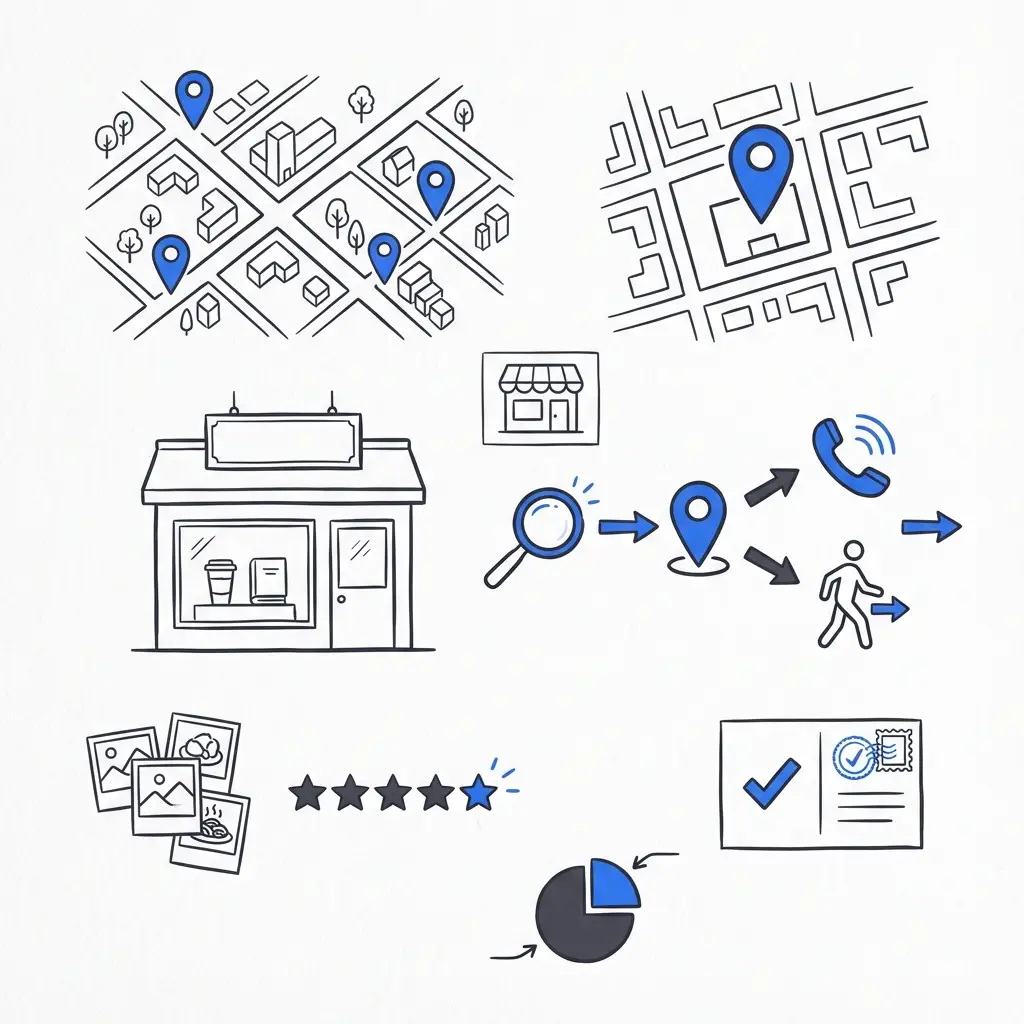
Most customers don’t scroll beyond their map results when they need a plumber. That’s why the first priority in any plumber’s marketing playbook is obvious: claim and optimize the digital front door people already use. The best plumbing marketing ideas start with a finished Google Business Profile, clear service-area pages, and a simple system for collecting reviews. These three items do more to generate local calls than a flashy homepage or a social media blitz.

Start where customers look: Google Business Profile
How to advertise for plumbing work begins with a fully completed Google Business Profile (GBP). For a service-area plumbing business, set the profile to service-area mode, list exact towns and neighborhoods, add readable business hours (including emergency hours), and keep the primary phone number consistent with your website and citations. Add recent photos of real jobs—before-and-after shots of pipe repairs or water heater installs—and a short video tour of your van or tools. Real assets build trust faster than stock photos.
Think of your GBP like a storefront window: it needs fresh displays. Post seasonal offers, short tips, and at least one update a month. Respond quickly and professionally to every review and question; responsiveness and review volume both influence local ranking. Include clear call-to-action language that encourages readers to call or request a visit. A clear, consistent logo adds trust.
Post seasonal offers, short tips, and at least one update a month. Respond quickly and professionally to every review and question; responsiveness and review volume both influence local ranking. Include clear call-to-action language that encourages readers to call or request a visit.
If you want friendly help getting the basics right—GBP, service pages and tracking—a short, no-pressure conversation can save time. Talk to Agency VISIBLE on their contact page to see how a focused 90-day plan can be tailored to your town and budget: Schedule a quick review with Agency VISIBLE.
Make pages that answer one local question at a time
Your website should answer searchers directly. A single, focused page for each service—“emergency leak repair near me”, “water heater replacement in [Town]”, “drain cleaning [Neighborhood]”—is a core plumbing marketing idea that improves conversion. Each service page should say what the visit includes, estimated time on site, common pricing structures, and a short FAQ. Include a clickable phone number for mobile users and an easy form that captures the job type and urgency.
Yes — by focusing first on Google Business Profile optimization, two or three focused service landing pages, and basic call tracking you can increase organic calls and run small paid tests. These plumbing marketing ideas let you prioritize where to spend and scale only the channels that produce booked jobs.
Main idea: avoid a bloated homepage that tries to do everything. Instead, craft a menu of short, useful pages that match real local searches.
How to advertise for plumbing work with paid campaigns that convert
Paid search still produces the cleanest lead signals for plumbers. People who type “plumber near me” or “hot water heater replacement” are actively seeking service now; targeting those queries with Google Ads drives high-intent traffic. Tie every ad to a focused service landing page and use call tracking numbers so you can allocate revenue to the right campaigns. Where available, Local Services Ads (LSAs) are worth testing: they show a verification badge and often match urgent local intent well.
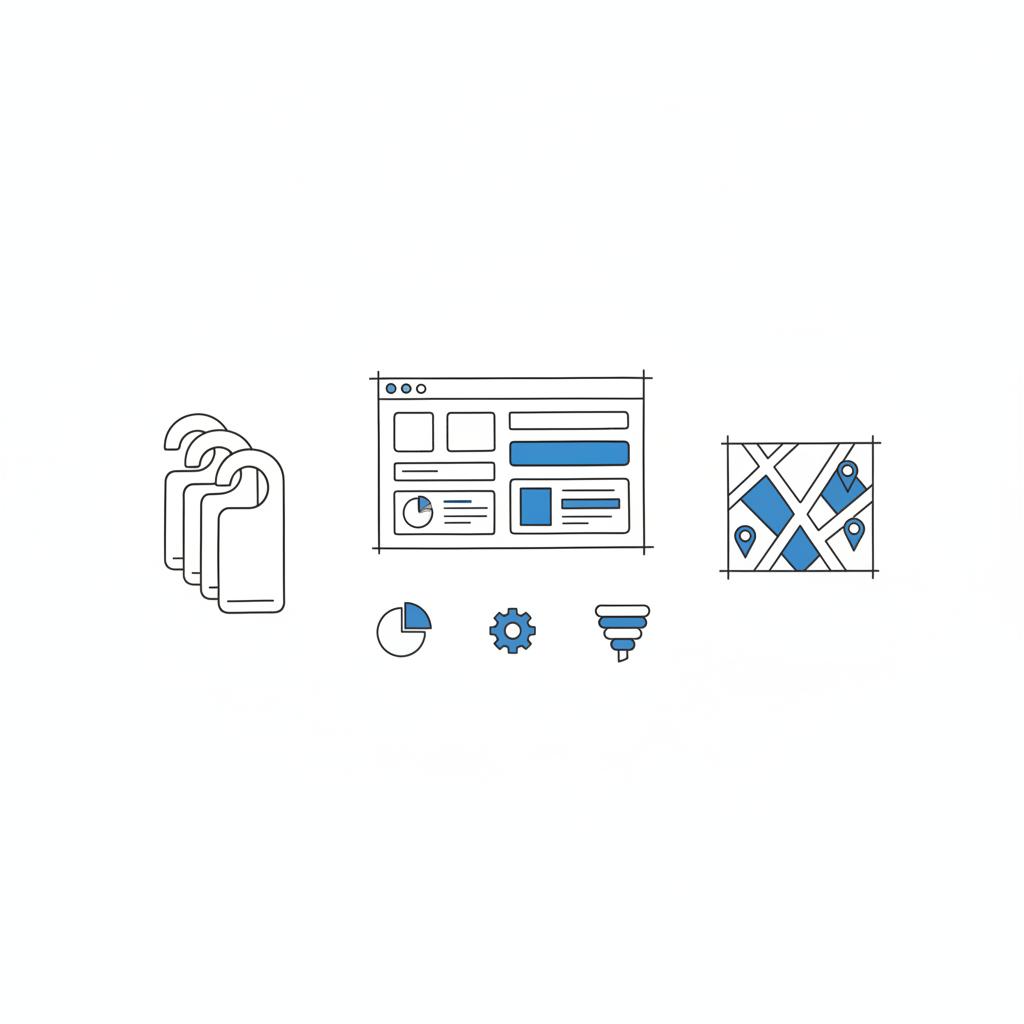
Paid search still produces the cleanest lead signals for plumbers. People who type “plumber near me” or “hot water heater replacement” are actively seeking service now; targeting those queries with Google Ads drives high-intent traffic. Tie every ad to a focused service landing page and use call tracking numbers so you can allocate revenue to the right campaigns. Where available, Local Services Ads (LSAs) are worth testing: they show a verification badge and often match urgent local intent well. For a few practical lead-generation tactics you can test, see this list: 14 Ways to Get Plumbing Leads in 2025.
Social platforms like Meta are best for discovery, not pure emergency intent. Use small-budget, neighborhood-targeted lead ads and remarketing to recapture visitors who viewed a service page but didn’t call. Keep creative short and specific: a photo of a completed job, a technician in uniform, and a headline such as “Same-day leak repairs in [Town Name]” works better than vague slogans.
Ad examples and copy templates
Here are ready-to-use ad copy ideas—short, clear and local:
- Search ad headline: “Same-day Leak Repair — [Company] in [Town]”
- Search ad description: “Arrive in 60 minutes. No diagnostic fee for emergencies. Call now.”
- LSA description: “Licensed, insured, background-checked techs — book a visit now.”
- Meta lead ad: “Moved in recently? Quick plumbing check for new homeowners. Book a visit.”
Test one or two variations per campaign. Small changes to headlines and the call-to-action usually reveal which message reduces friction and drives calls. For guidance on paid channels and plumbing leads, see this practical overview: 8 Proven Strategies to Get More Plumbing Leads in 2025.
Local citations, consistency and trust signals
Consistent Name, Address (or service area), Phone number—your NAP—across directories, trade pages and local sites is a plumbing marketing idea that quietly improves visibility. Create a master record and match it everywhere. If you use a citation service, treat it like a time-saver; check its work and ensure entries don’t create inconsistent duplicates.
Reviews: the compounding visibility tool
Reviews are not mere decoration; they affect how often your profile appears and whether searchers trust it enough to call. Make asking for a review part of your process. Use a short text or email template after every job, and give technicians a one-line script they can use on the doorstep.
Technician script example (one-line): “If we did a good job today, a quick one-line review would really help our small team—can I text you a link?” This tiny habit multiplies visibility over time.
Offline tactics that still work
Direct mail, door-hangers and local partnerships still earn attention, especially for services that are predictable by home age (water heater replacements) or geography (older plumbing in certain neighborhoods). Use Every Door Direct Mail (EDDM) in dense areas or targeted mailings in places with a lot of older housing stock. Door-hangers are inexpensive and visible for emergency services. The key is targeting areas where the lifetime value of a customer justifies the cost of the mail run. For additional offline ideas and lead strategies, this resource is useful: 10 Plumbing Lead Generation Strategies for Small Businesses.
Prioritizing offline spends
Ask: where are your highest-value jobs coming from? If water heater replacements make up most revenue, canvas neighborhoods with older homes. If rental repairs and quick calls pay the bills, aim for frequent, small mail runs in neighborhoods with many rentals or property managers.
Tracking and attribution—stop guessing, start measuring
No set of plumbing marketing ideas is complete without tracking. Use call tracking numbers for phone leads, forms with hidden UTM fields for website leads, and UTM-tagged landing pages for ads. Call tracking assigns campaign-specific numbers and records basic metadata—call source, duration and whether the call led to a booked job. Form tracking ties a submission back to the ad and landing page. Together these let you calculate meaningful KPIs: cost per lead, cost per booked job, and approximate ROI.
Accept that initial data will be messy. The first 30–60 days are about fixing tracking gaps so subsequent numbers are reliable.
Budgeting: arithmetic and art
Marketing budgets for small plumbing businesses typically land between 8% and 15% of revenue, depending on growth goals. New businesses or shops aiming to grow can allocate toward the higher end and invest in paid tests. Mature, steady businesses may choose the lower end. Start with a modest monthly ad budget you can afford to test for at least 6–8 weeks to collect actionable data.
Remember: it’s better to spend $600 well than $2,500 poorly. The plumber in a mid-sized city who began with $600/month and focused on GBP, two landing pages and small search tests scaled predictably. Paid leads were pricier but consistent; organic visibility rose through review collection and GBP management.
30/60/90 day plan—practical and prioritized
Here’s a simple roadmap that turns plumbing marketing ideas into action.
Days 1–30: Foundations
Complete and optimize your Google Business Profile. Create or refine two to four focused service pages (emergency leak repair, water heater replacement, drain cleaning, etc.). Implement call tracking and site analytics. Clean up citations and make your NAP consistent. Start asking for reviews using a templated text or email. These foundational moves produce the early signal you need to test paid channels.
Days 31–60: Test paid channels
Run small search campaigns that point to your service pages. Add a modest Meta remarketing campaign targeting site visitors. If LSAs are available, apply and test them. Track leads by source and measure cost per lead and cost per booked job. Run A/B tests on headlines and landing page calls-to-action.
Days 61–90: Scale what works
Move budget toward channels that deliver booked jobs at an acceptable cost. Double down on the service pages and GBP tactics that drive the most calls. Consider a targeted direct mail or door-hanger run if you see neighborhood-level patterns. Continue collecting reviews and improving the customer experience.
Concrete scripts, templates and checklists
Small, repeatable actions win. Use short scripts and one-click templates to reduce friction for technicians and office staff.
Review request text (template)
“Thanks for choosing [Company]. If you’re happy with the work, a quick one-line review helps our small team. Click here: [review link]”
Phone answering script
“Hi, thanks for calling [Company]. This is [Name]. How can we help today? If it’s an emergency, we’ll aim to arrive within [X] hours—can I get your address and a good callback number?”
New lead intake form fields
- Name
- Phone number (required)
- Address
- Service needed (drop-down: leak, water heater, drain, other)
- Preferred appointment window
- How did you hear about us? (hidden UTM fields populated by ads)
How to set realistic lead-value targets
Estimate average job values and conversion rates to set a cost-per-lead target. For example: if a typical water heater replacement nets $2,000 and your lead-to-sale conversion is 1 in 5, paying $200 per lead can make sense. For routine repair work that averages $150, your acceptable cost per lead will be much lower. Track these numbers and update them as you collect data.
Common mistakes plumbers make (and how to fix them)
Don’t spread a tiny budget across too many channels. Don’t ignore calls—phone tracking is the single most critical piece of measurement for many plumbers. Don’t assume reviews will come; create a simple script and a one-click link. And don’t postpone basic site improvements—focused service pages improve paid and organic conversion immediately.
Case study: how small tests add up
A single-operator plumber in a midsize city implemented GBP fixes, two service pages and a $600/month search test. Within three months he saw improved organic ranking in the local pack and a steady stream of paid leads that were more predictable than random calls. His mix of organic and paid leads allowed him to increase ad spend to $2,000/month by month four and focus on profitable jobs. This real-world result shows how combining foundational plumbing marketing ideas with modest paid tests smooths business cycles.
Measuring success: KPIs that matter
Focus on metrics tied to booked jobs. Track the number of calls per week, form submissions, cost per lead by channel, cost per booked job, and the average revenue per booked job. Keep a simple spreadsheet that ties leads back to revenue so you can see which investments pay back.
Messaging tips that close calls
Short, direct language wins. Emphasize speed, availability for emergencies, guarantees or warranties, and any free estimates. Use real photos of work and people. If you offer maintenance plans or warranties, say so—these increase lifetime value and justify higher ad spend per lead.
Scaling beyond local
Once channels are profitable, explore nearby towns and replicate the same service pages and GBP strategy for each service area. Keep tracking separate for every town so you can detect geographic differences in lead quality and cost.
Checklist: first 30 days (printable)
- Complete Google Business Profile — set to service-area if appropriate
- Create two focused service landing pages
- Install call tracking and website analytics
- Standardize NAP across directories
- Train techs on one-line review script and send templated review texts
Longer-term routine: weekly and monthly tasks
Weekly: check GBP messages and respond to reviews, review call logs for missed calls and trends. Monthly: post one update to GBP, analyze cost-per-lead by channel, and run a small A/B test on ad copy or a landing page headline.
When to hire outside help
If you don’t have time for the foundation work or you want faster progress, choose a partner that starts with the basics: profile, service pages and tracking. Ask for a 90-day plan, transparent reporting and references from other home-service clients. An agency that moves too quickly into expensive ad spend without measurement is a red flag. For examples of who does this work, see Agency VISIBLE and a few of their projects.
Ready to stop chasing jobs and start choosing them?
Ready to stop chasing jobs and start choosing them? If you want a short, practical 90-day plan or help setting up tracking and service pages, reach out for a quick consultation to see what will move the needle in your town: Get help from Agency VISIBLE.
Recipes for different budgets
Small budget ($300–$800/mo): GBP maintenance, one or two focused service pages, weekly review requests, start with a single small search campaign. Medium budget ($800–$2,000/mo): add remarketing, more aggressive search, test LSAs where possible, and consider a small direct-mail experiment. Larger budget ($2,000+/mo): scale winning channels, expand service-area pages, and test multiple creative variations for paid ads.
Frequently asked operational questions
Will asking for reviews annoy customers? When done politely and at the right moment, most homeowners are happy to leave a quick line. Are door-hangers effective? In dense neighborhoods and for emergency services, yes—especially when paired with a focused online presence. How long before paid channels yield reliable data? Expect 6–8 weeks for a meaningful test of paid search or LSAs.
Final practical tips
Make repeatable systems: a technician script, a templated review text, and a standardized intake form. Keep experiments small and measure results. Use local data to set future budgets rather than defaulting to national benchmarks. Over time, small consistent actions—GBP upkeep, service pages, steady reviews, basic tracking and small ad tests—compound into dependable lead flow.
How to advertise for plumbing work is not a one-time task; it’s a routine. The plumbing marketing ideas in this guide are practical, low-cost, and aimed at building predictable demand. Start with the basics, measure what matters, and scale what pays.
You can often see first calls within days after a fully completed Google Business Profile, especially if you add recent photos, set accurate service areas and ask satisfied customers for reviews. Expect better and more consistent call volume over several weeks as reviews accumulate and tracking is fixed.
Local Services Ads (LSAs) are worth testing if they are available in your area because they match urgent local intent and display a verification badge. However, regular search campaigns often deliver more controllable volume and clear conversion data. Start with small tests for both (if available), track phone leads with separate numbers, and scale whichever produces booked jobs at a profitable cost.
Yes. If you hire an agency, expect them to prioritize foundations first: Google Business Profile optimization, service-area landing pages, and call tracking. A good partner will provide a 90-day plan, transparent reporting, and references from other home-service clients. For a practical, collaborative start, consider contacting Agency VISIBLE to discuss a focused 90-day approach.
References
- https://agencyvisible.com/contact/
- https://agencyvisible.com/
- https://agencyvisible.com/projects/
- https://www.onthemap.com/blog/plumbing-leads/
- https://www.servicetitan.com/blog/plumbing-leads
- https://www.thryv.com/industries-resources/plumbing-software/10-plumbing-lead-generation-strategies-for-small-businesses/