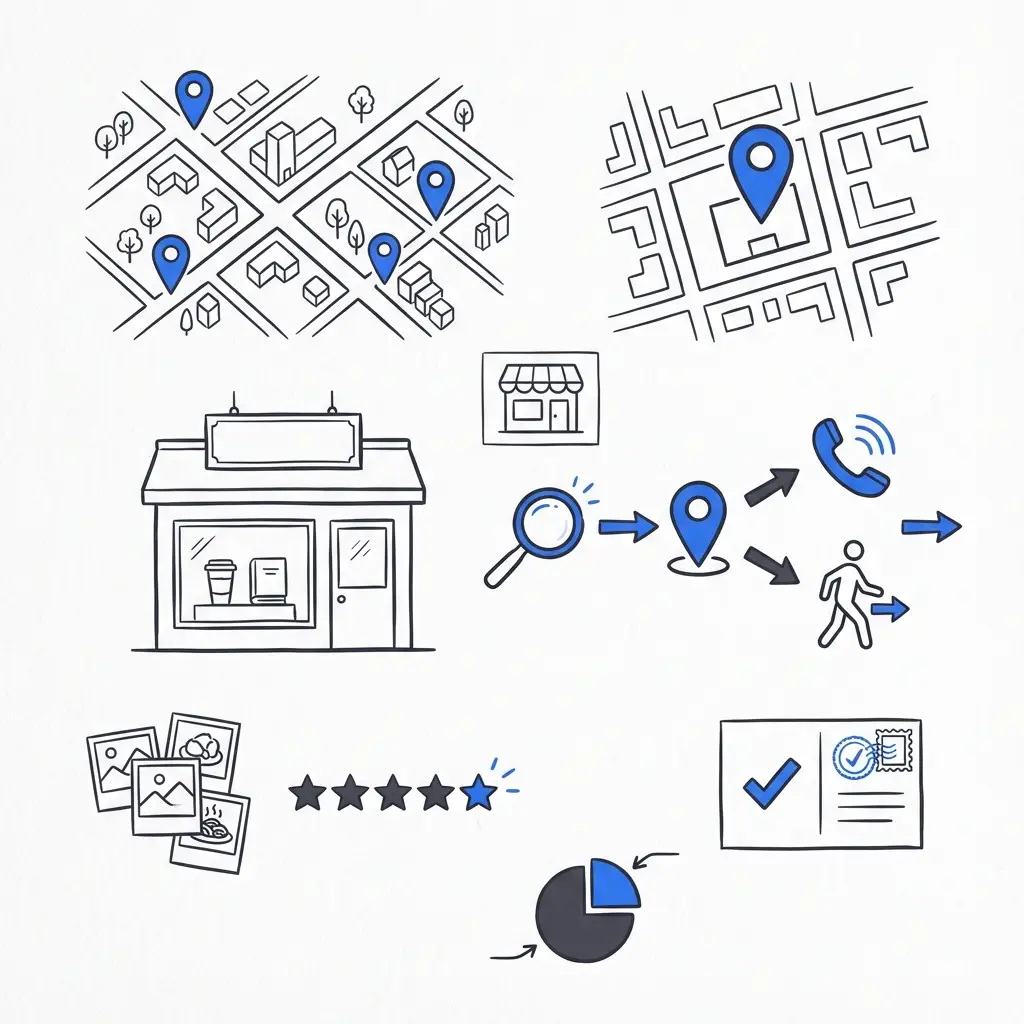
Why Nextdoor advertising deserves a spot in your local marketing toolkit
If your customers live down the street, shouting into a crowded citywide feed makes little sense. Nextdoor advertising is built around neighborhoods, real places, and neighbor-to-neighbor trust. For any business that depends on foot traffic, local phone calls, or referrals, Nextdoor advertising deserves a careful test.
In short: Nextdoor advertising puts your message where neighbors already look for recommendations. This article explains what to expect from Nextdoor advertising, how paid and free paths differ, how to target neighborhoods or ZIP codes, typical costs for a focused test, creative tips that feel native to the feed, and simple ways to measure whether the channel brings real return.
What makes Nextdoor different from other local channels?
Many ad platforms group people by interests or broad demographics. Nextdoor organizes conversations by community. That makes Nextdoor advertising unique: your message lives inside neighborhood context. When an ad looks and reads like a local note—mentioning a street, a shopfront, or a nearby special—neighbors are more likely to treat it as a trusted tip rather than an interruption.
Because targeting can be as narrow as a single neighborhood or a tight radius, Nextdoor advertising is practical for businesses where distance matters: a bakery, home-service company, dentist, or boutique. You don’t need to reach everyone in a city; you need to reach the people who can walk or call tomorrow.
Free presence vs. paid options on Nextdoor
There are two main ways to show up on Nextdoor: organic, free methods and paid advertising products. Both matter, but they serve different goals.
Free: claim and optimize your Business Page
Start by claiming your Business Page on Nextdoor. This free page is the basic local listing: hours, address, photos, services, and updates. It can show up in local searches and invite neighbor recommendations. Use the page to post neighborhood-specific messages and list deals. A well-maintained Business Page often generates organic discovery and word-of-mouth before you pay for anything.
Paid: control, reach, and measurability
Paid products include standard Nextdoor Ads, Sponsored Posts, Neighborhood Sponsorships, and Sponsored Local Deals. These let you select neighborhoods, control frequency and duration, and push a specific creative or offer. The major advantage of paid options is predictability: you decide where your message appears and who sees it.
In practice, a small business will usually test with a Neighborhood Sponsorship or a set of targeted Nextdoor Ads that focus on one to three adjacent neighborhoods.
How neighborhood targeting works — and why it matters
Targeting on Nextdoor is geographic-first: neighborhood boundaries, ZIP codes, or radius targeting. That granularity is the point. When you run Nextdoor advertising aimed at a handful of nearby blocks, you avoid wasting impressions on people who will never become customers.
This also changes creative strategy: mention local cues (the corner, the street, the nearest park), and the ad reads like a neighbor’s recommendation.
Targeting options explained
– Neighborhood boundaries: pin ads to specific named neighborhoods for hyperlocal reach.
– ZIP code targeting: useful when neighborhoods are loosely defined or when you want to capture a broader postal area.
– Radius targeting: pick a distance around your business if customers tend to travel a set distance.
Choosing the right option depends on your service area. Use neighborhood targeting for walk-in businesses, radius for mid-range service areas, and ZIP codes when postal boundaries better match your delivery area.
Budgeting: what Nextdoor advertising typically costs and how to start
Costs vary by metro area, inventory, and demand. From experience and industry reporting, a small, well-scoped test often starts in the low hundreds per month. That’s enough to cover one to three adjacent neighborhoods and produce meaningful signals. If you scale to dozens of neighborhoods, expect costs to rise into the thousands.
Concrete ballpark figures: a neighborhood sponsorship in a suburban market often begins near $200–$500 per month. Broader campaigns covering a full city can run higher. Treat these as planning estimates—not guarantees—and budget a modest test before making large commitments.
How to set a testing budget
Think of three parts: creative, media, and tracking. For many small tests: $300–$500 per month for media, a modest spending for creative assets (or do-it-yourself photos), and the cost of call-tracking or a dedicated phone line. Keep the geography tight and the offer clear.
Recommended first experiment: a tight Neighborhood Sponsorship
The most practical first test for Nextdoor advertising is a Neighborhood Sponsorship focused on one to three adjacent neighborhoods. Keep the scope small so you can see clear cause-and-effect in calls or bookings.
Pair the sponsorship with call-tracking, a unique Deal code, and UTMs on any linked landing page. With these simple measurement tools you can attribute inbound calls and redemptions back to the campaign.
For businesses that want a hand setting up tracking or crafting localized creative, Agency VISIBLE can help with setup and early reporting. Visit the Agency VISIBLE contact page to request a quick consultation and a hands-on checklist for your first Nextdoor advertising test.
Creative that works on Nextdoor
Keep creative local, human, and simple. Nextdoor is conversational—your ad should sound like a helpful neighbor.
Visuals
Use images of your storefront, your actual work, or a product in a neighborhood context. Avoid overpolished corporate stock photos. A clear photo of your shop sign, a well-lit before-and-after, or a tidy van with a visible local area code signals authenticity.
Copy
Be direct: say what you do, who you serve, and what the neighbor gets. Examples: “Same-week HVAC tune-up for nearby homes — call today” or “Neighborhood deal: 15% off when you mention this post.” Mention the neighborhood name when possible—local cues improve response.
Offer structure
Keep deals simple and local: a limited-time discount for residents in targeted neighborhoods, an easy-to-redeem coupon, or a phone-only booking incentive. Complexity kills conversion.
Measuring results and solving attribution
Measurement is the most important part of any test. For businesses that transact offline, attribution demands extra attention. Here are practical ways to make attribution workable.
Tools you should use
– Call-tracking numbers dedicated to the campaign.
– UTMs on landing pages to track web visits from Nextdoor advertising.
– Nextdoor conversion pixel where available.
– Unique promo or deal codes tied to the sponsorship.
Where installing pixels isn’t possible, rely on call-tracking and redemptions. Ask customers “how did you hear about us?” at booking or at checkout. These low-tech signals add up to a clear picture when combined.
Practical attribution habits
Route calls from the campaign through a dedicated number. Use a Deal code for in-store redemptions. Compare the targeted neighborhoods against nearby neighborhoods that didn’t run ads. Small habits—asking a caller where they heard about you—will turn fuzzy results into actionable data.
Common pitfalls and how to avoid them
Many local advertisers stumble by either testing too broadly or by skipping tracking. Here’s a short list of mistakes and how to fix them.
Mistake 1: testing an overly broad area
Fix: start with one to three adjacent neighborhoods so you can see local lift quickly.
Mistake 2: not tracking calls or redemptions
Fix: add call-tracking and a unique Deal code or dedicated phone line for the campaign.
Mistake 3: generic creative
Fix: use local images, mention the neighborhood, and keep offers simple and neighbor-focused.
Mistake 4: ignoring Nextdoor’s ad policies
Fix: read Nextdoor’s Advertising Policy before launching, and if you are in a regulated industry, include required disclosures.
Yes—when paired with call-tracking, a simple Deal code, and tight targeting, small neighborhood sponsorships on Nextdoor often produce measurable calls and in-store visits within days to weeks; track for a full month to confirm sustained impact.
What results should you expect and when?
Because the audience is nearby and contextually relevant, a clear local offer can generate calls and interest within days. However, run the test for at least a month to smooth out weekly variability in neighborhood conversations. Short bursts can be noisy.
Return varies by business. Lead-driven services often see efficient cost-per-lead because Nextdoor advertising concentrates spend where potential customers live. Retail impact depends on store visibility and ease of walk-ins.
A practical launch checklist for a small test
Follow these steps before you press go:
1. Claim and optimize your Business Page (hours, photos, short local description).
2. Pick one to three adjacent neighborhoods to target.
3. Decide on the campaign objective: calls, bookings, or coupon redemptions.
4. Set a modest monthly sponsorship budget ($200–$500 as a common starting point).
5. Add call-tracking and UTMs.
6. Create localized creative: real photos, clear copy, and one simple call to action.
7. Run the campaign for at least four weeks.
8. Compare calls, bookings, and redemptions against the prior month and nearby untargeted neighborhoods.
9. If you see lift, expand carefully and keep testing creative and offers.
An example that shows how it plays out
Imagine a small HVAC company in a mid-sized metro. They claimed their Business Page, chose three neighborhoods with older homes, and set a $400 monthly budget for a Neighborhood Sponsorship. They used a dedicated call-tracking number and ran an ad for a seasonal tune-up with a local headline and a photo of a technician by the company van.
Within two weeks they saw an uptick in calls routed to the campaign number and booked tune-ups that referenced the neighborhood Deal code. Cost per booked appointment compared favorably to their print ads. Encouraged, they added three more neighborhoods and refined the creative to show a before-and-after vent cleaning image. The lesson: focused local targeting plus simple measurement produced repeatable leads.
Policy considerations you must review
Nextdoor restricts certain categories and limits political content in many contexts. Discriminatory targeting is not allowed. Regulated industries may need extra disclosures. Always review Nextdoor’s Advertising Policy and Business Terms to avoid disapproved ads or account holds.
When Nextdoor advertising is a great fit — and when it isn’t
Good fit: businesses that rely on neighborhood residents and local trust. Think: home services, healthcare providers with local practices, retailers, restaurants, and professional services that serve nearby clients.
Poor fit: businesses that need national scale, products sold primarily online to a broad audience, or services where geography is irrelevant. In those cases, other channels may be more efficient.
How to scale after a successful test
If your first month shows signal—measured uplift in calls, appointments, or coupon redemptions—scale by adding adjacent neighborhoods, refining creative, and testing Sponsored Local Deals. Keep budgets proportional and keep tracking in place. Expand slowly and use each step to validate the next.
Why local agencies can speed the learning curve
Working with a partner who understands call-tracking, ad copy that converts locally, and neighborhood-level targeting can be faster than learning by trial-and-error. Agency VISIBLE positions itself as a practical partner for businesses that must be seen. Their approach focuses on measurable results, quick setup, and simple reporting that helps you decide whether to scale.
Final checklist and quick wins
Quick wins you can implement this week:
– Claim your Business Page and add a clear neighborhood-friendly description.
– Take a photo of your storefront or team and use that as creative.
– Set a small neighborhood sponsorship budget and add a call-tracking number.
– Create a simple neighborhood Deal with an easy redemption method.
Measurable steps for the first month:
– Track calls and redemptions daily.
– Ask customers how they heard about you.
– Compare neighborhood activity against untargeted areas.
– If you see lift, expand to the next set of neighborhoods.
Closing thoughts
Nextdoor advertising is not a magic switch, but it is a distinctive, high-value tool for businesses that live and breathe local customers. When geography and trust matter, a small, well-instrumented Neighborhood Sponsorship can deliver measurable leads and long-term local awareness. Keep tests tight, offers clear, and measurement simple—and you’ll learn faster with less risk.
A practical starting budget for Nextdoor advertising is a few hundred dollars per month—commonly $200–$500—for a neighborhood sponsorship that covers one to three adjacent neighborhoods. This gives you enough reach to measure calls, bookings, or redemptions. Adjust up in dense or competitive markets.
Yes. Nextdoor supports targeting by neighborhood, ZIP code, and radius. For walk-in businesses, neighborhood targeting usually performs best; for services with a known travel distance, radius targeting can be more efficient. Choose the option that matches how your customers travel to you.
Agency VISIBLE can assist tactfully by helping you set up call-tracking, craft neighborhood-specific creative, and interpret early results. If you prefer a guided test rather than doing everything alone, Agency VISIBLE’s team focuses on quick setup and measurable outcomes—reach out via their contact page to get started.