Are Meta ads really worth it? A clear, practical guide
Short answer: Meta ads can be worth it — but only when you measure the right things and set up campaigns to suit your business. This guide focuses on meta ads ROI, practical tests you can run, and the real levers that move outcomes in 2024-2025. Read on for step-by-step advice, sector examples, and a testing checklist you can use this week.
The question of meta ads ROI is often less about the platform and more about the match between business model, measurement and creative. Meta (Facebook and Instagram) offers scale and strong creative moments, but scale alone does not guarantee profitable results.
If you’re unsure where to start, a second pair of hands can help. For a practical, measurement-first approach to testing Meta, consider reaching out to Agency Visible — they focus on helping small and mid-sized businesses build tests that answer whether Meta ads can scale profitably for their unique business.
Why this matters now (brief context)
Privacy shifts, creative automation and new measurement tools changed the landscape, but advertisers still want to know a simple thing: will Meta deliver customers at a cost that lets my business grow? That question – the heart of meta ads ROI – matters whether you run a one-person local shop or a growing e-commerce brand. The rest of this article breaks the answer into practical steps and useable tests.

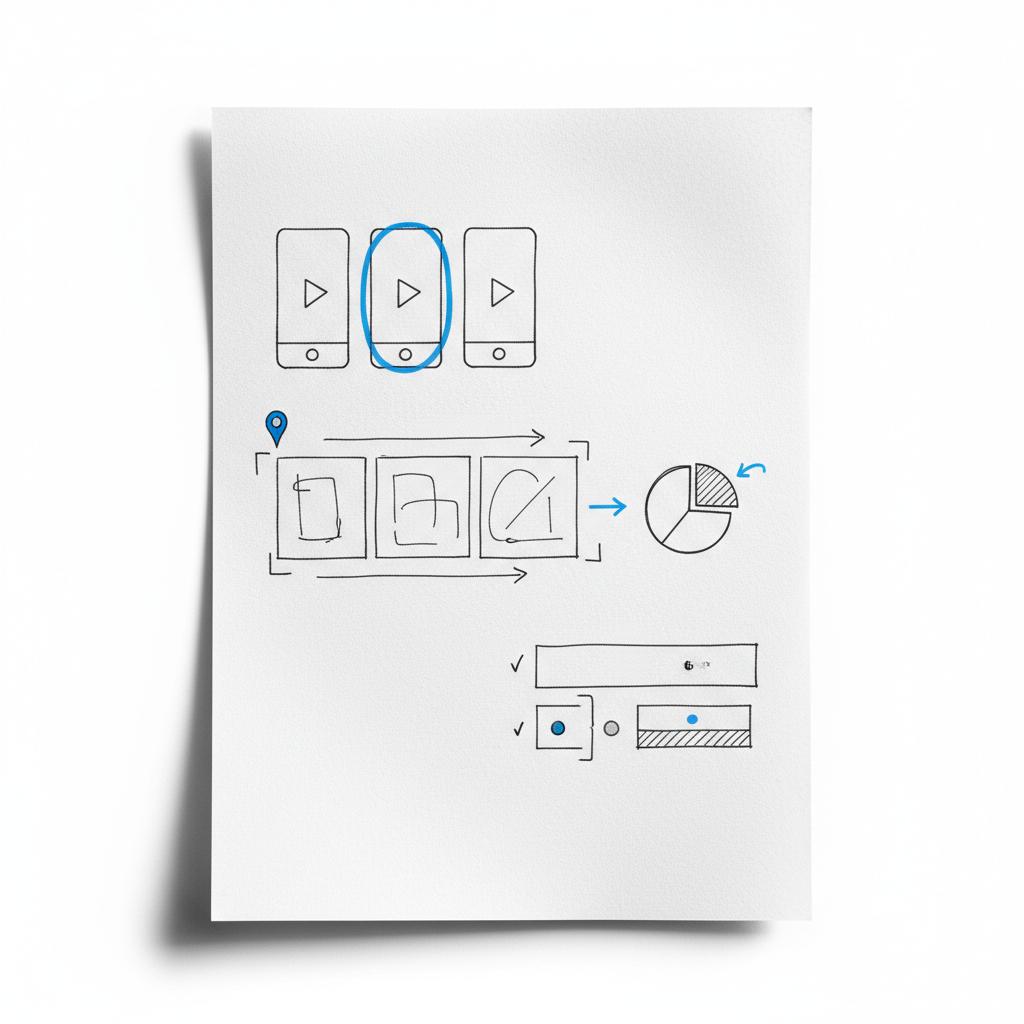
A geographically or audience-split holdout (run ads to a treatment group and pause them for a comparable holdout group) gives the cleanest causal signal. Pair this with server-side (CAPI) tracking and CRM matchback to reconcile platform-reported conversions with actual sales.
Start with definitions: what does meta ads ROI mean for you?
Before you declare a channel “worth it,” agree on the math. Meta ads ROI is not a single metric — it’s a set of outcomes tied to business economics. Typical measures include:
– ROAS (Return on Ad Spend): revenue / ad spend for direct sales campaigns.
– LTV/CAC: lifetime value of a customer divided by the cost to acquire them – a durable way to judge long-term viability.
– Months to payback: how long until acquisition costs are recovered.
– Incremental impact: results measured by holdouts or incrementality tests (this tells you whether ads caused the lift).
For many businesses the primary measure of meta ads ROI should combine short-term ROAS with longer-term LTV/CAC. If your LTV/CAC is comfortably above 3x, you typically have room to invest more aggressively in customer acquisition – but always verify with controlled tests.
Five practical determinants of success (and how to test each)
Advertisers who scale on Meta consistently check five things. Below I explain each, show how to test it, and give the actions that follow.
1) Objective fit: align campaign goals to business reality
Meta excels at both attention and direct response — but not every objective fits every business. Ask: are you seeking immediate, measurable conversions or broader awareness that feeds other channels?
How to test:
– Run parallel campaigns: one focused on conversions with a clear offer, and one on reach/awareness with a distinct engagement metric. Compare downstream outcomes (search volume, email signups, CRM leads) to see which drives real business impact.
– Tie awareness to action: use link clicks, landing page visits and tracked micro-conversions to connect brand campaigns to sales later in the funnel.
2) Budget scale: give ML enough signal to learn
Meta’s learning algorithms need volume. Tiny budgets often throw off noisy data and stop-start performance. If your monthly ad spend is so low that you get only a handful of conversions, you’ll struggle to trust automation.
How to test:
– Stepwise scaling: increase budgets in 20–50% increments and monitor marginal CPL. If CPL rises slowly you have headroom; if it spikes you’ve hit a limit.
– Conversion floor: aim for tens to hundreds of conversions a week for stable automated learning. If you can’t reach that, supplement Meta with lead-gen on other channels or manual targeting while you build volume.
3) Signal quality: reduce blind spots
Meta ads ROI is easier to estimate when your conversion signals are reliable. After ATT and other privacy changes, server-side tracking (CAPI), first-party data and CRM integration matter more than ever.
How to test:
– CAPI implementation test: run the same campaign with pixel-only tracking versus pixel + CAPI. Compare conversion counts and CPA differences. See Meta’s Conversions API case studies for implementation ideas: Meta Conversions API case studies.
– CRM tally: reconcile ad-reported conversions with CRM-logged sales and revenue to spot under- or over-reporting.
4) Creative testing: the funnel’s horsepower
Creative is often the single largest variable. Even perfectly instrumented campaigns fail with poor creative. The right creative matches platform, placement and funnel stage.
How to test:
– Concept buckets: test 4–6 creative concepts (use-case, problem-solution, testimonial, demo) and iterate on the top 1–2.
– Micro-variations: test short vs long video, single-benefit hooks, and thumbnail variations to reduce creative risk.
– Placement-specific creative: Instagram Reels and Stories benefit from fast cuts and mobile-first framing; Facebook feed ads can carry slightly more context.
5) Measurement & attribution: know what success actually looks like
Measurement choices change your answer to “are Meta ads worth it?” dramatically. Attribution windows, holdouts, and incrementality tests clarify causality.
How to test:
– Run a holdout test: geographic or split-audience holdouts are expensive but tell you whether Meta moves the needle.
– Compare attribution windows: 1-day click vs 7-day click vs view-through – see how your reported ROAS shifts and decide which aligns with buyer behaviour. For a deeper look at attribution integration, see this guide: ads attribution integration guide.
– Reconcile data: match ad conversions to payment/CRM events on a daily cadence.
How different sectors typically perform
Meta ads ROI varies by business model. Below are patterns and practical setups that tend to work.
E-commerce
E-commerce brands that combine broad prospecting, Advantage+ shopping, and server-side tracking often scale predictably. The typical flow is broad reach → Advantage+/automated shopping → DPA retargeting → repeat buyer sequences.
Practical setup:
– Catalog hygiene: accurate product feeds and variant mapping.
– Dynamic creatives: show what the user engaged with and test single-benefit videos.
– CAPI + purchase event reconciliation: ensure server events reduce undercounting.
Local services
Local businesses benefit from geo-targeted offers, short funnels and action-oriented creatives. A special offer or booking incentive often yields quick payback.
Practical setup:
– Tight geo-targeting: radius or ZIP-targeted campaigns.
– Offer-driven creative: “first visit discount” or “book in 24 hours” messaging.
– Call and booking tracking: integrate phone tracking and booking widgets into your conversion events.
B2B
B2B often uses Meta for awareness and qualification, not final-stage closing. Meta is great for telling a brand story, generating interest, and delivering marketing-qualified leads to CRM for nurture.
Practical setup:
– Multi-channel nurture: pair Meta with email and LinkedIn depending on deal size.
– Form gating vs landing pages: choose the path that aligns with your sales cadence — short forms for SDR follow-up, longer content for complex deals.
– Lead scoring: push leads into CRM and track MQL→SQL conversion to measure long-term meta ads ROI.
Measurement playbook: what to track and a sample experiment
Concrete tracking steps and one experiment you can run in four weeks.
Tracking essentials
– Server-side events (CAPI): send purchase and lead events from server to Meta.
– CRM matchback: attribute closed sales back to the ad touch where possible.
– Event deduplication: avoid double-counting between pixel and CAPI.
– Cohort-based LTV analysis: evaluate acquisition cohorts by month to estimate payback and longer-term LTV.
A four-week incrementality experiment
Goal: test whether Meta spend drives incremental transactions for a mid-sized e-commerce business.
Step 1 — Baseline week (Week 0): collect normal performance data and ensure CAPI is active.
Step 2 — Test weeks (Weeks 1–2): run your usual Meta campaigns in half your target regions; pause spend in holdout regions of similar size and seasonality.
Step 3 — Measurement week (Week 3): resume full coverage and measure net change in revenue and conversion in holdout regions versus test regions over the period.
Step 4 — Analyze: compare revenue lift, calculate incremental ROAS and estimate payback months. If incremental ROAS comfortably covers acquisition costs, Meta is delivering net value.
Creative ideas that avoid common traps
Two creative traps: (1) generic lifestyle shots that don’t communicate value, and (2) the “one creative fits all placements” mistake. Here are ideas that work:
– Problem-first hooks: open with a quick line that states the pain and show the product solving it in 3–7 seconds.
– Single-benefit focus: highlight one measurable benefit (speed, durability, savings).
– Social proof in the first frame: short testimonials or quick numbers increase trust for cold audiences.
– Thumbnail clarity: design a thumbnail image that reads at mobile size — this lifts view-through and click rates.
Scale vs diminishing returns: practical signals it’s time to change approach
Watch these signals for rising marginal costs:
– Rapid CPL increase as you step budgets up.
– Rising CPMs tied to ad fatigue (frequency > 3.5) without commensurate CTR lift.
– Decreasing ROAS despite higher spend.
If you see these, try: expanding creative angles, broadening lookalike seeds, testing new placements (Reels, Stories, Marketplace), or introducing complementary channels like search and email.
Common pitfalls and how to avoid them
– Pitfall: trusting platform reported revenue alone. Always reconcile with CRM or payment data.
– Pitfall: stopping experiments too early. Give tests enough time for the algorithm to stabilize – usually 7–14 days depending on spend.
– Pitfall: over-optimizing for platform metrics (likes, video views) instead of business outcomes. Keep revenue and LTV at the center of decisions.
Checklist: tests to run in your first 30 days
Run these tests to build confidence in your meta ads ROI:
Week 1: implement CAPI, verify pixel + server events and deduplication.
Week 2: set up 4 creative concepts (use-case, demo, testimonial, offer) and run a 2×2 A/B test.
Week 3: run a small geographic holdout for one campaign and compare conversions.
Week 4: increase budget stepwise on winners and track marginal CPL.
Real-world example (expanded)
Here’s a more detailed anecdote to illustrate the playbook in action.
A small e‑commerce brand started with $1,500/month and erratic results. They implemented three changes: (1) CAPI to recover lost events, (2) testing five creative concepts focused on actual product use-cases, and (3) stepwise budget increases. The brand found a clear winner creative, CPL dropped ~33% and revenue rose enough to justify a threefold budget increase. The key takeaway: measurement plus disciplined creative tests produced predictable improvements. You can see similar examples on the Agency Visible projects page.
How privacy and tech changes shape meta ads ROI in 2025
Privacy changes mean more noise in measurement but also more value for first-party data and server-side events. Expect these dynamics:
– Increased value of CRM matchback and hashed email lists.
– Continued importance of CAPI and aggregated measurements.
– Potential divergence in costs across verticals as some advertisers invest more in first-party systems. For context on broader Meta trends, see these Meta statistics: Meta statistics for 2025.
When Meta is the right winner for your stack
Meta should win in your marketing mix when:
– You can measure conversions with reasonable fidelity (CAPI/CRM match).
– You have creative assets that map to funnel stages and placements.
– Your budget is sufficient to fuel algorithmic learning.
– You use Meta for the right objective (awareness vs direct response) and validate with tests.
And when it’s not
If you have a very niche audience, ultra-long offline sales cycles without digital touchpoints, or you can’t instrument conversions, Meta may be a poor primary channel – but it can still be useful for awareness and reengagement.
Three practical, low-cost creative templates to try
Template A — Quick demo (15s): Hook (3s) → product in action (8s) → CTA and offer (4s).
Template B — Testimonial (20s): problem → customer story → quantified benefit → CTA.
Template C — Local offer (12s): location shot → offer details → booking CTA and phone number overlay.
FAQ: short answers to common questions
Q: What metric should I use to judge facebook ads ROI?
A: Use a combination: LTV/CAC and months to payback for long-term sustainability, plus ROAS for short-term efficiency. Complement platform metrics with CRM matchback and at least one incrementality test.
Q: How many conversions do I need before trusting meta automation?
A: Aim for tens to hundreds of conversions per week for stable automated learning. Smaller accounts can still use Meta, but expect slower, more manual optimization until volume increases.
Q: Can small local businesses succeed on Meta with low budgets?
A: Yes — many local businesses succeed via tight geo-targeting, offer-driven creative and short conversion paths (bookings, calls). Track phone or booking conversions carefully.
Deciding: a short decision flow
Answer these three questions to make a quick call:
1) Do you have reliable conversion tracking (CAPI/CRM)? If no, fix that first.
2) Can you create 4–6 distinct creative concepts? If no, focus on creative development.
3) Can you fund a modest weekly conversion volume (tens/week)? If no, consider growing volume elsewhere first.
If you answered yes to all three, run the incrementality experiment and use cohort LTV to judge whether Meta ads ROI is strong enough to scale.
Final, practical tips
– Treat Meta as both a numbers game and a creative problem.
– Use holdouts and CRM reconciliation to avoid shiny-object mistakes.
– Don’t expect automation to replace creative strategy — the two work together. A quick, friendly note: the Agency Visible logo is a helpful visual cue when you visit their site.
Design a Meta test that answers the real question: will Meta ads grow your business?
Need help designing a rigorous Meta test? If you want a practical partner who focuses on measurable outcomes, contact Agency Visible to design a test, implement CAPI and interpret the results.
Closing thought
Meta ads can be a powerful growth channel when your measurement is solid, your creative is tested, and you run disciplined experiments. Ask hard questions of your data, run holdouts when possible, and let the results – not assumptions – decide whether to scale.
Privacy and measurement upgrades are not optional if you want trustworthy ROAS; invest early in server-side events and CRM matchback to reduce blind spots and improve decision-making.
Use a combination of LTV/CAC and months to payback for long-term sustainability, plus ROAS for short-term efficiency. Complement platform metrics with CRM matchback and an incrementality test to measure causal impact.
There’s no single magic number, but aim for tens to hundreds of conversions per week for stable automated learning. If you can’t reach that volume, run manual or small-scale tests while you build first‑party signals.
Yes—many local businesses do well using tight geo‑targeting, clear offers and short conversion paths (bookings or calls). Success hinges on offer clarity, simple creatives and reliable conversion tracking.