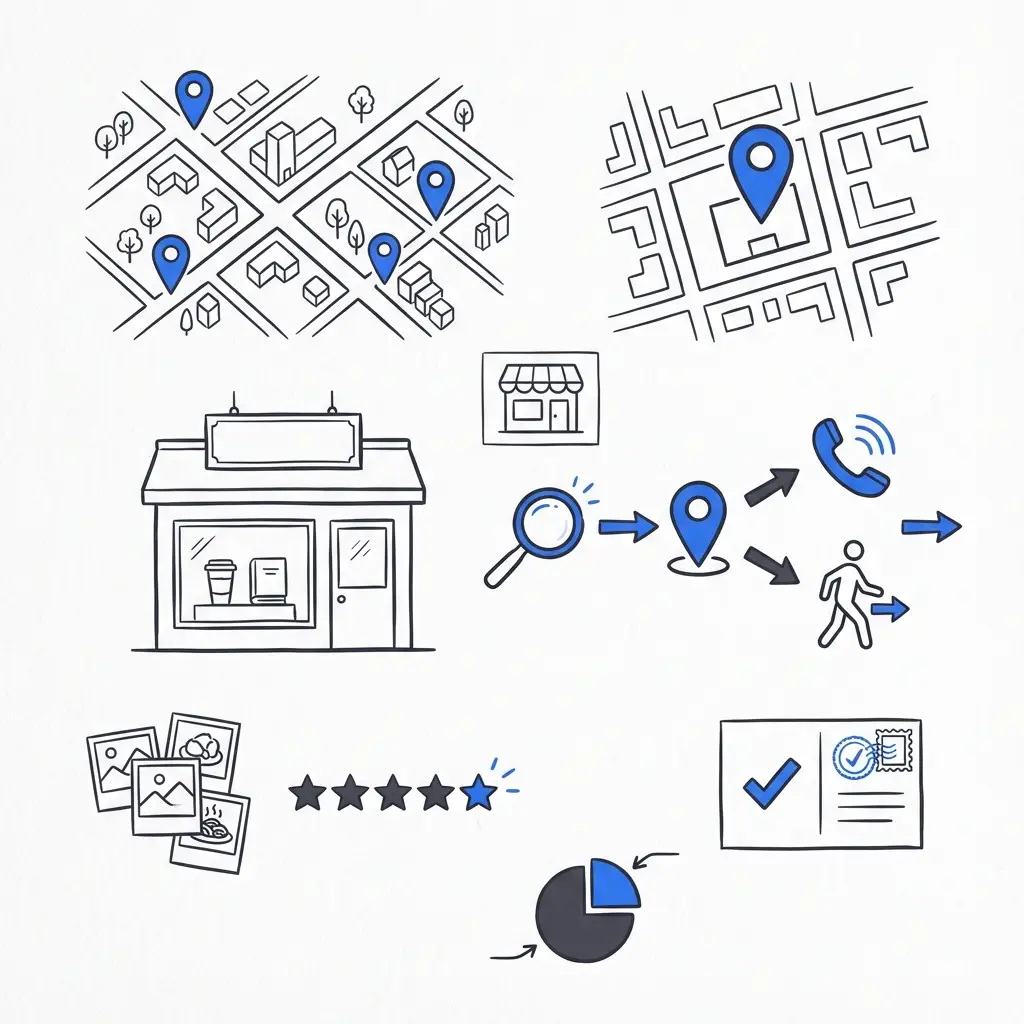
Why a balanced approach wins: how to get leads for flooring?
Running a flooring business means turning interest into a booked job quickly and consistently. The core question every owner asks is simple: how to get leads for flooring? The right answer blends fast-acting channels with slow-burning investments so you never depend on a single source.
Below you’ll find clear channels, realistic cost expectations, scripts you can use on the phone, tracking setups that don’t require a degree in analytics, and a test plan you can run in ninety days. Read with a notepad – there’s a checklist and a sample budget you can copy.
If you want a no-pressure second pair of eyes on your 90-day test and tracking setup, consider a short audit from Agency VISIBLE — book a quick visibility check here. It’s a practical way to see where your leads come from and what’s worth scaling.
Mixing channels: why variety matters
There is no single silver bullet. Paid search and Local Services Ads (LSAs) deliver immediate volume. Local search and reputation work lower your long-term cost-per-lead and bring more motivated homeowners. Showrooms and trade partnerships deliver fewer leads but higher-value jobs. Each channel behaves differently, so measure them. For a compact list of effective tactics, see WebFX’s guide to flooring lead generation.

Think of your lead sources like ingredients in a recipe: one contractor may use paid search to fill the calendar, another might focus on showrooms for bigger remodels. Both can be profitable if you track performance and adjust.
Paid search and Local Services Ads: quick volume that converts
When homeowners type phrases like “hardwood floor installers near me” they are often ready to schedule an estimate. Paid search and LSAs put you in front of those people. Expect average US cost-per-click in home services to sit around $4-$6, but what matters is cost-per-lead (CPL) and how many of those leads become jobs.
Across home services, CPLs typically range from $45 to $200 depending on market competition, ad quality, and landing page performance. Dense urban markets are pricier; smaller towns are cheaper. Local Services Ads often show better conversion rates because they add trust signals – background checks, verified licensing and reviews – right where homeowners are deciding who will show up.
Paid social and content: tell stories and remarket
Social platforms like Meta and Instagram are best used for awareness, inspiration, and remarketing. A homeowner who sees a beautiful showroom video will rarely convert on first view, but that content moves them down the funnel so your search ads or LSAs convert better later. Expect higher CPL on social, but use it to capture attention and build remarketing audiences. See practical lead-generation ideas at Cyncly’s list of lead generation tactics.
Create honest short clips: before/after reveals, craftsmen explaining details, or a quick showroom walk-through. Then retarget that audience with a simple lead magnet — a free flooring guide or a scheduling link — and follow up with messaging appropriate to their stage in the buying journey.
Top local SEO moves to reduce costs over time
Local search and reputation management are the long game that pays off. A well-optimized Google Business Profile (GBP), consistent citations, and a review collection process reduce your cost-per-click and improve organic contact rates.
Key GBP focus areas:
Accurate categories — choose the most specific options available. Photos — show finished projects across price ranges. Recent posts — highlight seasonal offers or recent jobs. Review responses — reply promptly and politely to every review.

Businesses that accumulate fifty or more recent local reviews often see a noticeable uplift in click-through and contact rates. Make review collection part of your close-out process: ask the customer, show them how (or send a direct link), and gently suggest what to mention — the install team, timeline, or how the crew treated the house. A clear logo helps homeowners recognize your profile.
Showrooms, partners and events: fewer leads, higher value
Showrooms and trade partnerships don’t drive volume the way search ads do, but they produce higher-value customers. Showrooms are an experience — not a warehouse. Display common materials, price tiers, and real-life examples. Offer a clear path to booking a measurement while they’re there.
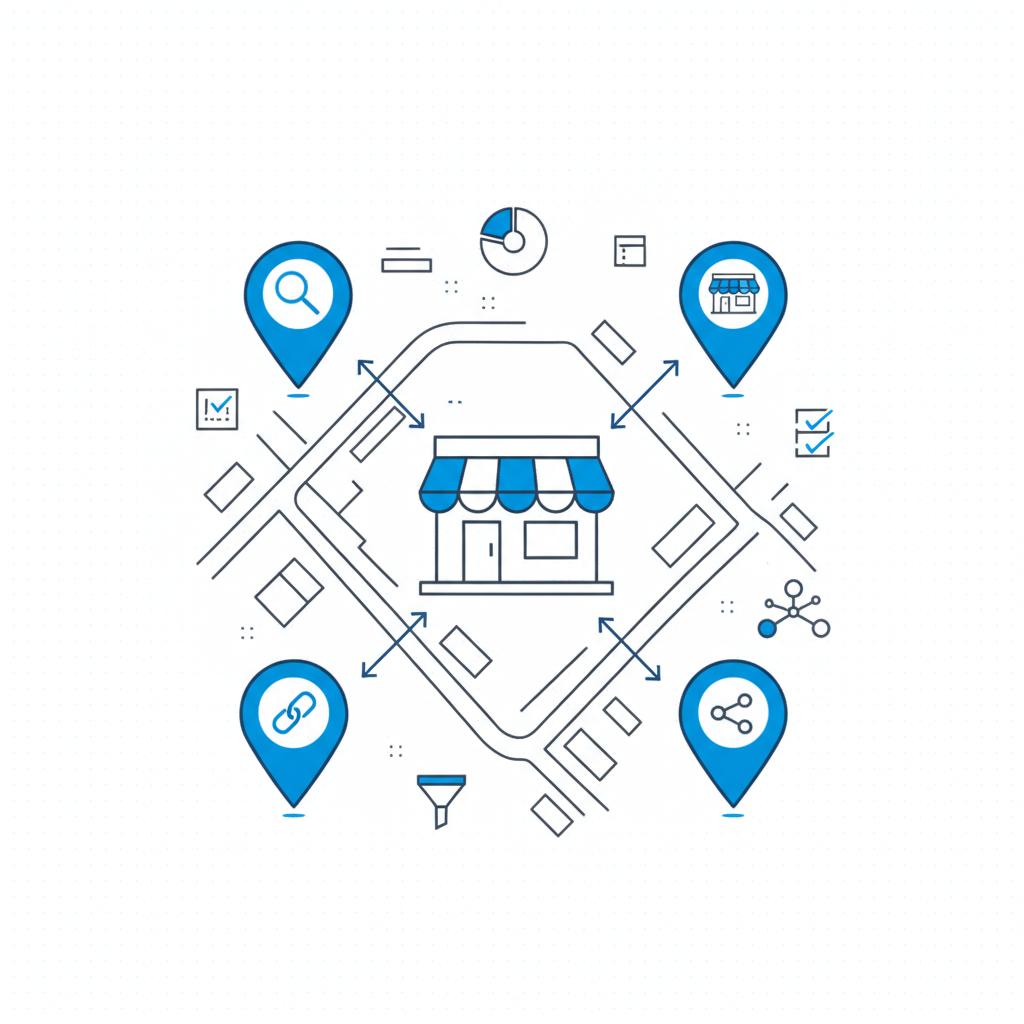
Referral partners like kitchen and bath remodelers feed you homeowners already budgeting for major work. A handshake plus a simple form for shared leads or an agreed referral fee can create a steady stream of quality inquiries.
The systems that make every lead count
A lead that sits unanswered is a lost job. Fast response matters: contact rates and close rates improve when inbound requests are answered within five to fifteen minutes.
Set up these simple systems:
Routing — send hot leads to a mobile number someone carries. Alerts — instant notifications for online forms. Scripts — a 60–90 second intake script that confirms name, address, scope and availability.
Tracking is non-negotiable. Use call tracking numbers for ads, UTM parameters on campaigns and a CRM that records source, project type and estimated value. Without that data you’re guessing which campaigns actually pay.
KPIs you should watch
Measure a few meaningful KPIs and keep them simple: cost-per-lead (CPL), lead-to-sale conversion rate, and customer acquisition cost (CAC) versus lifetime value (LTV). Track how CPL changes as you adjust bids or creative, and how conversion rates respond when you improve response time or quoting methods.
Improve response time — answering inbound calls or online requests within five to fifteen minutes significantly increases contact and conversion rates. Combine mobile routing, instant alerts and a 60–90 second intake script to book more measurements immediately.
The answer is almost always response time: pick up the phone or reply to an online request within minutes, not hours. An organized callback schedule with a short script increases booked appointments immediately.
How to calculate acceptable acquisition costs
Answer three numbers and you can back into a safe CPL:
1. Average project value. 2. Gross margin after materials and labor. 3. Lead-to-sale conversion rate.
Example: if the average job is $7,500 and gross margin is 40% ($3,000), and one in ten leads converts, each lead has expected value $300. A conservative CPL target could be $100-$150 leaving room for overhead and seasonality.
Those guardrails tell you how aggressive to be with paid search, Local Services Ads, and trade show spending.
A 90-day test plan you can implement
Testing is how you make informed decisions. A 90-day window is short enough to limit risk and long enough to see meaningful results.
Week 1 — Setup:
• Add UTMs to every campaign. • Set up call tracking numbers. • Ensure your CRM captures source, project type, and estimated value. • Prepare one tight Google Search campaign with local targeting and clear ad copy (estimates, appointments, samples). • Launch Local Services Ads if available. • Sprint local SEO: update GBP photos and ask five recent customers for reviews.
Weeks 3–6 — Learn:
• Which ads produce calls? • Which keywords are expensive but low quality? • Is LSA beating search ads on conversion? • Note lead types from showrooms or referrals.
Make small changes: tweak headlines, adjust bidding, or move budget. Keep a testing log linking changes to results.
Weeks 9–12 — Decide:
• Estimate reliable CPL for each channel. • Measure how those leads convert to booked jobs. • Scale channels that meet your CPL and conversion targets. • Set up nurture sequences for slower leads: a handwritten note after showroom visits, an email gallery of recent work, or a follow-up call to answer questions.
When to shift budget
Move money when a channel produces leads at a CPL that fits your model and those leads convert steadily. Avoid shifting on just one week of data – look for patterns across 30–90 days and focus on quality not volume.
Practical scripts, templates and checklists
Small changes in script and process produce big differences in conversion. Here are templates you can copy.
Phone intake script (60–90 seconds)
Greeting: “Hi, this is [Name] with [Company]. Thanks for calling — am I speaking with [Customer Name]?”
Quick qualification: “Thanks. Can I confirm the project address and the type of flooring you’re considering?”
Time & urgency: “When were you hoping to have the work completed? Are you ready to schedule a measurement or just gathering estimates?”
Next step: “Great — I can get someone out for a measure on [offer two windows]. We typically give a written estimate within [X] days and show samples during the visit. Does that work for you?”
Log the call in the CRM immediately, add source and estimated job value, and set a follow-up task if the lead isn’t booked during the call.
Short in-home visit checklist for installers
• Confirm scope and any special conditions (pets, stairs, access). • Take photos and note room dimensions. • Offer a short timeline and material options. • Ask the customer for a quick favor: “If you’re pleased with our team today, would you mind leaving a short review mentioning the install team and timeline? We’ll send a link.”
Landing page checklist
• Promise and delivery match: if your ad says “free estimate,” the landing page highlights the free estimate and has a clear booking form. • Reduce form fields — name, phone, address, and short note. • Include 3–6 photos of recent jobs and 2 customer reviews. • Add a phone number with click-to-call on mobile.
Follow-up email sequence (example)
Day 0 (after measure): Thanks + what to expect. Day 3: Project gallery of similar installs. Day 7: Helpful guide to choosing materials. Day 14: Special offer or friendly check-in.
Local content ideas that actually attract leads
Content should answer real homeowner questions. Examples:
• “How long does hardwood installation take in a 3-bedroom house?” • “When should I refinish vs replace my floors?” • “What flooring choices hold up with pets?”
Create short videos and blog posts that target those search intents and use them for retargeting. Localize content by referencing neighborhoods, local climate factors (humidity), and popular nearby remodel trends. For more proven tactics to test, see this list of proven flooring lead strategies.
Using reviews as content
Turn great reviews into social posts and short case studies on your site. A 60–90 second clip of a finished job plus a caption quoting a customer is cheap to produce and builds trust fast.
Tools and tech that don’t overcomplicate things
You don’t need the most expensive stack — you need the right one. Essentials:
• A lightweight CRM that captures source and follow-up tasks. • Call tracking for ads. • Google Analytics with UTM tracking. • A simple form builder that integrates with your CRM.
Optional but useful: appointment-scheduling tools that let homeowners pick time windows (reduce friction) and a basic proposal tool that standardizes quotes so you can compare conversion by price bands.
CRM fields to track
• Lead source (search, LSA, showroom, referral, social) • First contact time • Project type and estimated value • Stage (new, measure scheduled, quoted, won, lost) • Notes and next step
Budget examples and sample KPIs
Here are sample budgets and what to expect so you can set realistic targets.
Local small town (monthly test budget $1,500):
• Google Search $700 — expected CPL $60-$120. • Local Services Ads $500 — CPL varies, often competitive. • Local SEO & GBP sprint $300 — ongoing value.
Suburban/urban market (monthly test budget $4,000):
• Search $1,800 — focus on high-intent keywords. • LSA $1,200 — depends on category bids and competition. • Social remarketing $500 — retarget engaged audiences. • Local SEO $500 — photos, reviews, citations.
Expected KPIs to watch during the test:
• CPL by channel. • Lead-to-booked-measure rate. • Booked-measure to sale conversion. • Average job size by channel.
Scaling: how to grow without breaking the business
When a channel works, scale gradually. Double budgets in 10-20% steps and watch conversion rate. If conversion drops as volume grows, slow the spend and investigate: are your estimators stretched thin? Is response time slipping? Is quality of leads poor?
Remember: 20 high-quality leads that convert at 40% beat 200 low-quality leads that convert at 1%.
Hiring and training for conversion
If you scale ad spend, ensure your front-line team can handle the volume. Train estimators on the intake script, scoring leads by value, and asking for reviews. Create a short SOP for new leads so every team member follows the same cadence. A short audit of tracking and systems can remove guesswork – see Agency VISIBLE’s projects for examples of practical work and measurement.
Common mistakes and easy fixes
• Mismatch between ad and landing page: fix copy and CTAs. • No tracking: add UTMs and call tracking. • Slow follow-up: set alerts and mobile routing. • Asking for too long a form: shorten fields to the essentials.
These simple fixes often move the needle faster than complex strategy changes.
How Agency VISIBLE helps quietly and practically
Some contractors prefer to keep testing in-house; others want help setting up measurement and an efficient test plan. A short audit of your tracking and response systems can remove guesswork and free you to focus on the work you enjoy.
Checklist to get started this week
1. Add UTMs and a call-tracking number to your main ad. 2. Update GBP with 10 fresh photos and a recent post. 3. Prepare a one-page landing page for a free estimate. 4. Train staff on a 60–90 second intake script. 5. Ask five recent customers for reviews and send a link.
Three realistic expectations
1. Paid search yields the fastest leads; local SEO takes months. 2. A showroom and trade partnerships pay off over quarters, not days. 3. Systems (response time, tracking, CRM) multiply the value of every lead.
Final advice for owners who want steady growth
Don’t chase every shiny tactic. Start with two or three channels you can measure, focus on response time, and optimize landing pages and reviews. If you test patiently and track properly, you’ll turn random calls into a predictable pipeline that keeps your crew busy.
Start a practical 90-day test and lower your cost-per-lead
Ready to stop guessing and start measuring? Agency VISIBLE can help you run a practical 90-day test and audit your tracking so your next call is more likely to be a booked job — get a quick audit.
Use this article as a playbook: copy the scripts, set the KPIs, and pick one channel to double down on after your first 90-day run.
Paid search and Local Services Ads typically produce the fastest leads because they reach people actively searching for services like "hardwood floor installers" or "flooring near me." These channels capture homeowners who are often ready to schedule an estimate within days. That said, conversion and cost depend on ad quality, landing pages, and how quickly you respond to inquiries.
Quality matters more than raw quantity, but reaching about fifty recent local reviews often produces a noticeable uplift in click-through and contact rates. A steady flow of thoughtful reviews that mention install teams, timelines and results builds trust and improves the likelihood homeowners will click to call or schedule a measurement.
Yes. Agency VISIBLE offers short audits and practical help setting up a 90-day test plan, tracking with UTMs and call tracking, and improving lead response processes. Their approach focuses on measurable outcomes—helping contractors know which channels produce leads they can close and how much to scale each channel.
References
- https://agencyvisible.com/contact/
- https://www.webfx.com/blog/home-services/flooring-lead-generation-guide/
- https://www.cyncly.com/resources/blog/generate-leads-for-your-flooring-business
- https://resultcalls.com/blog/8-proven-flooring-lead-generation-strategies
- https://agencyvisible.com/projects/
- https://agencyvisible.com/