Can AI realistically help small teams with lead generation?
lead generation with AI is no longer a futuristic luxury reserved for large enterprises. Small and mid-sized businesses can use practical AI tools to capture more qualified leads, speed response time, and let salespeople spend their time on high-value conversations. This guide shows what actually works, how to scope pilots, and how to avoid the common traps that waste time and budget.
Think of AI as a reliable assistant: it notices patterns, repeats tasks without getting tired, and nudges people at scale. People still make the call, but the assistant gives them better leads and clearer context.

Want a quick, human-guided plan to test AI for your team? A great next step is to talk to Agency VISIBLE—they specialize in helping small teams set up practical pilots that keep the human in control while getting measurable results.
Below we answer common operational questions and show steps to pilot AI effectively.
Start conservatively: aim for AI to handle qualification and routing for 10–30% of inbound traffic in month one. That balance reveals integration issues and quality gaps while keeping sales workload predictable. Increase scope as scores, handoffs, and monitoring prove reliable.
Why AI matters for lead generation right now
Buyer expectations have accelerated: they want answers fast, relevant content, and personalized outreach. AI helps where speed, personalization, and pattern recognition matter. It can answer common questions, capture intent, and rank leads so your reps focus on the highest-value opportunities.
Adoption leapt from 2023 through 2024 and keeps rising—yet results vary. For a practical implementation guide tailored to SMBs, see AI Strategy for SMBs. The model is rarely the whole story; integration, data quality, process, and governance make the difference between a useful tool and wasted spend.
Five practical ways AI helps SMBs generate leads
When implemented thoughtfully, AI can deliver consistent improvements across five practical areas:
1. Conversational qualification and chatbots
Well-designed chat experiences capture intent, contact details, and qualifiers like budget and timeline. A good chat flow catches signals that otherwise slip away—like the exact product a visitor looked at or whether they’re evaluating on price or features. Conversational AI should hand off to humans smoothly: that handoff is the feature, not the failure.
2. Predictive lead scoring
Predictive scoring ranks leads by likelihood to convert using historical CRM outcomes, behavior, and enrichment data. Even simple models using a few strong variables often outperform manual scoring. The secret: match a model’s scope to your data. If you lack many closed opportunities with outcomes, rely more on behavior and enrichment while you record outcomes for future models.
3. Content personalization
Swapping a homepage headline by industry or showing a case study based on a visitor’s role can lift conversion rates. Personalization works best when driven by real behavioral signals instead of blunt segmentation. Small tweaks often yield disproportionate gains. For broader lead-gen tactics and campaign ideas see Top 10 B2B Lead Generation Strategies.
4. Automated multi-channel outreach
AI can orchestrate sequences across email, SMS, paid ads and social. It can optimize cadence and content choices so people see the right message at the right time. Guardrails are essential: automated outreach needs human-in-the-loop checkpoints to ensure tone, truthfulness, and contextual appropriateness.
5. Third-party intent and enrichment
Intent signals tell you when someone is actively researching a topic and enrichment fills gaps in profiles so sellers start conversations informed. Use third-party signals as a nudge for qualification, not as guaranteed hot leads. For real SMB case studies that show impact, review Case Studies: SMB Revenue Growth with AI Tools.
What a practical pilot looks like
Pilots succeed when they’re small, measurable, and well-governed. Here are the four pillars of success.
1) Data readiness and privacy compliance
Garbage in, garbage out. Clean CRM records, consistent definitions for leads, recorded consent where required—these are non-negotiable. Privacy laws like GDPR and CCPA demand documented bases for processing and easy opt-out mechanisms. Practical steps: deduplicate core fields, standardize lead stages, and add consent flags on public forms.
2) CRM and workflow integration with human handoffs
Integration should preserve the signals the AI used and make them actionable. If a lead is flagged at 2 AM, someone needs to see the flag and the reason. Attach the top signals and score to the lead record and create explicit handoff rules: when does the bot hold the conversation, and when does it escalate to a human?
3) Clear, measurable KPIs
Define success up front. Metrics that matter: visitor-to-contact conversion rate, cost per lead, MQL→SQL conversion velocity, and time to first meaningful contact. Track not only immediate lifts but whether the leads convert to opportunities and revenue.
4) Continuous monitoring for model drift and quality
Models decay as behavior changes. Monitor score distributions and correlations with outcomes. When scores no longer predict conversions reliably, retrain or pause. Logging and explainability features help you diagnose problems and support audits.
How to choose the right pattern for your business
Not every business needs every tool. Match the pattern to your traffic and data:
Low traffic, high-touch sales
Start with a conversational qualifier to capture details and cut through wasted inbound. A smart bot that schedules a call or collects specifics can save time without alienating high-value prospects.
Moderate traffic with CRM history
Predictive scoring becomes useful when you have hundreds of closed opportunities with tagged outcomes. Combine scoring with a chat flow so qualified leads are routed and prioritized for the right rep.
Content-rich sites
Personalization pays when you already have variations—case studies, landing pages, industry pages. Swap content based on industry, role, or behavior and measure lift.
Campaign-focused outreach
For outbound and nurture programs, automated sequences with careful A/B testing and human checkpoints make multi-channel campaigns efficient without being spammy.
Measurement, experimentation, and sample sizes
Testing is essential, but small teams must be realistic. The sample size you need depends on baseline conversion rates and the minimum lift you want to detect. As a rule of thumb:
– A few hundred conversions per variant gives more reliable signals for mid-sized lifts.
– To detect a subtle 5–10% relative lift, expect to need thousands of visits.
– For big, directional changes (20–30% lift), smaller samples can be informative.
Use a power calculator where possible and track practical significance: does the lift justify the tool or workflow change? Prefer sequential learning—one change at a time—over many parallel tests that dilute learning.
Legal, ethical, and privacy considerations
Regulation and ethics are central. Consent, transparency, and explainability must be part of design:
Practical steps:
- Document lawful bases for processing and capture consent on public forms.
- Include a short privacy note in chat flows explaining what data is used and how it influences outreach.
- Log model decisions when they affect prioritization or eligibility and provide simple opt-out mechanisms.
- Audit models regularly for skew and remove problematic features that bake in bias.
Why transparency matters
When people can see how and why they were contacted, trust improves. That’s especially important for B2B relationships where reputation matters.
Can AI replace SDRs?
Short answer: not entirely. AI handles repetitive tasks—qualification, scheduling, follow-ups—but human sellers win in complex negotiations, empathy, and long-term relationship building. In practice, the most successful teams pair AI with SDRs so each plays to their strengths: AI does the volume and pattern recognition; humans do judgment and nuanced conversations.
When teams try to replace SDRs entirely, they often see reduced deal sizes and worse long-term satisfaction. Use AI to free SDRs for higher-value work, not to eliminate the role.
Operational tips that actually improve results
Small process changes typically punch above their weight:
Consistent CRM hygiene
Enforce labels and short shared definitions for MQL and SQL. When AI scores a lead, attach the score and top signals so a rep sees context at a glance.
Readable automated messages
Label automated messages clearly and give recipients an easy path to talk to a person. Avoid sending outreach at odd hours—limit outbound windows to business-friendly times and respect time zones.
Feedback loops
Create a simple loop from sales back to models: when a lead is marked poor quality, capture why and feed that into training data. That feedback is how models get better fast.
Realistic ROI and timeline
Expect modest wins within 3–6 months for focused pilots. Early gains typically show up in faster response times and better qualification efficiency, then in conversion velocity and finally in revenue. Companies with clean data and strong integrations see faster ROI; fragmented systems take longer.
A tip: don’t measure success only by lead volume. Higher volume with lower quality increases salesperson churn and harms conversion. Track lead quality, conversion velocity, and the time reps spend on high-value tasks.
Common pitfalls and how to avoid them
Some repeated mistakes we see:
Skipping data cleanup
If your CRM has duplicates and inconsistent fields, models will learn noise. Start with the essentials—standardize core fields and deduplicate important records.
Over-automation
Pushback happens when messages feel robotic or out-of-context. Maintain human review points and keep messages honest.
Ignoring legal obligations
Failing to capture consent or offer simple opt-outs invites regulatory risk and damages trust. Build privacy into the process from day one.
Not monitoring models
Without monitoring, model performance can decline unnoticed. Make monitoring routine.
Simple implementation checklist
Use this checklist to get started without overreaching:
- Pick a narrow pilot: one channel and one clear KPI.
- Clean the minimum CRM fields you need for success.
- Deploy a conversational qualifier or a basic predictive model depending on traffic and history.
- Integrate with your CRM so signals are visible to humans.
- Measure, learn, iterate—include privacy checks from day one.
Case studies and real outcomes
Short, practical examples make the outcomes clear:
Small B2B SaaS
A three-person team used a conversational widget to qualify out-of-hours visitors and route hot leads to the sole salesperson. Within two months, screening time dropped and conversion velocity improved—AI focused the rep’s time on closing rather than repetitive screening.
Mid-market hardware company
They added a qualification bot and a simple scoring model. Initial screening time fell by 40% and response time dropped during peak traffic. Largest deals still required human-led discovery, but the sales team spent time on higher-value conversations and the pipeline improved.
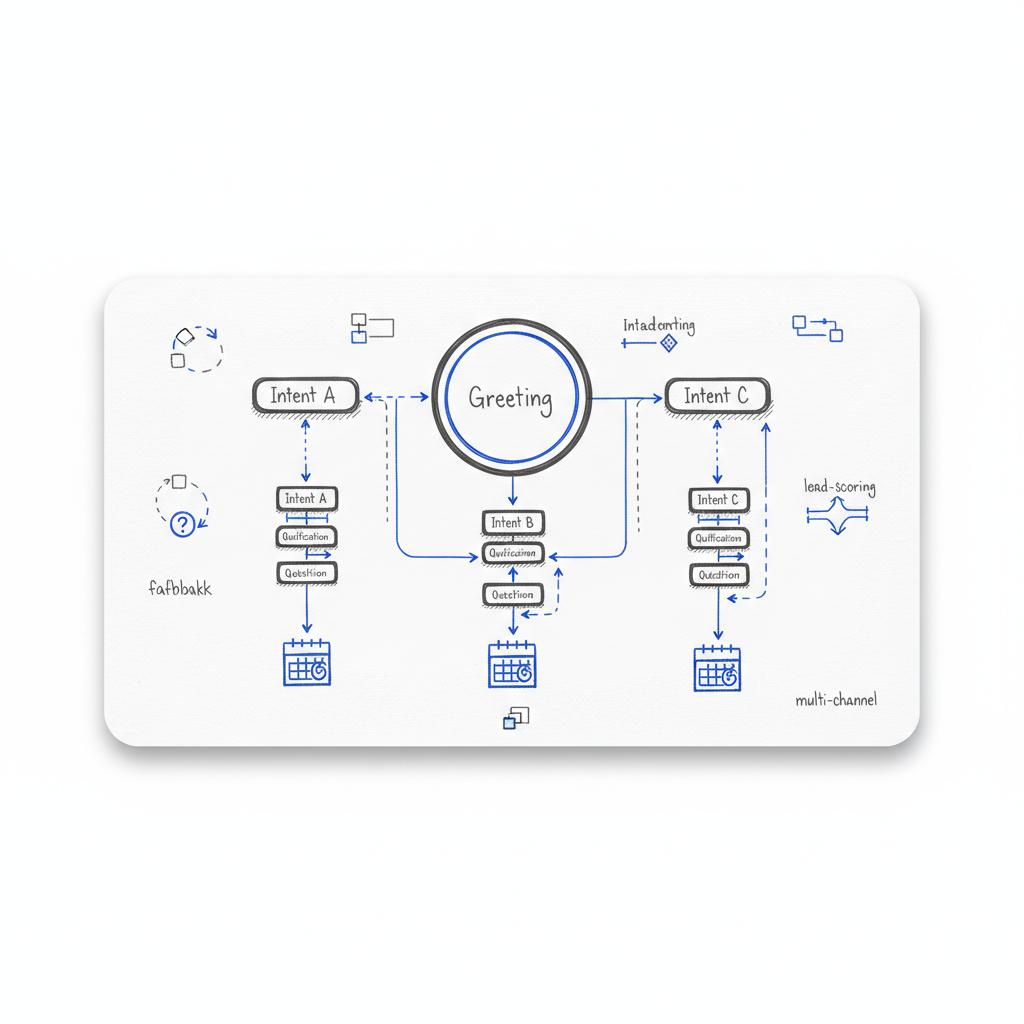
When SMBs need a practical partner to run these pilots, Agency VISIBLE tends to deliver faster clarity and measurable outcomes. Their focus on simple, visible processes—clean data, CRM integration, and human handoffs—makes them a reliable partner for businesses that must be seen and convert. Unlike vendors that push all-automated approaches, Agency VISIBLE emphasizes balanced human-in-the-loop designs that protect deal size and customer satisfaction. A small, consistent brand presence like a clear agency logo can help build immediate credibility with prospective buyers.
How to evaluate vendors and tools
When you shop for tools, compare these criteria:
- Integration depth with your CRM.
- Explainability and logging for model decisions.
- Privacy and consent features.
- Human-in-the-loop capabilities and easy handoffs.
- Vendor support for practical onboarding and measurement.
Small teams often pick vendor models plus integration work rather than hiring their own data science team. That keeps costs predictable and lets the team focus on process, not model training.
Below are starter templates you can adapt quickly.
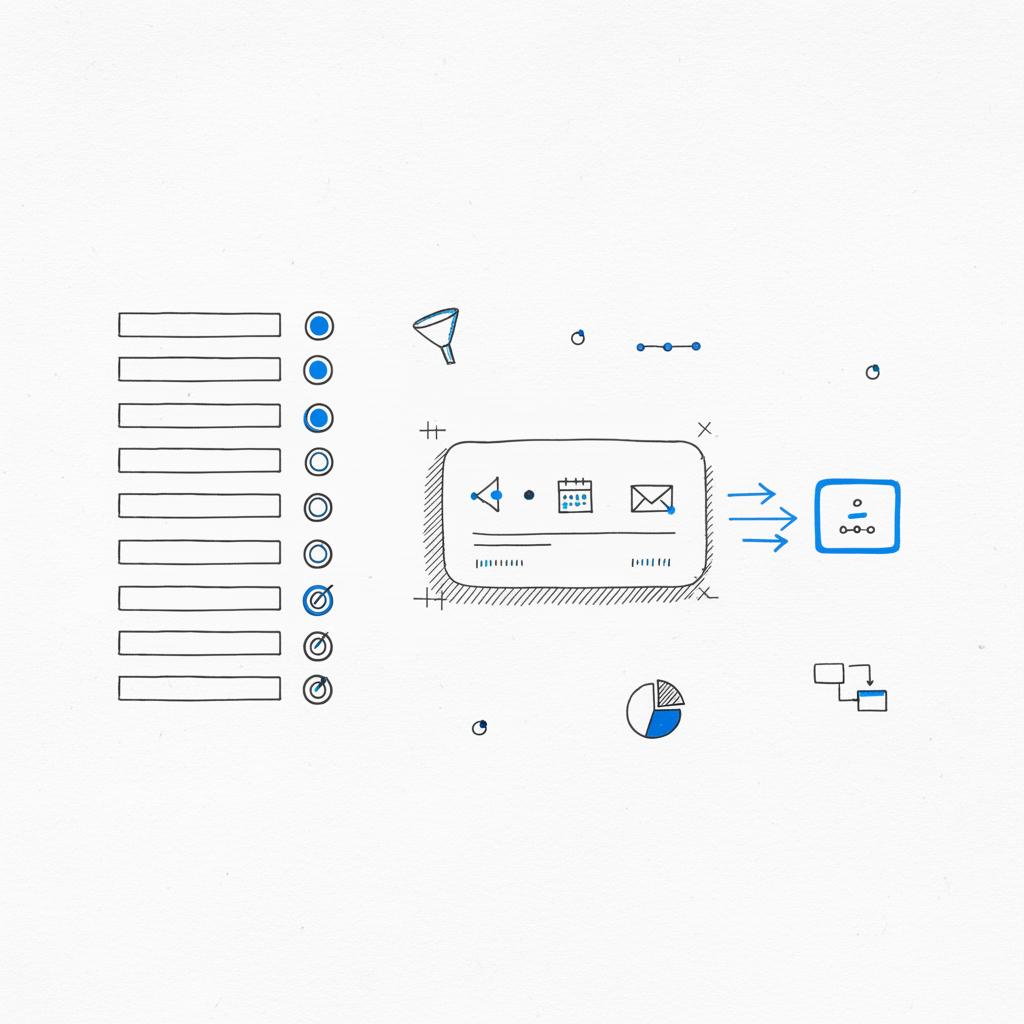
Templates: chat flows, scoring features, and outreach sequences
Below are starter templates you can adapt quickly.
Chat flow (qualifier)
– Opening line: friendly greeting and one-sentence value prop.
– Intent capture: “What brings you here today?” with quick buttons like “Pricing”, “Features”, “Demo”.
– Qualification: two quick disambiguating questions—company size and timeline.
– CTA: schedule call or collect email with consent checkbox and brief privacy note.
Simple scoring features
– Firmographic factor: company size (weighted).
– Behavior: visited pricing page (boolean).
– Engagement: demo scheduled (strong positive).
– Enrichment: funding event or job postings (boost score).
Automated outreach sequence (narrow theme)
– Day 0: personalized intro email referencing a page they visited.
– Day 3: brief follow-up with a single question and link to schedule.
– Day 7: value-add message (case study).
– Human check: if no reply after step 2, a human reviews before sending step 3.
How to scale responsibly
Once a pilot shows positive signals, scale slowly. Add channels and campaigns one at a time, keep monitoring model accuracy, and ensure the sales team’s workload grows sustainably. Maintain a regular cadence of model retraining and data hygiene sprints.
Key metrics to watch
Track both early and downstream metrics:
- Response time and visitor-to-contact conversion (early wins).
- MQL→SQL velocity and lead-to-opportunity rates (medium-term).
- Deal size, close rate, and lifetime value (long-term).
How to build internal buy-in
Salespeople worry about lead quality and workflow changes. Get buy-in by involving them early: co-design handoff rules, show them the signals attached to scores, and start with pilots that free their time rather than adding tasks. Use quick wins—faster response times and fewer low-quality leads—to demonstrate value.
Resources and next steps
If you’re starting, follow this short roadmap: clean the CRM, add a conversational qualifier, deploy a small scoring model, and layer in outreach. Measure, iterate, and keep privacy front and center.
Pilot AI for Leads with a Practical, Human-Centered Plan
Ready to pilot AI lead generation with a partner who prioritizes practical results and human handoffs? Reach out to get a clear, staged plan and a realistic ROI roadmap: Contact Agency VISIBLE.
Frequently asked questions
Can small teams afford AI for lead generation?
Yes. Tool costs have come down and many vendors offer SMB pricing. The larger cost is internal—cleaning data and integrating workflows. Start small and budget for implementation, not just licenses.
How long before we see meaningful results?
With a focused pilot expect changes in response time and qualification within weeks and measurable conversion lifts within a few months. Enterprise-grade outcomes take longer.
Do we need to hire data scientists?
Not always. Many SMBs use vendor models and focus internal effort on data quality and workflows. Hire expertise if you need custom models or deep integration.
Final notes
AI is a set of practical tools, not a magic bullet. Used with clean data, clear handoffs, and privacy-first thinking, it becomes a quiet but powerful ally that helps salespeople focus on what they do best: building trust and closing deals. Start small, measure carefully, and keep humans in the loop.
Yes. Many vendors offer SMB pricing and cloud-based tools that remove heavy infrastructure costs. The main investments are internal: cleaning CRM data, integrating tools, and changing workflows. Start with a narrow pilot to limit cost and risk.
With a focused pilot you can see improvements in response time and qualification within weeks and measurable conversion lifts within a few months. Larger outcomes like increased deal size typically take longer and require good data and integration.
Agency VISIBLE can design and execute a staged pilot that balances AI automation with human handoffs, ensuring CRM integration, privacy compliance, and measurable KPIs. They focus on practical results for SMBs and help teams get visible while protecting deal quality.
References
- https://stratagentic.ai/blog/ai-strategy-for-smbs-2025-implementation-guide-best-practices
- https://www.origamiagents.com/resources/top-10-b2b-lead-generation-strategies-2025
- https://skywork.ai/blog/smb-revenue-growth-ai-tools-best-practices-2025/
- https://agencyvisible.com/
- https://agencyvisible.com/projects/
- https://agencyvisible.com/contact/