How much should a landscape company spend on marketing?
Deciding how much to spend can feel like walking a tightrope: spend too little and leads dry up; spend too much and your margins vanish. This guide breaks that tightrope into safe steps and clear math so you can build a landscaping marketing budget that actually grows profit.
Why the right landscaping marketing budget matters
Marketing is not an expense you turn off when times are tight; it’s the engine that fills schedules and builds recurring work. A smart landscaping marketing budget targets the channels that bring customers quickly while investing in longer-term visibility that compounds over years. That balance is what separates companies that stall from companies that scale.

Start with a percentage, then refine with data
Many businesses begin with a simple rule of thumb: a percentage of gross revenue. For landscaping, a common guideline sits between four and twelve percent of revenue depending on your goals. That baseline creates a working landscaping marketing budget, but the number only becomes useful when you layer on local cost-per-lead data and your own conversion rates.
Here’s a quick baseline to consider:
– 4–8% of revenue: steady-state operation, maintaining growth and replacing churn.
– 8–12% of revenue: growth mode – new service lines, new territories, or aggressive market share capture.
These bands give you a starting budget. The next step is to make that budget actionable by assigning it to channels and calculating acceptable CPLs.
Typical channel mix for a landscaping marketing budget
A sensible starting allocation splits your budget between channels that deliver immediate demand and those that build long-term visibility. A recommended split might be:
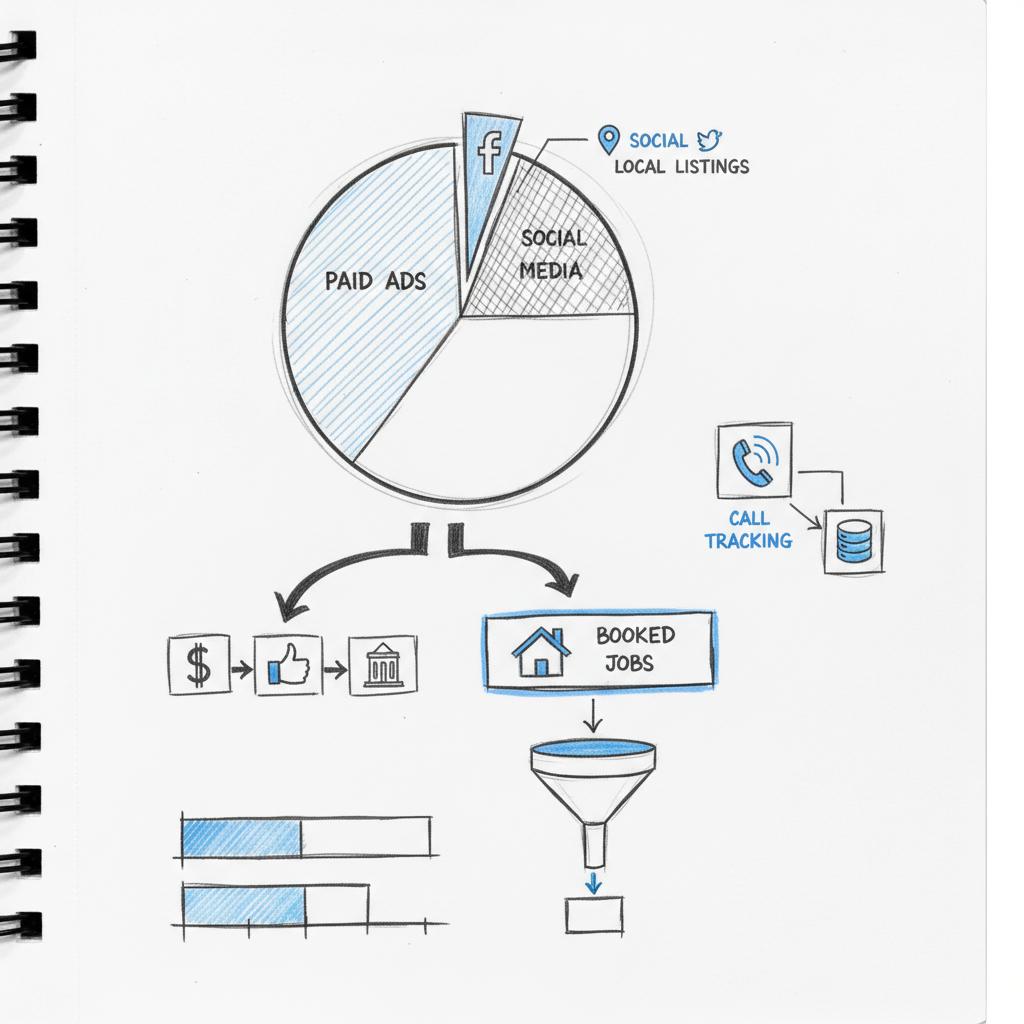
30–40% paid search & Local Services Ads for immediate inbound leads.
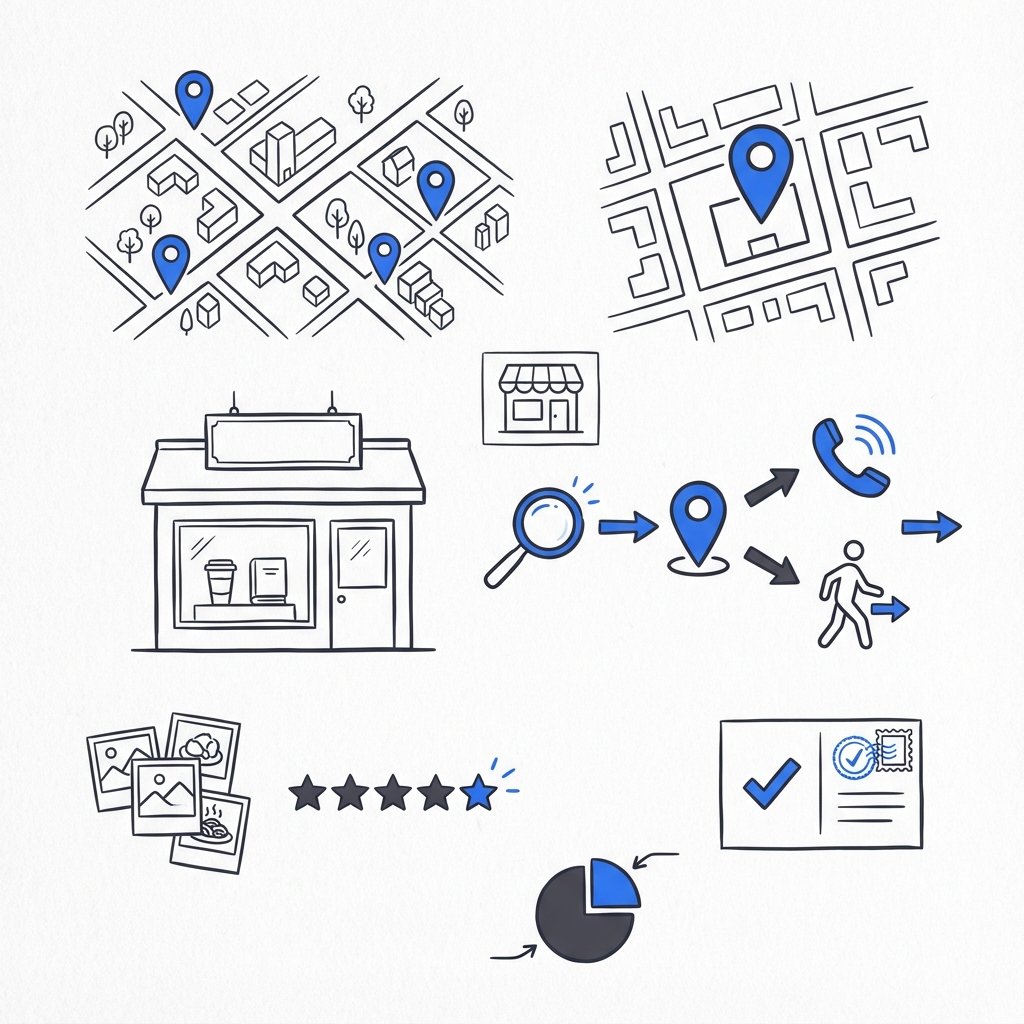
15–25% SEO & local listings to compound organic visibility.
10–20% social media paid & organic for awareness and high-margin showcase work.
5–10% retention, referral programs, and community partnerships.
5–10% testing/contingency to experiment safely.
This mix is flexible – your local market and business model will push weights up or down. Use this split to turn your percentage-of-revenue into channel dollar amounts that you can test and measure.
Real CPL ranges to expect
In 2024-2025, landscaping advertisers reported widely varying cost-per-lead numbers because local competition and search intent differ by market. Observed ranges commonly fell between $30 and $150 per lead. In many suburban markets paid-search leads cluster near $60–$100. In dense metropolitan areas CPLs commonly trend higher. For a detailed industry breakdown see Evergrow Marketing’s 2024 landscaping and lawn care Google Ads benchmarks and an analysis published on Green Industry Pros.
Local Services Ads often provide warmer intent and can produce lower effective CPLs early on because users contacting those listings are often ready to book. Still, the only CPL that matters is your own: measure it.
Turn gross margin and average job value into a target CPL
To keep marketing profitable, work backward from the money a closed job actually contributes. This is the most reliable step in setting a landscaping marketing budget that won’t sink your margins.
Step-by-step:
1) Calculate average closed job value.
2) Multiply by gross margin to find gross profit per job.
3) Decide what percent of that profit you will spend on acquiring the customer.
4) Divide that acceptable acquisition spend by your channel’s lead-to-sale conversion rate to get a target CPL.
Example: average job $2,000, gross margin 40% = $800 gross profit per job. If you’ll spend 20% of that profit on acquisition, you have $160 acceptable acquisition spend. If your lead-to-sale conversion rate is 10%, target CPL = $160 * 0.10 = $16. That low target reveals either a need to improve conversion or to include lifetime value.
This method makes your landscaping marketing budget defensible. It ties ad spend to profit and forces you to control conversion or shift to channels that deliver better lead quality.
Why lifetime value (LTV) changes everything
One-off jobs are priced differently in your marketing math than repeat maintenance or multi-season contracts. If a customer becomes a maintenance client at $1,000 per year for three years, the lifetime gross profit is much larger. That lets you sensibly pay more per lead.
Always run two scenarios: a single-job LTV and a repeat-customer LTV. The difference often justifies higher CPLs in competitive markets. A well-managed landscaping marketing budget counts on both near-term jobs and lifetime revenue to balance acquisition efficiency with volume.
Tracking and attribution: the non-negotiable step
Benchmarks are useful, but your own numbers are gold. Install call-tracking numbers per campaign, use UTM tags, and record leads in a simple CRM. Track stage progression: contact – estimate – booked – closed. Over time you’ll have channel-specific conversion rates and real CPLs.
A local example: a college-town landscaper spent $15k annually on search without tracking. After adding unique numbers per campaign and logging outcomes in a CRM, they discovered search leads converted at 5% while Local Services Ads converted at 15%. Reallocating spend doubled booked maintenance contracts without raising total spend. That result came from better tracking and follow-up – both cheap levers relative to ad spend.
When budgeting, account for the cost of talent and tools. A basic CRM, a call-tracking solution, and a couple of ad campaigns are modest line items but they’re necessary for accurate measurement. A clear logo helps with local recognition.
The lead-to-sale conversion rate — improving it lowers effective CPL and makes any marketing dollar work harder.
Seasonal timing and budget pacing
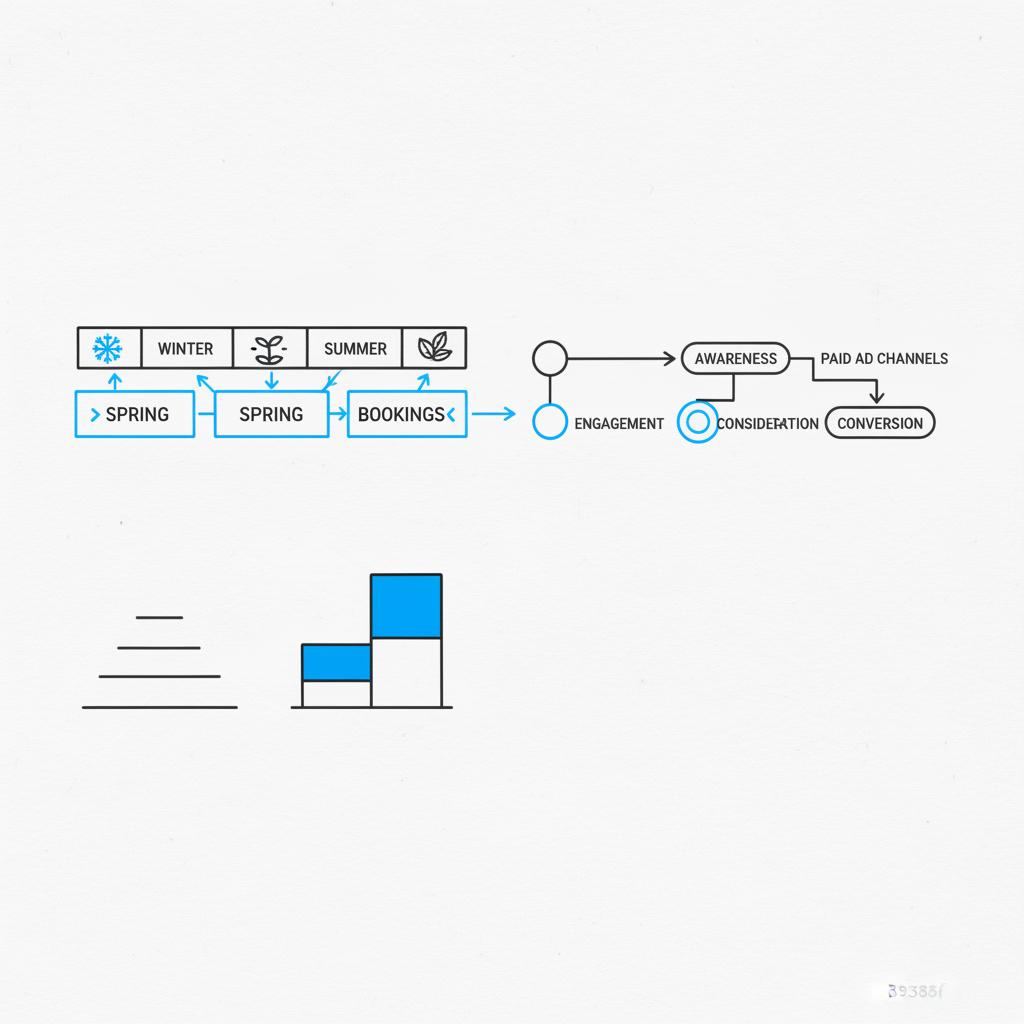
Landscaping is seasonal for many businesses. Your landscaping marketing budget should reflect that cycle. For most companies the late winter to early spring window is mission critical to build a full schedule.
Practical timing tips:
1) Front-load paid spend slightly before peak season to secure booked jobs early.
2) Maintain SEO and listings year-round so customers find you for emergency or off-season services.
3) Keep a testing fund (5–10%) to try new ad formats, landing pages, or geotargeting ahead of your busy season.
Channel-level tactics that protect profit
Paid search and Local Services Ads deliver speed, but each channel needs a conversion-focused setup:
Paid search: refine keywords to target higher-value services; use negative keywords to avoid low-margin queries; test ad copy that pre-qualifies customers. For a practical guide to running Google Ads for landscapers see this guide.
Local Services Ads: use screening scripts, fast follow-up, and clear service descriptions to maximize conversion.
SEO & local listings: claim and prove your Google Business Profile, encourage reviews, and create service pages for high-margin offerings.
Social: show before/after work and case studies to drive premium jobs and referrals. Social rarely generates high direct intent in landscaping, but it sells value.
Use ad copy and landing pages to pre-qualify leads. If you don’t want fence-staining, say that in the copy. It’s better to get fewer qualified leads than many leads that waste crews.
How to allocate dollars for three example companies
Concrete numbers make the planning real. Below are example allocations using the channel mix above.
Small shop — $500,000 revenue
Range: 3–10% = $15,000–$50,000. If they pick 7% = $35,000:
– Paid search & LSA (40%): $14,000
– SEO & local listings (20%): $7,000
– Social paid & organic (12%): $4,200
– Retention & referrals (10%): $3,500
– Testing & contingency (8%): $2,800
Mid-size firm — $2,000,000 revenue
Range: 3–10% = $60,000–$200,000. If they pick 6% = $120,000:
– Paid search & LSA (40%): $48,000
– SEO & local listings (20%): $24,000
– Social paid & organic (12%): $14,400
– Retention & referrals (10%): $12,000
– Testing & contingency (8%): $9,600
Large contractor — $8,000,000 revenue
Range: 3–12% = $240,000–$960,000. If they pick 8% = $640,000, they can run multi-territory paid campaigns, dedicated SEO teams, regional PR, and an internal platform to reconcile leads and bids across territories. See examples on Agency VISIBLE’s projects page.
Hiring vs. agency vs. DIY: which path for your landscaping marketing budget?
Choice depends on scale, skills, and urgency. Small companies often start DIY with tight tests. Mid-size firms may hire a specialist or a modest agency. Large firms usually benefit from a blended approach – internal operations plus an agency that handles paid media and measurement.
If you want a practical partner who helps with both strategy and execution, consider a short consult with Agency VISIBLE. Their team specializes in turning budgets into measurable visibility—start with a focused plan by contacting Agency VISIBLE via their contact page.
When budgeting, account for the cost of talent and tools. A basic CRM, a call-tracking solution, and a couple of ad campaigns are modest line items but they’re necessary for accurate measurement. If you bring in an agency, compare the expected lifts in conversion and volume against the agency fee to justify the spend. You can learn more on the Agency VISIBLE homepage or reach out via their contact page.
Practical tracking implementation
To get reliable CPLs and channel conversion rates, implement these steps in month one:
1) Unique phone numbers per major campaign (call tracking).
2) UTM parameters for every paid effort.
3) A CRM or spreadsheet to log lead source, campaign, stage, estimate date, and closed value.
4) Weekly review of leads and monthly attribution analysis to adjust spend.
Even simple tracking yields huge returns: when you know a channel converts at 15% vs. 5%, reallocation can double booked work without increasing the budget.
Pre-qualification scripts and sales process
Marketing gets leads; sales turn leads into customers. A strong follow-up script shortens time-to-estimate and improves conversion. Train estimators to ask specific questions that confirm scope and budget—this filters low-value leads quickly and professionally.
Consider incentivizing quick estimates: same-week estimate discounts or priority scheduling for maintenance contracts. These small moves increase conversion and improve the efficiency of your landscaping marketing budget.
Testing framework
Reserve a testing fund for controlled experiments. Test one variable at a time: landing page headline, call-to-action, local targeting radius, or ad copy that pre-qualifies. Track impact on lead volume, lead quality, and lead-to-sale rate. If a test wins, scale it; if it fails, stop and analyze.
Common mistakes that waste a landscaping marketing budget
1) Not tracking leads by source.
2) Treating all leads as equal value.
3) Ignoring lifetime value when judging CPL.
4) Letting ad spend run without monthly optimization.
5) Underinvesting in quick follow-up and sales training.
Fix these and you’ll protect margin while growing bookings.
How quickly will you see results?
Paid search and Local Services Ads can produce leads in days. SEO, local listings, and content take months to compound. Expect meaningful organic movement in 3–9 months with consistent investment. Use paid channels to bridge the gap while SEO grows.
KPI checklist for your landscaping marketing budget
Track these KPIs weekly or monthly:
– Leads by source
– Lead-to-estimate conversion rate
– Estimate-to-close conversion rate
– Average closed job value
– Gross margin per job
– Customer lifetime value
– Cost-per-lead and cost-per-acquisition by channel
These metrics keep your budget honest. When CPLs rise, ask whether conversion or LTV supports scaling or if you should shift spend elsewhere.
Refined calculation templates
Use two worksheets: one for single-job economics and one for LTV economics. Populate each with average job value, gross margin, acceptable acquisition percentage, and channel conversion rate. The templates produce a target CPL you can compare to real CPLs.
Example template fields to compute per channel:
– Avg closed job value
– Gross margin %
– Gross profit per job
– % of gross profit allocated to acquisition
– Acceptable acquisition spend
– Channel lead-to-sale conversion rate
– Target CPL
When to increase your landscaping marketing budget
Increase spend when:
– You have stable, positive ROI from a channel and enough operational capacity to handle volume.
– LTV supports higher acquisition cost.
– Market share opportunity arises in a new territory.
– You have a seasonal window and need pipeline ahead of time.
Don’t increase spend without confirming that conversion processes and crew capacity can absorb more business. Growth that outpaces operations quickly erodes margins and reputation.
How an agency can add value
A good agency brings measurement discipline, faster testing, and creative that converts. They can set up call tracking, manage Local Services Ads at scale, and provide weekly performance reviews so you never guess at CPL. If you pick an agency, choose one that prioritizes revenue impact and has experience with local service businesses.
Self-check: three questions to ask before you set a budget
1) What is my current lead-to-sale conversion rate by channel?
2) What is the lifetime value of an average customer?
3) Can my operations support 20–50% more booked work if demand increases?
If you cannot answer these quickly, allocate budget first to tracking and process fixes. Measurement converts a vague landscaping marketing budget into a growth engine.
Common scenarios and recommended responses
Scenario A – High CPL, low conversion: focus on qualifying ad copy, landing pages, and faster follow-up. Lower bids on low-intent keywords.
Scenario B – Low CPL but low LTV: shift spend to higher-margin services and change ad targeting.
Scenario C – High conversion but limited capacity: hire seasonal crews or prioritize higher-margin contracts to maintain margins.
Final checklist before you commit dollars
– Have you set a percentage-of-revenue baseline?
– Do you have call tracking and a CRM in place?
– Have you calculated target CPLs from gross profit and conversion rates?
– Is at least 30–40% of spend reserved for paid channels for near-term lead flow?
– Do you reserve testing and contingency funds?
Three next steps to make the budget real
1) Run a two-week paid test with unique numbers and UTMs on one high-margin service.
2) Track lead outcomes for 90 days and compute channel conversion rates.
3) Reallocate based on real CPLs and scale the winners.
Closing thoughts
There is no one-size-fits-all answer to “How much should a landscape company spend on marketing?” but there is a clear method to find your number: pick a revenue percentage, convert it to channel dollars, and validate those dollars against target CPLs calculated from your margins and conversion rates. Improve conversion, measure thoughtfully, and treat your budget as a living document you update as real data arrives.
Use the practical templates and steps above to build a landscaping marketing budget that protects profits while creating steady growth. Measure often. Adjust quickly. Keep the pipeline full.
Get a simple, measurable plan to turn your budget into booked jobs
Ready to turn your budgeting into booked work? If you want help setting up tracking or building a measurable plan, talk with a team that builds visibility for local businesses: start a conversation on the Agency VISIBLE contact page to get a clear, actionable plan.
Paid search and Local Services Ads typically generate visible leads within days to a few weeks once campaigns are live and optimized. Organic improvements from SEO and local listings usually take months—expect meaningful movement in 3–9 months with consistent investment. Use paid channels to bridge the gap while organic channels compound results over time.
Observed cost-per-lead ranges in 2024–2025 ran broadly from about $30 to $150 depending on market competition and channel. Many suburban markets saw paid-search CPLs near $60–$100, while dense metro areas pushed higher. The right target for your business should be calculated from average job value, gross margin, and lead-to-sale conversion rates rather than national averages.
Not necessarily. Small businesses can start with simple, tracked experiments and a basic CRM. However, an experienced agency speeds setup, measurement, and scaling. Agencies like Agency VISIBLE can help set up call tracking, Local Services Ads, and measurement frameworks that translate a budget into measurable revenue. Whether you hire an agency depends on your capacity and speed-to-market needs.
References
- https://evergrowmarketing.com/2024-landscaping-lawn-care-google-ads-benchmarks/
- https://www.greenindustrypros.com/business-management/marketing/article/22929906/evergrow-marketing-google-ads-benchmarks-for-landscaping-and-lawn-care-businesses
- https://www.serviceautopilot.com/landscaping/google-ads-for-landscapers-a-total-guide/
- https://agencyvisible.com/
- https://agencyvisible.com/projects/
- https://agencyvisible.com/contact/