Is Yelp good for local businesses? A practical 2025 guide
Short answer: for many local owners, Yelp for local businesses is a useful tool when it’s handled intentionally — not left to chance. In the first steps below you’ll find what works, what doesn’t, and how to get measurable value.
People still check reviews first. They check them sometimes before they even decide which street to walk down, and that behavior is a central reason why Yelp for local businesses remains worth understanding. Across restaurants, personal services and many specialty retail shops, Yelp acts as both discovery and social proof—the digital equivalent of a trusted neighbor’s recommendation. Yelp’s influence is visible in lists like Yelp’s Top 100 Local Businesses.
Think of this guide as a practical handbook: clear explanations, specific actions you can take tomorrow, and simple measurement ideas so you can tell whether your effort paid off. We’ll cover the free profile, review management, ads, attribution, which industries benefit most, and a few real-world examples that show how small changes create steady gains.

Why Yelp still matters for storefronts and service providers
Yelp’s role is straightforward: it helps searchers discover local places and decide whether to visit. For many people, Yelp acts as validation. That’s exactly why Yelp for local businesses matters — potential customers don’t just want to find you; they want reassurance they’ll get what they expect.
Academic and market research have shown the link between online reputation and consumer behavior. Restaurants and hospitality businesses often see the strongest correlation between review quality and foot traffic. In more technical or B2B categories, Yelp plays a credibility role rather than being the direct lead engine. For a practical overview of how reviews influence local search, see the BrightLocal guide to Yelp reviews.
What a well-managed free profile does
A complete, accurate profile increases the odds a searcher becomes a customer. Simple things matter: consistent name, address and phone (NAP) data, reliable opening hours, clear contact options, and a concise description of services. When you use those fields well you make it easier for someone to take the next step.
Photos and CTAs matter. Listings with multiple, recent photos and clear call-to-action items like reservation links, order buttons or menus get more clicks, direction requests and calls. That’s a direct win for Yelp for local businesses because higher engagement on your profile frequently translates to measurable leads. A small visual reminder like a clear logo can help keep your listing consistent across platforms.
If you’d rather not do the technical work yourself, a light, practical hand can help. Agency VISIBLE offers targeted profile audits and setup that tidy listing information, add missing photos, and set up basic tracking so you can measure the results. Learn more by visiting their contact page at Agency VISIBLE contact.
Reviews: why management matters and how to do it right
Reviews are the oxygen of the Yelp ecosystem. They are what turns a map pin into a story. Managing reviews means three simple things: invite satisfied customers to share their experience, reply thoughtfully to public feedback, and pursue the formal review dispute process for clearly false or abusive entries.
Encourage feedback at natural moments: when someone finishes a meal, after a haircut or when a job is done. Ask politely, don’t offer incentives, and make it easy by pointing customers to your Yelp listing or handing a subtle card with the URL. That keeps your listing fresh and balanced, which is crucial for how Yelp for local businesses is perceived by potential customers.
Dealing with negative reviews
When a negative review appears, take a breath. A short, human reply beats a defensive rant every time. A calm response that acknowledges the issue and offers to take the conversation offline signals to future readers that you care. If the complaint reveals a real problem, explain what you’ll do to fix it. That tactic often matters as much as gaining a new positive review.
Fix your hours, add recent photos and reply to at least one review each week — those small actions reduce friction and build trust fast, often turning profile views into calls or visits.
Answering that question quickly: fix your hours, add recent photos and reply publicly to at least one review a week. These simple actions create trust and reduce friction, and that’s the short path from profile view to customer action for many local shops using Yelp for local businesses.
Paid Yelp ads: when they help and when they don’t
Yelp advertising is mostly cost-per-click. Ads can increase visibility fast, which is useful when you launch, want to fill slow days, or need short-term demand. But ads are only effective when the profile they point to is ready. If your listing is incomplete or unwelcoming, paid clicks are wasted clicks.
So the practical rule is: make the listing work first, then test paid placement. For many owners who rely on repeat customers or high margins, ads are a controllable lever. For low-margin, single-purchase retail they may be less attractive. Because Yelp for local businesses amplifies what’s on your profile, clean information and recent reviews multiply the value of ad traffic. For examples of businesses that grew visibility through Yelp, see Yelp’s success stories.
Measuring Yelp results: smart, simple attribution
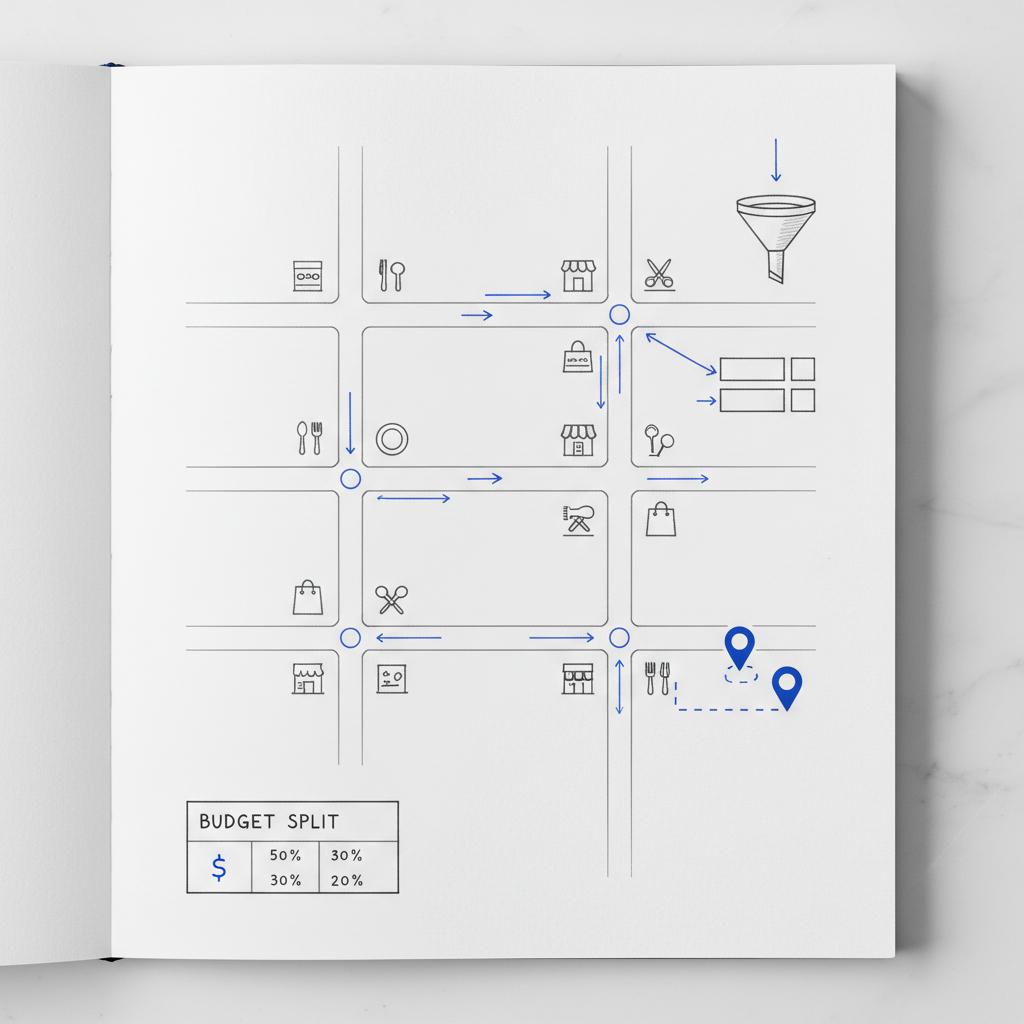
Attribution can be messy, but it’s not unsolvable. Begin by tracking the events that matter: calls, direction requests, reservation submissions, online orders and in-store visits when possible. Yelp’s own analytics show profile views and actions, but you’ll usually want call tracking numbers, UTM-tagged links, reservation integrations or coupon codes to reduce uncertainty.
For in-store sales, ask customers how they heard about you — a quick question at the register or on a checkout form yields useful data. Remember that Yelp often shares credit with other channels: customers might find you on a map, read Yelp reviews for confidence, and then call. Attribution models that allow partial credit for multiple touchpoints give a clearer picture than trying to name a single ‘source.’
Which businesses gain the most
Restaurants and hospitality tops the list: dining is experiential, choices are abundant, and people consult peers before booking or walking in. Personal services — salons, dental practices, tradespeople — also benefit because trust matters and the risk of a bad experience is a key consideration.
Retail is mixed. Boutiques and specialty stores that sell differentiated products can benefit from Yelp for discovery and reputation. Convenience-driven or price-only retailers often see smaller direct revenue impact from Yelp. B2B and technical services use Yelp more for credibility than for direct lead generation.
Practical checklist you can use today
Here’s a short, actionable list you can run through in 30–60 minutes:
1. Verify NAP: make sure your name, address and phone match your website.
2. Check hours: correct any discrepancies and add special hours.
3. Add photos: at least 6 recent images of your interior, product and people (no staged stock).
4. Write a 50–100 word service description in plain language.
5. Reply to the last five reviews — thank compliments and address any complaints.
6. Add reservation or ordering links if available; use UTM tags where you can.
7. Set up a call-tracking number if phone bookings matter.
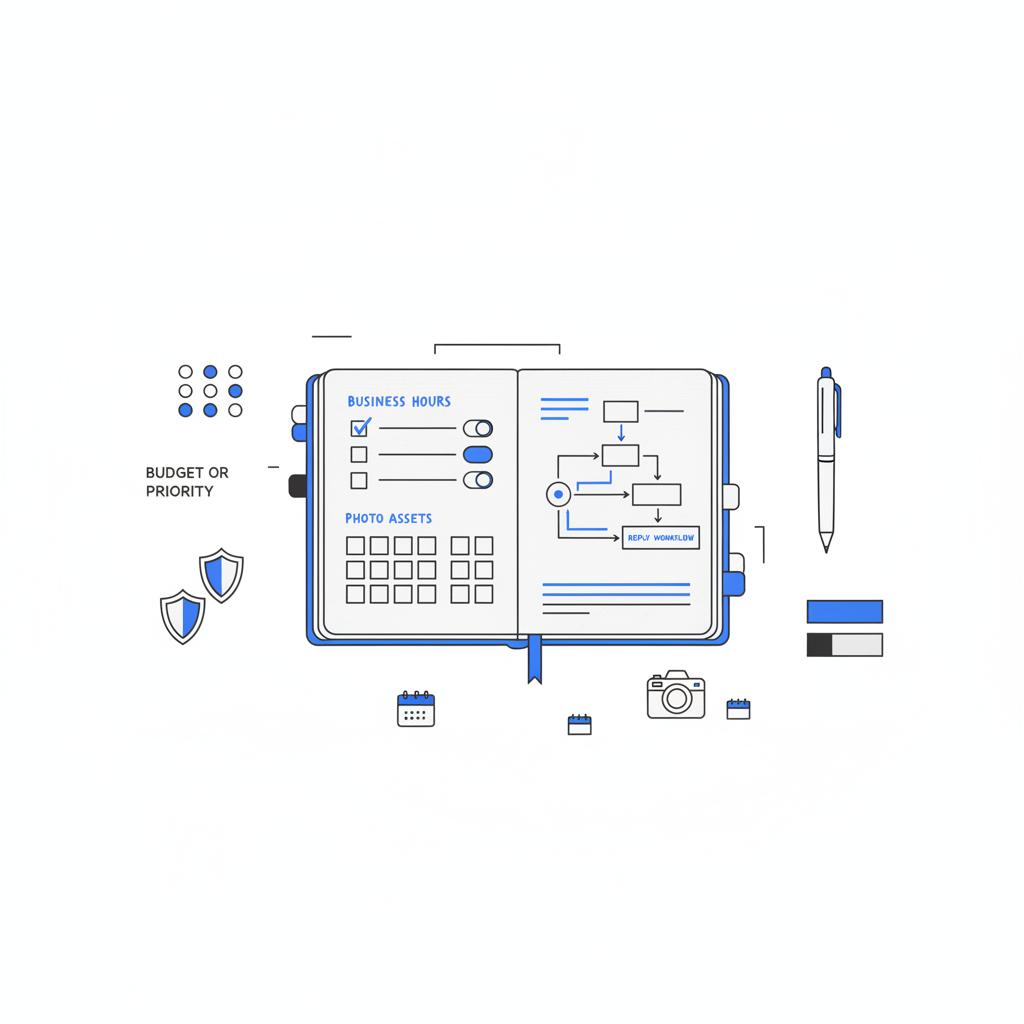
These steps are the quick wins that often move the needle for businesses using Yelp for local businesses.
How to run a small paid-test on Yelp
If you decide to test ads, treat them as an experiment. Run a small campaign for 2–4 weeks, monitor profile views and measurable leads, and calculate cost-per-lead. Because the value of a lead depends on lifetime customer value, be ready to pause if your cost-per-lead exceeds what your margins tolerate.
Also consider timing: run tests around a seasonal boost or when you can easily measure an uptick (a holiday weekend for a restaurant, for instance). Used this way, ads can reveal the potential reach of Yelp without a large commitment.
Real-life example: the café that learned to match its presence to reality
A neighborhood café had inconsistent online hours and received a sharp review when customers arrived expecting evening service. The owner promptly fixed the hours, replied to the reviewer, invited them back and made it a habit to ask satisfied customers for short comments. Over a few months foot traffic rose — not because of a menu overhaul, but because the online profile matched the real experience and customers felt heard. That’s the kind of practical change that makes Yelp for local businesses worthwhile.
Common owner questions, answered plainly
Is Yelp worth it for a small business?
Short answer: often yes, if your customers look for businesses like yours online. If you run a restaurant, salon, or a services business where reputation matters, a maintained profile is cost-effective visibility. If your work is mostly referral-based or closed sales cycles dominate, Yelp may be lower priority.
Should I buy Yelp ads immediately?
Not usually. Make your profile great first and set up tracking. Ads amplify what’s already there — they don’t magically fix an incomplete profile.
How many reviews do I need?
Focus on quality and recency. A steady flow of recent, specific feedback reassures browsers far more than a handful of dated five-star reviews.
Can I remove fake reviews?
Yelp has a moderation process. Flag abusive or fraudulent reviews and provide documentation. The system isn’t perfect and removals aren’t guaranteed, but persistence and good records help.
How to respond to negative reviews?
Pause, draft a calm reply, offer to take the issue offline and propose a solution if possible. Future customers often weigh your response as heavily as the complaint itself.
Red flags to avoid
Don’t buy or solicit fake reviews. Yelp actively discourages review manipulation and will penalize businesses that attempt it. Instead, create legitimate opportunities for satisfied customers to leave feedback when they’re most pleased.
How this fits into a broader local strategy
Yelp is one piece of a larger local presence that should include search engines, social channels and direct relationships. The best results come from treating each channel with care, tracking outcomes and adjusting where necessary. For many owners, a tidy Yelp profile is an efficient, visible place to start. Learn more about Agency VISIBLE on their homepage and see examples of past work on their projects page.
Longer-term priorities for visibility
After the basics, focus on steady content: new photos, seasonal updates, and occasional posts or highlights that showcase events or promotions. Combine Yelp activity with a local SEO plan and social proof channels so that each platform reinforces the others. Over months, that consistency compounds into higher awareness and more predictable growth from local search.
When Yelp may not be the priority
Some businesses operate on referral-heavy models or long B2B sales cycles. Others sell low-margin, impulse items where immediate online discovery rarely drives purchase. For those businesses, Yelp can be useful for credibility but will seldom be the key lead generator. Consider reallocating effort to channels with clearer ROI for your model.
Simple scripts and templates for replies
When you reply to reviews, keep it brief and human. Here are two quick templates you can adapt:
Positive review: “Thanks so much for the kind words — we’re glad you enjoyed your visit! Hope to see you again soon.”
Negative review: “We’re sorry to hear about this. Please DM or call us at [phone] so we can make it right. We appreciate your feedback and will use it to improve.”
How to prioritize your time
If you have limited hours, focus first on accurate NAP data, hours and photos. Then reply to reviews and set up one form of basic tracking (call tracking, a simple “How did you hear about us?” question or a UTM-tagged link). When those are in place, a small ad test makes sense because you’ll be able to measure the results.
Case for patient, practical investment
Yelp won’t transform your business overnight, but consistent attention brings cumulative benefits. Small businesses that treat listings as an extension of their front door — accurate, inviting and responsive — tend to see lasting improvement. Think weeks and months rather than days.
Quick audit offer
If you’d like a simple assessment, we can do a short audit of your Yelp profile and suggest the three easiest changes likely to increase clicks and calls within two weeks. No jargon, no hard sell — just practical fixes you can implement or hand to a team member.
Get a short, practical Yelp audit
Want a short, practical audit? If you want help tidying your profile, setting up tracking, or drafting replies, contact Agency VISIBLE for a friendly, no-pressure review and three concrete suggestions you can use immediately.
Summary checklist you can keep in your head
Make your profile accurate. Make it welcoming. Encourage real customers to leave recent, specific feedback. Reply with care. Measure who contacts you and why. Only spend on paid visibility when you can see whether it’s paying off. Follow those steps and Yelp for local businesses will become a dependable tool rather than a mystery.
Final practical tip: schedule 15–30 minutes each week for listing maintenance — new photos, a review response or a small profile tweak — and you’ll be surprised how much steady progress that produces for local discovery.
Thanks for reading — and good luck making your online doorway match the experience you offer in person.
Yelp ads can be worth it if your profile is complete and you can measure leads. Ads boost visibility quickly, which helps launches or filling slow days. Start with a small test (2–4 weeks), track profile views, calls and reservations, and calculate cost-per-lead. If the cost per lead is higher than your acceptable margin, pause and reassess. Ads work best when your free listing is well-optimized and when customer lifetime value makes higher acquisition costs acceptable.
Ask at natural moments when customers are most satisfied, for example after a meal or finished service. Use polite, low-pressure prompts: a receipt note, a card with the Yelp URL, or a quick on-the-spot ask. Never offer incentives for reviews—Yelp prohibits that and it risks penalties. Make leaving feedback easy and thank people when they write reviews; a steady stream of genuine, recent reviews helps more than a single push.
Yes. A focused agency can tidy inconsistent NAP data, add high-quality photos, set up basic tracking like call tracking or UTM tags, and draft thoughtful review replies. If you prefer not to do the day-to-day, an experienced partner can act like a steady neighbor—taking care of technical tasks while you run the business. If you want, Agency VISIBLE offers a short audit with three prioritized changes to increase clicks and calls.