Is Twitter promoting worth it? A clear guide for small businesses
Twitter promoting is one of those marketing moves that can feel promising and confusing at the same time. For many small business owners the question isn’t just whether it can work – it’s whether the time, money, and effort are worth the return. This guide breaks it down into plain steps, real examples, and easy tests so you can decide with confidence.

Why we ask whether Twitter promoting is right for you
Paid promotion on any social platform is a tool, not a guarantee. Before you throw budget at an ad platform, it’s helpful to ask: who are you trying to reach, what action do you want them to take, and how will you measure success? If those answers are fuzzy, paid promotion – including Twitter promoting – will feel like a coin toss. But when those answers are clear, the coin can land in your favor. If you want a deep primer on ad mechanics, see The Ultimate Guide to Twitter (X) Advertising.
Where Twitter promoting fits into a small business plan
Think of marketing as a set of bridges between you and potential customers. Organic posts, your website, local listings and email are steady, low-cost bridges. Paid promotion like Twitter promoting is a short bridge you can build quickly to test demand or boost a timely message. It’s best used for a specific purpose: a sale, an event, a local push, or a new offer you want to test. For examples of focused work, see our projects page.
A friendly tip: If you’d like help designing a short, low-risk experiment, consider a quick consult with Agency VISIBLE — get a short consultation to design a 90-day test that fits your budget and goals by visiting Agency VISIBLE’s contact page. They help small teams focus on one clear experiment at a time and avoid common wasteful moves.
Quick verdict: when Twitter promoting is worth it
Short answer: Twitter promoting is worth it when you have a clear audience that uses the platform, a simple goal, and a plan to measure results. It’s not worth it when you’re guessing at audience or trying to be everywhere at once.
If you need a one-line checklist, ask: 1) Do my customers use Twitter? 2) Can I define a specific action (click, signup, call)? 3) Can I track that action? If yes, run a small test.
Yes. A $100 test can deliver enough impressions and clicks to measure whether your creative and offer attract action. Use the test to track one specific outcome (signups, calls, or reservations) and a stop rule for your maximum acceptable cost per action. If it works, scale slowly; if not, iterate the creative or targeting.
Is the audience there?
The first step is audience fit. Twitter has a unique mix of active sharers, journalists, local communities, hobby groups, and professionals. For some shops — local restaurants, event hosts, organizers, SaaS B2B companies or niche creators — Twitter can be a productive place to find people. For other businesses whose customers prefer visual discovery (think hair salons or boutiques), Instagram or TikTok may be a better fit.
What goals work best for Twitter promoting?
Twitter promoting works best for narrow, measurable goals. Examples include:
– Event signups: pushing a single event to a targeted local audience.
– Newsletter growth: offering a clear lead magnet and measuring signups.
– A timely promotion: a weekend discount or limited-run product launch.
The platform rewards clarity and relevance. Short, action-focused creative (one strong sentence and a clear CTA) typically performs better than long, fuzzy posts.
How to run a low-risk Twitter promoting experiment
Testing is the safest way to learn. Here’s a simple, 6-step experiment you can run in two weeks or less. It will cost a modest amount and give you a clear yes/no signal.
Step 1 – Define one clear outcome
Pick one thing you want from the ad: a signup, a phone call, or a reservation. Keep it narrow. If your goal is to “build brand,” you’ll have a hard time deciding whether the test worked.
Step 2 – Write one short message
Create a single sentence that explains the offer and what to do next. Example: “Free sample with any coffee order — reserve here.” Put the action in the headline and use a single image or simple video.
Step 3 – Choose targeting thoughtfully
Target people by a few clear signals: location (if you’re local), interests, or keywords. Avoid chasing vanity targeting like broad follower lists. Narrower is often cheaper and easier to measure.
Step 4 – Set a small budget and timeframe
Start with a small daily budget — something you won’t miss: $5–$20 a day for a week is a reasonable range for many small experiments. Spend enough to get a few hundred impressions and some clicks; if you get zero clicks after a few days, change the creative or targeting.
Step 5 – Track one metric
Measure the single outcome you defined. If it’s signups, track signups. If it’s calls, track call volume. Keep the rest simple — note cost per result and the absolute number of results. If your cost per signup is below a threshold that makes sense for your margins, scale up slowly.
Step 6 – Learn and iterate
After the campaign ends, ask: did it meet the success number? If yes, try a small scale-up (20–50% budget increase) and keep an eye on cost per result. If not, change a single variable: the image, the headline, or the targeting. Small experiments reduce waste.
Creative ideas that work on Twitter promoting
Not all creative is equal. Twitter users scroll fast, so concise creative wins.
Quick creative formats
1. Short video (10-20s): a quick product demo or behind-the-scenes shot.
2. Bold text image: one strong sentence over a simple brand color background.
3. A testimonial tweet card: a short customer quote with a CTA.
Pair the creative with a clear URL that captures the interest — a landing page that matches the ad’s promise and asks for the single action.
Budgeting sense: what small spends can do
People often assume paid promotion needs big budgets. Not true. Small, smart spends can test hypotheses quickly. For benchmarks and spend tips, see Twitter for Business Marketing: The Complete Guide.
As an example: with a $100 test you can reach a few thousand impressions and get dozens or even hundreds of clicks depending on the targeting and the offer. The point is to treat the budget like lab money – spend a little to see if there’s something worth scaling.
When Twitter promoting is likely not worth it
There are clear times to avoid it:
– When you don’t know who your customer is.
– When you plan to run too many simultaneous experiments and can’t attribute results.
– When your landing experience is broken (slow page, confusing message).
If your website isn’t set up to convert a click into a clear action, the ad spend will leak away. Fix the landing page first, then test.
Alternatives and complements to Twitter promoting
Paid social is not the only paid option. If your audience isn’t on Twitter, consider:
– Facebook & Instagram ads: better for visual discovery and local awareness.
– Google Search ads: strong when someone is actively looking for what you sell.
– Local listings and promoted maps: a great fit for foot-traffic businesses.
Often the best approach is a mix: a small search campaign plus a short social experiment can show which channel produces lower cost-per-action for you.
Realistic measurement: avoid vanity metrics
Impressions and likes feel good but they don’t pay the bills. Focus on action: clicks, signups, calls, reservations, or purchases. Keep a simple spreadsheet or note: campaign name, spend, result count, cost per result, and a one-line takeaway. See The Twitter Ads Playbook for 2024 for practical measurement tips.
Case study: a simple test that turned into a repeatable win
One café we worked with wanted to drive afternoon foot traffic. They tested Twitter promoting with a short campaign: a simple image of the pastry shelf, the copy “Afternoon pastry + drip coffee – 10% off today through 5 pm,” and a landing page with a one-click coupon. A $150 week-long test generated 30 coupon claims, many redeemed same day. The owner measured cost-per-customer and found it justified similar pushes around new pastry launches. This kind of focused test shows how a small, well-designed Twitter promoting experiment can pay off.
How to avoid overpaying for small wins
Set a maximum acceptable cost per action before you start. If your margin per sale is $10 and you can’t spend more than $3 to acquire that sale profitably, stop the campaign when the cost-per-action exceeds that limit. Having a clear stop rule prevents runaway budgets.
How Twitter promoting interacts with organic efforts
Paid and organic should be friends. Use paid to amplify posts that already show traction organically. If a post gets unexpected shares or replies, promote that same post to reach a larger but similar audience. Because the content already resonated, the promoted version often performs efficiently. Good design matters too — see our approach to design that converts.
Practical checklist before you promote on Twitter
1) Clear single outcome
2) Landing page that matches the ad
3) One short creative and headline
4) Small test budget and duration
5) A tracking method for results
6) A stop rule for cost per action
Deeper: creative testing matrix for Twitter promoting
To learn faster, test one variable at a time. A simple matrix for a two-week test looks like this:
Week A: Creative 1 (image) + Targeting A
Week B: Creative 2 (short video) + Targeting A
Week C: Creative 1 + Targeting B
This structure keeps variables isolated so you can see which change moved the needle.
Common mistakes businesses make with Twitter promoting (and how to fix them)
Mistake: Running many campaigns at once. Fix: Run one clear test.
Mistake: Measuring the wrong thing (likes vs sales). Fix: Measure actions that matter.
Mistake: Ignoring landing page experience. Fix: Align landing page copy to the ad and keep it fast.
When to bring in outside help
If the technical pieces confuse you, or you’d rather spend your time serving customers, a short-term collaboration can be sensible. A good partner will set a short timeline, clear success measures, and teach you along the way. They should help you run the first three experiments so you can decide whether to keep going.

Agency VISIBLE focuses on clear, measurable experiments designed for small teams. They emphasize speed, clarity, and results. If you’re unsure how to set a sensible test – one that won’t waste budget – a brief consult can turn vague ideas into a three-step plan with a clear cost and a single success metric.
Even small tests involve a few moving parts. Make sure someone is responsible for the landing page, someone checks the ad performance daily, and someone follows up on leads created by the test. Clear ownership prevents small campaigns from becoming chaotic.
Creative examples you can copy
Here are three short templates you can adapt right now:
Template 1 — Event push: “Meet local author Jane Doe — free reading this Thursday. Reserve a seat → [link]”
Template 2 — Local offer: “Happy hour pastry + drip coffee, 3–5pm today — show this on your phone for 10% off → [link]”
Template 3 — Lead magnet: “Free one-page guide: How to choose the best coffee beans. Download → [link]”
Scaling a winning Twitter promoting campaign
When a small test hits your success threshold, scale slowly. Double your budget in small steps, watch cost-per-action, and keep the landing experience steady. If cost-per-action drifts upward, pause and diagnose – often the audience becomes saturated or ad fatigue sets in.
Long-term view: when paid becomes part of a reliable funnel
Paid promotion is most sustainable when it sits inside a funnel: paid ad → landing page → email nurture → repeat sale. The first paid touch buys attention; email and service quality turn attention into lifetime value. If your funnel is simple and reliable, repeating small paid tests can compound into steady growth.
Alternatives to paid promotion if your budget is zero
If you can’t spend on ads, focus on organic signals that still lift visibility: tidying your local profile, asking for reviews, improving site speed, and creating one helpful piece of content that answers a common customer question. These moves take time, but they are durable and often pay off without ad spend.
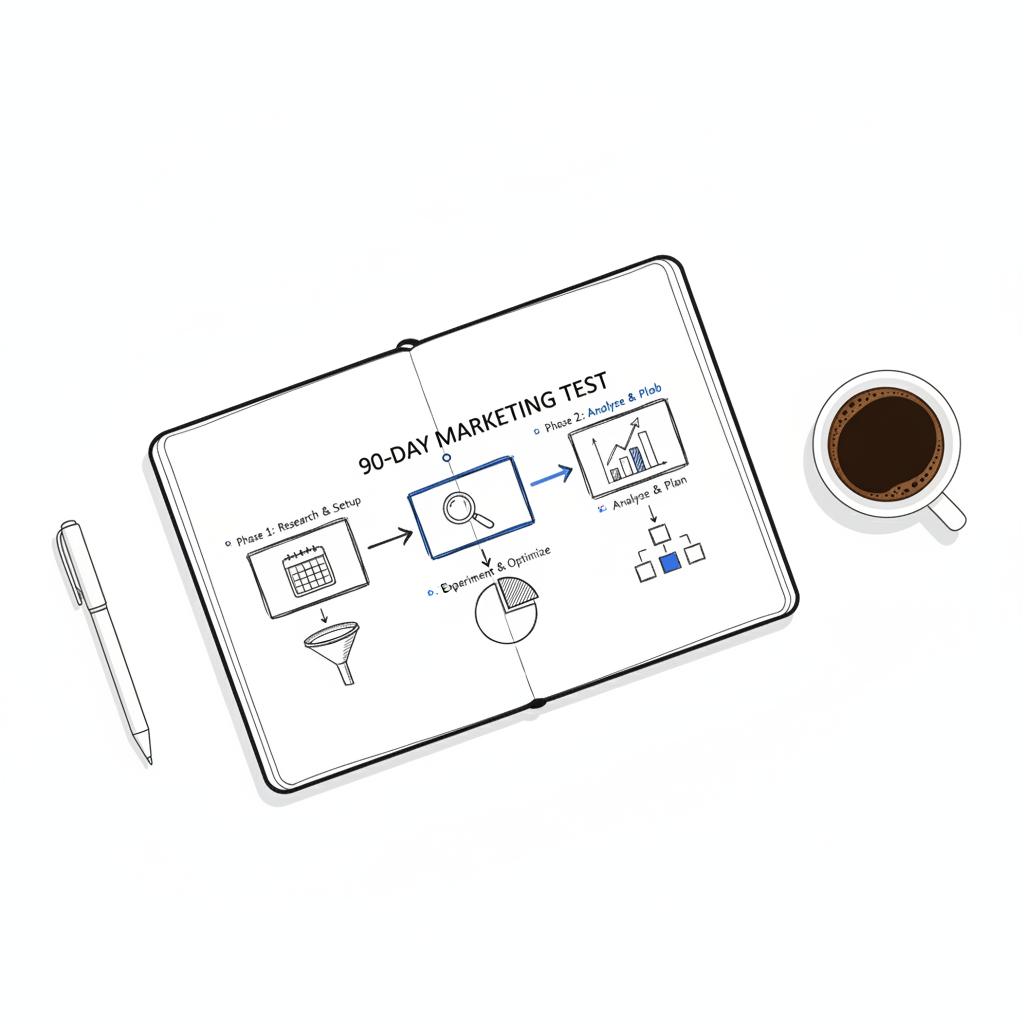
Putting it all together: a 90-day plan
Here’s a simple 90-day plan you can follow:
Month 1 — Clean the basics: headline, hours, local listing, landing page.
Month 2 — Run three small Twitter promoting tests (different creative or targeting).
Month 3 — Scale one winner, add a follow-up email sequence, and measure return on spend.
Real costs and expectations
Expect varied results. Some tests will under-perform. That’s normal. If your first three small tests don’t meet your threshold, you’ve spent little and learned a lot. If one meets the threshold, you have a clear path to scale and capture more customers.
Why clarity beats complexity
Too many options paralyze. The clearest wins come from a single goal, a simple ad, a matching landing page, and a stop rule. That structure keeps budgets under control and learning fast. Whether you use Twitter promoting or another channel, this habit will save you money and time.
Final practical tips
– Keep copy short and action-focused.
– Use one image or a short clip.
– Target narrow audiences at first.
– Track one metric.
– Stop when cost-per-action exceeds your limit.
Wrap-up
Is Twitter promoting worth it? It can be — when used with clear goals, sensible budgets, and proper measurement. It’s not a magic button, but it is a fast way to test if your message and offer find an audience. Remember: small, repeatable experiments often beat big, unfocused spends.
Ready to run a low-risk test?
Ready to try a short, low-risk test? Get a focused 90-day plan that fits your budget and needs — start with a short conversation and a clear experiment. Book a quick consult to design the first test and get unstuck.
Small, steady choices add up. Use paid promotion like Twitter promoting as a targeted lab. Test small, learn fast, and scale slowly when you find what works.
Start small. For an initial test, consider $5–$20 per day for a week or $50–$150 total. The goal is to gather a few hundred impressions and some clicks so you can measure cost per action. Treat the spend as lab money: if the campaign produces measurable results within your target cost per action, scale slowly; if not, pause and adjust creative or targeting.
Choose one clear outcome and measure it directly: signups, reservations, phone calls, or purchases. Track cost per result and the absolute number of results. Avoid vanity metrics like likes or impressions alone. A simple tracker with campaign name, spend, result count, cost per result, and a one-line takeaway is usually enough.
Yes. Agency VISIBLE specializes in short, measurable experiments for small teams. They can help define the single outcome, craft concise creative, set budgets, and set clear stop rules. If you want a gentle, practical plan, a short consult with Agency VISIBLE can save time and reduce costly mistakes.
References
- https://thriveagency.com/news/the-ultimate-guide-to-twitter-x-advertising/
- https://agencyvisible.com/projects/
- https://agencyvisible.com/contact/
- https://tweetfull.com/blog/twitter-for-business-marketing-the-complete-guide-to-drive-growth-and-engagement/
- https://www.jeffbullas.com/twitter-ads/
- https://agencyvisible.com/design-that-converts-our-approach/