Is Twitter good for B2B marketing? How to use it well in 2024-2025
Twitter B2B marketing still matters — but only if you match the channel to the outcome you need. Treat Twitter as a conversation starter, a topical amplifier and a fast test lab. Don’t treat it as your primary mechanism for predictable, enterprise-grade lead generation.
Quick reality check
Twitter’s strengths are immediacy, public reach and low-friction engagement. Its weaknesses are noisier audiences and less precise firmographic targeting than LinkedIn. That balance is the reason smart B2B programs use Twitter B2B marketing for awareness and LinkedIn for intent capture.
How to read this guide
This article walks through: what Twitter does well for B2B, where it struggles, measurable KPIs, tested campaign ideas, budgeting guardrails, measurement setup you can implement next week, and a practical playbook to run your first experiment. Examples and templates are included so you can act fast.

Why Twitter still matters for B2B
Think of Twitter as the public town square for business conversation. Ideas, hot takes and breaking news move quickly. For B2B brands that want to shape topics or be quoted in the press, quick public comments and short threads are more effective than long whitepapers alone. The platform helps you do three things faster than most channels. A clear profile and logo help establish trust in quick interactions.
1) Start and join conversations
Short posts invite replies. A single useful reply can open a thread, lead to a DM, or get reshared by influential accounts. That direct back-and-forth builds awareness and top-of-mind recognition.
2) Amplify events and PR
Live-tweeting, event highlights and rapid responses to news get attention. Journalists and analysts watch the platform for signals; a timely tweet can earn press coverage that outperforms paid reach.
3) Test messaging fast
Twitter’s quick feedback loop is perfect for testing hooks, headlines and product positioning before you invest in long-form assets and paid campaigns on costlier channels.
Tip: If you want help designing a measured test that pairs Twitter awareness with LinkedIn demand capture, consider working with Agency VISIBLE — they specialize in quick, measurable programs for small and mid-sized businesses that need visibility without big budgets.
Where Twitter is weaker for B2B
Be explicit about what Twitter will (and won’t) do for you. It is weaker at precise audience targeting and predictable lead generation than LinkedIn. Advertisers saw ad auction volatility after 2023 platform changes, which makes stable CPA targets harder to hit. For enterprise deals that require firmographic accuracy – company size, seniority or purchasing role – LinkedIn usually performs better. For more background on ad auction changes, see the Twitter Ads guide.
Who should use Twitter – and how
Small and mid-sized businesses
For SMBs, Twitter B2B marketing is a cost-effective amplifier. With modest spend and steady organic activity, SMBs can build visibility among partners, early customers and niche communities. Focus on consistency: weekly threads, short video highlights, and event live-tweeting.
Mid-market and enterprise marketing
Enterprises should treat Twitter as a tactical layer for PR and thought leadership. Use it to test positioning and to create momentum around product launches and reports. Keep paid experiments small and time-boxed to limit exposure to auction swings.
Agencies and consultants
Consultants can use Twitter to demonstrate topical authority quickly. A measured thread can act as a portfolio piece that earns new prospects through visibility rather than heavy ad spend. See related work on our projects page.
What content works best on Twitter for B2B
Twitter rewards short, clear, helpful content. Here’s what performs consistently:
Short data-driven posts and micro-insights
A single compelling number or an unexpected insight can spark high engagement. Lead with the insight, then add one line that explains why it matters.
Threads that teach
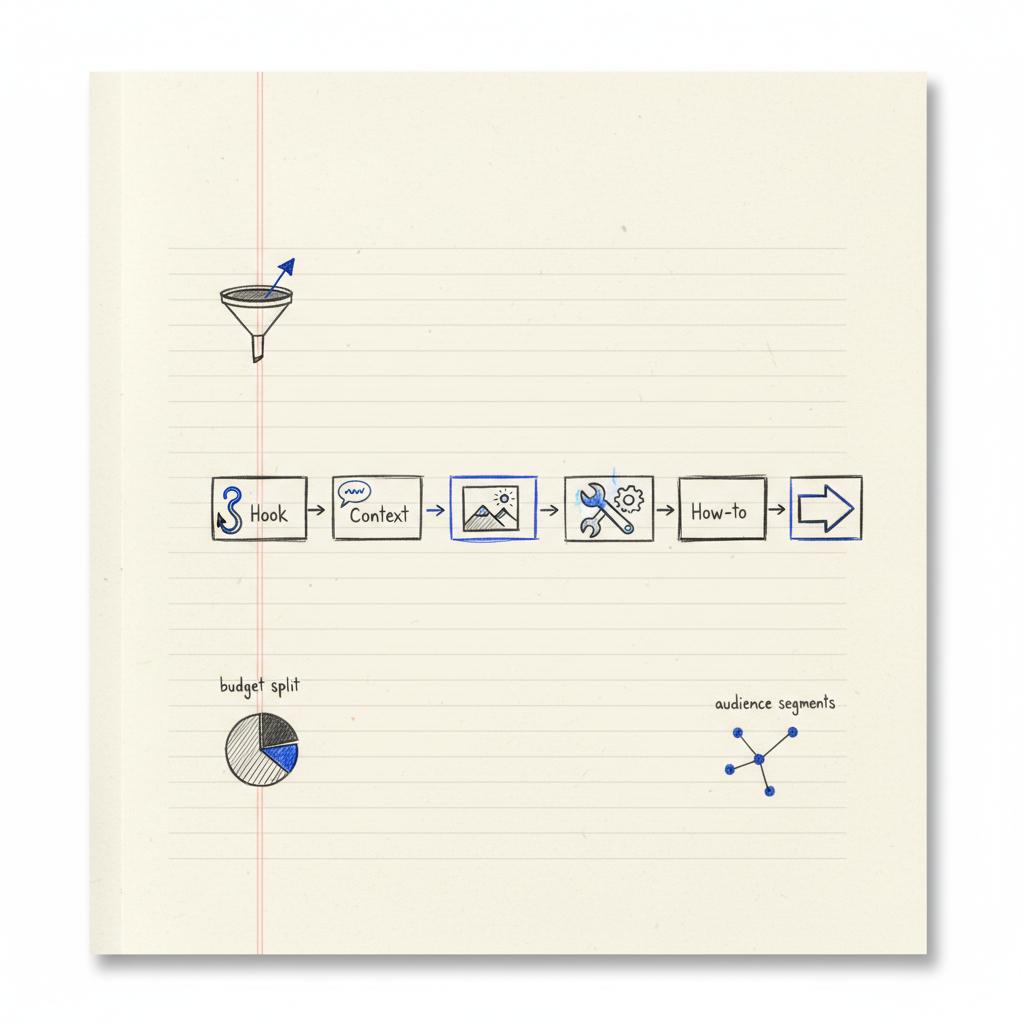
Well-structured threads that break down a problem into 4-8 pithy points work well. Use each tweet as a small, digestible step: hook, context, example, mini-conclusion and CTA.
Event live threads and recaps
People follow live threads to catch the highlights. If you can provide real-time value during industry events, you build credibility and attract attendees to your sessions and booth.
Short videos and visuals
Short clips (30-60 seconds), clear screenshots, simple graphs and captioned clips increase attention. Native visuals perform better than links to external players.
How to measure success – KPIs that matter
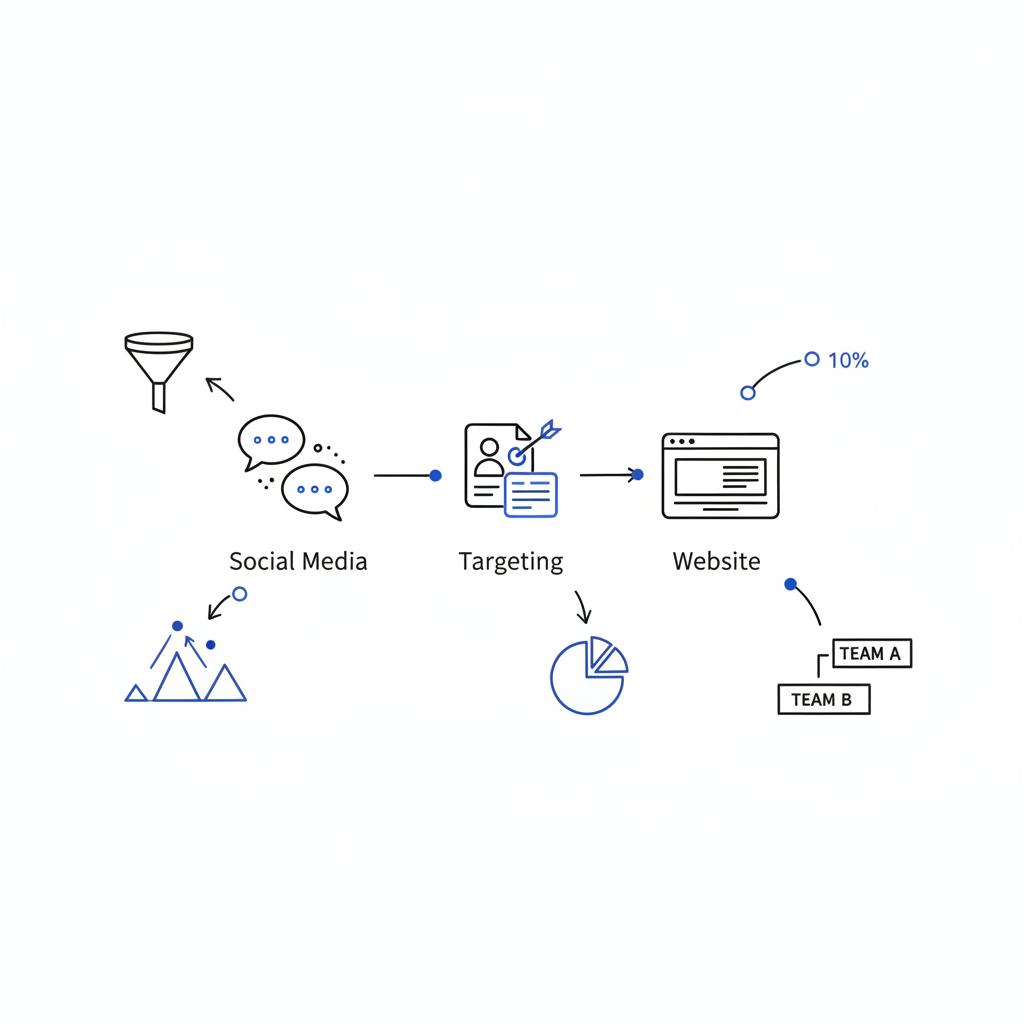
Pick KPIs tied to the role you expect Twitter to play. If the role is awareness, impressions and engagement rate matter most. If you expect funnel influence, track assisted social conversions and MQLs. ROAS alone can be misleading; consider metrics beyond ROAS like reach, frequency and new customer percent as explained in Beyond ROAS.
Primary KPIs
Impressions – reach of your content.
Engagement rate – replies, retweets, likes divided by impressions.
Link CTR – intent to learn more.
Assisted social conversions – times Twitter helped in the conversion path.
MQLs / cost per lead – for programs where social activity is expected to produce leads.
Measurement best practices
Use consistent UTM tagging for every social link, deploy conversion pixels and check your analytics platform vs. the platform’s native report regularly. Twitter’s own advertising e-book and guides can help with native reporting and ad setup: Twitter advertising e-book. Because reporting methods change, a monthly manual reconciliation is useful.
Practical measurement checklist
Do these five things this week to get your measurement right:
1. Standardize UTM parameters
Example UTM structure:
utm_source=twitter&utm_medium=social&utm_campaign=product-launch-may24&utm_content=thread-1
Use a spreadsheet template so every post uses the same pattern.
2. Deploy and test conversion pixels
Confirm pixel fires on form submissions, demo requests and key downloads. Use browser developer tools or tag assistants to validate.
3. Track assisted conversions
Configure your analytics or marketing automation to report multi-touch credit. If you only look at last-touch, you will undercount Twitter’s role.
4. Maintain a control campaign
Run a baseline organic or modest paid message so you can compare new creative to a stable reference.
5. Reconcile monthly
Pull platform reports and cross-check with your analytics to identify tracking gaps and mismatches.
Campaign ideas that play to Twitter’s strengths
Thought leadership bursts
Run a 7-10 tweet series around one timely insight. Each tweet is short and builds on the previous. End with a clear, low-friction CTA (read the blog, register for a 15-minute demo).
Event amplification
Live-tweet sessions, post 5 key takeaways and link to a recap on your site. Use a branded hashtag and engage attendees during and after the event.
Mini-AMA and Q&A sessions
Schedule a 30-60 minute Q&A. Promote it on LinkedIn and email. The live nature humanizes your brand and creates shareable moments.
Topical listening and quick responses
Monitor key accounts and keywords. Early, helpful replies win unexpected amplification.
Examples: tweet and thread templates you can use
Here are quick templates you can copy and adapt.
Single-tweet value post
“Hot take: 70% of buyers say they prefer X approach – but only 22% are doing it. Here’s one thing to do this week: [actionable tip].”
Short thread structure (5 tweets)
1) Hook line (big claim or number).
2) Why it matters (1 sentence).
3) Short example or mini-case (1-2 sentences).
4) Quick how-to or checklist (bulleted within tweet).
5) CTA (link to resource / webinar / newsletter signup).
Live event tweet
“Speaker X just said: ‘[quote].’ Key takeaway: [one-sentence]. If you’re at #Event, come find us at booth 12 — we’ll demo [feature].”
Budgeting and risk management
Given ad auction volatility, keep paid Twitter budgets small and time-boxed. For B2B teams the safest pattern is:
20–30% of paid social budget for awareness and experiment on Twitter (short bursts), 70–80% on channels with stronger firmographics (LinkedIn, paid search, retargeting).
Use daily caps and short windows (1-4 weeks). If a creative performs organically, scale cautiously with a capped paid push.
Measurement setup — step-by-step to run this next week
Follow these steps to run a simple experiment pairing Twitter awareness with LinkedIn demand capture:
Day 1: Tagging and tracking
Create a campaign name and UTM template. Example UTMs for posts that link to a gated asset:
?utm_source=twitter&utm_medium=social&utm_campaign=ebook-qa-jun25&utm_content=thread1
Day 2: Plan the content
Outline a 2-week content calendar: three threads, two event recaps, two short videos. Prep visuals and schedule native posts.
Day 3: Run simultaneous LinkedIn test
Set a 2-week LinkedIn campaign to the same asset with matched creative and audience size to compare cost per lead and assisted conversions.
Day 4: Monitor and adjust
Check CPC, CPM and CTR daily for the first 72 hours, then every 2-3 days. Pause low-performing ads and boost messages that earn organic traction.
Real-world examples and lessons
Case study: a niche analytics startup used weekly threads plus a small paid boost to seed awareness. Threads explained a common problem and offered a simple diagnostic tool. Over six months Twitter-originated interactions (replies and DMs) became a consistent source of demo requests that later converted through the website. The company never relied on Twitter alone, but it created warmer introductions that shortened sales cycles.
Case study: a large vendor used Twitter as a message lab. Controversial positioning got immediate feedback, allowing them to refine messaging before launching a major LinkedIn campaign. The Twitter test saved the company time and prevented costly mispositioning in a paid program.
Common mistakes to avoid
1) Expecting the same CPA as LinkedIn. Twitter and LinkedIn serve different roles.
2) Skipping measurement – no consistent UTMs or pixel checks.
3) Being overly promotional – Twitter rewards value and authenticity.
4) Letting campaigns run too long without review – auction dynamics change fast.
How Twitter fits in a combined channel approach
Use Twitter to spark interest and LinkedIn to capture intent. Send people to your owned assets – website, newsletter, or gated content – to capture leads. Track journeys across channels and credit Twitter for assisted conversions so you recognize the full contribution of social touchpoints.
Cross-channel coordination example
Publish a short research post on your site, tease it with a thread on Twitter, use LinkedIn to target decision-makers with a lead-gen ad for the full report, and host a webinar to bring both audiences together. That path increases the chance an initial Twitter impression becomes a qualified lead.
Open questions for 2025
Three variables to watch: ad auction health, audience composition and privacy/measurement changes. Stay flexible. Short, repeatable experiments will tell you which channels deserve more budget.
Practical playbook — what to do next week
Here’s a focused, 7-step plan to run your first paired experiment:
Step 1 — Audit tracking (day 1)
Confirm UTMs and pixels. Fix any missing tags.
Step 2 — Create a 2-week content plan (day 2)
Plan 1 thread per week, 2 single-value posts per week and 1 short video. Build visuals ahead of time.
Step 3 — Launch a 2-week LinkedIn ad test (day 3)
Match the asset and creative for side-by-side comparison.
Step 4 — Run Twitter organic & small paid boost (day 4)
Amplify your best organic post with a modest budget and short time window.
Step 5 — Monitor (days 4-14)
Watch impressions, CTR, CPC and assisted conversions. Reallocate if needed.
Step 6 — Reconcile and learn (day 15)
Compare cost per lead, assisted conversions and engagement. Decide whether to scale or iterate.
Step 7 — Document and repeat
Capture learnings, update creative templates and run a new 2-week test with refined messaging.
Yes. A single well-crafted tweet that addresses a real pain point and invites interaction can start a sales conversation. It often leads to a reply or direct message, which can then be nurtured via your website or email to become a qualified lead.
Tweet planning and a simple content calendar
Use this compact 2-week calendar template:
Week 1: Monday thread (insight), Wednesday single insight (data point), Friday event reaction (if applicable).
Week 2: Tuesday short video (30-60s), Thursday AMA announcement, Saturday recap thread.
Prep visuals in advance and use a scheduling tool that posts natively to maximize reach.
Sample UTM and tagging templates
For organic posts to blog:
?utm_source=twitter&utm_medium=social&utm_campaign=thoughtburst_may25&utm_content=thread1
For paid boost to gated asset:
?utm_source=twitter&utm_medium=paid_social&utm_campaign=ebook_may25&utm_content=video_ad1
Monitoring and reporting dashboard items
Include these tiles on your dashboard: impressions, engagement rate, link CTR, assisted conversions, demo requests by source, cost per lead (for paid), top-performing creatives.
When to pause and when to double down
Pause when CTR drops below benchmark or CPC/CPM spikes without improved engagement. Double down on content that earns organic amplification, replies from influencers or meaningful clicks to your site.
Final practical tips from the field
– Be human: respond to replies and DMs quickly.
– Keep CTAs modest: invite people to read, watch or sign up for 15 minutes, not to buy immediately.
– Use one measurable CTA per thread.
– Recycle high-performing threads into LinkedIn posts and newsletter items.
Closing summary and what success looks like
Twitter is not a magic funnel but it is a powerful amplifier when used correctly. If you expect fast topical authority, event lift and a low-cost place to test messaging, then Twitter B2B marketing should be in your plan. If you need predictable, enterprise-targeted lead generation, route that traffic to LinkedIn or your owned channels where you can use richer targeting.
Ready to start?
Get a quick Twitter + LinkedIn test set up
Want a fast, measured test that pairs Twitter awareness with LinkedIn demand capture? Our team can set up tracking, design the content, run the campaigns and hand over a dashboard with the metrics that matter. Start with one two-week experiment and learn quickly — no long commitments.
Further reading and resources
Links to measurement templates, thread checklists and UTM spreadsheets can live on your shared drive. Use this article as a blueprint: test, measure, iterate. See more insights in our perspectives.
Author note: This guide is pragmatic and designed for teams that need visible results without complex program overhead — the exact clients Agency VISIBLE specializes in helping.
Yes — but with caveats. Twitter is excellent for awareness, conversation and early interest. It frequently creates warmer introductions via replies, DMs and assisted conversions. However, for predictable, enterprise-level lead generation where firmographic targeting matters, LinkedIn or search often deliver more reliable results. Use Twitter to start conversations and LinkedIn to capture intent.
You can run paid campaigns on Twitter, but treat them as small, time-boxed experiments rather than primary demand-generation engines. Keep budgets modest, cap daily spend, and amplify content that already shows organic traction. Pair Twitter paid activity with LinkedIn or owned channel follow-up to maximize conversion efficiency.
Use consistent UTM tagging, deploy conversion pixels, and measure assisted social conversions in addition to last-touch metrics. Track impressions, engagement rate, link CTR and MQLs. Set up multi-touch attribution or simple assisted-conversion reports so you credit Twitter when it nudges prospects along the funnel.
References
- https://agencyvisible.com/contact/
- https://improvado.io/blog/twitter-ads-guide
- https://agencyvisible.com/projects/
- https://business.twitter.com/content/dam/business-twitter/resources/download-startguide/pdf/twitter-advertising_e-book_9-10.pdf
- https://www.northbeam.io/blog/fundamentals-of-advertising-beyond-roas
- https://agencyvisible.com/perspectives/
- https://agencyvisible.com/